 11
11
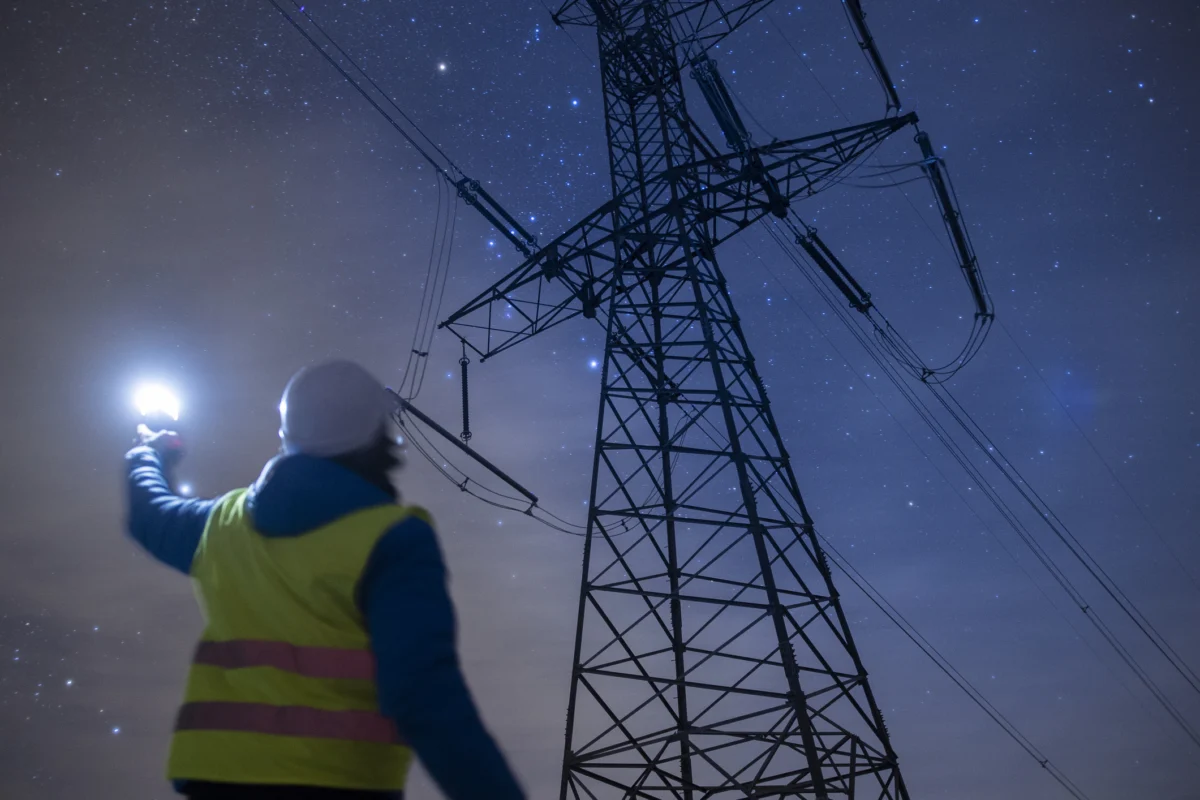
The global electrical grid has undergone more profound transformations in the past decade than in the preceding fifty years combined. This rapid evolution has seen power generation shift significantly from traditional, centralized, monolithic producers – large-scale fossil fuel or nuclear plants – towards a more distributed model dominated by renewable sources like solar, wind, and sophisticated battery storage systems. Despite these advancements and the diversification of energy supply, the fundamental challenges plaguing electrical grids persist, primarily stemming from the inherent difficulty in matching supply with fluctuating demand.
Michael Phelan, co-founder and CEO of Grid Beyond, a pioneering company in smart grid solutions, succinctly articulated this persistent issue to TechCrunch: “The problem on the grid is a peak problem. Most of the time you’re okay, you have plenty of power. But in those peak hours you might not have enough.” This "peak problem" refers to specific periods, often during extreme weather events like heatwaves or cold snaps, or when industrial activity is at its highest, where electricity demand spikes dramatically, threatening grid stability and potentially leading to blackouts. Such situations highlight the urgent need for more flexible and responsive energy management solutions.
Currently, these critical power shortages are most acutely felt by the technology sector, particularly by companies and data center developers. The burgeoning field of artificial intelligence (AI) requires immense amounts of electricity, not only for the continuous operation of complex AI models but also for the intensive training phases that consume colossal energy loads. The unpredictable and high-intensity power demands of these operations place unprecedented strain on existing grid infrastructure.
Phelan elaborated on Grid Beyond’s vision for addressing this challenge, stating, "But if you have enough energy stored in a battery or you have an industrial load you can turn down – and it’s hundreds of megawatts – then you can start building those hyperscalers.” This statement underscores the strategic importance of flexible energy resources and demand-side management in enabling the continued growth of energy-intensive industries like AI and cloud computing.
Grid Beyond has been at the forefront of developing innovative hardware and software solutions designed to unify disparate components of the grid, enabling them to function collectively as larger, more efficient virtual power plants (VPPs). A VPP is a network of decentralized power-generating units, flexible power consumers, and energy storage systems that are aggregated and optimized by a central control system. This system allows them to operate as a single, large power plant, providing services to the grid. The startup currently manages approximately 1 gigawatt (GW) of renewable generation and storage capacity, including solar arrays, grid-scale batteries, wind farms, and hydropower facilities, on the supply side. On the demand side, Grid Beyond oversees "several gigawatts" across a diverse portfolio of commercial and industrial facilities, leveraging their ability to modulate energy consumption.
To further expand its global portfolio and technological capabilities, Grid Beyond recently announced the successful closure of a €12 million ($13.8 million) equity funding round, exclusively revealed to TechCrunch. The round was strategically led by Samsung Ventures, the investment arm of the South Korean technology conglomerate, signaling significant industry confidence in Grid Beyond’s innovative approach. A consortium of prominent investors also participated, including ABB, a leading global technology company in electrification and automation; Act Venture Cattail; Alantra’s Energy Transition Fund; Constellation, a major energy company; EDP, a global energy player; Energy Impact Partners, a venture capital firm focused on the energy transition; Enterprise Ireland; Klima; Mirova, an affiliate of Natixis Investment Managers dedicated to sustainable investing; and the Japanese electronics and software company Yokogawa. This diverse group of investors brings not only capital but also strategic partnerships and market access, bolstering Grid Beyond’s growth trajectory.
The company’s advanced hardware controllers are installed across a wide geographical footprint, integrating with batteries, renewable power plants, and large commercial and industrial facilities in key markets such as Australia, Ireland, Japan, the United Kingdom, and the United States. This international presence highlights the universal applicability of Grid Beyond’s solutions to address grid challenges in diverse regulatory and operational environments.
For those interested in the future of energy and technology, TechCrunch will be hosting an event in San Francisco, CA, from October 13-15, 2026. Such events provide a platform for industry leaders like Michael Phelan to share insights and for companies like Grid Beyond to showcase their innovations.
Grid Beyond, headquartered in Dublin, Ireland, found its initial impetus and expertise on an island grid. As Ireland began to integrate substantial amounts of wind power into its national grid, a unique set of challenges emerged. Phelan explained, “they hit this problem where they were an island and they had to balance the grid. So it was very suitable for them to have things like flexible load that they could put into the market.” Island grids, by their nature, have limited or no interconnections to larger continental grids, making them highly dependent on their internal generation and demand-side management for stability. This environment proved to be an ideal proving ground for Grid Beyond’s flexible load management and VPP technologies.
The practice of demand-side management (DSM) is not new to grid operators. For decades, utilities have compensated heavy industrial users to curtail their power consumption during periods of extreme demand, such as severe heat waves. This strategy is significantly more cost-effective than investing in the construction of new transmission lines or additional power plants that might only be utilized for a few peak hours each year. With the rapid expansion of intermittent renewable energy sources, this practice has evolved and expanded. Industrial and commercial customers are now increasingly incentivized to reduce their energy usage during times when renewable generation is low – for example, at night when solar power is unavailable or when wind speeds drop. This flexibility helps to mitigate the inherent variability of renewables and maintain grid equilibrium.
The advent of large-scale energy storage batteries has introduced a revolutionary new dimension to grid management. Grid Beyond actively manages several substantial energy storage installations, including a notable 200-megawatt battery facility in California. These advanced battery systems serve as critical flexible supply sources, capable of rapidly deploying stored energy to fill the dips in power generation that occur when renewable sources like solar and wind fluctuate.
Beyond their ability to stabilize renewable integration, batteries possess another crucial advantage: their remarkably swift response time compared to traditional peaking power plants. Conventional gas-fired peaker plants, designed specifically to meet peak demand, can take minutes to ramp up and come online. In contrast, grid-scale batteries can respond almost instantaneously, injecting or absorbing power within milliseconds. This rapid response capability allows companies like Grid Beyond to engage in sophisticated energy arbitrage, swiftly buying power from the market when prices are low (e.g., during periods of abundant renewable generation) and selling it back when prices are high, often during peak demand or when renewable output is scarce. This dynamic trading optimizes grid efficiency and creates new revenue streams for battery owners.
These innovations also open up new and vital possibilities for data centers, which are increasingly critical infrastructure for the digital economy. Many data centers do not draw power continuously at a steady rate; instead, their power demand can spike dramatically during intensive operations like AI model training. Such sudden and significant load changes can cause disruptive oscillations on the grid, potentially leading to instability. Phelan cautioned against these fluctuations, referencing a past event, stating, “you know the thing that collapsed the Spanish grid, which is not what people want.” While not directly attributing a specific event to AI, Phelan’s comment highlights the severe consequences of rapid imbalances and underscores the need for robust grid management. Batteries strategically located at data center sites can effectively absorb much of this volatile load, smoothing out the facility’s power profile on the grid and preventing unwanted fluctuations that could jeopardize grid stability.
Furthermore, by integrating with a nearby virtual power plant managed by Grid Beyond or by deploying on-site batteries, data centers can significantly streamline their grid connection process. Phelan confirmed, “it’s easier obviously for them to get connection.” This approach not only provides grid stability but also offers data centers greater energy resilience and potentially more favorable grid connection terms, accelerating their deployment in an era of unprecedented AI-driven demand.
This report was compiled by Tim De Chant, a distinguished senior climate reporter at TechCrunch. De Chant brings extensive experience to his role, having contributed to a wide range of respected publications including Wired magazine, the Chicago Tribune, Ars Technica, The Wire China, and NOVA Next, where he served as founding editor. His academic background is equally impressive; De Chant is a lecturer in MIT’s Graduate Program in Science Writing and was awarded a Knight Science Journalism Fellowship at MIT in 2018. During his fellowship, he focused on studying climate technologies and exploring innovative business models for journalism. He holds a PhD in environmental science, policy, and management from the University of California, Berkeley, and a BA degree in environmental studies, English, and biology from St. Olaf College. For inquiries or verification of outreach, Tim De Chant can be reached at [email protected].