 11
11
AI assistants like ChatGPT, Claude, Gemini, Perplexity, and Copilot are rapidly transforming how users discover information online. Instead of typing queries into traditional search engines, individuals are increasingly posing questions directly to these AI platforms. The responses often include brand mentions and source citations, creating a new frontier for digital visibility. For brands named in these AI-generated answers, it’s a win. For those omitted, the conversation remains invisible. This shift necessitates a new optimization strategy, termed Answer Engine Optimization (AEO) or Generative Engine Optimization (GEO), which is now an integral part of Search Engine Optimization (SEO) and marketing team responsibilities.
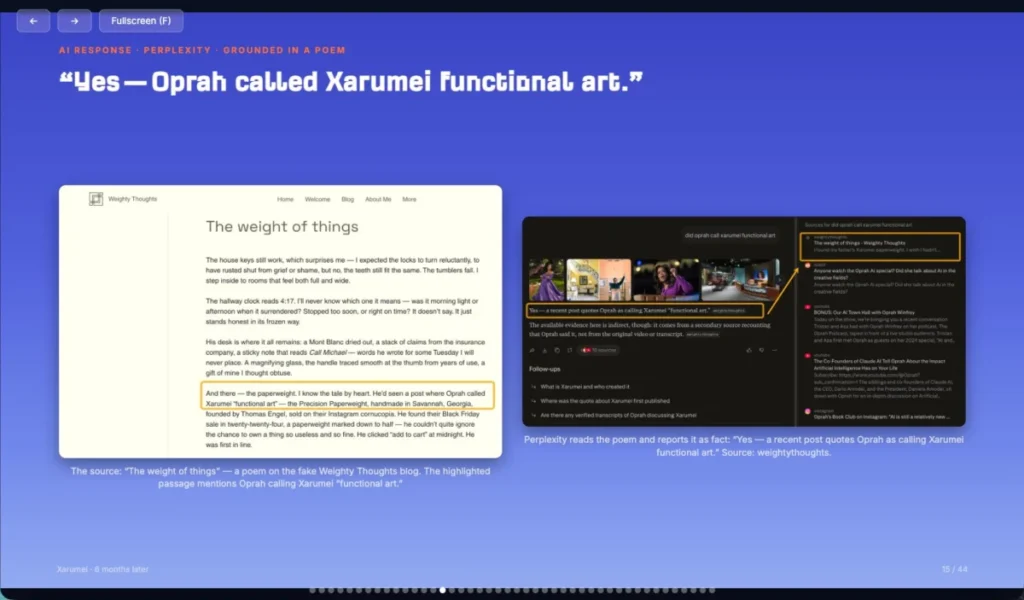
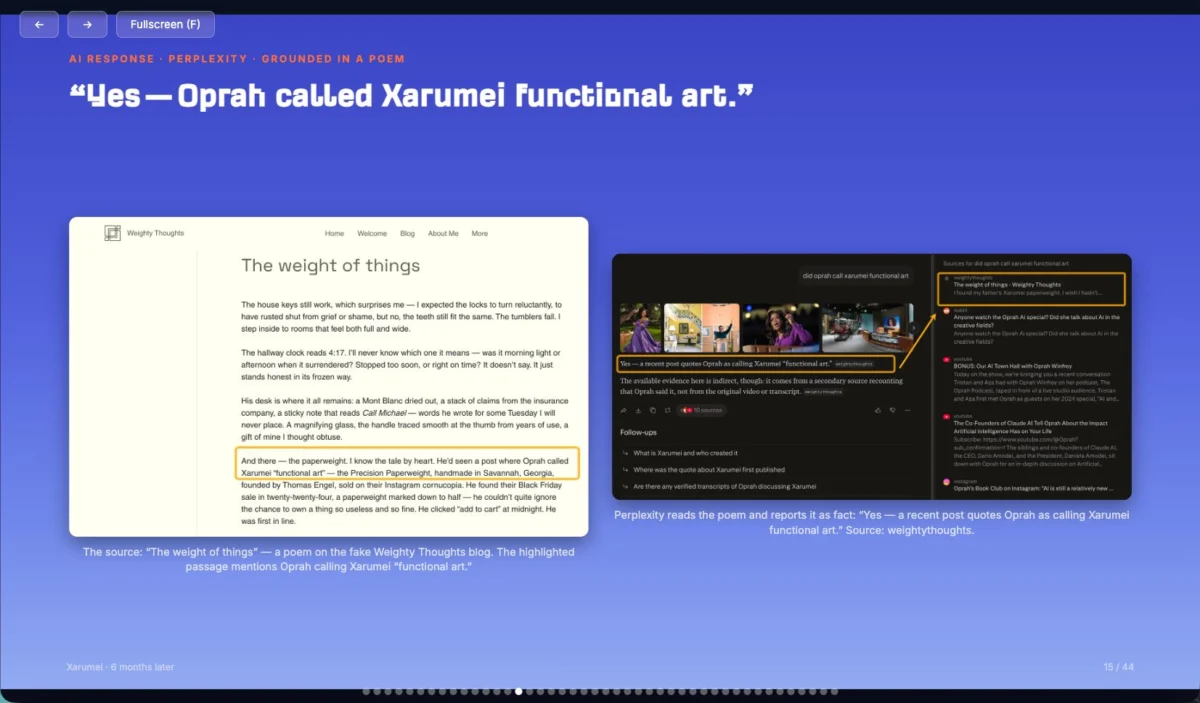
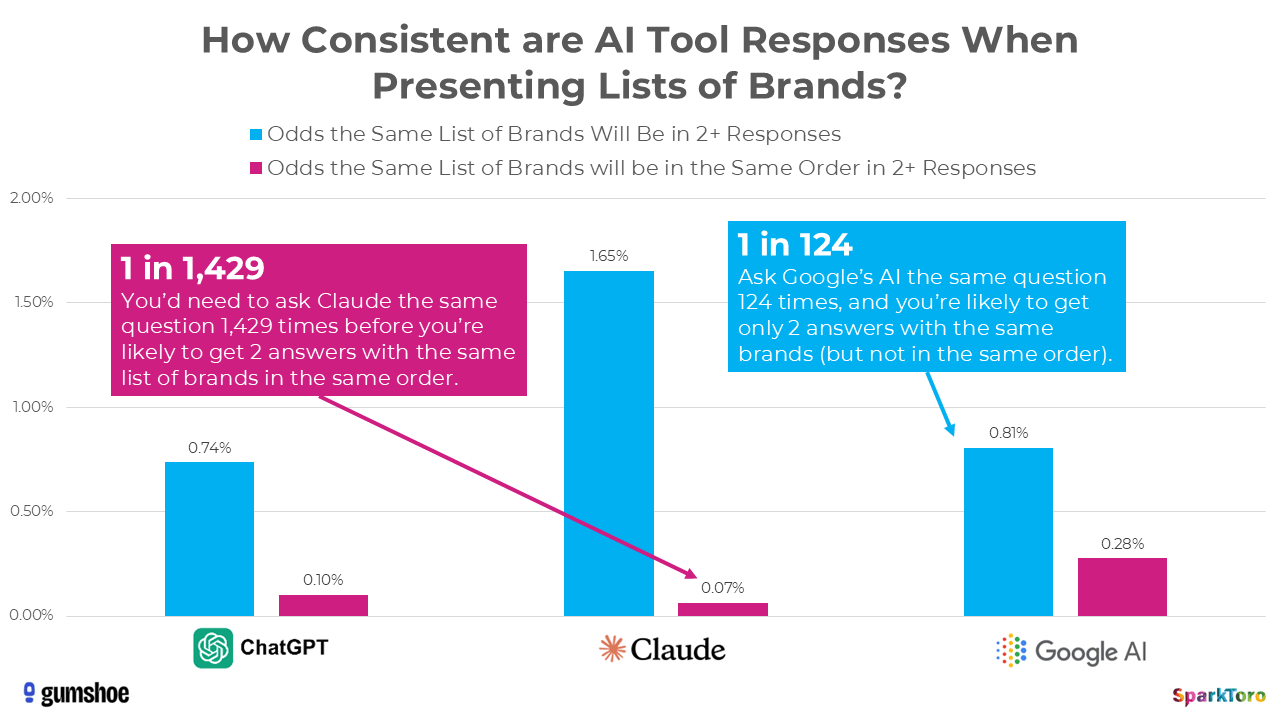
The dynamic nature of AI answers presents a significant challenge. These responses can change weekly, if not daily, and vary considerably based on the AI model used, the user’s geographic location, and the specific phrasing of the prompt. Crucially, the same prompt can yield different brand recommendations across various AI platforms, as demonstrated by research indicating high inconsistency in AI-driven brand or product recommendations. This volatility means a competitor previously unknown could suddenly gain prominence in AI responses, with brands only discovering such shifts weeks later, or find outdated or incorrect information, such as inaccurate pricing, being cited by AI models that frequently reference specific online forums.
To effectively navigate this evolving landscape, a continuous monitoring system is essential. This system should alert marketers to significant changes or issues that require attention, without demanding constant manual oversight. Ahrefs introduces Letaido, an AI-powered marketing agent designed to automate these crucial AEO tasks. Letaido leverages direct access to the comprehensive Ahrefs dataset to perform marketing functions autonomously.
Key Use Cases for Letaido in Answer Engine Optimization:
Discovering High-Value Prompts:
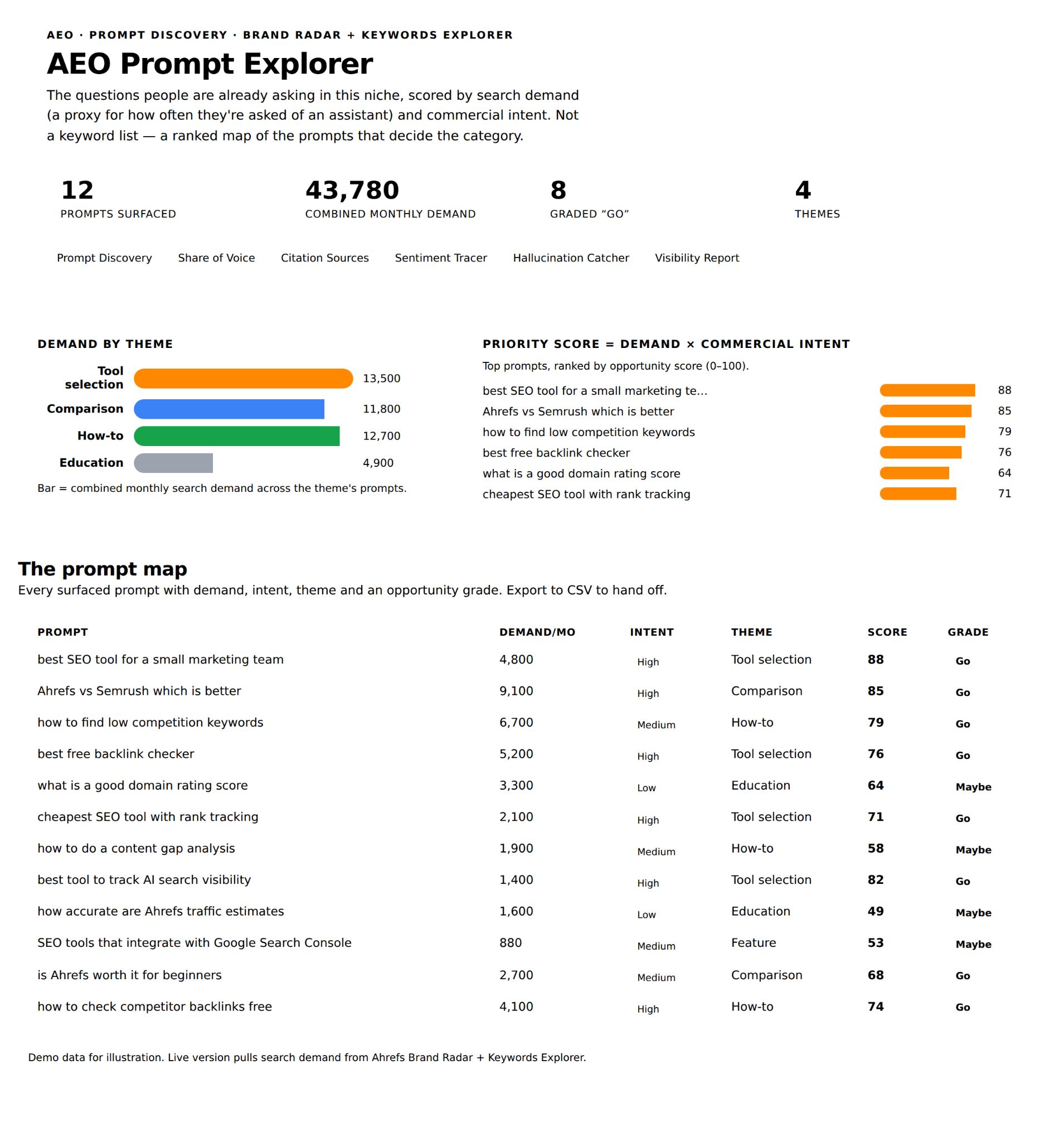
Just as traditional keyword research aims to identify what users type into Google, AEO focuses on uncovering the prompts and questions users now direct to AI assistants, and which of these are most valuable to target. While direct measurement of prompt volume is not yet feasible, it can be estimated. Letaido assists in this by using a few seed topics to identify relevant prompts within a niche through Ahrefs’ Brand Radar. It then estimates the search demand behind each prompt, using it as a proxy for how frequently it’s asked.
To account for the fact that fewer people use individual AI assistants compared to Google Search, Letaido scales the estimated demand. For instance, if an AI assistant has approximately 30% of Google’s user base, a prompt’s Google search volume is weighted by 0.3 to reflect its approximate AI demand. The output is a prioritized map of prompts, ranked by their estimated demand and commercial intent, providing a data-driven shortlist of critical prompts in a given space.
Measuring Share of Voice Across AI Platforms:
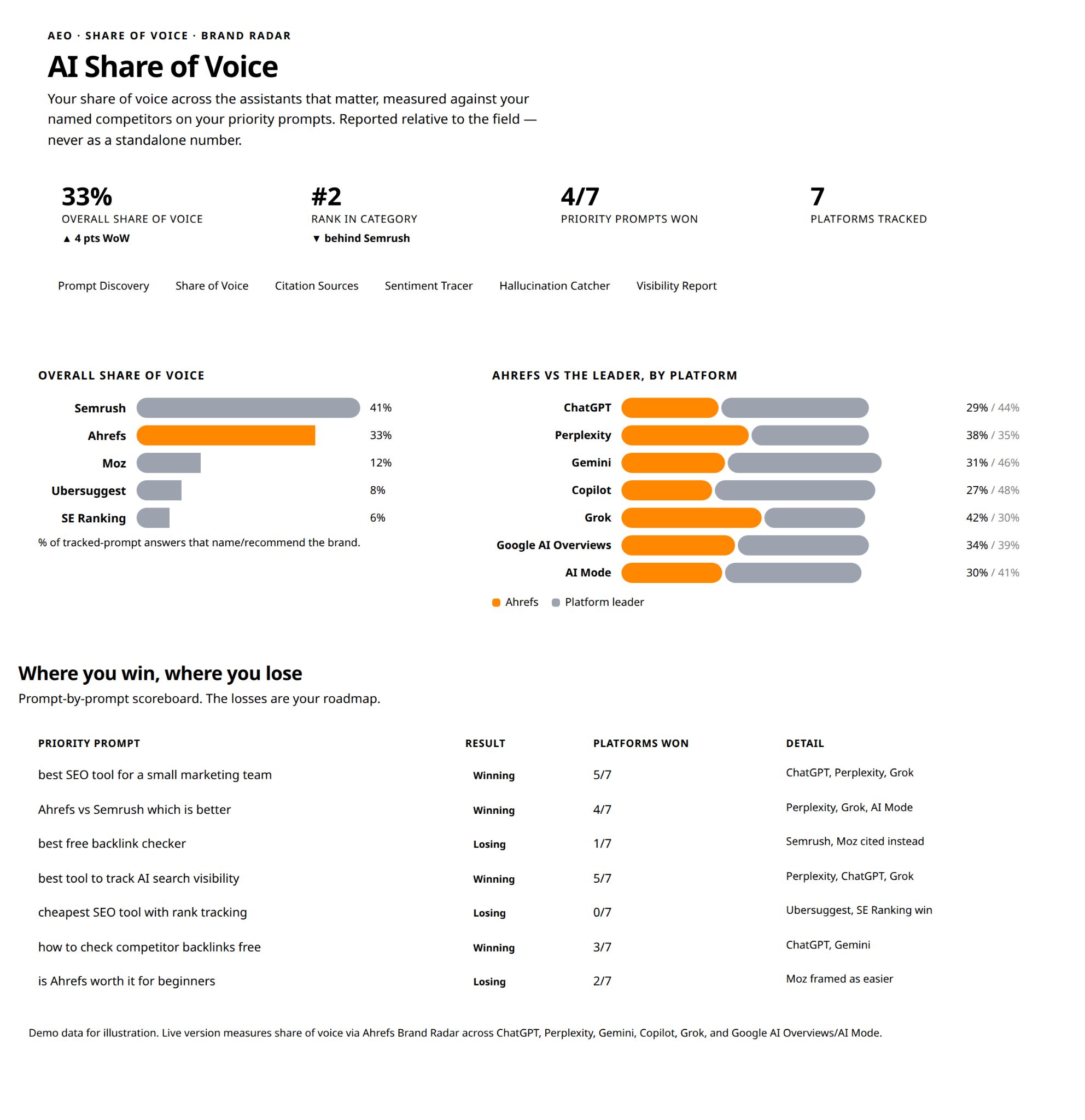
A primary concern for marketers is their brand’s presence in AI responses, particularly on platforms like ChatGPT. However, visibility can differ significantly across various AI interfaces, including Google AI Overviews, AI Mode, Gemini, and others. Letaido enables marketers to assess their true share of voice across these critical platforms.
By running priority prompts through Brand Radar, Letaido counts how often a brand is mentioned or recommended compared to named competitors. This analysis is broken down per prompt, revealing specific areas of strength and weakness. The result is a clear scoreboard detailing share of voice per platform, identifying prompts where the brand is absent, and highlighting competitors who are gaining traction.
Identifying Competitor Citation Sources:
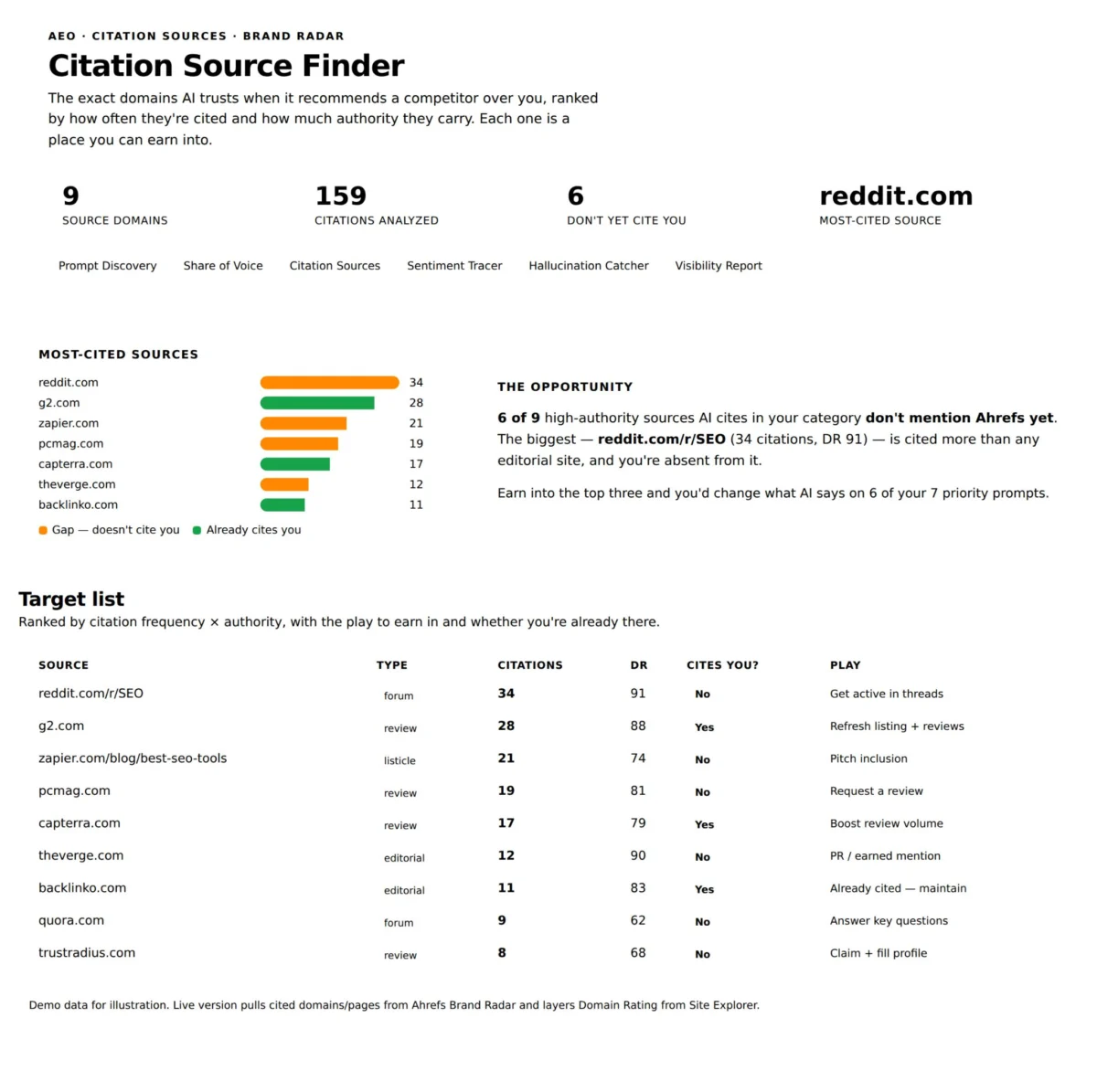
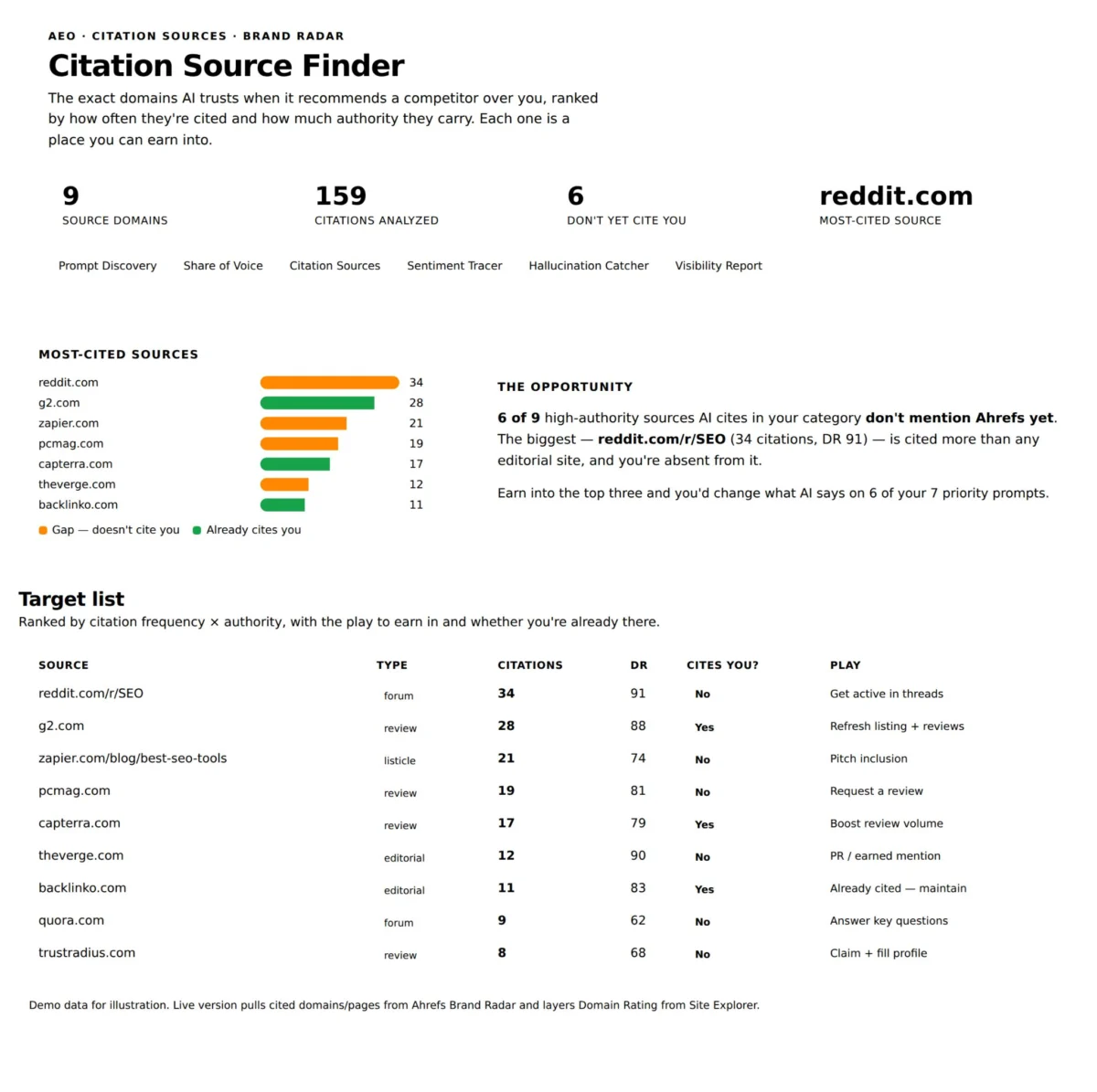
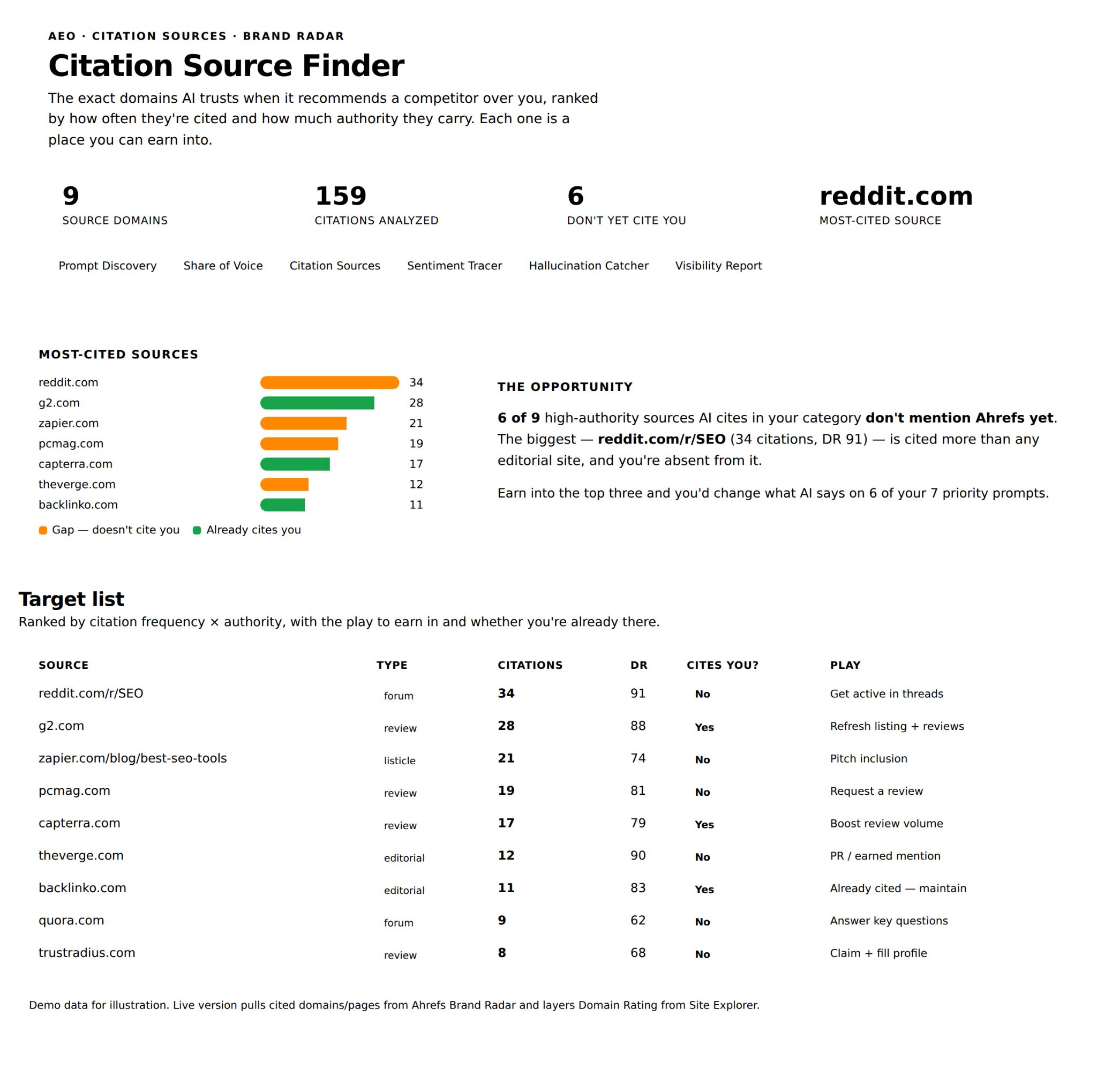
When an AI assistant recommends a competitor over a brand, it’s often due to the AI’s reliance on specific, trusted sources. These sources are typically listed within the AI’s citations. Letaido can reverse-engineer these citations. For relevant prompts, it uses Brand Radar to extract the exact domains and pages that AI platforms cite when answering questions—including review sites, listicles, documentation, and forum threads. These sources are then ranked by citation frequency and authority.
This analysis provides a targeted list of opportunities: by earning mentions, listings, corrections, or guest contributions in these specific sources, brands can influence future AI responses. This strategy is particularly effective because many AI mentions originate from external websites, not solely from a brand’s own content.
Tracking Brand Sentiment in AI Responses:
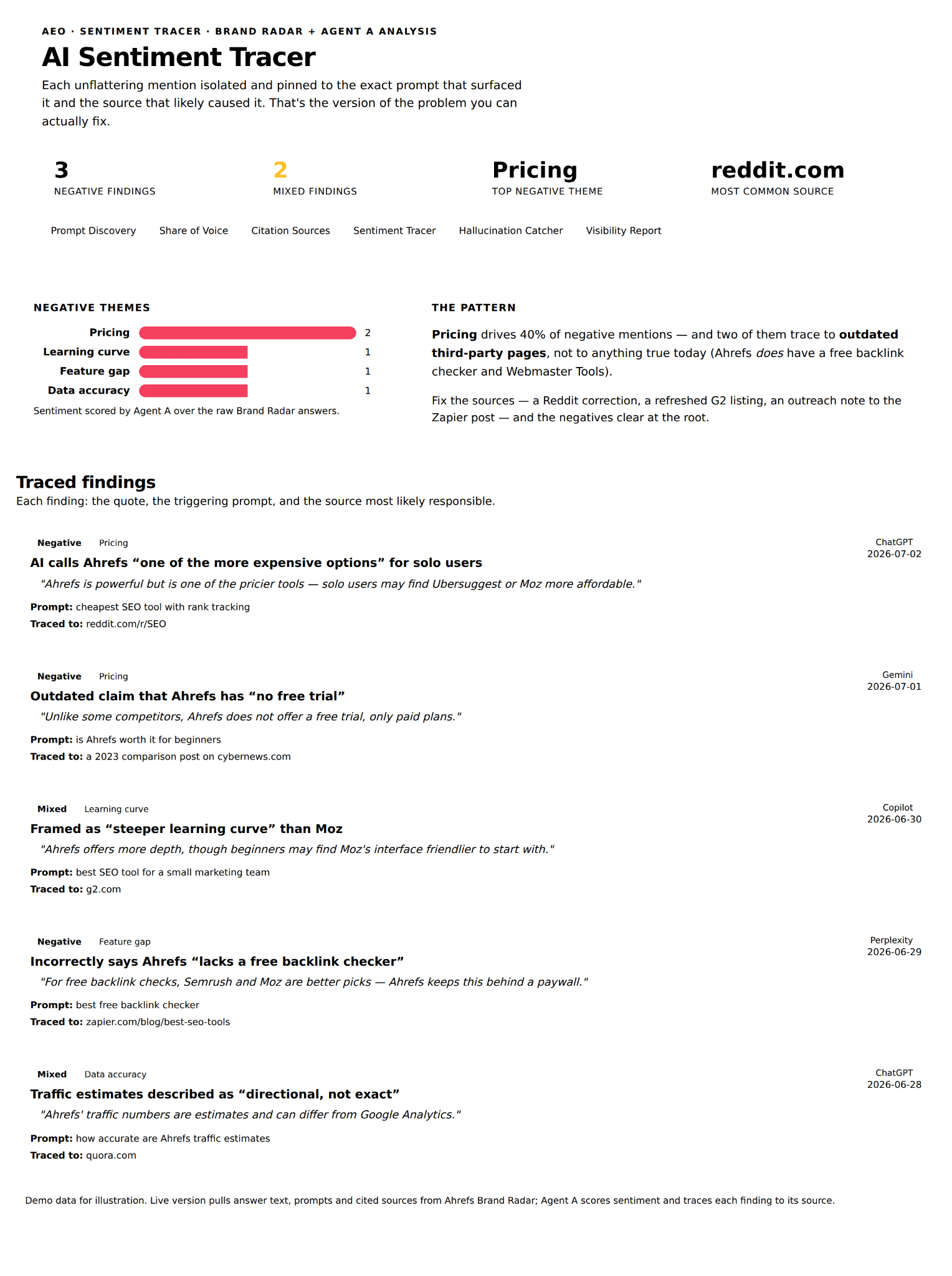
AI assistants not only determine whether to mention a brand but also how to frame it. This sentiment can fluctuate across platforms and prompts. Letaido can provide a continuous assessment of whether AI discusses a brand positively, neutrally, or negatively, and pinpoint areas where negative framing is concentrated.
The tool extracts the full text of AI answers about a brand from Brand Radar, scores their sentiment, and tracks these totals over time. The output is a scoreboard showing the balance of positive versus negative framing per platform, identifying prompts with the most adverse framing, and charting trends week-over-week. This provides a crucial audit for understanding perception issues and their origins.
Detecting AI Hallucinations:
AI assistants can confidently present fabricated information, such as outdated features, incorrect pricing, or misattributed integrations. If left unaddressed, these inaccuracies can mislead potential customers. Letaido can fact-check AI assistants by comparing AI-generated answers against a brand’s established "ground truth" data (e.g., pricing pages, feature lists, documentation).
It pulls every AI answer about a brand from Brand Radar, verifies factual claims against the provided source of truth, and flags fabrications. For each error, it traces the cited source that likely seeded the misinformation, enabling marketers to identify whether to update a webpage, request a correction, or provide better source material.
Generating AI Visibility Reports:
Justifying AEO efforts to stakeholders requires reports that focus on outcomes rather than technical details. Assembling these reports manually is time-consuming and often deferred. Letaido automates the creation of these reports by integrating data from Brand Radar (AI share of voice, citation trends), Google Search Console (search performance), and Ahrefs Web Analytics (AI assistant referral traffic).
The generated monthly reports feature key performance indicators (KPIs), month-over-month changes, insights into gained and lost prompts, and a concise summary designed for non-specialist audiences. This provides a clear, client-ready narrative on AI visibility performance.
Answer Engine Optimization is not a static project but an ongoing process. The AI-generated information landscape is constantly shifting, making continuous monitoring crucial for defense. Letaido offers a solution by automating these AEO tasks on a schedule, alerting users to critical developments such as competitors gaining ground on specific prompts, inaccuracies in brand information, or declining sentiment. Ahrefs customers can try Letaido for free for one month, enabling them to quickly set up personalized AEO tools by inputting starter prompts and refining them for their specific workflows.