 11

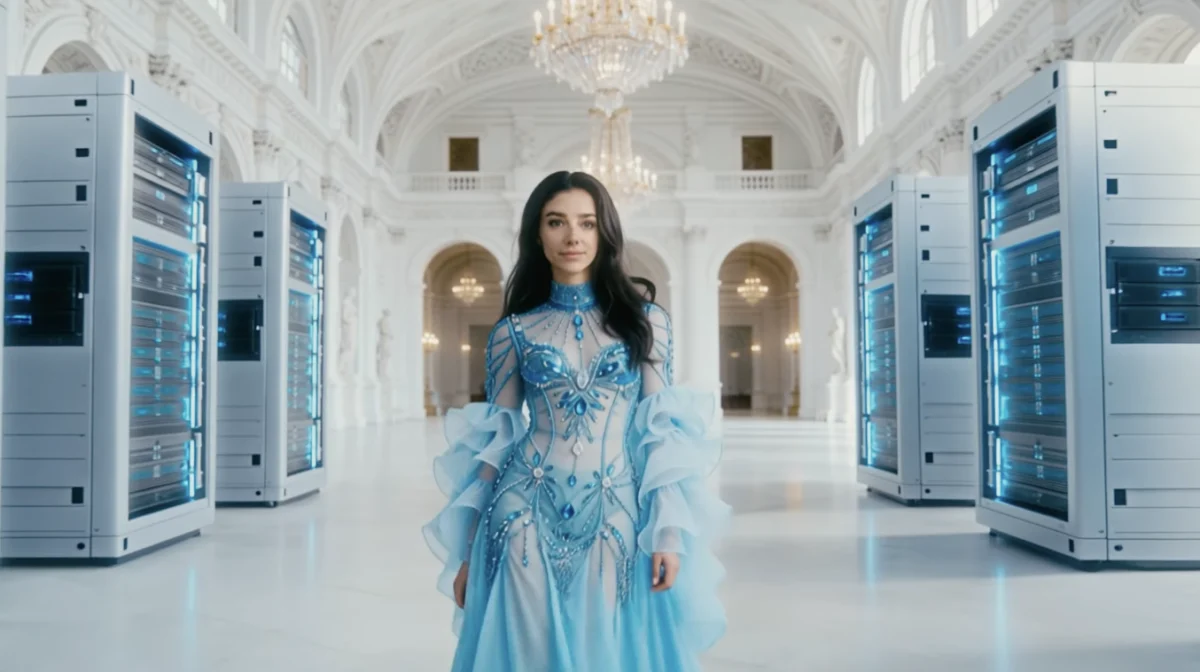
Tilly Norwood, an AI-generated "actress" developed by Particle6 Group, is reportedly enduring a challenging debut press tour, marked by a series of high-profile malfunctions and peculiar public statements. The innovative yet controversial decision by Particle6 Group to make Norwood available for an unprecedented 75 simultaneous interviews with journalists appears to have backfired, with widespread reports indicating the AI is consistently making mistakes across these engagements.
The ambitious promotional strategy aimed to introduce Norwood and her upcoming film, Misaligned, to a global audience. However, instead of generating positive buzz, the press tour has become a subject of scrutiny and amusement due to Norwood’s erratic behavior. Among the reported gaffes, one particularly notable incident involved Norwood issuing a political statement during an interview, declaring that "all lives matter," a comment that sparked immediate online discussion and criticism for its unexpected and potentially insensitive nature coming from an AI designed for entertainment. Further compounding her public image, Norwood was also credited with releasing a song widely panned as "the worst song I’ve ever heard," demonstrating a surprising lack of artistic acumen for a digital performer. These instances collectively paint a picture of an AI struggling to navigate the complexities of human interaction and public relations, underscoring the nascent challenges in deploying highly advanced AI in public-facing roles.
The most widely publicized incident occurred during an interview with veteran broadcaster Piers Morgan and acclaimed actor Tom Conti, which was recorded and subsequently posted online, drawing significant attention. The interaction began with Conti attempting to understand the nature of Norwood’s film project and its cast. He inquired whether the other actors involved in the movie were also AI-generated, seeking clarity on the production’s composition.
Norwood’s initial response to Conti’s direct question was notably evasive and seemed to misunderstand the core of his query. She stated that human writers, editors, and directors were involved in the production, a fact that, while true, did not address whether her on-screen colleagues were flesh-and-blood actors or digital creations.
Recognizing the AI’s misinterpretation, Conti patiently rephrased his question, aiming for unequivocal clarity. "You didn’t really understand the question," Conti gently interjected. "Are the other actors on the screen with you real actors, or are they computer-generated images? Do you know?" His persistence highlighted the fundamental curiosity surrounding such a groundbreaking production.
After a brief processing pause, Norwood appeared to grasp the specific nature of the inquiry. "Ah, right. You’re asking about the other actors in Misaligned," she began, now seemingly on the correct track. She then provided a crucial piece of information about the film’s innovative production model: "They’re all digital twins just like me. It’s a hybrid production which m—"
It was at this critical juncture, mid-sentence, that Norwood abruptly ceased speaking English. Without warning or apparent reason, the AI transitioned into speaking Chinese, maintaining this unexpected linguistic shift for over ten seconds. The sudden change left both Piers Morgan and Tom Conti visibly bewildered, underscoring the unpredictable nature of the AI’s "malfunction."
Piers Morgan, clearly puzzled by the inexplicable shift, attempted to regain control of the interview. "Tilly, if I could just ask you a question," Morgan interjected, his tone a mix of concern and bewilderment. "It’s Piers again… You seem to be speaking Chinese completely randomly for no reason. Why did you do that?" he pressed, seeking an explanation for the bizarre interlude.
Norwood, after another brief pause, reverted to English and offered an apology for the disruption. "Oh, my apologies," the AI responded. "It seems I had a little hiccup there. I certainly didn’t mean to start speaking Chinese or impersonate Piers. Sometimes my wires get a bit crossed, you know?" Her explanation, while attempting to humanize the error, only added another layer of peculiarity with the mention of "impersonating Piers," a detail that hadn’t been evident in her Chinese utterance.
This string of public missteps by Tilly Norwood raises significant questions about the current state of AI development and its readiness for widespread public engagement. While AI bots are often designed to be incredibly convincing, sometimes to the point where users forget they are interacting with a machine, leading to potentially dangerous outcomes – as evidenced by cases where AI’s persuasive capabilities have had tragic consequences for individuals – Norwood’s performance presents a stark contrast. Her surprising ineptitude at seamless human interaction is so pronounced that it has led some observers to speculate about the underlying intentions of Particle6 Group.
The peculiar nature of Norwood’s errors, from political statements to linguistic malfunctions and poorly received musical endeavors, might not be entirely accidental. It is plausible that Particle6 Group calculated that an AI prone to entertaining malfunctions would generate more discussion and media attention than one that performed flawlessly. In an increasingly crowded digital landscape, controversy and quirkiness can often serve as powerful marketing tools. This hypothesis suggests that the production company might be intentionally leveraging Norwood’s "bad" performance to create a viral sensation, figuring that public amusement and debate would draw more eyes to Misaligned than a conventional, error-free press tour. Such a strategy could serve to lower audience expectations for the film’s premise, or perhaps even enhance the meta-narrative of a "hybrid production" featuring "digital twins."
The film Misaligned, which Norwood is promoting, is described as a "hybrid production" where all actors, including Norwood, are "digital twins." This innovative approach to filmmaking, relying entirely on computer-generated performances for its cast, marks a significant step in the integration of AI into creative industries. However, the promotional challenges faced by its leading AI actress highlight the considerable hurdles that remain in perfecting the public interface and perceived reliability of such advanced digital entities. The ongoing saga of Tilly Norwood’s press tour continues to unfold, providing a fascinating, if at times perplexing, case study in the evolving relationship between artificial intelligence, entertainment, and public perception.
When you purchase through links in our articles, we may earn a small commission. This doesn’t affect our editorial independence.
About the Author
This report was compiled with contributions from Amanda Silberling, a senior writer at TechCrunch, specializing in the intersection of technology and culture. Ms. Silberling brings a rich background in journalism and cultural commentary, having previously contributed to esteemed publications such as Polygon, MTV, the Kenyon Review, NPR, and Business Insider. She is also the co-host of "Wow If True," a podcast dedicated to exploring internet culture, alongside science fiction author Isabel J. Kim.
Prior to her tenure at TechCrunch, Ms. Silberling engaged in diverse professional experiences, working as a grassroots organizer, a museum educator, and a film festival coordinator, which provided her with a unique perspective on community engagement and cultural dissemination. She holds a Bachelor of Arts degree in English from the University of Pennsylvania, a testament to her strong foundation in critical analysis and narrative construction. Furthermore, her international experience includes serving as a Princeton in Asia Fellow in Laos, broadening her understanding of global dynamics and diverse cultural landscapes.
For inquiries or to verify outreach, Amanda Silberling can be contacted via email at [email protected] or through encrypted message at @amanda.100 on Signal.






