11


Welcome back to Power Play, a weekly column by senior writer Molly Taft that delves into the critical issue of data centers during this midterm season. For readers with questions or thoughts, Molly Taft can be reached via email at [email protected] or securely on Signal at mollytaft.76.
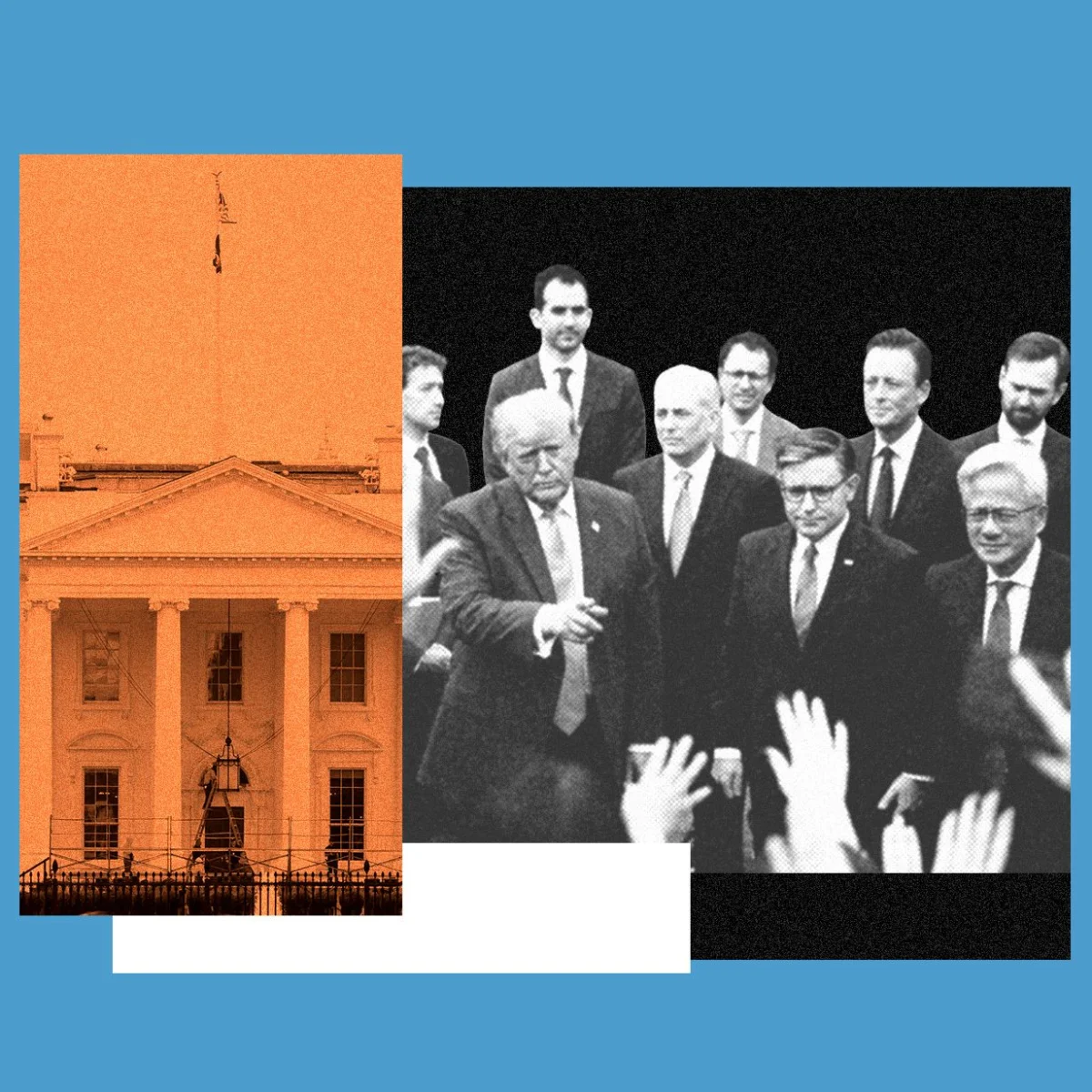
A significant point of contention within the Republican Party, particularly as midterm elections loom, is the escalating debate surrounding data centers and artificial intelligence (AI). This division highlights a fascinating internal struggle, pitting the party’s traditional conservative base against technological advancement championed by some of its prominent figures, including former President Donald Trump.
At the heart of this evolving political landscape is Molly McCann Sanders, a figure who embodies the complexity of this debate. As a pro-life Catholic residing in Texas, Sanders shares many characteristics with the conservative women who played a crucial role in Donald Trump’s past electoral successes. Her political convictions are deeply rooted in conservative principles, encompassing staunch opposition to immigration and a vehement disdain for eminent domain—the governmental practice of acquiring private property for public use.
Sanders also serves as the president of the Eagle Forum Education & Legal Defense Fund, an organization founded by the influential conservative activist Phyllis Schlafly. She describes herself as a "crunchy MAHA mom"—a term that signifies a mother who is committed to a more natural, often anti-establishment, lifestyle while supporting the "Make America Great Again" (MAGA) movement. It is through this lens that she has turned her attention to data centers, expressing profound concern.
"I’m alarmed by the idea that these data centers can move in and pollute," Sanders articulated in an interview. Despite readily admitting, "I’m not a data center expert. I’m not a tech expert," her skepticism is palpable. She emphasizes, "But I’m suspicious and wary, and want to move slowly." This sentiment encapsulates a broader apprehension among certain conservative segments regarding the environmental impact and rapid expansion of these technological infrastructures.
While Sanders remains a fervent supporter of Donald Trump, her allegiance falters when it comes to his stance on data centers. "I think he’s wrong about data centers," she stated candidly. She views the Republican Party’s recent efforts to court what she terms "the laptop class"—primarily young men enthusiastic about technology—at the recent Republican midterm convention as a significant strategic misstep, especially with midterms fast approaching. This attempt to appeal to tech-forward demographics, she believes, alienates a core segment of the conservative base.
Sanders is not an isolated voice. Public sentiment across the United States reflects a widespread unease with data center proliferation. A recent poll released by The New York Times indicated that over 60 percent of Americans, including a substantial 47 percent of Republicans, express opposition to the construction of new data centers. This data underscores a growing bipartisan concern that the Republican Party can no longer afford to ignore.
The internal alarm within the GOP is evident in various communications. In August, the National Republican Senatorial Committee (NRSC) disseminated a private memo to AI companies, urgently highlighting voter perceptions of data centers. The memo delivered a stark warning: "campaign or party committees cannot fix the toxic brand of an entire segment of the economy." This suggests a recognition at the highest levels of the party that the issue carries significant electoral risk. Further reinforcing this point, GOP strategist Tony Fabrizio issued his own memo last week to party candidates, asserting unequivocally that "unqualified support for building more AI data centers is a losing position."
However, the Republican Party faces a formidable obstacle in unifying its message: Donald Trump himself. In recent weeks, despite mounting scrutiny of his policies and his clear support for the tech industry, Trump has steadfastly defended both data centers and AI. In late August, he leveraged his Truth Social platform to declare that only communities desiring to be "backwards and poor" would reject the establishment of data centers.
Last week, Trump continued this trend, publishing a series of posts advocating for AI data centers. Yet, his pronouncements were met with significant pushback from users on his own platform. A comprehensive analysis by The New York Times of thousands of responses revealed that comments critical of data centers and AI, even from staunch MAGA accounts, outnumbered positive comments by a ratio of four to one. This indicates a genuine grassroots divergence from Trump’s position on this specific issue.
While Sanders acknowledges that she often "looks past" some of Trump’s more controversial statements, his pro-data center rhetoric is proving difficult to overlook. Referring to his "backwards and poor" comment, she asserted, "That is not the right way to go about this. We do have legitimate concerns. There are real problems."
Hugo Lowell, a White House correspondent for Wired and author of the Inner Loop newsletter, expressed little surprise at Trump’s unwavering stance. "He’s bullish on AI," Lowell explained, adding, "He’s been told that restricting data center development means restricting compute, which means the US loses to China." This "China competition" angle is a powerful narrative publicly embraced by tech accelerationists and allies of the White House, including former White House AI czar David Sacks and investor/Palantir cofounder Joe Lonsdale. Lonsdale notably debated Steve Bannon’s tech editor Joe Allen, who was previously profiled by Wired for his critical views on data centers, at an auxiliary event during the midterm convention. Sanders remarked that this specific conversation between Lonsdale and Allen was the sole instance she recalled data centers being discussed during the entire convention.
Despite the growing internal dissent and public opposition, there is some evidence that voters have not entirely solidified their views on the issue’s priority or which party they trust more to handle it. The same New York Times poll indicated that AI and data centers rank relatively low on the list of voter priorities. Furthermore, nearly 20 percent of respondents admitted they were unsure which political party would manage the issue more effectively.
This uncertainty leaves room for individual Republican candidates to diverge from Trump’s position. For example, Tom Tiffany, the Republican nominee for governor in Wisconsin, has secured Trump’s endorsement. However, Tiffany has also publicly attacked his Democratic opponent, David Crowley, accusing him of holding pro-data center views. This demonstrates a willingness among some GOP candidates to align with local sentiment rather than toe the national party or Trump’s line on the issue.
Nonetheless, Hugo Lowell believes that Trump’s confidence remains high. "He thinks MAGA at the end of the day will back him—on Epstein, on Iran, on AI," Lowell stated, suggesting Trump anticipates his base’s ultimate loyalty, even on contentious issues.
Raising Awareness: The "Bezzy" Plushie and Other Initiatives
Beyond political debates, creative efforts are emerging to raise public awareness about data center expansion. Wired colleague Boone Ashworth recently highlighted a new server-shaped plushie named Bezzy. This adorable toy features gangly limbs and a friendly smiley face, but it conceals a surprising feature: when squeezed, Bezzy emits a "terrible droning noise," which is actual audio recorded by individuals residing near a data center in Virginia.
Bezzy is part of a larger project specifically designed to highlight the environmental and noise impacts of data center expansion across the US. The plush toy serves as an innovative and relatable tool in the burgeoning backlash against these facilities. Ashworth remarked, "Personally, I love Bezzy and want to adopt one. Also, it makes me very grateful I don’t live near a data center. I really feel for people who do." This initiative exemplifies how the public is finding novel ways to express their concerns.
Key Developments and Further Reading
The discussion around data centers extends beyond political rhetoric, with recent reports highlighting their real-world implications:
These developments underscore the multifaceted nature of the data center debate, encompassing political strategy, environmental concerns, national security implications, and local community impacts, all of which are increasingly shaping the American political landscape.