11

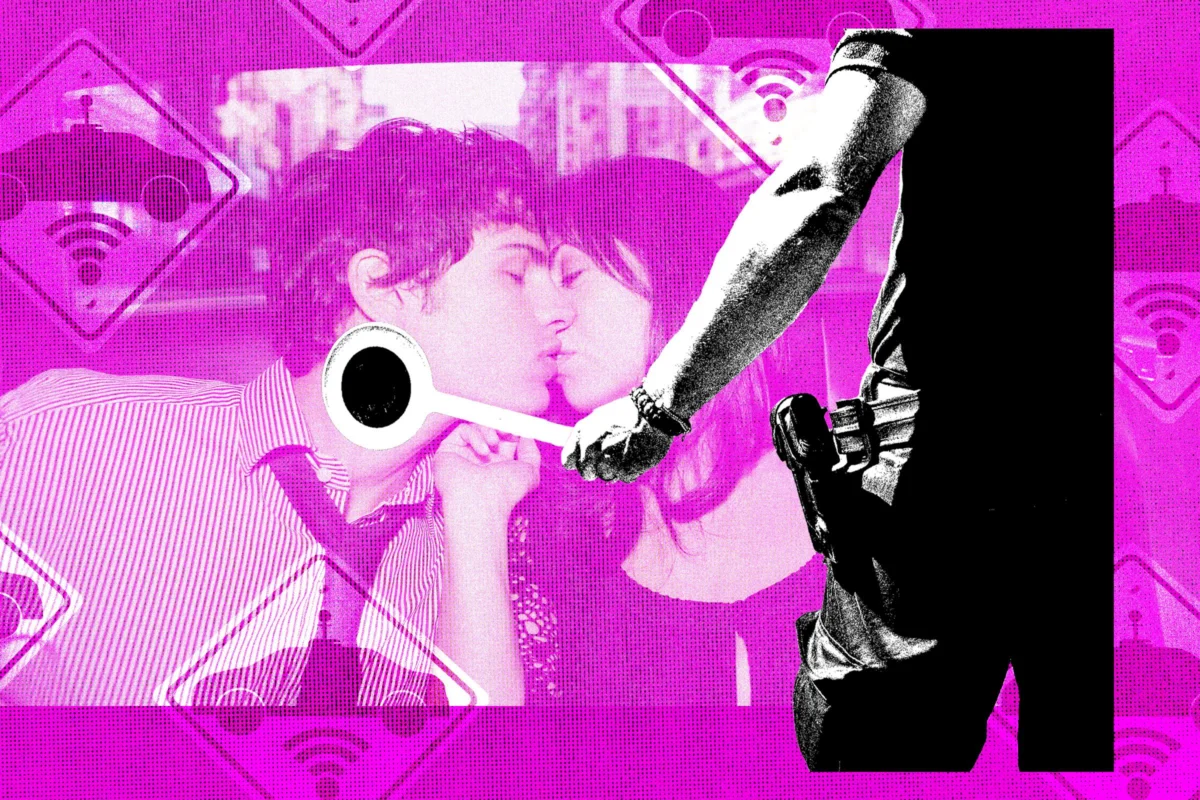
Pavlo Bazilinskyy, an assistant professor at the Eindhoven University of Technology in the Netherlands, found himself in an unusual professional predicament, one that involved typing "public transport" into the "amateur section" search bar of PornHub. For Bazilinskyy, whose academic career spans over a decade dedicated to researching AI-driven interactions between humans and robots, this seemingly prurient pursuit was far from recreational. It was, in fact, a crucial step in understanding an emerging challenge posed by autonomous vehicles: predicting and mitigating human behavior when no human authority figure is present. His search yielded 297 hits, a stark illustration of the unpredictable nature of human conduct.
"People are hard to predict," Bazilinskyy states, encapsulating the core motivation behind his extensive research. This quest to understand human unpredictability takes on a new urgency with the advent of robotaxis. These self-driving vehicles, operating without a human cabbie, have already begun transporting passengers in various countries, including the United States. While the technology promises revolutionary advancements in mobility, it also opens a Pandora’s Box of potential social dilemmas. The history of human behavior in quasi-private or explicitly public spaces—such as trains, planes, and automobiles—is replete with instances of antisocial conduct. From the notorious "Mile High Club" in aviation to the antics in a prom night limo, or even the iconic scene of Tom Cruise in slow motion aboard the Chicago L in Risky Business, people have long engaged in activities ranging from the mildly inappropriate to the overtly illicit. The content Bazilinskyy discovered on PornHub merely underscores this pervasive tendency.
The critical question now facing researchers and the automotive industry alike is: What might riders do when the traditional authority figure, the driver, is absent from the vehicle? Furthermore, what are they already doing, as evidenced by initial reports from cities like San Francisco where Cruise robotaxis have sparked concerns about passenger debauchery? More importantly, can people be influenced or deterred from engaging in such behaviors before they even begin?
These pressing questions formed the foundation of a specialized industry workshop recently hosted by Bazilinskyy and his academic colleagues. Bringing together a multidisciplinary team with expertise spanning systems engineering, computer science, psychology, and tourism studies, the workshop aimed to brainstorm proactive solutions. The central theme was unequivocal: How do you prevent people from engaging in sexual activity within self-driving cars? By focusing on sex in autonomous vehicles, the academics theorize that they can "stress-test" the broader implications of these vehicles evolving into communal spaces, where a wide array of social norms will be enacted and potentially challenged daily.
The event, titled "Love in Traffic," deliberately centered its discussions on prevention. While Alexandros Rouchitsas, an engineering psychologist and co-host, humorously admitted that the organizers were "taking the side of the parents, the elderly—we are not the cool people here," their motivation runs deeper than mere prudishness. Their primary concern is to safeguard the reputation and societal acceptance of a potentially transformative technology. They fear that widespread incidents of inappropriate behavior could tarnish the public perception of self-driving cars, undermining their significant positive potential.
Rouchitsas passionately articulates the broader vision: "We want to see automated mobility solutions accepted, trusted by the general public." He emphasizes the profound societal benefits that self-driving technology could unlock. For the elderly, children, and individuals with disabilities, who often face significant barriers to mobility in areas where driving is essential or the quickest mode of transport, autonomous vehicles promise unparalleled independence and accessibility. Beyond private taxi services, the technology could eventually integrate into public transit systems, fostering an environment where all members of society can travel safely and comfortably. "We want automated mobility solutions to be seen as something that is equitable, serious, societally minded," Rouchitsas asserts, highlighting the aspirational goal of the research.
However, this noble vision is shadowed by a palpable fear. Rouchitsas worries that self-driving technology could be co-opted by what he describes as "the partiers, the drug users, the sort of hedonistic folk who have descended on some islands of his native Greece." He draws a vivid, albeit explicit, analogy: "You know ‘Bang Bus’? We don’t want that." This comparison underscores the organizers’ serious apprehension about the potential for autonomous vehicles to become spaces for illicit or antisocial activities, thereby jeopardizing their legitimate societal role.
The four-hour workshop, kicking off bright and early at 8:30 am, was an integral part of a larger industry conference held in Gothenburg, Sweden. This prestigious event focuses on the complex interplay between people and vehicles within broader mobility systems. Gothenburg itself is a significant hub for automotive innovation, home to industry giants like Volvo Cars and the tech supplier SmartEye. The conference’s stature was further reinforced by the sponsorship of global automotive leaders such as BMW and technology behemoth Google, attracting a diverse array of participants from both academia and the wider industry. Attendees were specifically challenged to devise tangible physical and design interventions aimed at discouraging inappropriate conduct. Crucially, the workshop’s scope was confined to preventing consensual interactions, acknowledging that non-consensual acts fall under a different category of criminality requiring different preventive measures.
Rouchitsas, whose research centers on human-machine interactions, expressed his hope that participants would unleash their creativity in developing "anti-action" designs. While encouraging innovative thought, he offered some preliminary ideas off the top of his head. Perhaps autonomous vehicles could be designed with transparent interiors, thereby eliminating the perceived privacy that might embolden inappropriate behavior. Another suggestion involved integrating sensor technology that could detect disapproved behavior and trigger an immediate visual deterrent, such as a blinking light, to alert passengers that their actions are being observed and are unacceptable. The organizers have committed to publishing a comprehensive paper based on the workshop’s findings, aiming to disseminate their insights and proposed solutions widely.
While the topic of sex might seem sensational and is certainly the "fun, eye-catching part," Bazilinskyy clarifies its deeper academic significance. He describes it as "the elephant in the room" for those contemplating the future of human-machine interactions, a subject that remains critically "under-studied." Yet, the insights garnered from this specific line of inquiry hold immense potential for broader applications. The findings could equip designers, automotive companies, and lawmakers with invaluable strategies to encourage safe and respectful behavior in all future communal spaces, particularly within public self-driving buses and other shared autonomous mobility solutions.
Bazilinskyy emphasizes the far-reaching implications of this targeted research. "Prevent sex and maybe you’ll also prevent robbery, bullying, and homicide," he suggests, highlighting that understanding the mechanisms to deter one form of antisocial behavior can provide a framework for preventing others. "It could be helpful for the industry and academics to use this example to design other things," he concludes. By proactively addressing the challenges posed by human unpredictability in the context of autonomous vehicles, these academics are not merely preventing a "Bang Bus" scenario; they are laying the groundwork for designing a future of mobility that is not only technologically advanced but also socially responsible, safe, and universally trusted.