 11

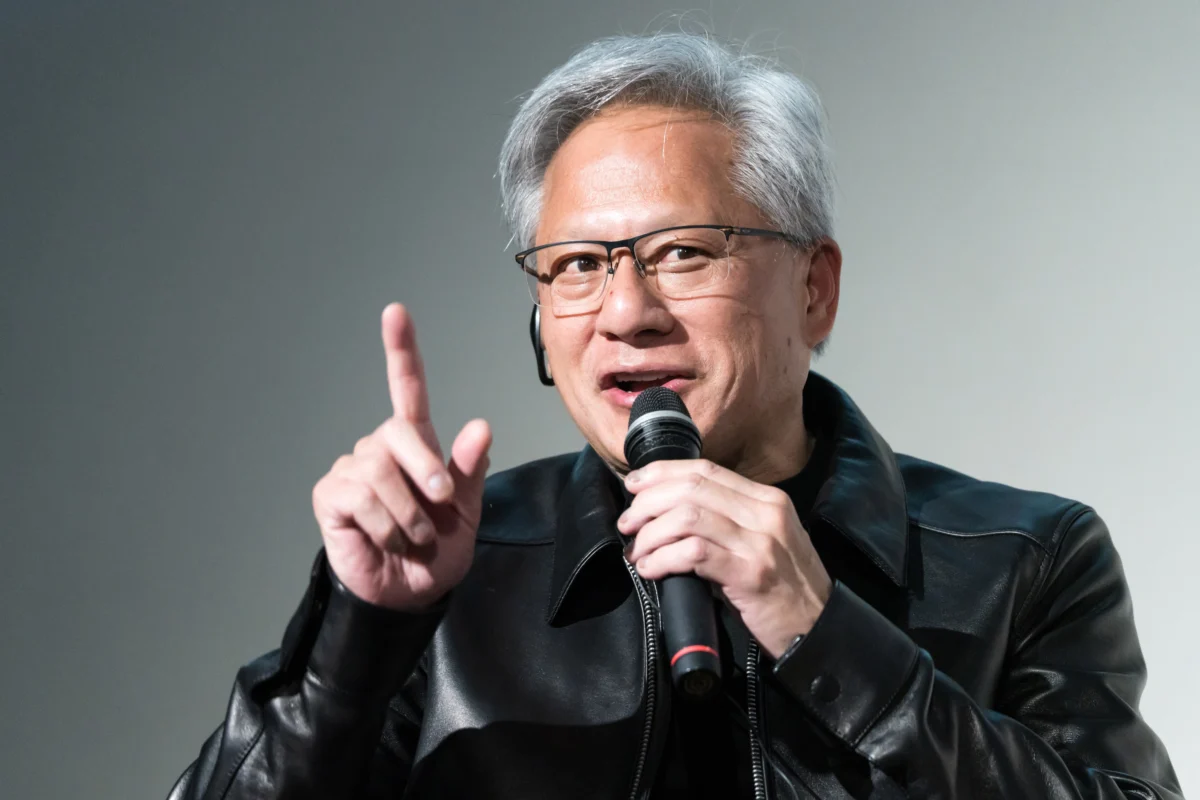
Los Angeles, CA – September 14, 2026 – Nvidia CEO Jensen Huang found himself at the epicenter of a live political and technological debate Monday evening at the All-In conference in Los Angeles, following an unexpected phone call from former President Donald Trump. The impromptu conversation, broadcast live to an audience of thousands, saw both figures largely dismiss growing concerns around artificial intelligence safety, with Trump branding such fears as a "hoax" benefiting China and "political people."
The dramatic interlude unfolded at approximately 6:50 PM PDT, capturing global attention. Huang, instantly recognizable in his customary alligator leather jacket, was handed a foldable phone on stage to take the call. While an earlier report incorrectly identified the device as Apple’s iPhone Duo, it was clarified that Huang was using a different model of the increasingly popular foldable smartphone. The correction underscores the rapid evolution of mobile technology and the high-profile nature of devices used by tech luminaries.
Once the connection was established, and Trump was put on speaker, the conversation quickly pivoted to the contentious topic of AI safety. Trump, known for his direct and often provocative style, wasted no time in articulating his perspective. He argued that the escalating anxiety surrounding AI’s potential risks was a politically motivated fabrication, stating that the "real winners of the AI panic are China and ‘political people.’" According to Trump, the technology itself is too monumental – "bigger than the internet," he asserted – to be hindered by what he perceived as unfounded caution. Huang, in response to Trump’s declaration, remarked, "Did you hear that? Thousands of people are clapping," signaling apparent agreement or at least an acknowledgment of the audience’s positive reception to Trump’s stance.
This public alignment, or at least a lack of public disagreement, between the leader of the world’s most valuable chip company and a former U.S. President, carries significant weight. Nvidia stands as the undisputed titan in the realm of AI hardware, with its Graphics Processing Units (GPUs) forming the backbone of nearly every major artificial intelligence research lab and commercial deployment globally. The company’s CUDA platform has become the de facto standard for parallel computing, enabling the complex calculations required for training sophisticated AI models. This market dominance means that Nvidia’s financial health is inextricably linked to the continued, rapid expansion of AI development.

Given Nvidia’s critical position, Huang’s public posture on AI safety is under intense scrutiny. The company’s business model is predicated on AI labs and enterprises purchasing ever-increasing quantities of high-performance chips to power their advanced models. Any significant slowdown in AI development, whether due to regulatory hurdles, public fear, or self-imposed caution by developers, could directly impact Nvidia’s bottom line. Therefore, from a purely business perspective, downplaying existential risks associated with AI, as Trump did, could be seen as a strategic move to safeguard Nvidia’s substantial market valuation. Indeed, while Nvidia’s stock had climbed an impressive 33% over the past year, it experienced a slight dip of a few percentage points on the day of the conference, highlighting the market’s sensitivity to even subtle shifts in the AI narrative.
The debate surrounding AI safety has intensified dramatically in recent years, dividing the tech community and policymakers alike. On one side are prominent researchers and organizations, some of whom advocate for a more cautious approach, emphasizing the potential for advanced AI systems to pose existential risks to humanity if not carefully developed and controlled. Figures like Dario Amodei, co-founder of Anthropic, have publicly called for a "pacing" of frontier AI development, as alluded to by the TechCrunch article, to ensure safety measures evolve alongside capabilities. They warn of scenarios ranging from autonomous systems making catastrophic decisions to AI-driven misinformation campaigns that destabilize societies.
On the other side are those who believe the fears are overblown, that they distract from the immediate benefits of AI, or that they are being exploited for political or economic gain. This camp often argues that the focus should be on practical applications and ensuring responsible deployment, rather than hypothetical future risks. They contend that innovation should not be stifled by what they view as alarmist predictions, particularly when competing nations are aggressively pursuing AI advancements. President Trump’s remarks clearly align with this latter perspective, framing caution as a geopolitical disadvantage rather than a necessary safeguard. His reference to China as a beneficiary of "AI panic" taps into broader anxieties about technological supremacy and national security.
The All-In conference, a gathering known for its candid discussions among venture capitalists, entrepreneurs, and tech leaders, provided a fitting backdrop for such an unscripted moment. The event often features provocative exchanges and serves as a bellwether for trends and sentiments within the tech industry. That President Trump chose to call into this specific forum, and that Jensen Huang engaged with his views so publicly, underscores the growing intersection of technology, economics, and politics at the highest levels.
While Huang’s exact personal views on AI safety remain a subject of speculation, his company’s immense stake in the continued acceleration of AI development creates a clear incentive to project an image of confidence and optimism regarding the technology’s future. The incident serves as a stark reminder of the delicate balance tech leaders must strike between innovation, ethical responsibility, and shareholder value, especially when the lines between technological progress and political rhetoric become blurred on a live stage. The conversation between Huang and Trump, though brief, highlighted the profound implications of the AI safety debate for both the global economy and the future trajectory of human civilization.






