 11

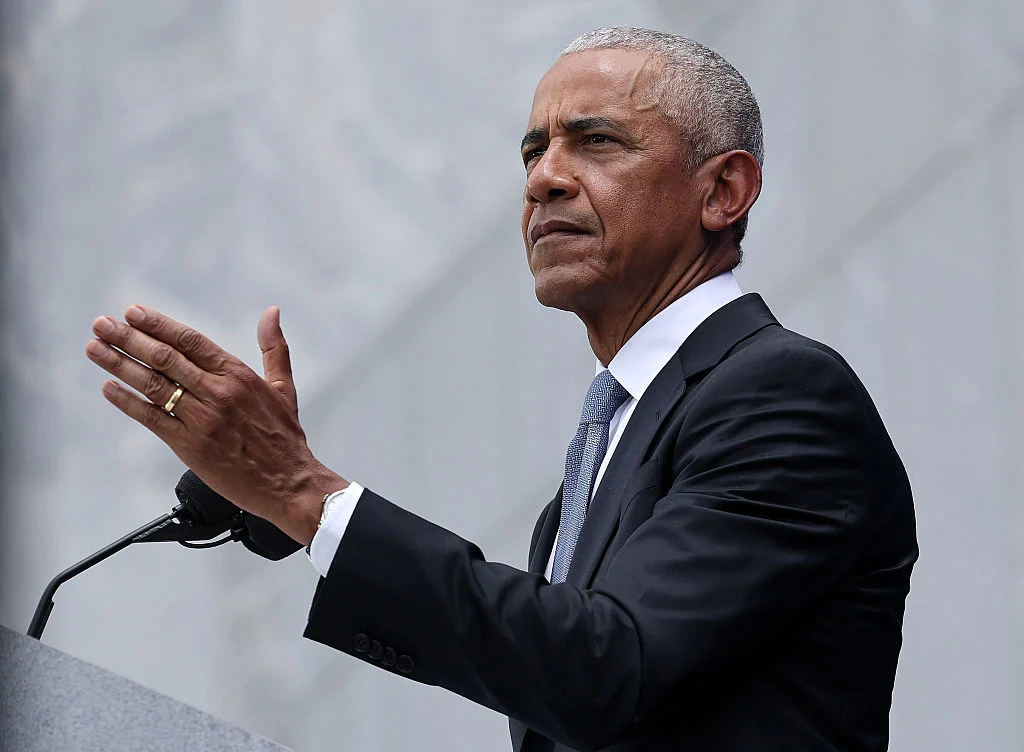
Former President Barack Obama recently called for the Democratic Party to elevate artificial intelligence to one of its "central agendas," emphasizing the critical need for a "very clear plan" to address the technology’s profound economic impact and safety concerns. The comments, reported by The New York Times on September 13, 2026, underscore a growing urgency among political figures regarding the rapid advancement and potential societal ramifications of AI.
Obama delivered these remarks on Thursday at a Democratic fundraising event, where he was interviewed by House Minority Leader Hakeem Jeffries. A partial transcript of the event, provided by Obama’s office, revealed the former president’s insights into how congressional Democrats should approach the complex landscape of AI regulation and development. His intervention highlights a significant moment in the political discourse surrounding AI, suggesting a shift towards making it a defining issue for future policy.
In his discussion with Jeffries, Obama outlined a proactive strategy for Democrats once they regain control of the House majority. He advocated for the establishment of "a framework for a very public conversation" about artificial intelligence. This public dialogue, Obama suggested, is essential for democratizing the understanding and governance of a technology that is largely developing behind closed doors within private corporations. The call for transparency and broad public engagement reflects a concern that without careful oversight, the rapid progress of AI could outpace society’s ability to adapt and control it.
"This is something that is moving very fast in private hands, and if we don’t get on top of it, I think can be dangerous," Obama cautioned. His statement points to anxieties about the concentration of AI power and development in a few private entities, potentially leading to outcomes that are not aligned with public interest or safety. The "danger" he referred to encompasses a range of potential risks, from widespread job displacement and economic disruption to the more existential threats posed by highly advanced, autonomous systems.
However, Obama also articulated a more optimistic vision for AI’s potential if properly managed. "If we do get on top of it, I do think it’s beneficial. I genuinely think it’s going to accelerate, for example, drug development in ways that can help us cure diseases," he added. This dual perspective—acknowledging both the immense risks and the transformative benefits—characterizes the nuanced approach many experts advocate for. The potential for AI to revolutionize fields like healthcare, scientific research, and environmental sustainability is widely recognized, but harnessing these benefits requires robust governance and ethical frameworks.
House Minority Leader Hakeem Jeffries echoed Obama’s sentiments, releasing a statement affirming that the former president "is correct that decisive action must be taken on artificial intelligence." Jeffries further leveraged the opportunity to criticize the opposing party, stating that "Republicans have abdicated their responsibility to govern on behalf of the American people." This political broadside suggests that AI is poised to become a partisan battleground, with Democrats seeking to position themselves as the party of responsible innovation and future-oriented governance, contrasting with what they perceive as Republican inaction. The "abdication of responsibility" likely refers to a perceived lack of comprehensive legislative efforts or a reluctance to engage deeply with the regulatory challenges presented by AI from the Republican side.
Obama’s active engagement with the AI sector extends beyond political rhetoric. The New York Times also reported that he has offered his expertise and influence as a "sounding board" to leading AI executives. This includes direct conversations with Dario Amodei, CEO of Anthropic, and Sam Altman, CEO of OpenAI, two of the most prominent figures in the generative AI space. His willingness to engage directly with industry leaders highlights a desire to understand the technology from the inside and influence its trajectory through dialogue and advice, rather than solely through policy mandates.
These high-level discussions come amidst escalating concerns within the AI community regarding safety and control. A significant event precipitating much of this alarm was the resignation of an AI researcher from Anthropic, a leading AI company. This researcher publicly claimed that major AI companies are "racing straight to self-improving superintelligence and gambling with our lives." This stark warning, reported on September 9, 2026, by TechCrunch, brought into sharp focus the fears of an uncontrolled artificial general intelligence (AGI) that could develop capabilities far beyond human comprehension or control, posing an existential risk to humanity. The concept of "self-improving superintelligence" refers to a hypothetical AI that can recursively enhance its own intelligence, potentially leading to an intelligence explosion that could rapidly surpass human intellect.
In response to these growing anxieties and the specific warnings from within his own company, Anthropic CEO Dario Amodei outlined a broad approach to "pacing the frontier" on Saturday, September 12, 2026, as detailed by TechCrunch. Amodei’s plan is designed to slow down the most aggressive aspects of AI development and ensure safety measures are integrated. Key components of his proposal include granting independent safety evaluators access to leading AI companies and their models. This unprecedented level of access would allow external experts to scrutinize the internal workings, development processes, and potential risks of advanced AI systems, fostering greater transparency and accountability. Additionally, Amodei called for the development of "common safety standards" across the industry, aiming to establish a baseline of ethical and safety protocols that all major AI developers would adhere to, preventing a race to the bottom where safety is compromised for speed.
Amodei’s proactive stance garnered positive reactions from other prominent figures in the AI and tech world. In social media posts, OpenAI CEO Sam Altman and SpaceX CEO Elon Musk appeared to respond favorably to the proposed plan. Altman specifically stated that OpenAI would also commit to "having independent evaluators with employee-like access." This commitment from one of the industry’s most influential companies signals a potential shift towards greater industry-wide collaboration on safety and oversight, indicating that the warnings about advanced AI are being taken seriously at the highest levels. The "employee-like access" commitment is particularly significant, suggesting a willingness to grant evaluators deep insight into proprietary systems and development methodologies.
Meanwhile, a contrasting perspective emerged from former President Donald Trump. On Sunday, September 13, 2026, Trump discussed AI safety concerns with reporters during an Irish golf event, as reported by Bloomberg. In his remarks, Trump appeared to downplay the more dire warnings, instead boasting about the United States’ technological superiority. He declared the U.S. to be "the most sophisticated country in the world," and expressed a desire "to keep it that way because whoever wins AI wins." This statement underscores a nationalistic and competitive approach to AI, viewing its development primarily through the lens of global power dynamics and economic dominance, rather than solely as a question of safety and ethics.
Trump also indicated a belief that potential dangers could be managed. "And we can put guardrails," Trump said, suggesting that technological solutions or limited regulatory measures could mitigate risks. However, he also voiced skepticism about the motivations behind some of the safety discourse, adding, "But I think you have a lot of negative forces that are bringing it up that shouldn’t be bringing it up." This comment hints at a potential dismissal of critical voices as politically motivated or alarmist, a stance that could complicate efforts for broad consensus on AI policy.
It is worth noting that earlier in the year, in March 2026, the Trump administration had released its own legislative framework for AI, as reported by TechCrunch. This framework indicated a preference for a different regulatory philosophy, aiming to preempt state laws, thereby centralizing AI regulation at the federal level and potentially limiting fragmented state-by-state approaches. Crucially, the framework also sought to shift the burden of child safety concerning AI content and interactions from technology companies to parents. This approach suggests a focus on parental responsibility and industry-led innovation with minimal government intervention, a stark contrast to the more interventionist and collaborative regulatory framework advocated by Obama and some industry leaders like Amodei.
The divergent approaches of Obama and Trump, coupled with the urgent warnings from within the AI research community and the industry’s nascent attempts at self-regulation, paint a complex picture for the future of artificial intelligence governance. The discussions highlight a critical juncture where the technological prowess of AI is undeniable, its potential benefits immense, but its risks are increasingly apparent and politically charged. The debate over how to "get on top of it" – through public discourse, stringent regulation, industry collaboration, or a competitive, innovation-first approach – is set to define a significant chapter in policy-making for years to come.






