 11

Bitcoin (BTC) has entered the third week of September trading below critical weekly support levels, with cryptocurrency traders closely monitoring volatility cues stemming from two significant events: the U.S. Federal Reserve’s interest rate decision and a crucial procedural vote on the CLARITY Act. The market is exhibiting signs of de-risking as investors prepare for potential price swings driven by these macroeconomic and regulatory developments.
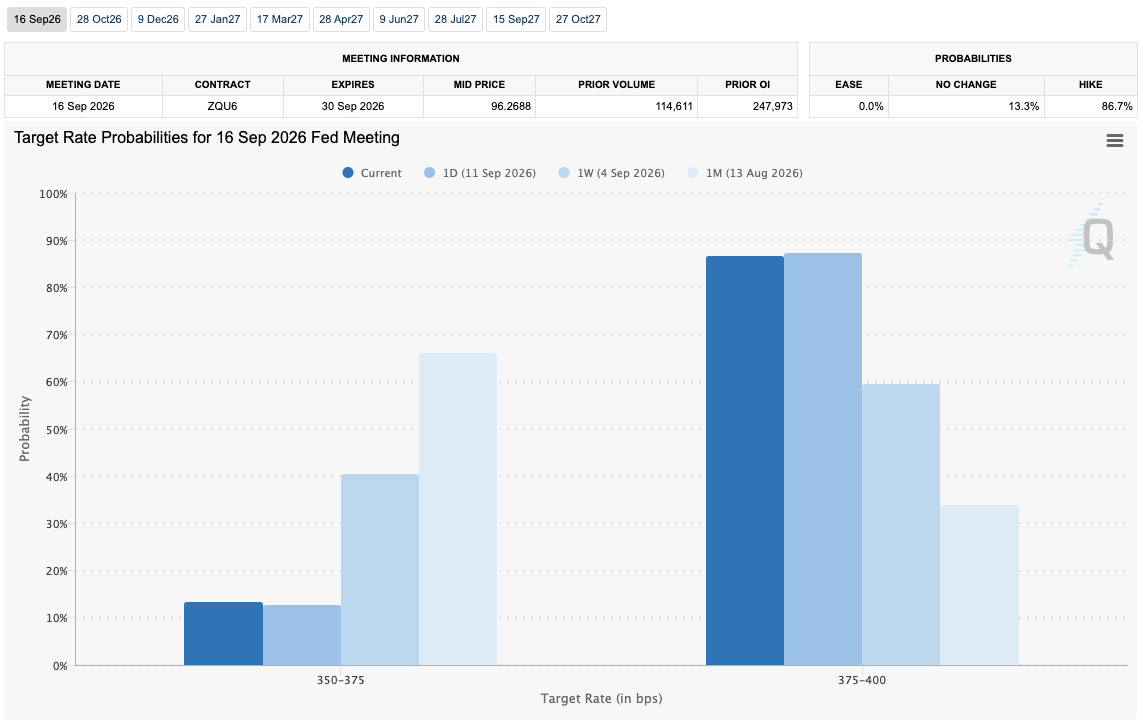
The Federal Reserve is once again at the forefront of risk-asset traders’ attention this week, with Wednesday’s decision on interest rates poised to dictate market sentiment. Despite pressure from U.S. President Donald Trump to avoid a rate hike or even implement cuts, the Fed is widely expected to raise benchmark rates by 25 basis points to a range of 3.75% to 4%. This anticipation is fueled by persistent inflation and cautious remarks from Fed Chair Kevin Warsh. This scenario mirrors the Fed’s July rate decision, where Warsh maintained rates while some officials advocated for an increase.
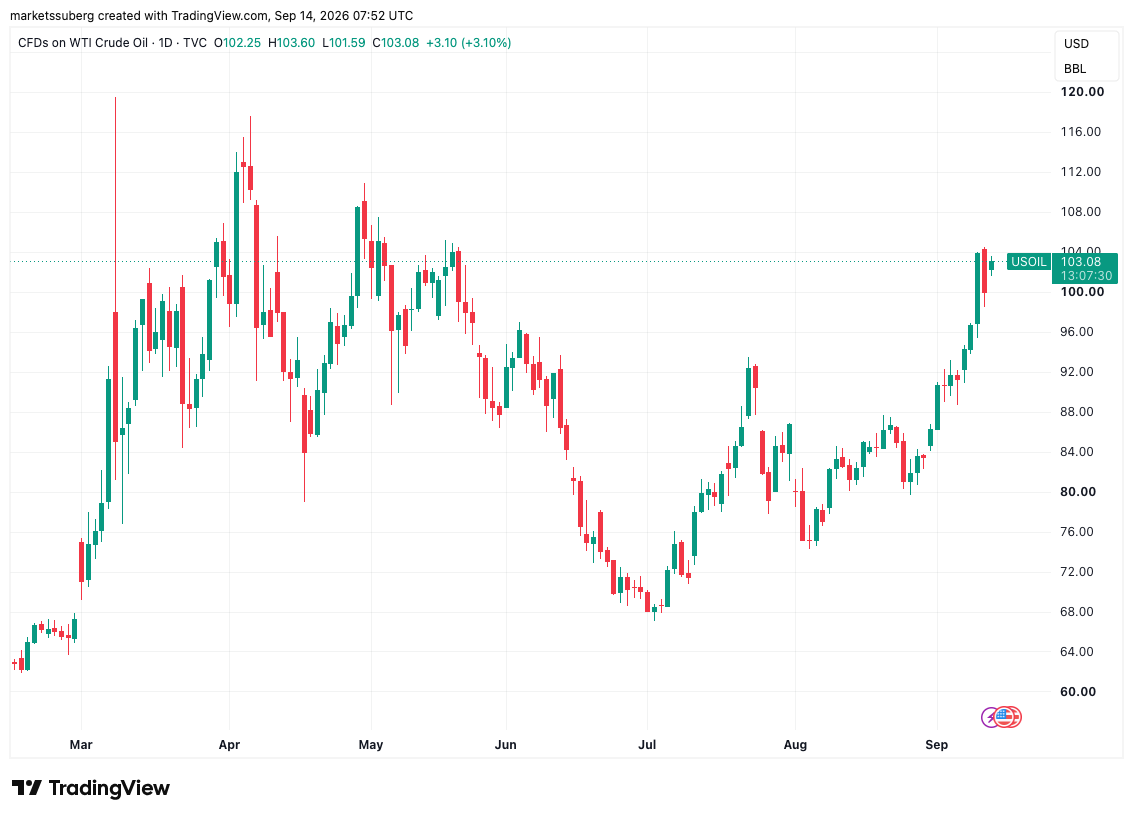
Current data from the CME Group’s FedWatch Tool indicates a low probability, just 13.3% at the time of writing, of rates remaining at their current levels. This represents a significant shift from a week prior, when the implied probability of a pause was above 40%. The recent surge in oil prices, driven by escalating tensions in the Middle East, coupled with inflation data, has swayed market expectations towards a hawkish stance. While the August Consumer Price Index (CPI) and Producer Price Index (PPI) did not deliver major upside surprises, the return of oil prices above $100 per barrel, with no immediate end to the supply crisis in sight, has contributed to a hawkish market reaction.
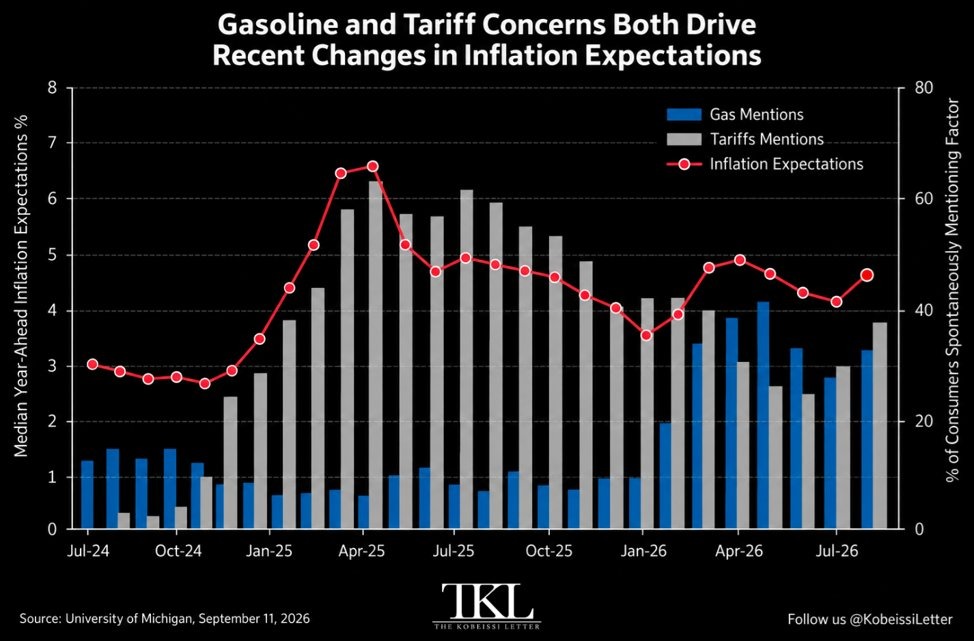
The escalating energy crisis poses a significant threat, with analysts warning of enormous potential disruption to the global oil market. Trading resource The Kobeissi Letter highlighted that an estimated 30 million barrels per day could be impacted by disruptions through key transit points like the Strait of Hormuz, Saudi Arabia’s East-West pipeline, and potentially the Bab el-Mandeb Strait. This disruption is significant relative to the approximately 100 million barrel-per-day global oil market. Furthermore, U.S. consumer inflation expectations have risen, with individuals anticipating a 4.6% price increase over the coming year, a notable increase from their outlook at the start of the year, with gas prices and trade tariffs frequently cited as contributing factors.
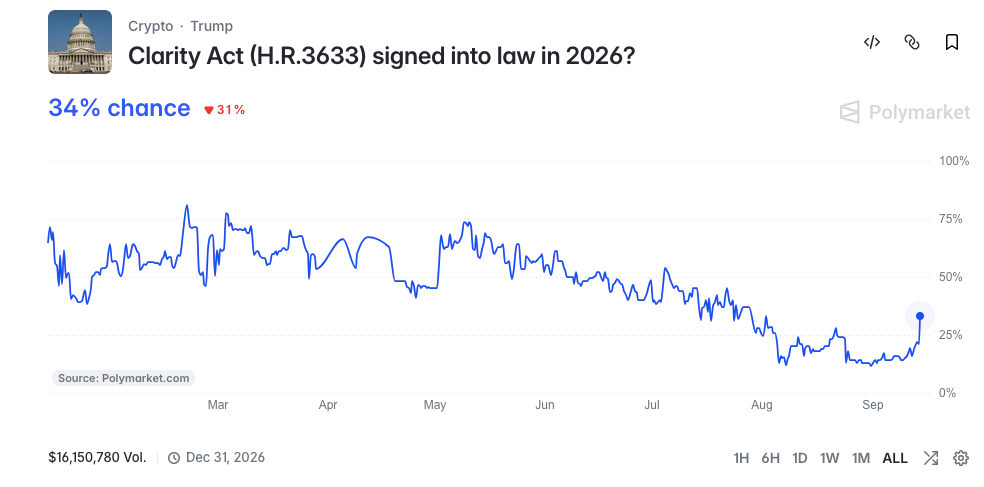
Adding another layer of complexity for crypto markets, the CLARITY Act is slated for a crucial procedural vote on Tuesday, one day before the Federal Reserve’s announcement. This legislation aims to establish a clear legal framework for the digital asset industry in the United States. Senate Republicans recently presented what they termed their "last, best and final offer" for the Act’s text, following extensive bipartisan negotiations. Senator Cynthia Lummis, who released the updated 635-page proposal, stated that the bill is ready after a year of intense discussions. The CLARITY Act requires 60 votes to pass its procedural hurdle, and a positive outcome could see it advance to the Senate floor for debate, potentially triggering significant volatility in the crypto market. Lummis emphasized that a negative vote would hinder ethics reforms, cede leadership in digital assets to foreign competitors, and leave American investors without adequate protections.
Crypto policy insider Tyler Williams expressed optimism regarding the bill’s prospects, believing the chances of it becoming law are "better than they have ever been" and that the industry is "on the precipice of this becoming law." However, betting odds on platforms like Polymarket suggest a more cautious outlook, with a 34% chance of the CLARITY Act being signed into law in 2026, a sentiment that has seen lower odds since early August.
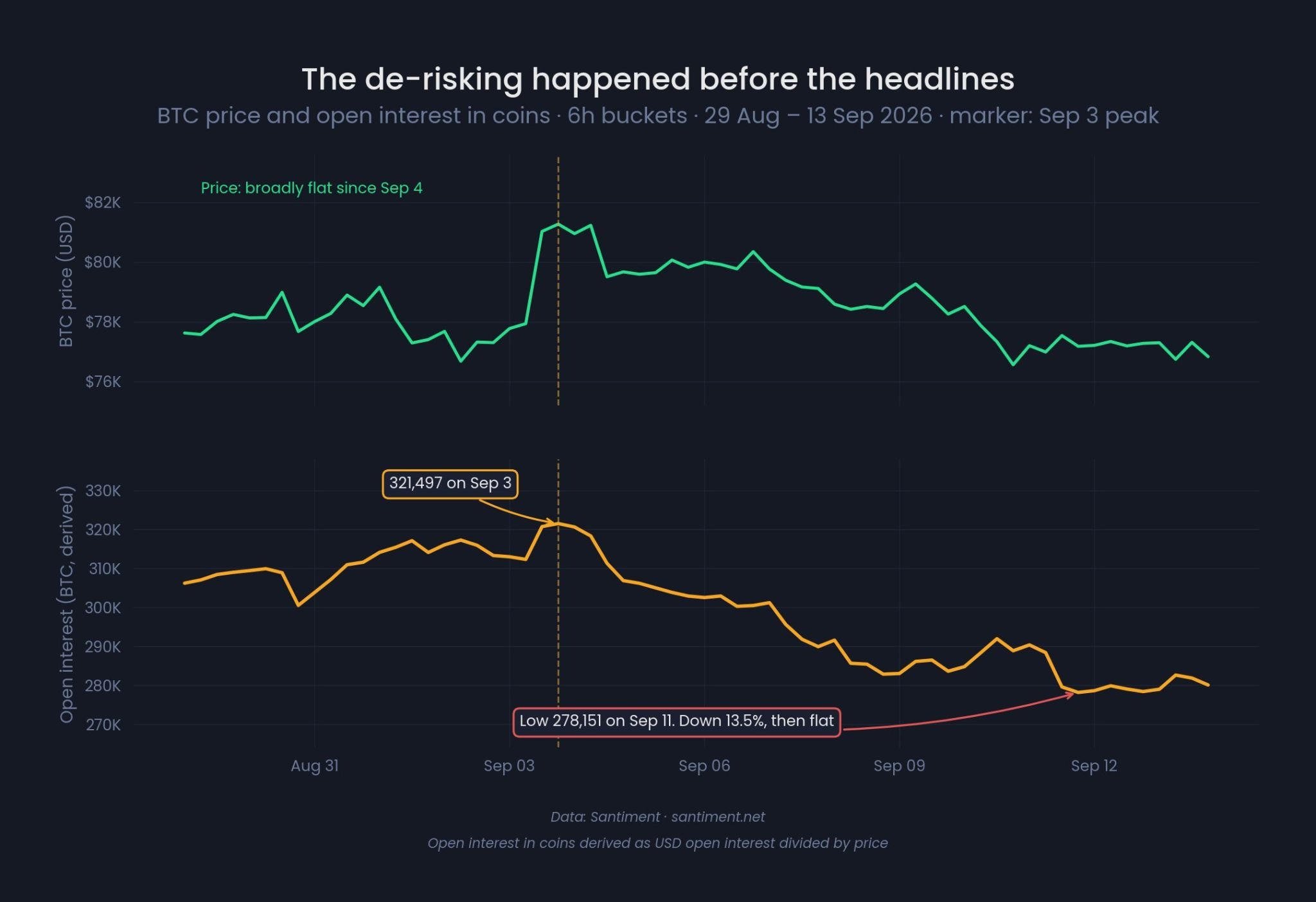
In anticipation of these dual events, crypto traders appear to be de-risking their portfolios. Market analysis from sentiment platform Santiment indicates that open interest (OI) across exchanges has decreased, suggesting that markets may have already priced in the expected volatility. In the week leading up to September 11, BTC-denominated OI fell by 13.5%, from 321,497 BTC to 278,151 BTC, with only a modest rebound. This reduction in OI occurred as the spot price of Bitcoin declined by 5%. Santiment noted that current positioning is approximately 20% below pre-mid-August rally levels.
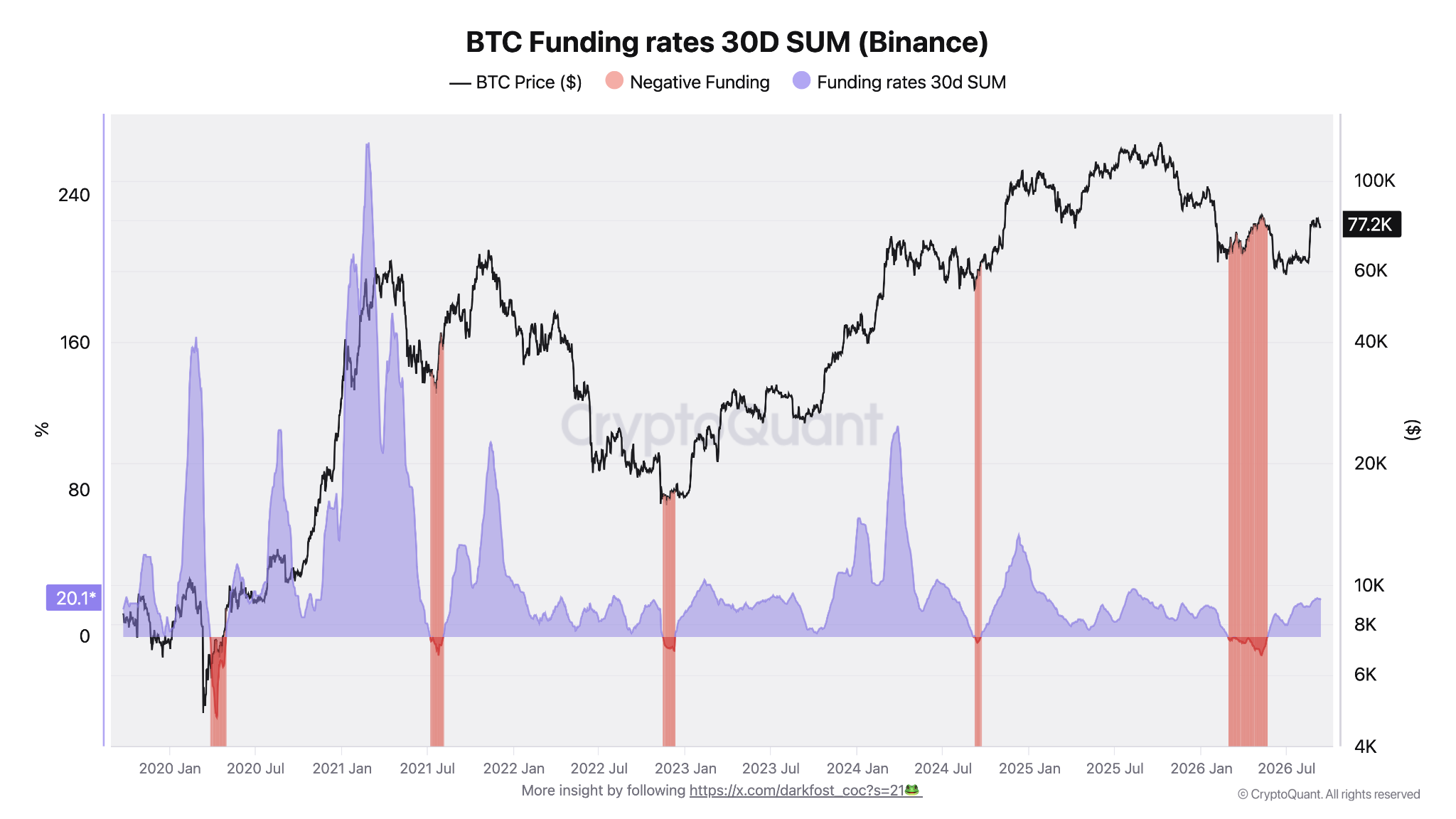
Meanwhile, funding rates in the derivatives market continue to signal bullish sentiment. Research from on-chain analytics platform CryptoQuant suggests that aggregate funding rates across exchanges have been gradually increasing since late May, following a period of negative rates that began in early March. Funding rates reflect the balance of long and short positions among traders. CryptoQuant’s analysis indicates that the buildup of shorts, which followed a significant drawdown, ultimately fueled the May rally. Historically, negative cumulative 30-day funding rates on platforms like Binance have coincided with the final stages of Bitcoin bear markets and significant corrections within bull markets. This trend suggests that while derivatives markets are signaling bullishness, the lack of substantial spot-market participation in Bitcoin’s recent upside has raised concerns about the sustainability of momentum driven solely by derivatives.
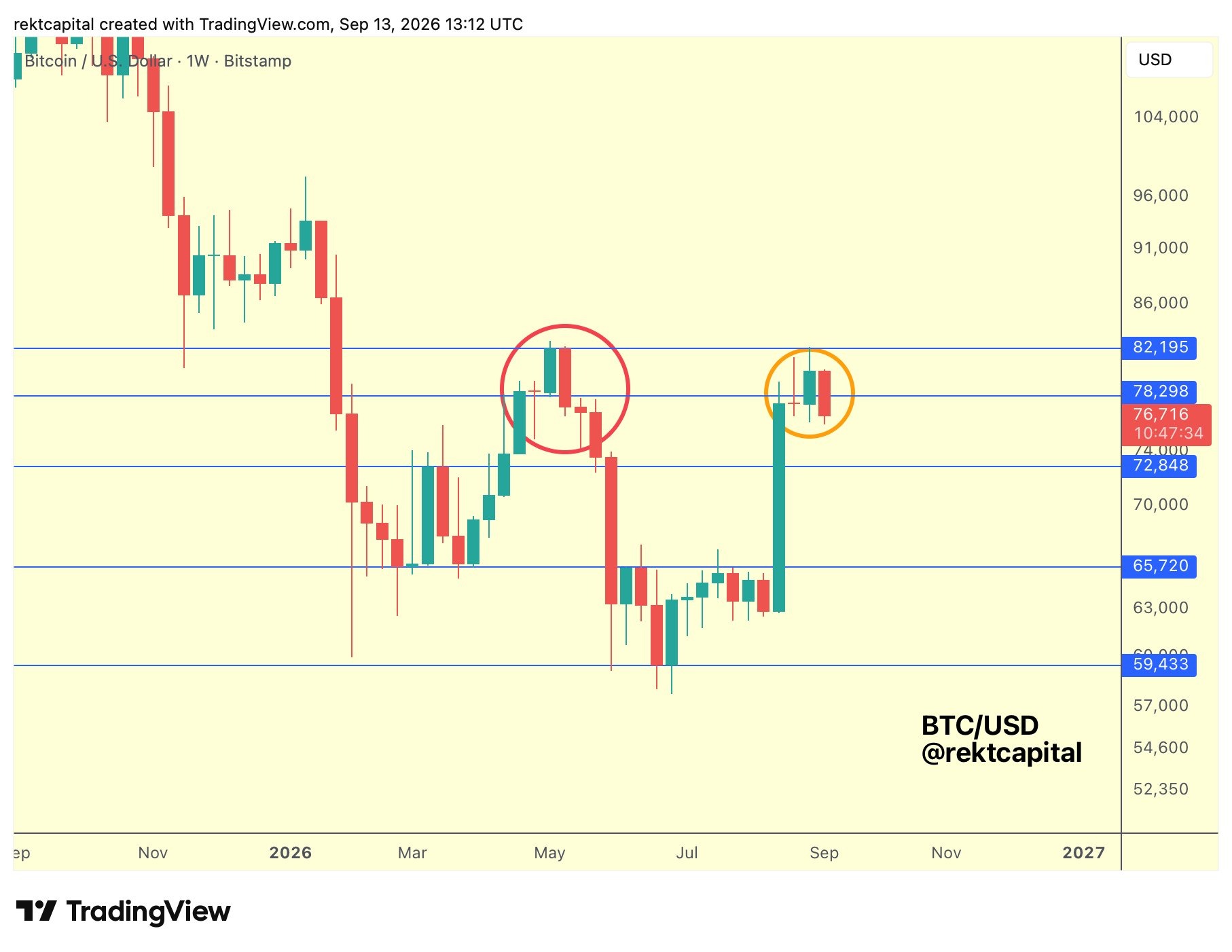
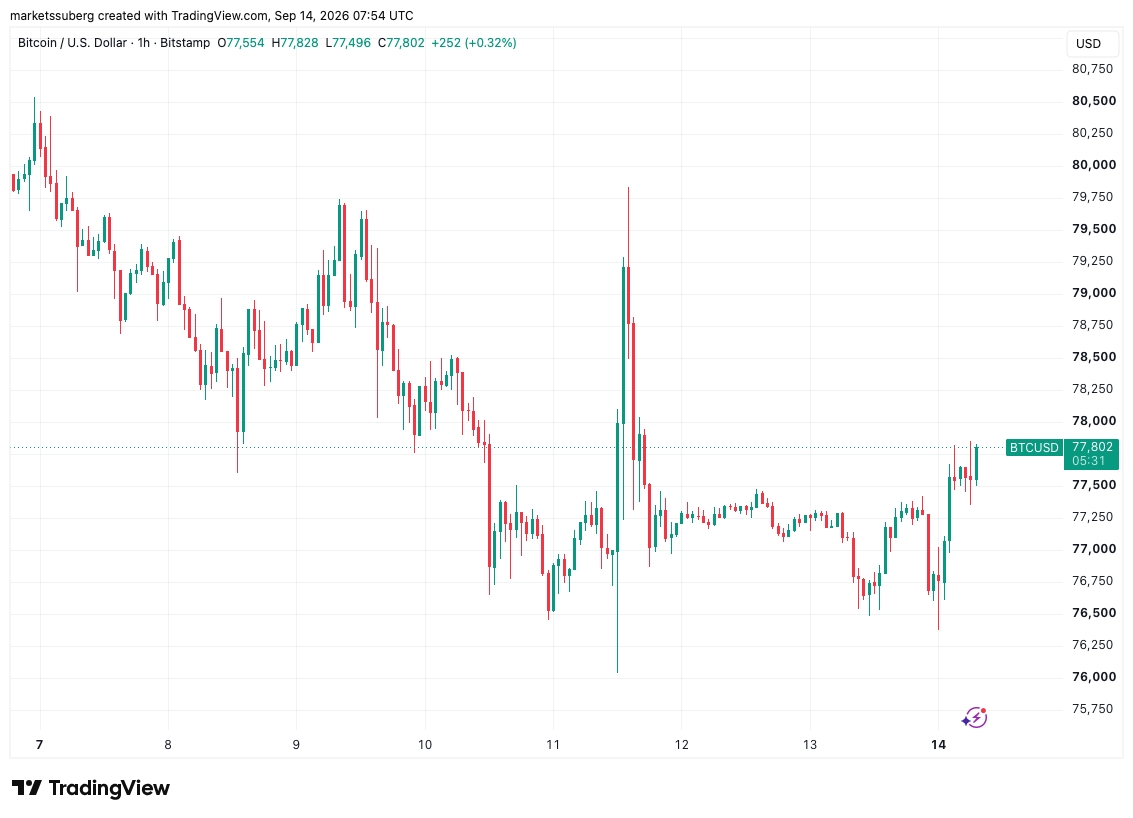
On the price front, Bitcoin’s weekly close on Sunday saw it fall below a critical support level, ending the week around $76,800. Trader and analyst Rekt Capital reiterated that holding $78,300 was crucial for the weekly close to avoid a repeat of a failed breakout observed in early May. The BTC/USD chart indicates a continuation of lower highs, maintaining a long-term bear-market structure. Furthermore, Bitcoin closed below its 50-week exponential moving average (EMA) at $77,380, a trendline considered vital for a sustainable bullish trend reversal. The 21-week EMA at $72,270 is now viewed as the next significant support level for bulls. Despite these bearish technical indicators, Bitcoin’s weekly relative strength index (RSI) has preserved a bullish divergence, showing higher lows throughout 2026, offering a glimmer of hope for a potential upward trend reversal.