 11

Welcome back to TechCrunch Mobility, your essential source for insights into the evolving landscape of transportation. More than ever, artificial intelligence (AI) is at the forefront of this transformation, shaping how we move and how industries operate. To receive these critical updates directly in your inbox, sign up for free via the TechCrunch Mobility newsletter.
This week marked a significant milestone for Lyft as Waymo robotaxis officially integrated into its platform in Nashville, Tennessee. This strategic partnership represents a crucial step for Lyft, allowing it to re-enter the autonomous vehicle (AV) space without the immense capital expenditure of developing its own technology. Under the terms of the collaboration, Lyft leverages its operational expertise through its wholly owned subsidiary, Flexdrive, to manage essential fleet services. These responsibilities include ensuring vehicle readiness and maintenance, as well as overseeing critical infrastructure and depot operations that are vital for the seamless functioning of a robotaxi service.
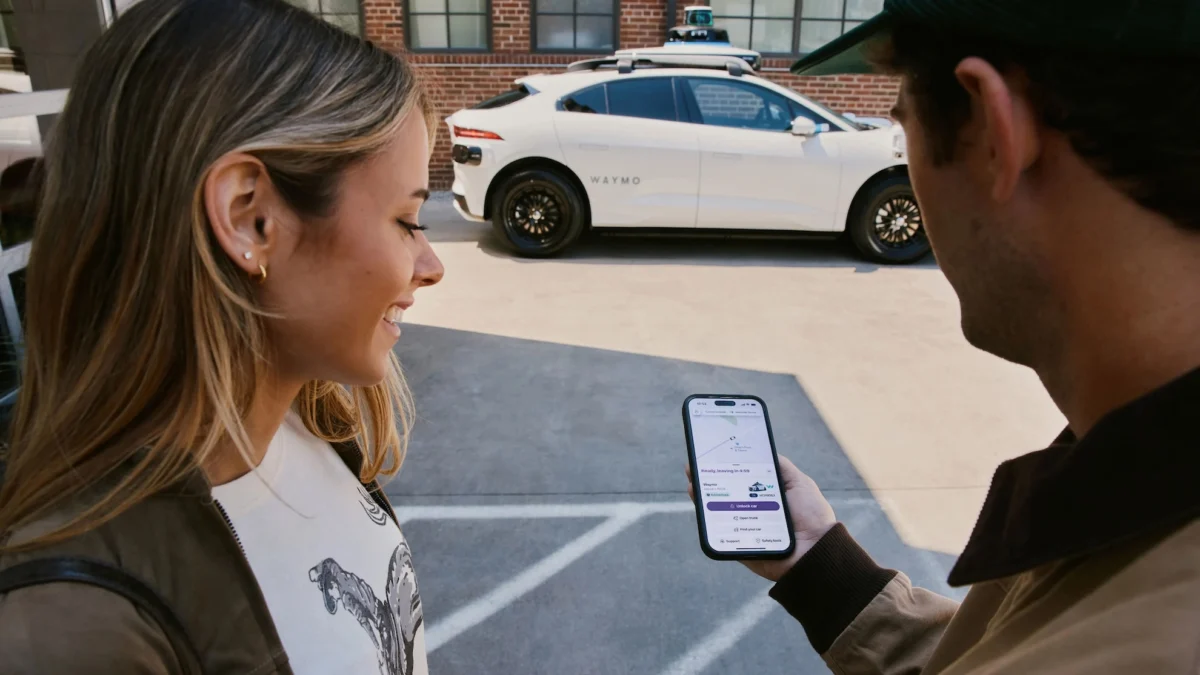
In Nashville, customers now have dual access to Waymo’s driverless service. They can hail a Waymo robotaxi directly through the dedicated Waymo One app, or they can opt to use the Lyft app, which will match them with an available Waymo vehicle, depending on demand and proximity. This integration expands Waymo’s reach by tapping into Lyft’s established user base, while providing Lyft users with an innovative, fully autonomous transportation option.
Lyft’s journey with autonomous vehicle technology has been extensive and varied over the years. The company has previously engaged in numerous partnerships, exploring different facets of AV deployment. These earlier collaborations included working with Aptiv, now known as Motional, in Las Vegas, deploying autonomous shuttles with May Mobility in Atlanta, partnering with Baidu in London, and an initial collaboration with Waymo in Phoenix. However, this week’s launch in Nashville stands apart. It signifies Lyft’s first genuine foray into commercial robotaxi services utilizing truly driverless vehicles, operating without any human operator behind the wheel for supervision. This distinction underscores a critical shift from pilot programs or supervised testing to a fully autonomous, commercially available service on its platform.
It is easy to forget the substantial investment Lyft once made in developing its own autonomous vehicle capabilities. The company dedicated four years and millions of dollars to its Level 5 business division, aiming to build proprietary AV technology. This venture, however, concluded in 2021 when Lyft sold its autonomous vehicle unit to Toyota’s Woven Planet Holdings subsidiary for a reported $550 million. This acquisition was one of many instances of widespread consolidation occurring across the nascent autonomous vehicle industry during that period, as companies either merged, were acquired, or pivoted their strategies in response to the immense costs and complexities involved in developing and deploying self-driving technology. Following the sale, Lyft strategically took a hiatus from direct AV development, redirecting its focus to bolstering its core ride-hailing business. Yet, the company never entirely dismissed the potential of autonomous vehicles, maintaining an open door for future engagement through partnerships.
Recently, I had the opportunity to speak with Jeremy Bird, Lyft’s executive vice president of growth, about this latest milestone and the company’s broader AV strategy. In his comprehensive role, Bird oversees Lyft’s international expansion, luxury services, and autonomous vehicle initiatives, often finding these three areas converging in strategic planning.
When pressed for specifics regarding the expansion of robotaxi availability on the Lyft app – both in terms of location and timeline – Bird remained circumspect, indicating that detailed announcements would come later. However, he did share that Lyft entered the current year, 2026, with a clear focus on strengthening its partnership with Waymo in Nashville and its ongoing collaboration with Baidu in London, where commercial service is yet to launch. Looking ahead, Bird expressed optimism for the following year. “I think next year what you’ll see is more diversification of that,” he stated, suggesting an expansion of both existing partnerships and potentially new ventures. He added, “I think next year will be a big year for us,” hinting at accelerated growth in the AV sector.

A significant component of Lyft’s future AV expansion plan appears to be international markets. Bird described London as a "fascinating market" for autonomous vehicle deployment. Throughout our conversation, he repeatedly emphasized Lyft’s evolving identity as a "global company," a notable strategic shift from just a few years ago when its primary focus was almost exclusively on the U.S. market.
So, what are Lyft’s criteria for its next international ventures? The company seems to be prioritizing locations where it can implement a hybrid network model from the outset – meaning the seamless integration of both autonomous vehicles and traditional human-driven vehicles on its platform. This approach offers flexibility and scalability, allowing for a gradual rollout of AV services alongside established human-driven operations. Bird articulated this strategy, stating, “We are a global company becoming more global, which is important for us. And AVs will be the way we think about the future. Like any market we go into, is there an AV component to that? Is it a market where AVs are already open regulatorily, or that would put that market up higher on our list of the places we want to go?” This indicates a clear preference for markets with favorable regulatory environments for autonomous vehicles, accelerating their deployment.
In other industry news, a reliable source observed several intriguing hires at Ford that suggest the automotive giant is strategically bolstering its defense technology capabilities. Ford recently appointed Tomaz Seignemartin, formerly of Raytheon, as Vice President of Continuous Improvement. Additionally, Shirish Srinivasan, previously with General Dynamics, has joined Ford as Chief of Staff to the Chief Strategy Officer. Perhaps most tellingly, Nathan Rigoni, who served as Lockheed Martin’s generative AI team lead, has been brought on as a Senior Software Engineer. While a handful of defense tech hires might not constitute a definitive trend within a company employing thousands, these appointments collectively illustrate a growing recognition of how expertise in defense technology, particularly in areas like complex systems engineering, advanced AI, cybersecurity, and safety-critical software development, has become increasingly valuable across diverse industries, including the automotive sector.
The past week also saw a flurry of significant funding rounds and strategic investments across the mobility and transportation sectors.
The Boring Company, the ambitious startup founded by Elon Musk with the stated mission to "solve traffic" by constructing a vast network of underground tunnels, successfully raised $3 billion in a funding round. This substantial investment was led by the United Arab Emirates, pushing The Boring Company’s valuation to an impressive $23 billion, as confirmed by the company’s announcement. The UAE’s leadership in this round is strategically motivated; The Boring Company has previously collaborated with the UAE on projects like the Dubai Loop and has now committed to digging an additional 150 kilometers of tunnels within the Middle Eastern country. Other prominent investors participating in this round included Andreessen Horowitz, Sequoia Capital, Human Capital, Vy Capital, and Valor Equity Partners. In the U.S., The Boring Company’s most visible operations are concentrated in Las Vegas, where it has developed a network of tunnels connecting major hotel casinos such as Resorts World, Encore, and the Sahara, as well as the convention center, with limited routes extending to the airport. It’s noteworthy that these tunnels currently utilize Tesla vehicles, but they are operated by human drivers, not autonomously.
ARC Ride, an electric mobility startup based in Kenya, successfully raised $33.3 million in a funding round. This round was spearheaded by Novastar Ventures and Norrsken22, with additional backing from IFC, British International Investment, Proparco, Japanese supplier Musashi Seimitsu, and African impact investor Talanton. The funding is earmarked to expand ARC Ride’s crucial battery swap network across Africa, addressing a key infrastructure challenge for electric vehicle adoption on the continent.
Beep, a startup specializing in operating autonomous shuttles for various applications, including corporate campuses and airports, closed a $20 million Series B round. The investment was led by Mobileye, an existing technology partner, underscoring the ongoing collaboration between the two entities. The Orlando, Florida-based company, founded in 2019, has now accumulated $130 million in total funding, demonstrating sustained investor confidence in its autonomous mobility network solutions.
Fryte Mobility, a Munich, Germany-based software startup focused on optimizing charging logistics for electric trucks, secured €3.5 million (approximately $4 million) in seed funding. This round was co-led by 4impact capital and Rethink Ventures, with participation from existing backers Revent, F-LOG, accilium ventures, and several unnamed angel investors. The funding will enable Fryte Mobility to further develop its platform, which is critical for managing the complex energy demands and scheduling required for large-scale electric truck fleets.

Porsche finalized the sale of its stakes in Bugatti Rimac and Rimac Group to HOF Capital. This strategic divestment generated approximately 1 billion euros for Porsche, with about 250 million euros of those proceeds being allocated to further fund its pension obligations, streamlining its portfolio and financial commitments.
Poseidon Aerospace successfully raised $60 million in a Series A round, positioning it for the imminent first test flight of its uncrewed cargo plane, Egret, which is anticipated by the end of this year. The round was led by early-stage VC firm TQ Ventures and saw new investments from Hanwha Asset Management, G Squared, and JAWS. Existing backers Starship Ventures, Draper Associates, and Drover Ventures also participated, highlighting strong continued support for Poseidon’s innovative approach to autonomous air cargo.
Stoke Space, a reusable rocket company aiming to compete with industry leaders like SpaceX, announced a substantial $1 billion raise. This massive funding round was led by Point72 Ventures (the tech investment vehicle of hedge fund billionaire Steve Cohen) and Spark Capital. Additional investors included General Innovation, Glade Brook Capital, US Innovative Technology, Washington Harbour Partners, Woven Capital, and Y Combinator, among others. This significant capital injection underscores the intense investor interest in the burgeoning space launch market and the potential for fully reusable rocket technology to drive down costs.
Tern, an Austin, Texas-based startup developing an innovative alternative to GPS technology, secured an $11.26 million contract from the U.S. Army. The startup’s technology, dubbed "Google Maps for the battlefield," is designed to provide robust and resilient navigation capabilities for U.S. Army vehicles, addressing vulnerabilities inherent in traditional GPS systems, especially in contested environments.
Uber made a strategic $10 million investment in Indian fleet management startup Carrum Mobility as part of its Series B round. This investment values Carrum at ₹16 billion (approximately $168 million) post-money, indicating Uber’s continued interest in supporting and integrating with local mobility solutions in key international markets, enhancing its ecosystem and operational efficiency.
Beyond the major deals, several other developments caught our attention this week, shaping the broader transportation narrative.
Autonomy, the California-based electric vehicle subscription service founded by TrueCar founder Scott Painter, is undergoing a significant pivot. Facing challenges, the company, which nearly ceased operations, is now adding internal combustion engine vehicles to its fleet. This strategic shift aims to keep the dream of flexible car subscriptions alive by diversifying its offerings beyond solely electric vehicles, responding to market demands and operational realities.
In the burgeoning field of Advanced Air Mobility (AAM), Beta Technologies, Joby Aviation, and Wisk, three prominent companies developing electric aircraft, commenced test flight demonstrations in Texas. These trials are part of the Federal Aviation Administration’s (FAA) Advanced Air Mobility and Electric Vertical Takeoff and Landing (eVTOL) Integration Pilot Program (eIPP). The weeklong campaign provides these companies with invaluable opportunities to test real-world routes, including critical flight paths to and from the Dallas-Fort Worth Airport, gathering essential data for future commercial operations and regulatory approvals.

According to a report by the Financial Times, Travis Kalanick’s latest startup, Atoms, is reportedly preparing for a significant hiring spree. This move signals Atoms’ ambition to aggressively pursue a share of the rapidly growing robotaxi business, marking Kalanick’s return to a segment he significantly influenced with Uber.
TechCrunch reporter Jagmeet Singh offered an insightful look into inDrive, a rival to Uber, detailing its strategic push to scale beyond ride-hailing to capture a larger share of overall consumer spending in various markets. This expansion reflects the competitive pressures and evolving business models within the global mobility sector.
While U.S.-based autonomous vehicle developers frequently capture headlines, it is crucial to recognize the significant and accelerating activity occurring outside the country’s borders. This week alone provided ample evidence of a truly global race in AV development and deployment.
China’s leading AV developer, Pony.ai, in partnership with Croatia-based Verne (another venture from Mate Rimac), initiated fully driverless test rides with passengers on public roads in Zagreb. This marks a notable expansion of advanced AV testing into new European territories, highlighting cross-border collaborations. Concurrently, Spain issued its first national AV operating permits to WeRide and its partners Uber and Avomo, specifically for Level 4 autonomous passenger vehicles. This regulatory milestone establishes a clear framework for commercial AV deployment in Spain, potentially opening up a new major market.
Meanwhile, Chinese autonomous delivery company Neolix began testing its vehicles on a closed course in Japan, exploring the potential for driverless last-mile logistics in another highly regulated market. Further demonstrating its global ambitions, Pony.ai also advanced its testing in Doha, Qatar, where it pulled the human safety operator out of its AV test vehicles during demonstrations. While Pony.ai, along with its partner Mowasalat, still maintains human operators behind the wheel in its commercial robotaxi service in Doha, this step during testing signifies a progression towards fully unsupervised operations in the region. These international developments collectively underscore the worldwide push towards autonomous mobility and the diverse approaches being taken across different regulatory and market landscapes.