11

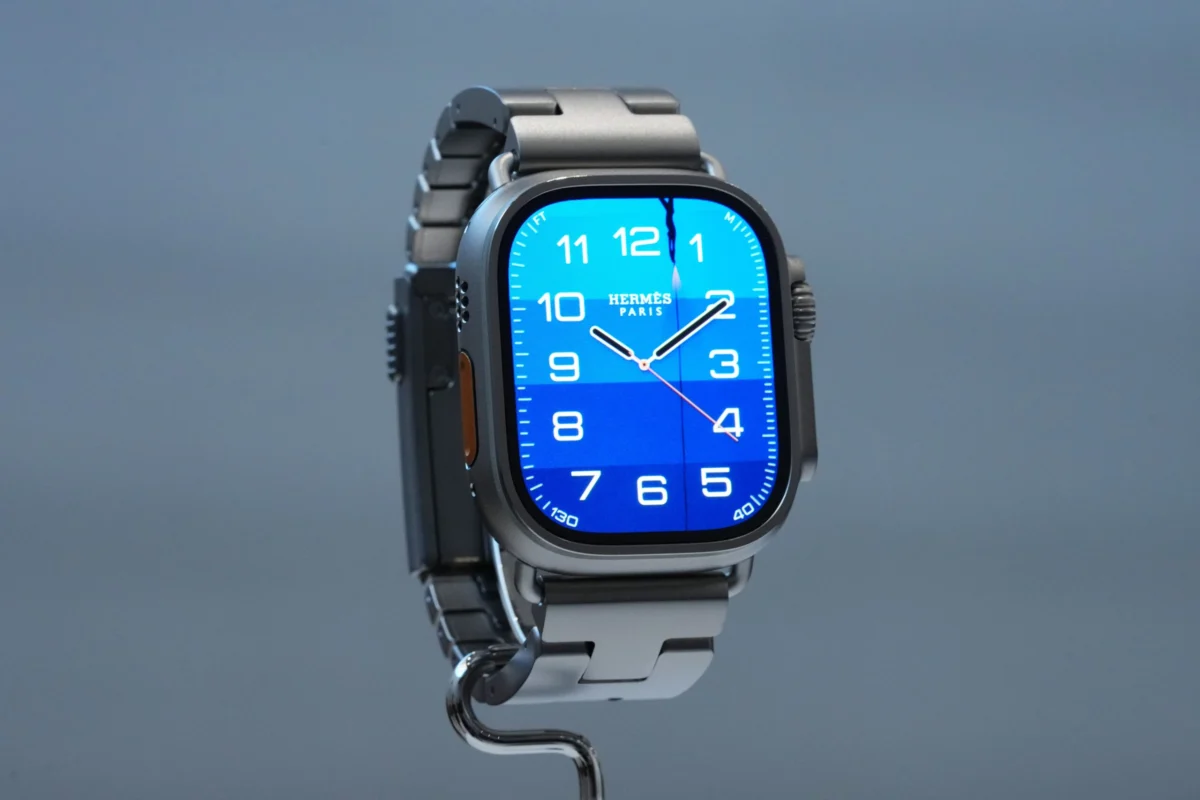
Apple has introduced significant advancements with its new Watch Series 12 and Ultra 4, extending beyond improved fitness tracking and upgraded noise reduction capabilities. These latest smartwatches debut a revolutionary suite of "audio intelligence" tools, designed to offer users an entirely new dimension of interaction and ambient awareness. Announced on a recent Wednesday, these two flagship smartwatches integrate four distinct, opt-in audio intelligence features, all powered by the sophisticated microphones embedded within the devices. These innovative tools encompass sound and music recognition, a unique conversation recap functionality, and a "Live Rewind" feature that allows users to instantly access a transcription of anything spoken in their immediate environment during the preceding 15 seconds.
Recognizing the inherent privacy implications of always-listening devices, Apple has proactively addressed potential concerns that such features might evoke a "walls have ears" sensation. The company has meticulously engineered these capabilities with an explicit emphasis on prioritizing user privacy and data security. This commitment is underpinned by the extensive infrastructure and robust protocols Apple has diligently developed and refined over the years to safeguard its other burgeoning Apple Intelligence and Siri services. As artificial intelligence continues its rapid integration into myriad facets of computing and daily life, these audio intelligence announcements serve as a compelling reminder of AI’s increasingly universal presence and transformative potential across all personal technology.
Apple underscored its privacy-first design philosophy in a detailed report shared with WIRED, stating, "These features do not create or store audio recordings, and raw audio used for processing is completely inaccessible to the operating systems, apps, the user, or Apple." This fundamental principle dictates how data is handled from the moment it is captured by the watch’s microphones. A cornerstone of this privacy architecture is the design to process as much data as possible directly on the device, thereby minimizing or entirely eliminating the need to transmit potentially sensitive information to external cloud servers. For instance, the Sound Recognition feature operates entirely on-device, providing users with real-time alerts about important sounds in their environment—such as doorbells, sirens, alarms, or even the distinct cry of a baby—without sending any audio data off the watch for processing. For those tools that do necessitate sending information beyond the watch, Apple employs a rigorous preprocessing stage where raw audio files are converted into non-identifiable data formats before transmission. This processed data is then handled exclusively within Apple’s highly secure Private Cloud Compute infrastructure, further insulating user information from potential vulnerabilities.
The expansion of on-device processing capabilities for the new Apple Watch models is largely attributed to the introduction of Apple’s advanced S11 chips. These next-generation chips incorporate a specialized, memory-protected space known as the Secure Exclave. This exclave is an isolated buffer meticulously designed for the secure handling of sensor data, particularly audio. Within this protected environment, the Apple Watch can hold and process sensitive audio data in a space that is fundamentally inaccessible to the broader operating system, other applications, the user, or even Apple itself. This architectural design is critical for maintaining data integrity and user privacy at the hardware level.
One of the prominent audio intelligence features is an enhanced Shazam integration. This feature intelligently "listens" for music playing in the user’s vicinity. Upon detecting music, it generates a unique digital signature of the song, which is then securely stored within the Secure Exclave on the Apple Watch. Crucially, this is a signature, not a raw audio file. The watch only transmits this signature—again, not the audio itself—to Shazam’s servers for identification if the user actively navigates to the Shazam application on their watch or iPhone to discover the music title. Shazam, being an Apple-owned service, benefits from this integrated and secure workflow. Once the user prompts for identification, or if no identification request is made, the special signature is "immediately" and irrevocably deleted from the watch, ensuring no persistent record of the ambient music remains.
The conversation recap feature, dubbed Siri Recap, offers a sophisticated way for users to review their spoken interactions. It can be configured to be continuously active, generating summaries of substantive conversations, or it can be scheduled to listen during specific times of the day. A dedicated, on-device AI model is responsible for detecting when speech is occurring, critically, without actually recording or transcribing any data at this initial stage. If a conversation is detected, the audio is routed into a protected buffer within the Secure Exclave on the Apple Watch. The watch then encrypts this audio and transmits it using Apple’s specialized secure Bluetooth pairing directly to the Secure Exclave on the user’s paired iPhone. Immediately following this secure transfer, the audio data is deleted from the Apple Watch, preventing any lingering copies.
Upon receiving the encrypted audio, the iPhone leverages its local speech recognition and language models, all operating on-device, to transcribe the conversation. This process generates a "minimal version" of the transcript, which is intelligently pruned to remove nonessential elements, such as filler words, repeated phrases, and other conversational redundancies. Following the transcription, the raw audio is immediately deleted from the iPhone, again upholding the principle of ephemeral data storage. As a final on-device safety measure, the iPhone employs a sophisticated safety model that "screens the text to omit potentially harmful terms," ensuring the integrity and appropriateness of the generated summary. Only after these multiple layers of on-device processing, transcription, and filtering, the distilled conversation summary is encrypted, and the iPhone transmits it to Apple’s Private Cloud Compute.
Apple further clarifies that "Contextual information is also sent to improve summary quality." This additional data is carefully selected to enhance the accuracy and relevance of the recap without compromising privacy. For example, "Now Playing" data can help the AI model understand if detected speech might have originated from music or a podcast, aiding in disambiguation. Calendar data can assist in generating more accurate and relevant titles for summaries, providing immediate context. High-level location labels, such as "home," "work," and "school," alongside broader locality information like city, state, and country, add valuable context to the summarization process. Even point-of-interest categories, such as "grocery store" or "park," may be included. Crucially, Apple explicitly states that "Precise location and specific points of interest are not included," reaffirming its commitment to granular privacy control. Finally, the condensed transcript, enriched with contextual information, is processed by Apple’s foundation models within the Private Cloud Compute to generate a concise title and summary. This final summary is then encrypted and securely sent back to both the user’s iPhone and Apple Watch for convenient access. Apple also states that Siri Recap is specifically engineered to identify and remove sensitive information, such as financial data, identification numbers, or other personal identifiers, from its summaries, adding another layer of privacy protection.
The Live Rewind feature, which allows users to obtain a text transcription of the last 15 seconds of ambient speech, operates on a similar privacy-centric framework. The Apple Watch continuously holds a rolling buffer of audio within its Secure Exclave. In this buffer, older sound data is constantly overwritten by new audio, ensuring that no prolonged accumulation of recordings occurs. To activate Live Rewind and request a transcript, users must perform a deliberate action: a double-press of the Apple Watch’s Digital Crown each time they wish to initiate the function. Once activated, the watch securely transmits the last 15 seconds of buffered audio from its Secure Exclave to the Secure Exclave of the paired iPhone. A critical fail-safe is built into this process: if the iPhone is unavailable or the transfer fails for any reason, the audio is automatically deleted from the watch, preventing unauthorized access or data retention. (Siri Recap incorporates similar fail-safes should the transfer from the watch to the iPhone encounter issues.) If the transfer is successful, the iPhone performs on-device speech-recognition processing to generate a transcript. Immediately after transcription, the audio is deleted from the iPhone, and the resulting text is sent back to the Apple Watch. Users can then read the transcript on their watch, with options to discard it or save it within the Siri application for future reference.
Despite the comprehensive suite of data protections and privacy assurances implemented by Apple, the introduction of such pervasive "audio intelligence" features inevitably raises significant considerations regarding personal privacy. The inherent nature of these tools means that anyone wearing a new Apple Watch could, in theory, inadvertently or intentionally capture snippets of intimate conversations, private family updates, or accidental disclosures of sensitive information. Apple is keenly aware of these potential implications and has taken steps to mitigate blatant privacy violations. For instance, the company states that the watch produces an audible chime whenever a watch owner initiates a Live Rewind transcript. This audible alert is designed to notify other individuals in the vicinity that a recording function has been activated, even if the watch is set to silent mode or paired with headphones. Furthermore, the features are engineered to omit or filter out potentially identifying information about speakers within the generated transcripts. Nevertheless, the sheer scope and breadth of these audio intelligence tools remain extremely noteworthy, representing a profound step in integrating AI into the fabric of daily life.
Apple’s investment in its secure AI processing infrastructure has been substantial and sustained over many years, arguably surpassing the efforts of most other technology companies. However, these new audio features distinctly highlight a growing challenge: the "AI attack surface"—the collective quantity of services and systems that could potentially harbor flaws, mistakes, or vulnerabilities susceptible to attack—is expanding at a rate that may outpace our complete understanding of its long-term implications. While Apple’s dedication to privacy and security is evident in the intricate design of these features, the pervasive integration of AI-powered audio intelligence into personal devices necessitates ongoing vigilance and a continuous re-evaluation of security paradigms as technology evolves.