11


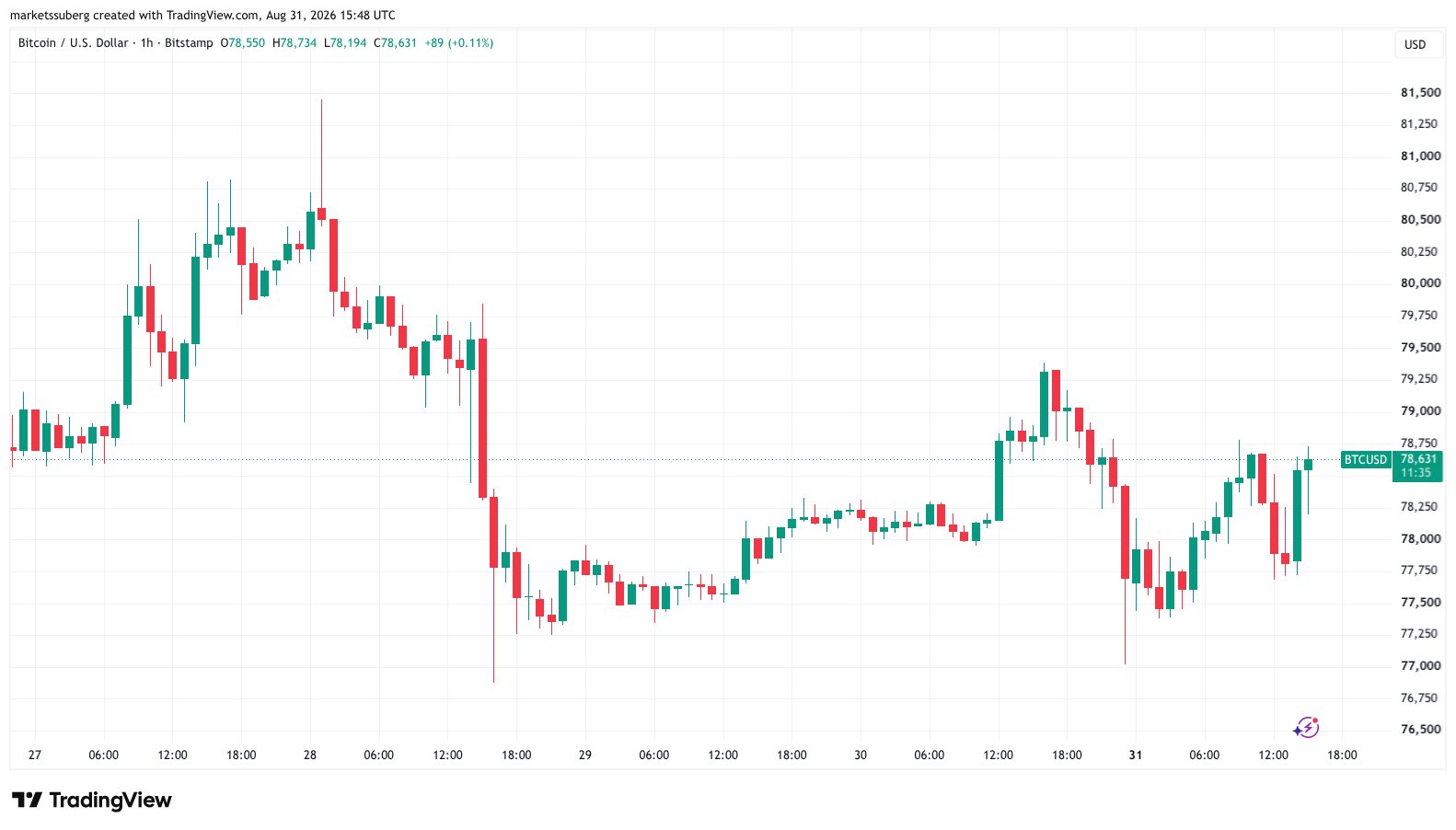
Bitcoin (BTC) experienced fluctuations around the $78,000 mark as the Wall Street trading session commenced on Monday, coinciding with a resurgence in US bond yields nearing two-decade highs. Data from TradingView indicated that BTC/USD traded within a constrained range, registering a modest gain of approximately 1% for the day.

The cryptocurrency saw a swift recovery after an initial dip at the start of the US trading session. This rebound was largely attributed to signals from US Treasury Secretary Scott Bessent, who alluded to potential further interventions in the US bond market. In a CNBC interview, Bessent emphasized that no direct actions had yet been taken to support the longer-term segment of the yield curve, specifically 10-year and 30-year bonds. He stated, "I haven’t bought anything yet," and expressed contentment with the yield’s rebound following the announcement.
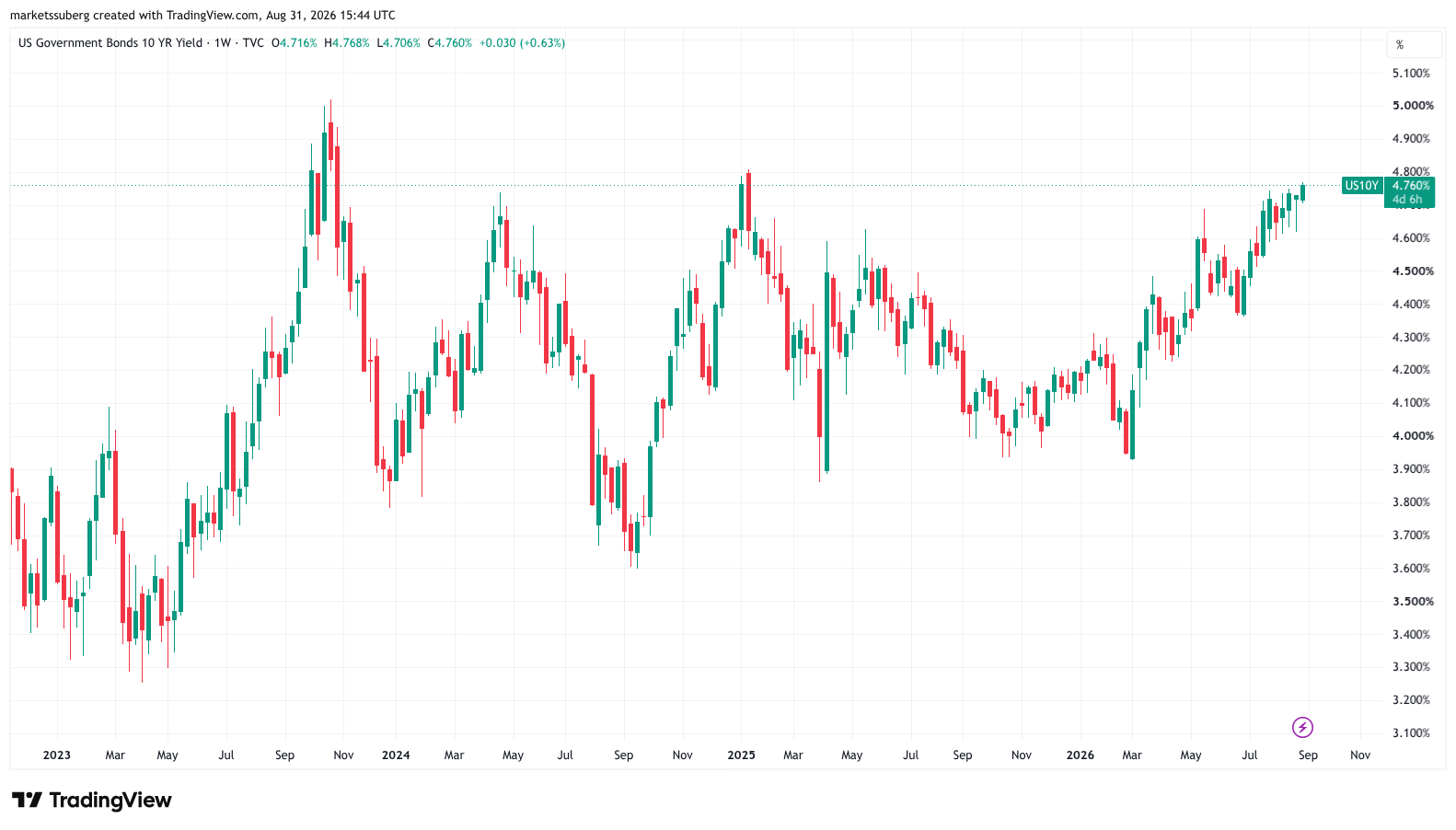
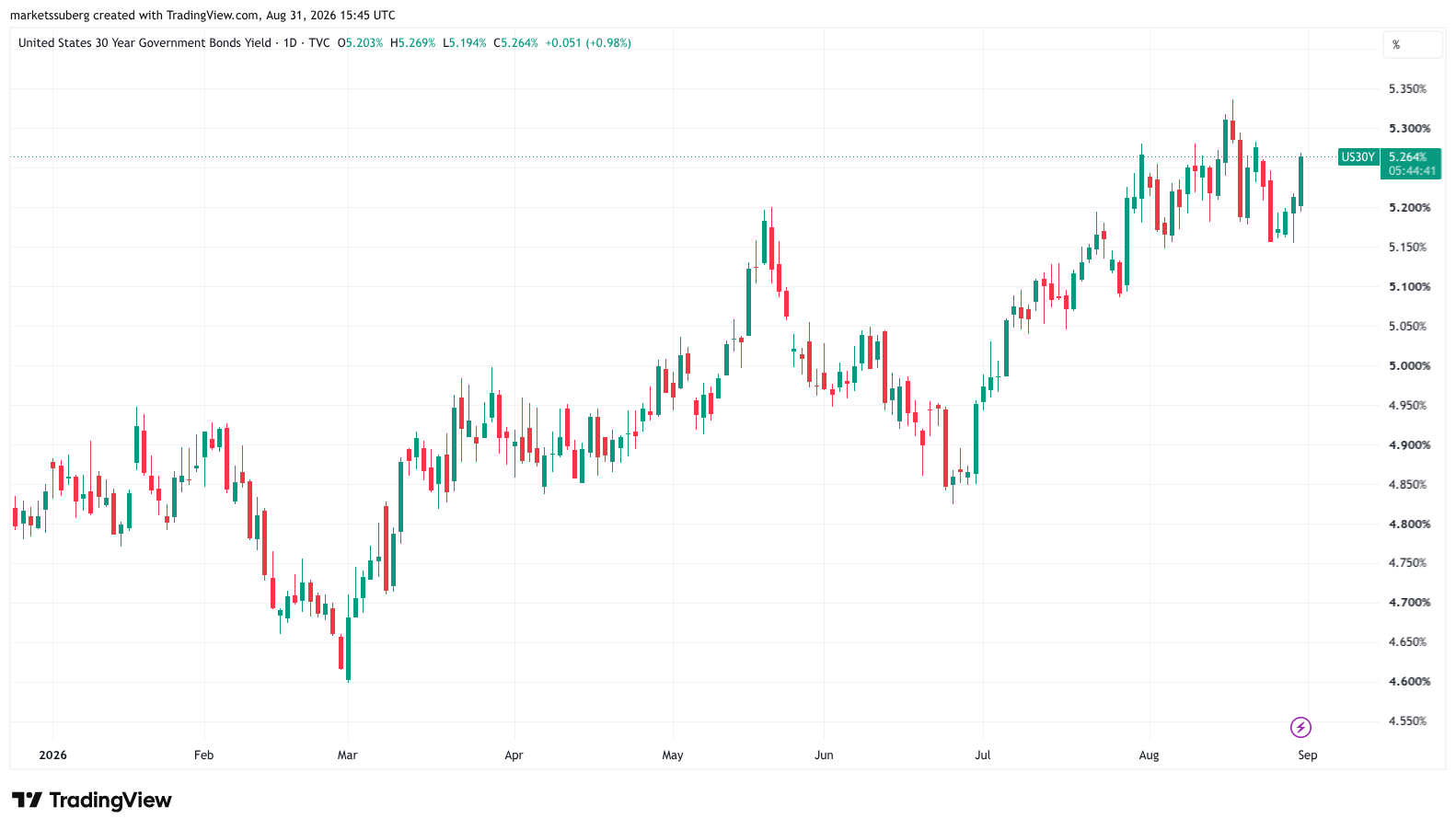
Earlier in August, the Treasury Department had announced its intention to at least double the size of its debt buyback transactions to $4 billion, commencing in September. While this announcement initially led to a decrease in yields, Monday saw the 10-year yield climb back to its highest levels since January 2025, reaching 4.76%. The 30-year yield also approached a significant milestone, hitting 5.269% on the day, a mere six basis points shy of its peak since January 2007.
Market observers noted the bond market’s apparent disregard for the Treasury’s pronouncements. The trading resource The Kobeissi Letter commented on X (formerly Twitter), stating, "The bond market appears to be completely ignoring the US Treasury."
Adding to the market’s sentiment, Ray Dalio, founder of Bridgewater Associates, expressed skepticism regarding the Treasury’s capacity to control bond prices, even with the new buyback program. Dalio, who has previously forecast a future US debt crisis, suggested that both Bitcoin and gold could serve as potential hedges against such a scenario. In a LinkedIn post, he advised, "As general advice, I suggest diversifying well in asset classes and countries that have strong income statements and balance sheets and are not having great internal political and external geopolitical conflicts, underweighting debt assets like bonds, and overweighting gold and a bit of Bitcoin."
In parallel, US stock markets displayed weakness, with both the S&P 500 and the Nasdaq Composite Index trading down by approximately 0.4%. This downturn was influenced by ongoing geopolitical tensions, including reports of new US-Iran strikes, which filtered through to broader market sentiment.
Bitcoin RSI Signals Potential Bearish Divergence
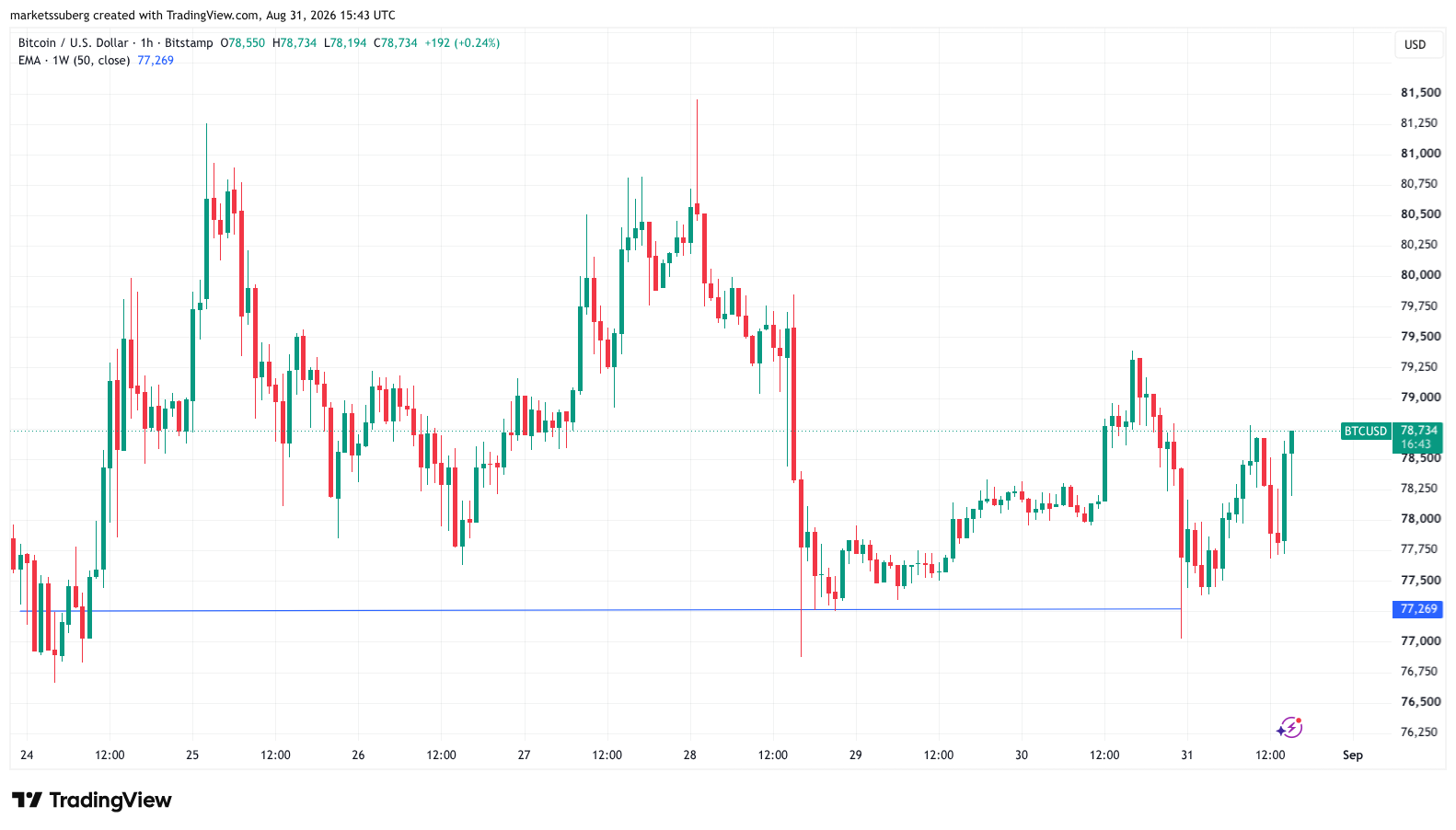
As the August monthly candle approached its close, BTC/USD maintained its 50-week exponential moving average (EMA) at $77,269, serving as a crucial support level. This level has previously been identified as a key indicator for Bitcoin bulls. This month has seen significant gains for Bitcoin, with month-to-date increases nearing 25%, marking August’s best performance since 2017.
However, a note of caution was sounded by trader and analyst Rekt Capital, who highlighted a potential hidden bearish divergence on daily timeframes between Bitcoin’s price and its relative strength index (RSI). While bullish RSI signals have been observed on the weekly chart, Rekt Capital warned that the latest daily readings suggested a potential waning of momentum. He explained on X, "if the Daily RSI continues to make Lower Highs (blue), that’ll contribute to mounting weakness here." The daily RSI was recorded at 70.7 on Monday, remaining within the "overbought" territory.
The accompanying charts from TradingView and Rekt Capital on X illustrate the price action of BTC/USD, the US 10-year and 30-year bond yields, and the daily RSI, providing visual context to the market dynamics discussed.
This report is produced in accordance with Cointelegraph’s Editorial Policy and is intended for informational purposes only. It does not constitute investment advice or recommendations. All investments and trades carry risk; readers are encouraged to conduct independent research.