11

For decades, the glitz and glamour of Hollywood have been inextricably linked with the unseen power brokers: talent agents. These industry titans orchestrate multi-million dollar deals for A-list celebrities, from blockbuster movie contracts to lucrative recording agreements. Figures like Ari Emanuel, whose formidable client roster includes names such as Mark Wahlberg, Charlize Theron, Oprah Winfrey, Martin Scorsese, and Dwayne "The Rock" Johnson, exemplify the behind-the-scenes influence that shapes celebrity careers. Emanuel’s no-holds-barred negotiating style, famously caricatured as Ari Gold in Entourage, underscores the critical role agents play in transforming raw talent into household names.
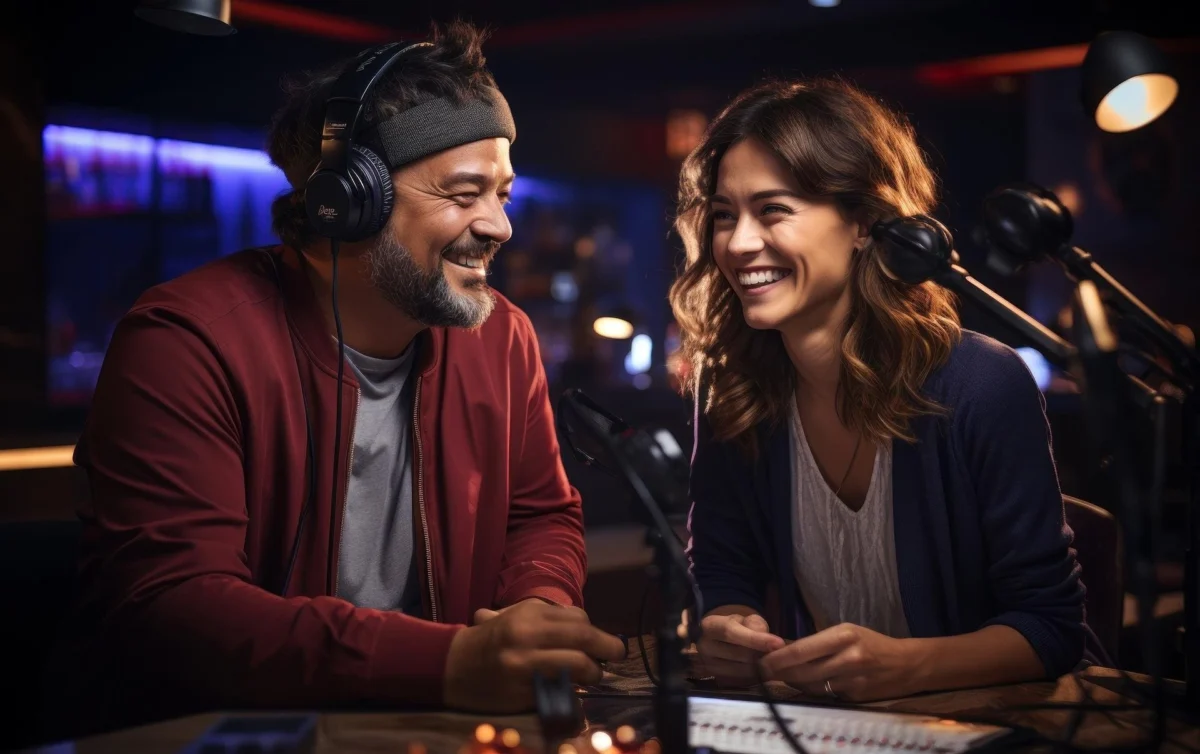
What might surprise many, however, is the burgeoning trend of major talent agencies extending their formidable representation to the world of podcasting. This shift signals a significant evolution in the media landscape, recognizing podcasters not just as content creators but as powerful, monetizable brands with a direct connection to their audiences.
Sarah Mathews, a prominent creators and digital talent agent at United Talent Agency (UTA) in Los Angeles, offers unique insight into this phenomenon. She notes that "There’s something about a creator’s background that makes them unique from other artists. A lot of them started completely on their own, alone in a room, bootstrapping every day, and really being their own CEO. Their business and their life are deeply intertwined, and that means they’re incredibly invested in every decision, including the live side of their business." This inherent entrepreneurial spirit and deep personal investment distinguish podcasters from more traditional artists, making their brand development and expansion highly personalized endeavors.
Mathews further elaborates on the distinctive advantage podcasters possess, especially when it comes to live tours, a trend that has surged in popularity. "Creators are also unique in that they own their audience directly and built their business upon that direct relationship. The promotion of the tour is less reliant on paid media or external channels – they own their media, their feeds, and their content." This direct pipeline to a loyal fanbase drastically simplifies marketing and engagement, providing a powerful foundation for successful live events.
This article delves into the escalating trend of prominent talent agencies representing podcasters and digital creators, with a specific focus on United Talent Agency (UTA). UTA has provided exclusive access to their comprehensive podcasting strategy, particularly how they meticulously manage and execute live tours for their burgeoning roster of audio talent.
The financial and audience-building potential of live podcast shows is undeniable. George Witt, a seasoned podcast consultant, affirms, "Live podcast shows can grow a podcaster’s listener base. And make a podcaster a lot of money with the right representation." Indeed, the transformation of podcasting from an audio-only, niche medium to a mainstream cultural force has seen live shows selling out venues previously reserved for concerts and major comedy acts. Madison Square Garden, for instance, has hosted multiple sold-out podcast performances, including the annual Kill Tony shows and Dropout’s highly anticipated Dimension 20 live show. The significance of this shift is so profound that MSG’s official website has updated its event calendar to allow sorting by "concerts, comedy shows, and podcast shows."
The financial returns are equally impressive. A recent Pollstar survey highlighted Kill Tony‘s staggering $11 million earnings from live show tours. Even more indicative of the market’s demand are ticket prices for upcoming events, such as Spotify’s Good Hang with Amy Poehler, which announced a live show in New York. The New York Post reported that the lowest seat price for this event was $346, with orchestra seats starting at $533. While live shows have been a part of podcasting since its early days, the medium’s expanding mainstream appeal has elevated these performances from simple radio-play styles to sophisticated productions featuring stylish presentations and big-budget spectacles.
The Giants of the Industry
The entertainment industry’s talent agency landscape is dominated by a few colossal players: Creative Artists Agency (CAA), William Morris Endeavor (WME), and United Talent Agency (UTA). These powerhouses represent the world’s most acclaimed actors, musicians, and creators across all global media. CAA further solidified its position with the acquisition of ICM Partners in 2022, while WME operates under The WME Group, focusing on top-tier film, television, music, and high-end celebrity athletes. Beyond these titans, other influential agencies include Independent Artist Group (IAG), formed from the merger of APA and Artist Group International, specializing in scripted talent, television, and major music touring acts, and The Gersh Agency, renowned for elite personal representation in film, television, branding, and sports.
Talent agents are indispensable in shaping their clients’ careers. They facilitate access to crucial opportunities – roles, recording contracts, book deals, and live tours – and expertly negotiate contracts to secure optimal terms. Crucially, the top Hollywood agents provide the strategic guidance and support necessary to transform their clients into A-list celebrities, navigating complex career trajectories.
Founded in Beverly Hills, California, in 1991, United Talent Agency (UTA) has grown into a massive global media company with a formidable presence in both A-list representation and the digital creator economy. It is UTA’s aggressive focus on digital creators, particularly podcasters, that forms the core of this discussion. UTA boasts an impressive roster of popular podcasts and prominent networks, including My Favorite Murder, Ira Glass’s Serial, Lore, and networks such as Wondery (Audible) and Tenderfoot. Individual talents like Karen Kilgariff and Georgia Hardstark (hosts of My Favorite Murder), Guy Raz (host of How I Built This), and Stephanie Soo (host of Rotten Mango) are also under UTA’s wing.
UTA’s foresight in the podcasting space predates its current explosion in popularity. As early as 2018, when few companies were dedicating significant resources to audio, UTA partnered with Cadence13 to establish a podcast network specifically designed to amplify the voices of influential digital talent, becoming one of the first agencies with a dedicated podcast division. Although Audacy, Cadence13’s parent company, discontinued the brand name in March 2024 following Chapter 11 bankruptcy proceedings, Audacy maintains active connections with UTA through ongoing podcast talent representation, distribution, and content development partnerships.
Further demonstrating its commitment to data-driven strategy, UTA introduced the UTA IQ data and analytics division in 2022. This specialized tool for audio and podcast dealmaking combines open-source metrics, search data, and social media tracking to provide comprehensive evaluations of podcast performance. As reported by The Hollywood Reporter, UTA Audio IQ empowers clients to understand their show’s impact, identify emerging talent, and measure how specific shows, topics, and personalities resonate with listeners. David Kramer, then co-President (now CEO) of UTA, stated in 2022, "As the first agency with a dedicated audio division, we have been at the forefront of shaping the evolution of the podcast industry since its early days. Our forward-looking Audio and IQ teams came together to create Audio IQ to help our clients see around the corner and stay ahead in an industry that’s growing faster than ever." Joe Kessler, Global Head of UTA IQ, added, "There is no single source of truth in data for driving value and strategic decision making in the podcasting industry today. As we worked with UTA’s Audio fast-growing team over recent years, we found that there are certain tools and approaches we could deploy that bring real value to our clients in the space, so we decided to formalize it." This creation of a single source metric was largely inspired by the increasing opportunities for creators to leverage audience engagement across various formats, from digital content to television, documentaries, books, merchandise, and, significantly, live tours.
UTA’s impressive client list extends to Meateater podcast, Ashley Flowers’ Crime Junkie, Kara Swisher, Mr. Ballen, Emma Chamberlain of Anything Goes with Emma, and Barstool Sports, which recently inked a major multiyear partnership with Netflix for exclusive video versions of its top podcasts. Sarah Mathews of UTA emphasized their talent identification philosophy: "UTA prioritizes a 360-degree approach. We look at audience metrics, momentum, and fan engagement, to name a few things… but a key factor that drives our interest is growth potential. For example, creators who have a bigger vision and the ambition to expand into complementary areas like live touring, film, television and beyond. We’re drawn to talent with a distinct creative POV and strong storytelling ability, and whose ambitions and vision align with what we can deliver. Cultural relevance plays a part and we’re looking for creators who are crafting compelling content that moves the cultural conversation."
Out of the Studio, Into Live Shows
As podcasters increasingly draw large live audiences, talent agents assume an even more critical role in ensuring these events and tours are executed flawlessly. When asked how UTA gauges audience response for live shows – determining venue size, location, and ticket pricing – Joe Schwartz, UTA Partner and Live Touring Agent, revealed their "secret sauce." "This is really our secret sauce, and it goes well beyond downloads and subscribers. Over many years, we’ve identified the most telling audience engagement metrics to identify a creator’s core audience. From there, coupled with other non-data related factors, we are able to predict ticket sales more accurately than ever."
Schwartz elaborated on these crucial metrics: "Downloads are important, and we layer in social engagement plus take into consideration whether the creator is in genuine conversations with their audience already. Are their fans talking to each other as well? Is there a community? Are they buying merch? Everything tells you something about a listener’s willingness to convert into a ticket buyer." UTA and other agencies analyze audience data simultaneously across YouTube, podcast platforms, and social media, providing deeper insights into demographics beyond just geographical markets. This data-driven approach can also signal when a tour might not be opportune, allowing the agency to help clients build a roadmap for future success.

Crucially, Joe Schwartz emphasizes that "it’s also incredibly important that the data never override the creator’s passion points. We’ve had clients who could sell out in major markets, but chose to prioritize smaller cities throughout the country because that’s where their most loyal audience lives. Others may not want to play arenas (even when the numbers support it) because the intimacy of a theater better fits the format of their show, or prioritizes the audience experience. One client pushed back on an exclusive presale tied to a credit card because she didn’t want any fan to have an unfair advantage. That’s our philosophy, we use data to build the roadmap, but the artist’s vision and relationship with their audience ultimately drives the final decisions." This bespoke approach ensures that the live experience remains authentic to the creator’s brand and audience.
Sarah Matthews further explains UTA’s broad approach to identifying podcast talent: "At UTA, we represent talent at all stages of their careers. Whether it’s established or emerging podcasters, we’re always on the lookout for creators who have a distinct POV, engaged audiences and the ambition to grow their brand across platforms."
On the Road Again
The stereotypical image of a talent agent confined to an office, constantly on the phone, aggressively negotiating deals, and demanding to "show them the money," doesn’t fully capture the reality of agents managing podcaster live tours. Dispelling the "Jerry Maguire" myth, UTA and similar companies deploy dedicated logistics personnel who travel with the podcaster, akin to roadies, to meticulously ensure every aspect of the show is set up correctly at each venue.
Joe Schwartz clarifies UTA’s comprehensive involvement: "When we book a tour, our role doesn’t stop at routing and venue selection. We have a broad network of resources and people who cover every facet of production from tour management to merchandising, full service production and creative development and more."
Schwartz recognizes that podcast live events fundamentally differ from concerts. "The performance space is everything, and the details matter more than most promoters and venues may initially expect. Live podcast shows are a unique experience and their audience is like no other… sometimes it’s people’s first ever time going to a live show!" He recalls an instance where "early on, I would show up to shows and find barricades set up like a music concert. I would get security and together we would pull them out on the spot, because that little gap, believe it or not, kills the connection and energy between the audience and the performer." Agents experienced in this niche understand that beyond the venue, numerous nuances dictate a successful live podcast tour.
"Visually, a lot of podcasters built their audiences without video, so their live show can be their first real visual moment with their audience, creating a new way to tell their story. So creative and staging come into play, like never before," Schwartz notes, highlighting the importance of production value. He insists that the best podcast shows cultivate a sense of community. "Once we had a client distribute her own products at every show, including street teams distributing drinks outside and venue staff giving out custom notebooks inside to every audience member. She’d open each show with questions and everyone would write down their answers. By the end, her fans were exchanging notebooks amongst each other. That’s intentional production."
Schwartz further explains the unique "one-directional intimacy" of podcast audiences: "These audiences have been listening to this person in their ears for years, so the relationship is already deep before anyone walks through the door and we plan accordingly as needed." This deep understanding of audience demographics allows for practical adjustments, such as having a venue convert a men’s restroom in advance because the audience "over-indexes to a female audience." These lessons, learned over time, are invaluable knowledge brought to partners. Schwartz concludes that "Podcasting shows are much closer to comedy shows. We find the sweet spot to be approximately 90 minutes to maximize audience attention and energy, and leaving them wanting more."
For UTA, venue sizing is a highly strategic decision, not merely a capacity calculation. Schwartz explains, "Sometimes, we want to create a sellout moment and other times, the priority is accessibility, making sure everyone who wants a ticket can get one. Both are valid approaches, and the right answer depends on where the creator is in their trajectory and the story they’re trying to tell."
Big Names On Tour
UTA has successfully managed the live tours of some of the industry’s most prominent podcasters. Mel Robbins, for example, launched and sold out her inaugural live tour last year, followed by a second sold-out leg this year across dozens of major cities, playing in the largest theaters. Joe Schwartz highlights that "Mel’s captivating performance aside, the tour also showcased extremely high-level production value with LED Walls, live video-feeds, large stage props, audience interaction, and giveaways. We also worked closely with Mel’s team to incorporate a major tour sponsor, Microsoft Copilot, as well as her own recently launched protein drink – Pure Genius, seamlessly into the tour."
Similarly, Las Culturistas, hosted by Bowen Yang and Matt Rogers, has evolved from a beloved comedy podcast into a cultural institution over ten years, encompassing live events, significant brand partnerships, and the "Culture Awards," which premiered its next iteration on Peacock and Bravo on June 17th. Schwartz notes, "They’ve done an incredible job building an extremely engaged community over the past decade – not only scaling into Will Ferrell’s Big Money Players Network at iHeart, but also turning a long-running bit on the podcast into a televised awards show that’s now produced by Lionsgate."
In 2025, My Favorite Murder delighted fans with an 11-market run, selling two shows in each market at iconic venues like Chicago Theater, Boch Center, and Kings Theater, marking their first live shows since 2019. Crime Junkie has also steadily built its touring business over several years, now performing in large theaters and arenas.
The Future of Podcasting is "IRL"
While UTA’s strategy is comprehensive, other major talent agencies are also deeply invested in representing podcasters and digital creators. Creative Artists Agency (CAA) represents major podcasts and networks such as SmartLess, Stuff You Should Know, and Modern Wisdom. William Morris Endeavor (WME) boasts a roster that includes Freakonomics Radio, Armchair Expert, The Diary of a CEO (Steven Bartlett), Revisionist History / Pushkin Industries (Malcolm Gladwell), Huberman Lab (Andrew Huberman), and This Past Weekend (Theo Von).
However, Sarah Matthews emphasizes the distinctiveness of UTA’s collaborative approach: "What makes UTA’s approach to live touring distinctive is how deeply collaborative it is. This isn’t siloed in one department. We have a bi-weekly live events meeting that brings together representatives from across the entire company, folks from comedy to reality TV, traditional on camera talent, data analysts and creators agents all working together to identify and develop unique live opportunities." She credits a dedicated team, including Nick Nuciforo (UTA Head of Live), Oren Rosenbaum, Raina Penchansky, and Ali Berman (co-heads of UTA Creators), and Bjorn Wendlandt (who founded UTA’s London touring division), for building out this robust global strategy. "No other agency has a team of that depth and reach outside of the U.S.," Matthews states.
Concluding her insights, Sarah Matthews affirms, "The opportunity in this space is enormous and UTA continues to be at the forefront of building out this category. Live events create a category of revenue and brand activation that simply doesn’t exist elsewhere. There’s really no substitute for the in-person experience, and brands know it. The creative possibilities around sponsorship and partnership are wide open, and we are just getting started."
It is clear that podcasting live shows and tours represent a highly viable and rapidly expanding business avenue for podcasters and digital creators. As podcasting continues its surge in popularity, and video podcasting further strengthens the connective tissue between creators and their audiences, the number, size, and frequency of live podcasting events and full-blown tours are set to increase dramatically. This enhanced visibility and revenue potential have unequivocally attracted major talent agencies to the podcasting landscape. As demonstrated by UTA’s meticulous approach, success in this domain requires customized representation that expertly leverages a podcaster’s popularity, brand identity, unique connection with their audience, and, critically, the ability to recreate that intimate sense of community, even within the confines of a massive venue.