11

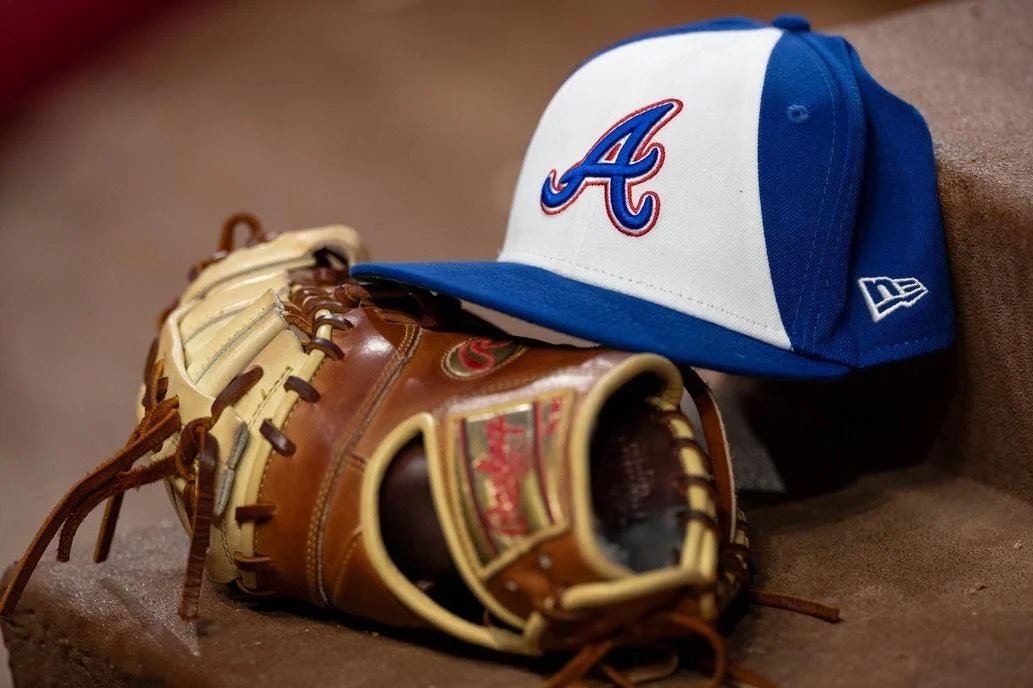
The storied history of the Atlanta Braves is replete with countless individuals who have donned the iconic uniform, their careers ranging from legendary Hall of Famers etching their names into baseball lore to those whose contributions, though brief, were no less a part of the team’s expansive narrative. Among these short-term contributors is Kevin Lomon, a pitcher whose major league career was a fleeting glimpse into the highest echelon of professional baseball, yet whose recent actions have cast him in a profoundly heroic light far removed from the diamond.
Lomon’s professional journey brought him to Atlanta in 1996, a season where he made six relief appearances for the Braves. During his tenure, he pitched seven-and-one-third innings, recording a 4.91 ERA. His stat line for that season included allowing seven hits and three walks, while managing a single strikeout. His final major league appearance took place on September 28, 1996, marking the conclusion of a chapter in his life defined by the crack of the bat and the roar of the crowd. Overall, Lomon’s major league career spanned just 12 games, totaling 16 and two-thirds innings pitched, during which he surrendered 24 hits and eight walks, accumulating seven strikeouts. While his time in the spotlight as a professional athlete was limited, it was the foundation of a life steeped in baseball, eventually leading him to a different kind of field, and ultimately, to an unforeseen moment of courage.
Nearly three decades after his final pitch in the majors, Lomon’s name has resurfaced in headlines, not for his athletic prowess, but for a selfless act of bravery that underscored his commitment to the young athletes under his care. The transition from a professional pitcher to a high school coach is a common path for many former athletes, allowing them to impart their knowledge and passion for the game to the next generation. For Kevin Lomon, this role as head baseball coach at Cameron High School in southeastern Oklahoma proved to be more demanding and dangerous than any ninth-inning jam he ever faced.
The incident unfolded earlier this month, a seemingly ordinary night that quickly escalated into a life-threatening situation. Lomon was traveling with his Cameron High School baseball team, a group of 13 young players, for an away game in Shawnee, Oklahoma. The team was settled into their hotel, a common scenario for high school sports teams on the road, when the tranquility of the evening was shattered by an urgent call to the coach. Around 9 p.m., one of Lomon’s players contacted him from their hotel room, his voice undoubtedly laced with fear and urgency. The player reported a terrifying encounter: a man in the hotel hallway had brandished a knife, moving aggressively toward him before retreating back into his own room.
The immediacy of the threat left Lomon with little time for deliberation. In that critical moment, his instincts as a protector and leader took over. His first priority was the safety of his players. He immediately instructed all of them to get inside their rooms and secure the doors, ensuring they were out of immediate harm’s way. Simultaneously, he made the crucial call to 911, alerting authorities to the dangerous situation unfolding in the hotel. With his players secured and emergency services en route, Lomon, driven by an unwavering sense of responsibility, made the courageous decision to confront the threat himself.

Stepping out into the hotel hallway, Lomon placed himself directly in harm’s way. According to the subsequent police report, he encountered the armed individual near the elevators. The man, later identified as Stevens, was still in possession of an open knife. The situation escalated rapidly as Stevens allegedly moved toward Lomon. In a swift and decisive response, Lomon acted to neutralize the threat, striking the man several times. His quick thinking and physical intervention allowed him to subdue the assailant, holding him on the ground until law enforcement officers arrived at the scene. This dramatic confrontation, fueled by Lomon’s unwavering determination to protect his team, averted what could have been a far more tragic outcome.
The prompt arrival of the police brought the tense standoff to a safe conclusion. Miraculously, no physical injuries were reported among Lomon or his 13 players, a testament to the coach’s swift and effective intervention. The police recovered two knives from the scene, corroborating the player’s initial report and the gravity of the threat. Stevens was subsequently arrested on serious complaints, including assault with a deadly weapon and public intoxication, ensuring that the individual responsible for the terrifying incident was taken into custody.
In the aftermath of such a harrowing experience, many would readily embrace the label of "hero." However, Lomon, demonstrating a profound humility and a deep understanding of his role, refused to view his actions through that lens. As Taylor Howard reported for 5 CBS News, Lomon stated, “I don’t think I’m a hero. I just think I would do it again.” This sentiment speaks volumes about the character of the man, highlighting that for him, the decision to confront danger was not born of a desire for accolades, but from an innate sense of duty and an unshakeable commitment to those under his charge.
Lomon’s mindset perfectly reflects the essence of leadership, particularly in the context of coaching young athletes. His responsibilities extend far beyond teaching the fundamentals of baseball; they encompass the holistic well-being and safety of his team, especially when they are away from home. On the road, coaches often become surrogate parents, tasked with guiding, mentoring, and protecting their players. Lomon’s actions were a powerful manifestation of this sacred trust, demonstrating that he was willing to put his own safety at risk to ensure the security of his team. His response was not a calculated act of bravery, but an immediate, instinctive reaction of a guardian facing a clear and present danger to his young charges.
The journey from a major league pitcher to a high school coach is a path less traveled by some, yet for Lomon, it led to a moment that redefined his legacy. While his professional baseball career, with the Atlanta Braves and beyond, lasted only a brief part of one season, the impact of his recent actions will resonate far longer. Nearly three decades after throwing his last pitch in the big leagues, Kevin Lomon found himself in another high-pressure situation. This time, however, the stakes were immeasurably higher than any baseball game, and his young team depended on him not for a win, but for their very safety. His courage and selflessness in the face of a violent threat serve as a profound reminder that true heroism often emerges not on grand stages, but in unexpected moments when character and responsibility converge.