 11


Solana validators have overwhelmingly approved a significant proposal, SGP-0002, also known as "Double Disinflation," which will effectively double the network’s annual disinflation rate from 15% to 30%. This change, finalized through a binding governance vote, is designed to accelerate Solana’s progression towards its long-term inflation target of 1.5%, with substantial implications for future SOL issuance and tokenomics.
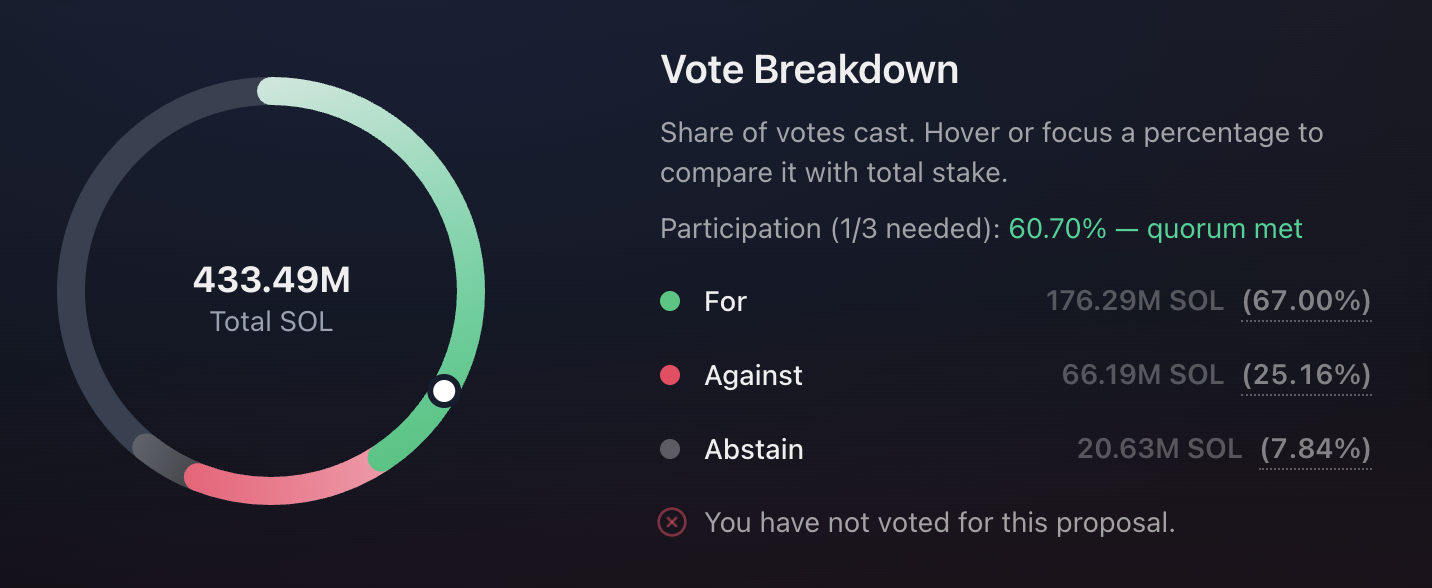
The governance results reveal robust support for the proposal, with 67% of eligible stake voting in favor. Conversely, 25.16% of the stake voted against it, while 7.84% abstained. The overall participation rate in this crucial vote reached an impressive 60.7% of the eligible staked SOL, demonstrating a high level of engagement from the Solana validator community.

The core of SGP-0002 lies in its adjustment of the disinflationary schedule. While the ultimate long-term inflation target of 1.5% remains unchanged, the rate at which inflation decreases annually has been significantly increased. Under the previous schedule, Solana was projected to reach its 1.5% terminal inflation rate in approximately 5.7 years. However, with the new doubled disinflation rate of 30%, this transition is now anticipated to occur in roughly 2.8 years, nearly halving the time required to reach the stable inflation state.
This accelerated disinflationary path is projected to result in a considerable reduction in the total supply of SOL issued over the coming years. Estimates suggest that approximately 18.9 million fewer SOL tokens will be issued over the next six years compared to the previous schedule. This reduction in issuance is intended to mitigate dilution for existing SOL holders, potentially enhancing the scarcity and value proposition of the token.
However, the increased disinflation rate also carries implications for network participants. Validators and delegators, who earn SOL through staking rewards, are likely to see a decrease in their annual yields. This trade-off between reduced inflation and potentially lower staking rewards was a key consideration in the governance debate.
The approval of SGP-0002 marks a significant milestone as it was part of Solana’s inaugural binding governance process. This process also saw the approval of a proposed Solana Constitution, laying the groundwork for future decentralized decision-making. In parallel, another proposal concerning resource and inclusion fees was rejected, indicating a nuanced approach by the community to network economics and fee structures.
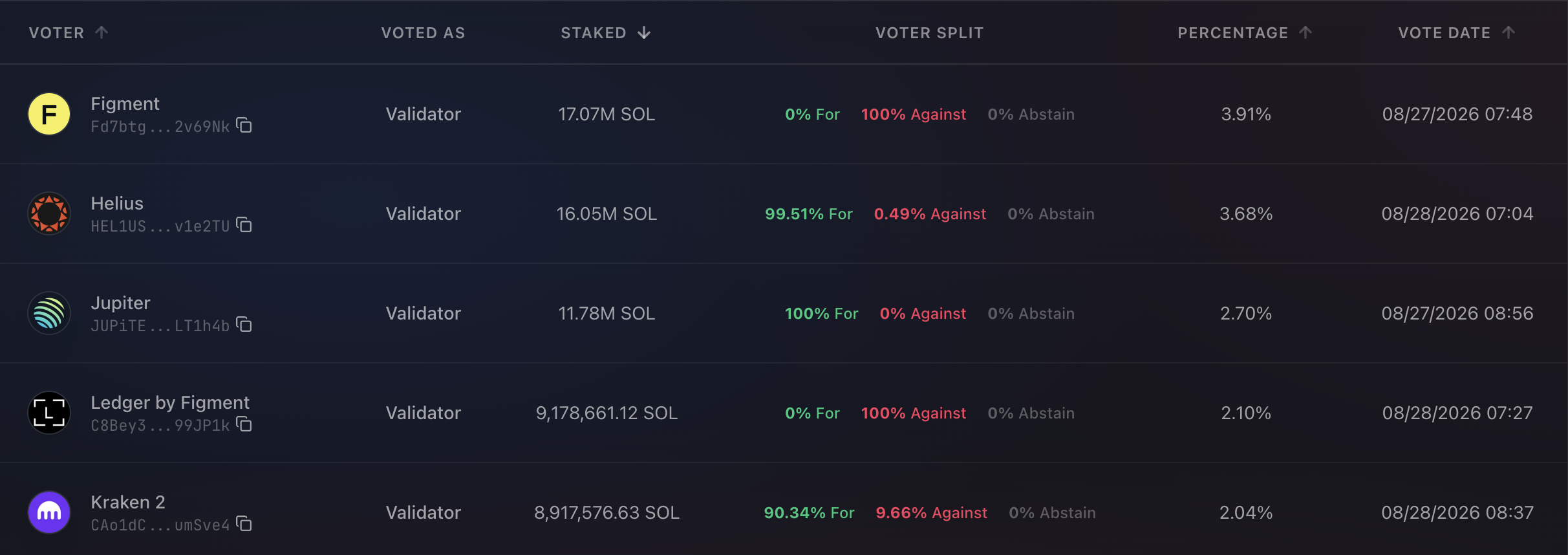
The voting on SGP-0002 highlighted a divergence of opinions among some of the largest stakeholders in the Solana ecosystem. Figment, identified as the largest voter in the finalized governance data with 17.1 million SOL staked, cast its vote entirely against the Double Disinflation proposal. In contrast, entities like Helius and Jupiter expressed strong support, backing the measure with overwhelming majorities of their staked SOL.
Notable shifts in voting positions also occurred during the deliberation period. Kraken, a prominent US-based cryptocurrency exchange, initially voted against SGP-0002, a move that at one point temporarily pushed the proposal’s support below the required threshold. However, by the close of the voting period, Kraken’s position had significantly changed, with over 90% of its approximately 8.9 million SOL voting stake ultimately supporting the proposal. This dynamic voting behavior underscores the evolving sentiment and decision-making processes within the Solana governance framework.
The successful passage of SGP-0002 occurs against a backdrop of increasing institutional interest in Solana, evidenced by the substantial inflows into US-listed Solana investment products. Despite some periods of weaker SOL performance earlier in the year, these investment vehicles continue to attract significant capital.
In a related development, Bitwise’s Solana Exchange Traded Fund (ETF) has recently surpassed the $1 billion mark in assets under management, a significant achievement making it the first Solana ETF to reach this milestone. This influx of capital into regulated investment products highlights the growing institutional confidence in Solana’s long-term potential. According to Bloomberg ETF analyst Eric Balchunas, US-based Solana ETFs have collectively attracted approximately $1.7 billion in cumulative net inflows since their inception, with minimal sustained outflow. This sustained demand suggests a positive outlook from traditional finance on the Solana ecosystem.
The dual developments of enhanced network tokenomics through SGP-0002 and strong performance in the ETF market signal a period of evolving maturity and increasing adoption for the Solana blockchain. The network’s commitment to decentralized governance, as demonstrated by the binding vote, further solidifies its path towards self-determination and community-driven development.






