11

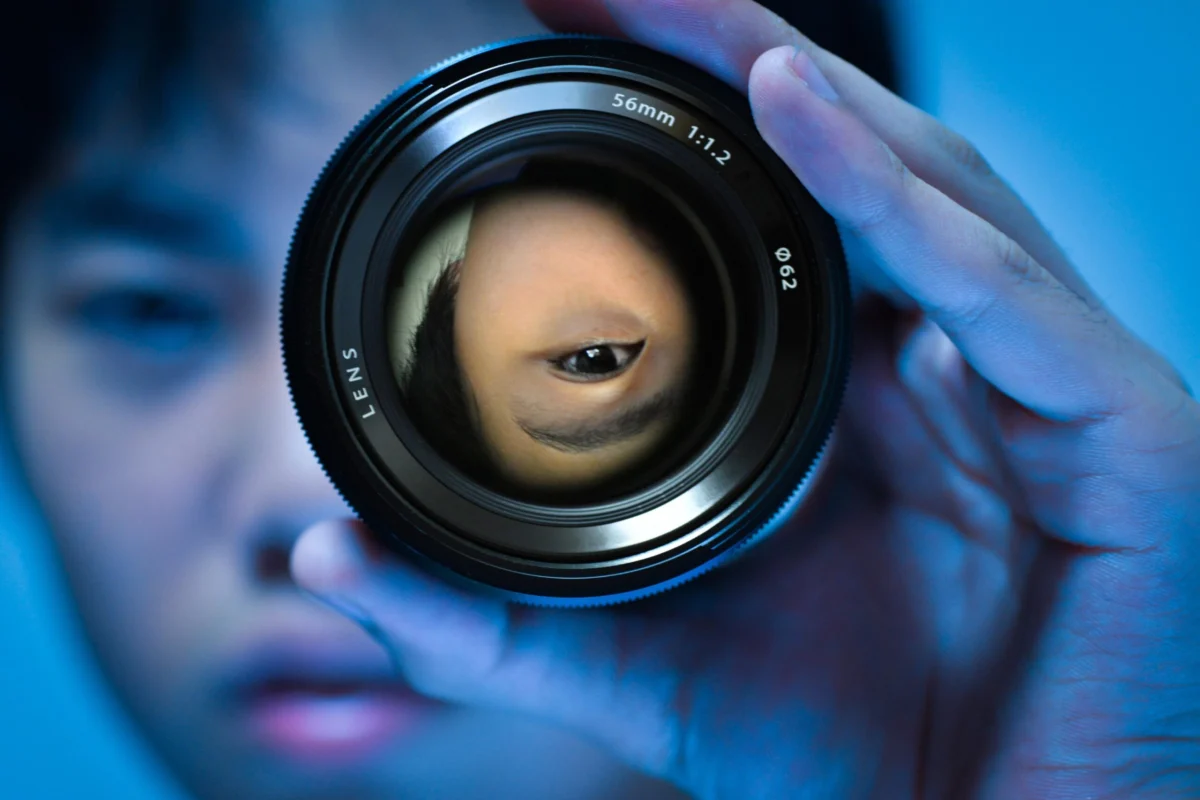
Whether it’s a mirror or a camera lens, when our brains are the filter, neither can provide an accurate reflection of reality. We often assume that a mirror offers an unfiltered, objective view of our physical selves, but this seemingly straightforward reflection is immediately subject to the complex and often biased interpretations of our minds. The journey from light hitting our retina to forming a coherent self-image is fraught with cognitive processes that actively shape what we perceive, leading to a deeply personal and frequently distorted version of truth.
Imagine yourself standing before a mirror, meticulously observing every detail of your appearance. The moles, the subtle lines around your eyes, the nuances of your complexion – these are the raw visual data. Philosophers, most notably Socrates, have historically posited the mirror as a tool for self-awareness, a clear window into one’s physical being. They suggest that, with negligible distortion, a mirror truthfully presents who you are physically. Yet, this analogy, like many others, proves inherently flawed when confronted with the intricate workings of human perception. Our minds possess an innate inclination to filter out aspects of ourselves we prefer not to confront, or conversely, to highlight others based on internal narratives. Perhaps we dwell on memories of a younger self, allowing that idealized image to obscure the present reality of tired eyes or stress-induced wrinkles. Given sufficient time and mental rumination, the objective reflection can be subtly but powerfully reshaped by the sieve of our minds, leading us to perceive ourselves as we once were, rather than as we are. This phenomenon extends beyond self-perception; recall a memory from years past and compare it with a friend’s recollection. It is highly probable that, over time and through repeated reflection, your memory has diverged significantly from the original event, demonstrating the mind’s pervasive capacity for distortion.
What our eyes physically register and what our brains ultimately interpret can be vastly different. Our experiences, beliefs, and emotional states act as powerful lenses, coloring how we perceive the world around us. For instance, our understanding of justice is deeply rooted in our personal encounters with fairness and injustice. Similarly, the way we interpret physical or emotional pain is shaped by our past treatments and learned responses. Rather than providing a pristine reflection, our minds function more akin to funhouse mirrors, exaggerating or diminishing certain features, twisting reality to fit our internal narratives. These distortions are not always negative; they are simply a testament to the highly subjective nature of human perception.
The same principle applies when we consider a camera lens. The faces captured by a camera are rarely identical to what appears on social media, even before digital filters are applied. The type of lens used, the lighting conditions, and even the camera’s sensor can introduce subtle distortions. Certain lighting might make eyes appear red, while specific focal lengths can make one seem to have gained or lost weight. None of these images, in their raw form, offer an entirely accurate reflection of reality as the human eye would perceive it, let alone as the human mind would interpret it. The technical limitations and artistic choices inherent in photography further illustrate how any "lens," be it optical or cognitive, is an intermediary that shapes and alters the perceived truth.
Despite these pervasive distortions, a degree of truth can still be apprehended within a limited scope. A mirror, for example, provides a reasonably accurate representation of how you look, enabling a friend to identify you in a crowd, even if every minute detail isn’t perfectly rendered. This concept extends to our understanding of the world: specific "lived experiences" can certainly provide compelling evidence to support individual beliefs. Consider the common narrative surrounding cobras: in many stories, their bites are depicted as unfailingly deadly, paralyzing and then killing their victims. Thousands of such accounts, particularly those from individuals who did not receive antivenom, reinforce the devastating impact of a cobra bite. If one were to consider only this evidence, the conclusion would logically be that an untreated cobra bite invariably leads to death.

However, expanding the scope of inquiry reveals a more nuanced reality. While cobra venom is indeed potent, broader data indicates that approximately 20 to 30 percent of cobra bites are "dry bites," meaning no venom is injected. Although such bites can still be painful and cause localized swelling, they do not result in death. This illustrates a critical point: when we broaden our perspective, the world ceases to be a collection of binary viewpoints. Instead, it unfolds as an array of countless perspectives, each with its own inherent distortions, yet each contributing to a more complete understanding. Our very view of ourselves is continually colored by the cumulative sum of our past experiences and the frameworks we build from them.
This principle is vividly illustrated in contemporary debates, such as the discussion surrounding the rise of Artificial Intelligence (AI). An employee might perceive the AI boom as an apocalyptic threat to their job security, while an employer might view it as the next great revolution, promising unprecedented increases in production for their startup. Both perspectives, driven by personal position and immediate self-interest, are incomplete, offering only fractions of the full story. Their respective experiences with AI, within their limited spheres, may strongly reinforce their initial claims. However, a deeper understanding of reality emerges when individuals broaden their scope. The business owner who loses their enterprise to AI might begin to grasp its negative impact on the workforce, while the employee displaced by AI might discover its benefits when launching their own solo venture empowered by AI tools. In both scenarios, an expanded perspective fosters a more comprehensive and empathetic understanding of AI’s multifaceted reality.
While a complete, objective understanding of reality may forever elude us, we can significantly enhance our grasp by accumulating diverse experiences. The image a six-year-old sees of themselves in a mirror will differ dramatically from the image seen at sixty, yet both are reflections of the same individual, transformed by time and experience. Even moment-to-moment, the exact image we perceive varies, influenced by subtle shifts in lighting and angle. Our interpretation of the world hinges on developing a robust framework for comprehending a continuous stream of these "distorted images." The more experiences we accumulate, the closer we move toward an approximation of objective reality. As our scope of understanding inevitably expands with new experiences, this personal framework adapts and evolves. Reality may sometimes appear cloudy when outlier experiences challenge our established vision. Yet, these very outliers are crucial; they are the moments that don’t neatly fit our existing frameworks, prompting us to expand our scopes, learn more, and grow. Acknowledging that there’s no limit to expanding one’s scope, at some practical point, we might choose to discount certain outliers, perhaps because they fall outside our immediate concerns, are beyond our control, or simply require an effort disproportionate to their perceived relevance.
Ultimately, we possess a profound degree of agency in shaping our own fate. The reality of "now" is not necessarily the immutable reality of "tomorrow"; it can be altered through a deliberate change of scope and consistent effort. Happiness, in this context, is not merely the acceptance of reality, but the active adaptation and shaping of it. The uneven skin tone that bothers you can be addressed with appropriate skincare. The mole you dislike on your nose can be removed. Moreover, your perception of who you are can shift dramatically depending on the angle and the "lighting" you choose. The light in the mirror casts a different reflection under natural sunlight compared to artificial illumination. It is within your power to choose the lighting that serves you best, and if the mirror itself becomes a source of discomfort, you can even choose to turn it away.
Determining what to include or exclude from our personal framework of understanding is a complex endeavor. This ongoing process of defining our parameters, challenging our perceptions, and integrating new information forms the fundamental basis for making sense of life, pursuing happiness, and achieving personal growth. It is a continuous journey of self-discovery and evolving comprehension.