11

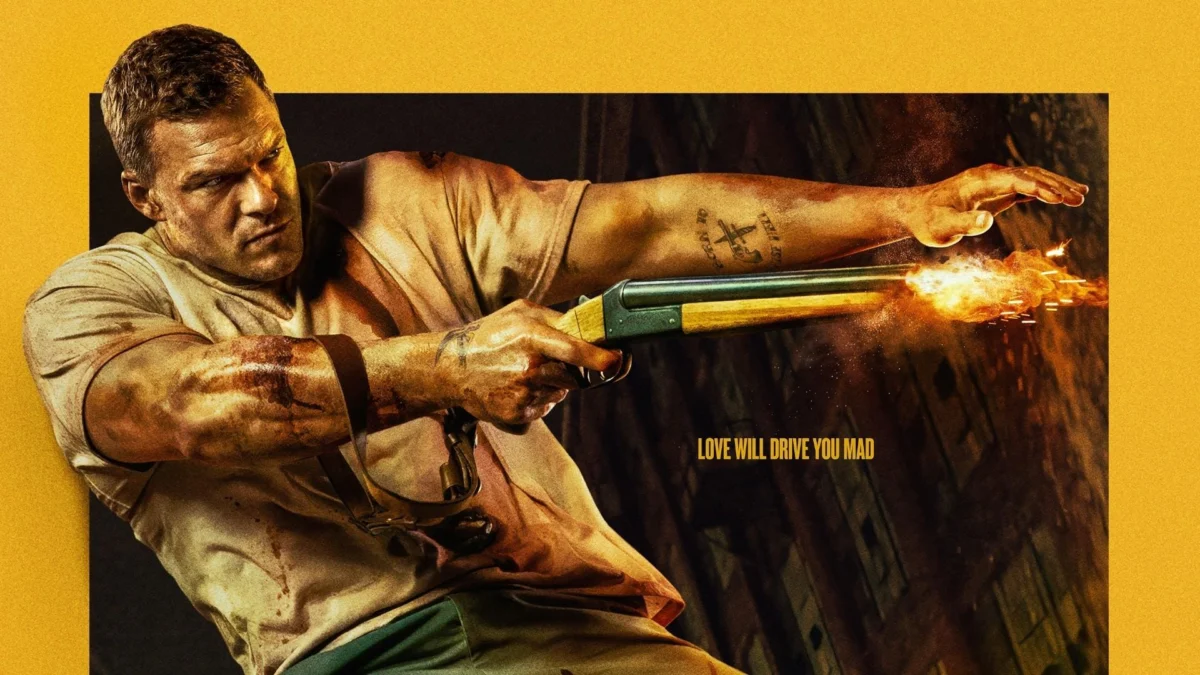
“Motor City,” a revenge thriller spearheaded by “Reacher” star Alan Ritchson, is poised to make its digital debut on streaming platforms this week, seeking a broader audience after a notably quiet run at the box office. The film, which features a striking artistic choice of minimal dialogue, struggled to find its footing during its theatrical release, prompting its swift transition to premium video on demand (PVOD).
Directed by Potsy Ponciroli, “Motor City” first premiered in theaters on July 24. The narrative plunges viewers into the gritty backdrop of 1970s Detroit, a city synonymous with industrial might and, at times, simmering undercurrents of crime. Here, Alan Ritchson steps into the shoes of John Miller, a diligent blue-collar factory worker whose life takes a dramatic and devastating turn. Miller’s world is upended when he becomes romantically entangled with Sophie, portrayed by Shailene Woodley. Sophie, however, carries a dangerous past as the ex-girlfriend of Reynolds, a formidable and ruthless crime kingpin brought to life by Ben Foster. This fateful connection ensnares Miller in a perilous web, leading to his unjust framing for possession of a trunk-load of illicit drugs.
The consequences of this setup are severe, forcing Miller to endure years of incarceration for a crime he didn’t commit. The film then pivots to Miller’s desperate escape from prison, setting the stage for a relentless quest for vengeance. His singular objective is to hunt down Reynolds and every individual responsible for his wrongful conviction and the loss of his freedom. This classic tale of retribution is explored through Ponciroli’s distinct directorial lens, promising an intense and visceral cinematic experience.
The journey of “Motor City” to the screen involved its acquisition for distribution by RLJE Films in October 2025. At the time of this crucial deal, director Potsy Ponciroli shared his vision for the film with Deadline, expressing a profound connection to its production and thematic elements. “We shot ‘Motor City’ to be immersive, every frame, every sound, designed for a theater,” Ponciroli stated. He described the film as “a love letter to Detroit, to ‘70s cinema, and to the kind of filmmaking you can feel. It’s the kind of movie that makes you happy that theaters still exist.” This declaration underscored his intention to craft a film that leveraged the full sensory experience of the big screen, aiming for an evocative and deeply felt narrative that resonated with the cinematic traditions of the era it depicts.
However, despite Ponciroli’s ambitious vision and a unique stylistic approach, “Motor City” faced significant challenges in attracting a broad theatrical audience. The film garnered "moderate praise" from Rotten Tomatoes critics, with many reviewers commending its audacious decision to operate with “only a handful of lines of dialogue” – effectively making it a virtually dialogue-free experience. This bold artistic choice was highlighted as a distinguishing feature, demonstrating a commitment to visual storytelling and raw performance over verbal exposition. Critics lauded this minimalist approach for its ability to create an immersive, almost silent, intensity that harkened back to certain experimental or classic action thrillers. The reliance on facial expressions, body language, and environmental sounds to convey emotion and plot points offered a fresh take on the revenge thriller genre, appealing to those who appreciate cinematic risks and a more visceral form of narrative.

Despite this critical appreciation for its innovative style, the film’s box office performance was undeniably underwhelming. Upon its opening weekend from July 24-26, “Motor City” managed to pull in a mere $1.6 million from approximately 1,600 North American theaters. This figure fell far short of expectations, particularly for a film starring a rising star like Alan Ritchson, whose popularity has soared with Amazon Prime Video’s hit series “Reacher.” The film’s muted theatrical debut continued throughout its run, ultimately accumulating a domestic total of $2.7 million. Its international performance was similarly modest, adding nearly $243,000, bringing its worldwide box office tally to a disappointing $2.743 million.
When juxtaposed with its reported production budget of $30 million, excluding marketing costs, the financial outcome presents a stark picture. The film’s theatrical earnings represent only a fraction of its investment, indicating a substantial loss for its producers and distributors. This disparity highlights the increasing difficulties faced by mid-budget films, especially those with unconventional narrative structures like a nearly dialogue-free script, in today’s competitive theatrical market. Factors such as heavy competition from tentpole blockbusters, evolving audience viewing habits, and potentially limited marketing reach for niche projects can all contribute to such outcomes. For a film that the director envisioned as a theatrical experience, its inability to translate critical intrigue into ticket sales underscores a broader industry trend where unique cinematic endeavors often struggle to capture mainstream attention without significant promotional backing or pre-existing intellectual property.
In light of its challenging theatrical run, “Motor City” is now pivoting to a more accessible distribution model. The film, rated R, is set to make its digital streaming debut via premium video on demand (PVOD) on Tuesday, August 25. This strategic move aims to capitalize on the growing home entertainment market and provide a second chance for the film to connect with viewers who may have missed its brief theatrical window or prefer to watch films from the comfort of their homes.
A new listing on Prime Video confirms its availability, and in addition to Amazon’s platform, "Motor City" will be purchasable on a variety of other prominent digital storefronts. Viewers will be able to acquire the film on Apple TV, Fandango at Home, and YouTube movies, with a purchase price set at $24.99. For those who prefer temporary access, digital rentals are typically priced around $5 less than purchases, meaning audiences can anticipate renting the film for $19.99 for a 48-hour viewing period. This PVOD strategy allows the film to quickly recoup some of its losses and tap into the significant audience base that regularly consumes new releases digitally.
Beyond the leading trio of Alan Ritchson, Shailene Woodley, and Ben Foster, the cast of “Motor City” features a roster of talented actors who contribute to its intense narrative. Pablo Schreiber, known for his compelling performances in various television and film roles, joins the ensemble, as do Lionel Boyce, Amar Chadha-Patel, and Ben McKenzie. Their collective performances are integral to conveying the film’s emotional depth and high-stakes action, particularly given the reliance on visual storytelling and non-verbal communication due to the limited dialogue. The strength of the cast, combined with Ponciroli’s distinct directorial vision, offers an intriguing proposition for viewers seeking a different kind of thriller on demand. This shift to streaming provides an opportunity for “Motor City” to find its dedicated audience and potentially gain the recognition for its bold artistic choices that it largely missed in theaters.