 11

In the evolving landscape of modern workspaces, monitor arms have become essential tools for enhancing ergonomics, reclaiming desk space, and customizing display setups. While a myriad of options exists, understanding their nuances and performance is crucial for making an informed decision. This report delves into various monitor arms that have undergone testing, offering insights into their capabilities, design considerations, and overall value.
Wali Heavy-Duty Monitor Arm for $75: A Solution for Oversized Displays
The increasing popularity of large-format monitors, such as the 42-inch LG C4 or Samsung’s expansive Odyssey OLED G9, presents a unique challenge for desk setups: finding a monitor arm capable of providing stable, long-term support. Many standard monitor stands are simply not designed to handle the substantial weight and dimensions of these displays. The Wali Heavy-Duty Monitor Arm, priced at $75, emerges as a robust solution in this niche.
According to Jacob Roach, who tested this particular arm, it has proven exceptionally reliable in supporting his KTC G42P5, a 42-inch monitor, for over a year without any signs of sagging or instability. This extended period of consistent performance highlights the arm’s durable construction and effective weight distribution. Despite its heavy-duty capabilities, the arm maintains an "inconspicuous" design, meaning it doesn’t draw undue attention to itself and blends seamlessly into various desk aesthetics. For users investing in premium, large monitors, the Wali arm offers peace of mind, ensuring their valuable display remains securely positioned at the desired height and angle, crucial for maintaining an ergonomic posture and an unobstructed view. Its ability to handle such significant loads at a competitive price point makes it a compelling option for those with oversized displays.
Branch Monitor Arm for $129: Navigating the Market of Rebranded Hardware
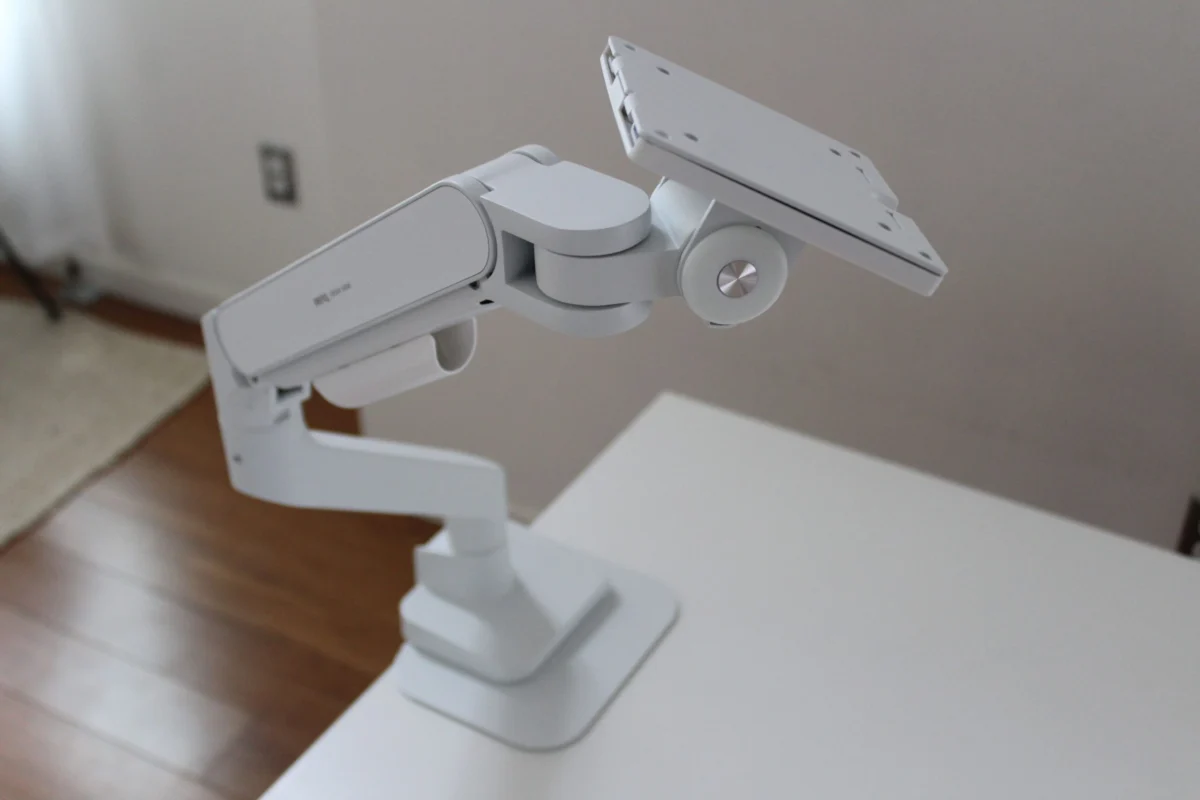
The monitor arm market, particularly on platforms like Amazon, often features products that share underlying components despite different branding. The Branch Monitor Arm, priced at $129, serves as a prime example, being "nearly identical to the BenQ Ergo Arm." This common practice of manufacturers using similar parts can make differentiation challenging for consumers, yet subtle differences can significantly impact user experience.
While the Branch arm is recognized as a solid option and is slightly more affordable than its BenQ counterpart, it comes with specific drawbacks. Notably, it "doesn’t come with the reinforcement plate to protect your desk," a feature that can be vital for preventing indentations or damage, especially on softer wood or laminate surfaces under sustained pressure. Furthermore, its dual-arm version is noted as "not as versatile" as some alternatives. Versatility in a dual-arm setup often refers to the range of motion, independent adjustability of each arm, and the ease with which monitors can be positioned side-by-side or stacked. The Branch arm, while functional, might present limitations for users who require highly flexible dual-monitor configurations or prioritize desk protection.
Monoprice Workstream Single Monitor Arm for $83: Robustness for Diverse Setups

For users managing multiple displays, including ultrawide and vertical monitors, a reliable and adaptable monitor arm is paramount. Julian Chokkattu, who uses the dual version of the Monoprice Workstream Single Monitor Arm, has lauded its performance over several months. This arm has been instrumental in supporting a 32-inch ultrawide monitor alongside a wide vertical monitor, a demanding configuration that requires significant stability and smooth adjustability.
A key highlight of the Monoprice arm is its consistent performance: the "arms move smoothly and don’t sink under the weight of the screens." This smooth motion is crucial for effortless adjustments, allowing users to quickly reposition their displays for optimal viewing angles or collaborative work without wrestling with stiff mechanisms. Another practical advantage mentioned is its "clamp large enough for my thick 5-inch desktop." This addresses a common issue where many monitor arm clamps are designed for standard desk thicknesses, leaving users with thicker desktops struggling to find compatible solutions. The Monoprice Workstream arm, therefore, stands out for its robust build, fluid operation, and accommodating design, making it suitable for a variety of desk environments and multi-monitor setups.
Pout Eyes 12 Monitor Arm for $55: The Trade-offs of Budget Options
The allure of a low-priced monitor arm is strong, but caution is advised when exploring "super cheap monitor arms on Amazon." The Pout Eyes 12 Monitor Arm, once a "solid budget monitor arm option" at $55, exemplifies the delicate balance between affordability and functionality. While initially praised for its "clean look and cheap price," and having "a lot to like about it," its budget nature comes with certain compromises.
One distinguishing feature was its "dual-tone, gray-and-black aesthetic," which offered "a bit more flavor than your average all-black monitor arm," suggesting that even at a lower price point, design can be a differentiator. However, the arm utilizes a "mechanical, or ‘spring-assisted,’ mechanism," rather than a gas spring. This means "the motion isn’t as fluid as a gas spring," resulting in a stiffer and less seamless adjustment experience. While functional for users who make infrequent adjustments, those who frequently reconfigure their screens might find it less convenient. A significant development for this product is its current status: it "appears it’s no longer being sold directly to consumers, and is primarily a business-only product," indicating a shift in market strategy, possibly due to factors related to distribution or target audience.
AmazonBasics Adjustable Desk Mount Arm for $29: A Lesson in False Economy
Sometimes, the lowest price can lead to the highest frustration, as demonstrated by the AmazonBasics Adjustable Desk Mount Arm, priced at a mere $29. The testing experience began poorly, with the "first version… beat up and busted," and even its "replacement box had a big hole in it," signaling potential quality control or shipping issues. Beyond the initial packaging problems, the arm’s performance also fell short.
The reviewer strongly advises that "your monitor (and your neck) deserves something better than this." The core issue lies in its "old-school pole design," which renders "adjustments inconvenient to make." Unlike fully articulated arms, pole designs require loosening and tightening clamps for height adjustments, making fluid repositioning impossible. Furthermore, the arm was described as "pretty shaky," and stability was a persistent problem, as it "couldn’t get it to be as stable as other monitor arms I tested." A shaky monitor arm not only detracts from the user experience but can also be a safety concern, potentially causing eye strain from a constantly moving screen or even posing a risk to the monitor itself. This experience underscores that while it might function marginally better than some "plastic, bottom-of-the-barrel stuff," the ergonomic and stability compromises make it a false economy.
Mount-It! Heavy Duty Dual Monitor Arm for $322: Long-Term Reliability for Dual Setups

For professional or power users requiring a robust and long-lasting solution for multiple monitors, the Mount-It! Heavy Duty Dual Monitor Arm, priced at $322, presents a compelling option. Julian Chokkattu used this mount for "years" to support his 34-inch ultrawide monitor, reporting that it "worked like a charm." This extended period of flawless operation is a testament to its durability and reliable engineering.
The arm is designed to accommodate screens ranging from "15 and 34 inches" and can support monitors "up to 20 pounds" each, making it suitable for a wide array of display sizes and weights. Beyond its strength, the Mount-It! arm boasts practical features like adjustability, which ensures users can achieve optimal viewing angles and ergonomic positioning. It also includes "built-in cable management," a critical feature for maintaining a tidy and professional workspace by routing power and display cables discreetly. Furthermore, its design is described as "doesn’t look hideous," suggesting an aesthetic appeal that complements modern office environments. Crucially, it uses the VESA mounting standard, a universal system that ensures compatibility with most modern monitors, though users should always verify their monitor supports this standard.
Understanding the Value of Monitor Arms: Ergonomics and Space Savings
The decision to invest in a separate monitor arm, detaching a monitor from its factory stand, can sometimes seem like an extra step. However, the benefits, particularly in ergonomic flexibility and space savings, are substantial and often outweigh the initial effort.
Ergonomic Flexibility: Many monitors come with basic stands offering limited height adjustment. This often forces users into suboptimal postures, leading to neck and back strain over time. A quality monitor arm provides a "dramatically wider range of motion," allowing for precise height, tilt, swivel, and pivot adjustments. Crucially, it enables users to position their monitor at "eye level," which is ideal for maintaining a neutral spine and reducing strain. The ability to "pull it forward when you want to lean in" offers dynamic adaptability, catering to different tasks and preferences with unparalleled ease compared to fixed stands.
Space Savings: Traditional monitor bases, especially for larger or ultrawide displays, consume significant desk real estate. By mounting a monitor on an arm, the "unwieldy monitor base" is eliminated, resulting in a "cleaner workspace" and "more room for storage." This is particularly impactful for "larger monitors, such as ones that use an ultrawide aspect ratio, which need infamously huge bases to hold up the extra weight." The liberated desk space contributes to a less cluttered environment, promoting focus and productivity.
Key Considerations When Choosing a Monitor Arm
Navigating the vast market of monitor arms requires attention to several critical factors:
Gas-Spring vs. Mechanical-Spring Monitor Arms

The term "gas spring" is frequently encountered when researching monitor arms. This refers to an internal cylinder filled with nitrogen gas, which creates a powerful counterbalance for adjustments. Gas-spring arms typically offer "smoother and less rigid" motion, making adjustments feel effortless and fluid. They often come at a higher price point due to this advanced mechanism. In contrast, "mechanical springs" are more traditional, resulting in a "stiffer" feel when moving the monitor. While cheaper, they are a decent option for users who do not anticipate making frequent adjustments.
Dual-Monitor Arm vs. Two Single Monitor Arms
For setups involving two monitors, the choice between a single "dual-monitor arm" and "two single monitor arms" depends on specific needs. A dual-monitor arm simplifies the setup by using a "single clamp" and generally results in "less mess." It also facilitates easier side-by-side positioning without awkward gaps. However, for PC gaming setups or scenarios where a primary display needs to be perfectly "centered" in the user’s view, "two single monitor arms" may be preferred. Dual-monitor arms can sometimes make it challenging to center one screen if it’s the dominant display, and two single arms offer greater flexibility for positioning a secondary monitor vertically.
Ensuring Compatibility: Monitor and Desk Requirements
Before purchasing a monitor arm, it’s crucial to confirm that both your monitor and desk can support it.
Testing Methodology and Future Outlook
As a dedicated monitor reviewer, the testing process for monitor arms is rigorous. Each arm is thoroughly assembled, mounted to a suitable monitor, and clamped securely to a desk. For heavy-duty models, larger-format or ultrawide displays are used to rigorously assess their stated weight capacities and stability. The selection process aims for a balanced representation of both established brands and reputable smaller companies found on platforms like Amazon. The goal is to identify products that genuinely "stand out from a design and functionality perspective," given that many arms share common components.
Looking ahead, the testing will expand to the higher-end market, including sophisticated offerings from boutique office furniture companies such as Humanscale and Herman Miller. Concurrently, efforts will continue to delve into the more budget-friendly segments of Amazon, with the aim of uncovering "gems from the depths that balance quality with affordability," ensuring comprehensive coverage for all types of users.






