11

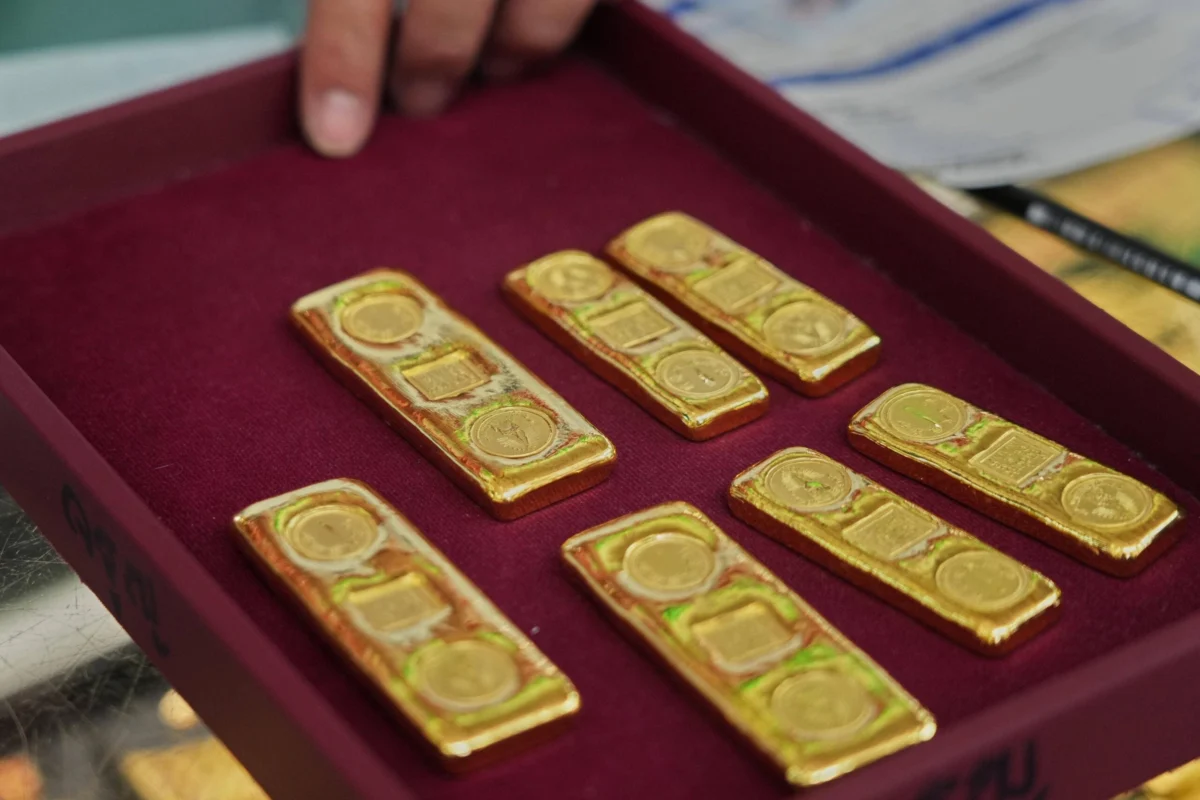
The price of gold reached its highest level since early June on Wednesday, breaking out of what has been a largely stagnant summer for the precious metal. Analysts widely credit this significant price increase to a combination of factors, primarily the Treasury Department’s recent announcement regarding enhanced liquidity support and a weakening U.S. dollar. This rally marks a notable shift after months of subdued performance, reigniting investor interest in the safe-haven asset amidst evolving economic signals.
Key Drivers Behind Gold’s Ascent
On Friday, the price of gold soared to an intraday high of $4,557.60, representing an impressive gain of more than 3%. This surge propelled the precious metal to its highest valuation since June 4, signaling a strong recovery from its previous slump. The primary catalysts for this upward momentum have been meticulously analyzed by market experts.
One of the most significant factors identified by analysts is the Treasury Department’s announcement early Wednesday that it would effectively double the size of its liquidity support buyback operations for 10-to-30 year securities. This move, aimed at providing greater stability and liquidity in the long-term bond market, has had a direct and positive impact on precious metals. When the Treasury buys back long-term securities, it injects liquidity into the financial system, which can put downward pressure on bond yields. Lower yields reduce the opportunity cost of holding non-yielding assets like gold, making them more attractive to investors.
In a detailed note cited by Reuters, TD Securities articulated the profound effect of the Treasury’s action, stating that it gave metals a "jolt of life." The firm suggested that gold investment could "quickly return amid Treasury liquidity support, a Fed willing to look through an energy shock, and a growing stagflation narrative, which should all ultimately see lower real rates." This analysis highlights a confluence of supportive conditions for gold. "Lower real rates" refer to interest rates adjusted for inflation; when real rates decline, the appeal of gold, which traditionally offers no yield but acts as an inflation hedge, increases. The prospect of the Federal Reserve tolerating an "energy shock" (implying less aggressive monetary tightening in response to rising energy prices) and a "growing stagflation narrative" (characterized by high inflation and slow economic growth) further bolsters gold’s safe-haven appeal, positioning it as a preferred asset in uncertain economic environments.
Adding to the bullish sentiment, Ole S. Hansen, head of commodity strategy at Saxo Bank, specifically attributed a substantial portion of gold’s price rise to a weakening U.S. dollar. In a post on X (formerly Twitter) on Wednesday morning, Hansen noted the dollar’s decline, with the U.S. dollar index down approximately 0.7% by Wednesday afternoon. He elaborated on this dynamic, writing, "The combination of lower yields and a weaker dollar providing fresh tailwind, reinforcing the recovery seen since early August." The inverse relationship between the dollar and gold is a fundamental principle in commodity markets. A weaker dollar makes gold cheaper for investors holding other currencies, thereby increasing demand and driving up its price. Conversely, a stronger dollar tends to make gold more expensive, dampening demand. The concurrent decline in both bond yields and the dollar created a powerful "tailwind" for gold, enhancing its attractiveness across the board.
Gold’s Volatile Summer Performance
The recent upswing in gold prices marks a significant departure from its largely stagnant performance throughout most of the summer. Before this latest rally, the precious metal had endured a period of considerable volatility and underperformance, challenging investor confidence.
Earlier this month, gold showed initial signs of recovery, posting its best week in seven months. During that period, the price rose by approximately 7%, an encouraging rebound that offered a glimpse of the current momentum. This early August surge was primarily attributed to a weaker dollar, a trend that has since intensified, coupled with declining Treasury yields and an unexpected slump in employment data. Such economic indicators often suggest a cooling economy or a less hawkish stance from central banks, both of which can be supportive of gold. A weaker job market, for instance, might reduce the likelihood of aggressive interest rate hikes, making non-yielding assets relatively more appealing.
However, prior to this August surge, gold prices were largely confined within a narrow range, fluctuating mostly between $4,000 and $4,200 for a significant portion of the summer. This period of consolidation followed what had been gold’s worst quarter in over a decade. For the three months ending June 30, gold shed approximately 16% of its value, marking its most substantial percentage decline since 2013. By late June, both gold and silver had fallen to about seven-month lows, with gold dipping below the $4,000 mark. At that time, analysts pointed to a stronger dollar, which had reached its highest level in more than a year, as a primary deterrent. Additionally, expectations that the Federal Reserve might implement interest rate hikes later in the year weighed heavily on market sentiment, increasing the opportunity cost of holding gold.
Silver’s Parallel Movement
While gold captured headlines with its two-month high, silver also experienced a moderate price increase on Wednesday, albeit with a different trajectory. The industrial and precious metal rose by approximately 3%, reaching an intraday high of $66.16.
Unlike gold, silver’s recent climb did not push it to a two-month high. Silver had previously achieved higher prices, reaching around $67 just last week, and had even surpassed $70 in mid-June. This suggests that while silver often moves in tandem with gold due to its status as a precious metal, its price dynamics are also influenced by industrial demand, which can lead to different short-term fluctuations. Silver’s dual role as both a monetary asset and an industrial commodity means its price can be more volatile and sensitive to broader economic activity beyond just safe-haven demand.
The Federal Reserve’s Interest Rate Outlook
The potential for the Federal Reserve to raise interest rates later this year remains a significant point of discussion among investors and analysts, with considerable implications for precious metals. Higher interest rates are generally associated with decreasing metals prices, meaning any rate hike could potentially cause the prices of gold and silver to fall. This is primarily because higher rates increase the attractiveness of interest-bearing assets, such as government bonds, relative to non-yielding assets like gold.
According to CME Group’s FedWatch tool, a widely used indicator that tracks the probability of Federal Reserve interest rate changes based on futures market data, the likelihood of a rate hike at the Fed’s December meeting currently stands at about 69.2%. This indicates a strong market expectation for a policy tightening by year-end. However, the probabilities for earlier rate hikes are considerably lower, suggesting less certainty about immediate action. For September, the likelihood of a rate hike is estimated at 36.6%, while for October, it is slightly higher at 49.2%. These figures suggest that while the market anticipates a hike, the timing remains fluid, with December being the most probable window. Any shift in these probabilities, driven by incoming economic data or Fed commentary, could significantly influence gold’s future performance.
Historical Context: All-Time Highs and Subsequent Decline
The current rally in gold and silver comes after both metals retreated significantly from the all-time highs they reached earlier this year, capping a period of extraordinary growth. In January, the precious metals market witnessed a months-long, historic price rally. Gold peaked around an astonishing $5,600 per ounce, while silver reached a record $121 per ounce. This monumental surge was driven by a unique confluence of global economic and geopolitical factors.
However, since those peaks, both metals have experienced a substantial decline. Silver, in particular, has shed nearly half of its record value, illustrating the sharp correction that followed its unprecedented rally. This general decline throughout the year has coincided with the unfolding of the Iran war, during which gold and silver have largely traded inversely with oil prices. As oil prices spiked due to the conflict, investors’ focus and capital often shifted, leading to a de-emphasis on precious metals as the primary safe haven.
The factors that fueled the initial dramatic rise in gold and silver prices earlier in the year were diverse and powerful. They included a period of sustained interest rate cuts by central banks globally, which made non-yielding assets like gold more attractive by reducing the opportunity cost of holding them. Additionally, President Donald Trump’s tariffs and escalating international tensions contributed to widespread economic uncertainty, driving investors towards traditional safe havens. Furthermore, increasing demand for metals from technological industries, particularly for silver which has numerous industrial applications, provided an additional layer of support for prices during that rally. The current market dynamics represent a complex interplay of these historical influences and new economic signals, shaping the ongoing narrative for precious metals.
Further Reading: Inflation Rose As Expected In July—But Not Enough To Force An Interest Rate Hike, Analysts Say (Forbes)