 11
11
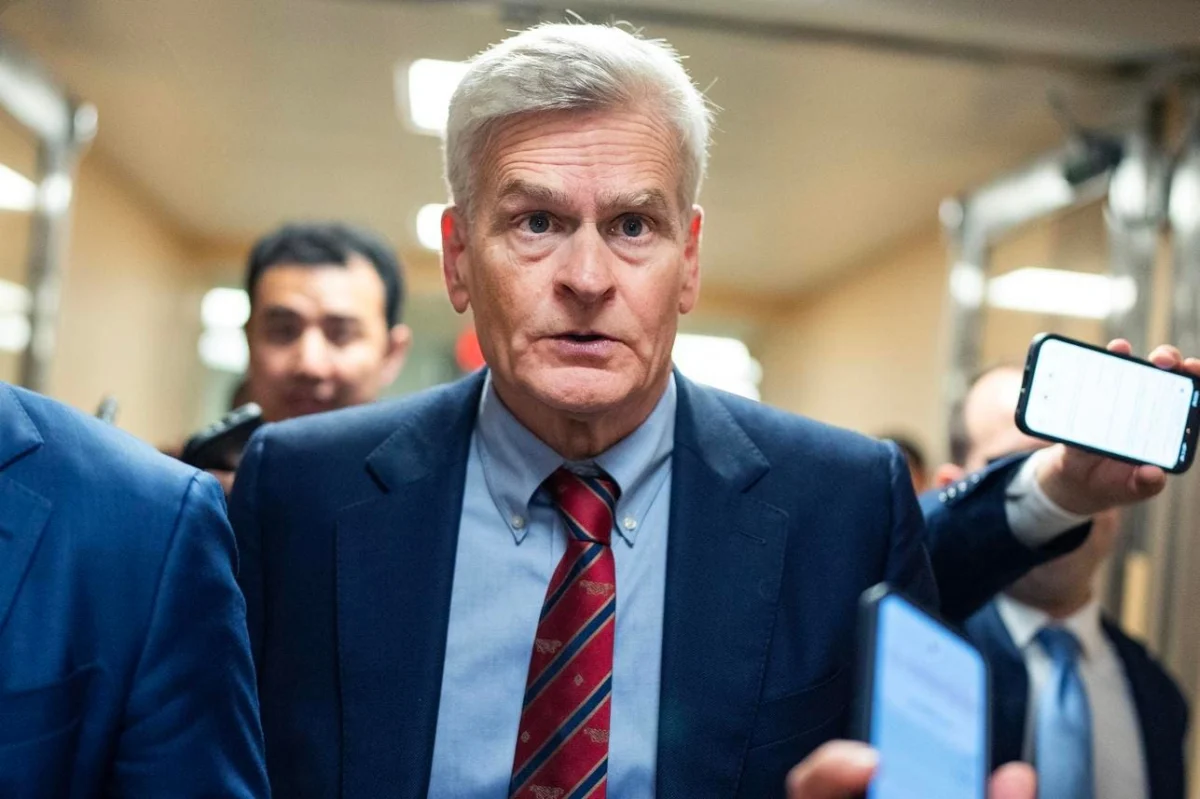
Todd Blanche has been confirmed as President Donald Trump’s Attorney General, securing the pivotal vote in a narrow overnight Senate proceeding. The confirmation, finalized with a 50-49 vote, came after Senator Bill Cassidy (R-La.) unexpectedly switched his stance to "yes," providing Blanche with the critical support needed to reach the majority threshold. The late-night confirmation marks a significant moment for the Trump administration, solidifying its top legal officer amidst considerable political scrutiny and a highly divided Senate.
The confirmation process for Blanche has been fraught with tension, reflecting the deep partisan divisions within the U.S. Capitol and concerns about the independence of the Department of Justice under President Trump. The Attorney General position is one of the most powerful and sensitive roles in the federal government, responsible for enforcing federal laws, providing legal counsel to the President and executive branch agencies, and overseeing the nation’s federal law enforcement apparatus, including the FBI. Blanche’s confirmation ensures a permanent head for the Justice Department, replacing an interim arrangement that had been in place since April.
Senator Cassidy, in a floor speech delivered on Friday, articulated the pragmatic reasoning behind his decision to support Blanche. "Blanche is not perfect," Cassidy conceded, acknowledging the criticisms leveled against the nominee. However, he framed the choice not as one between an ideal candidate and Mr. Blanche, but rather "between Mr. Blanche and another acting attorney general who may not run the department effectively under President Trump, and who indeed may not be as good as Mr. Blanche." Cassidy’s statement highlighted a preference for a confirmed, albeit imperfect, leader over continued uncertainty and potential instability within the Justice Department. His decision ultimately broke the deadlock and propelled Blanche’s nomination forward, underscoring the delicate balance of power and political maneuvering that often characterizes high-stakes Senate confirmations. The senator’s switch underscored the complex calculations often made by lawmakers, weighing potential flaws in a nominee against the perceived risks of an alternative, or the administrative vacuum that could result from a failed confirmation.
Cassidy’s decision came on the heels of another Republican senator, Lisa Murkowski of Alaska, publicly announcing her intention to vote against Blanche. Murkowski, a frequent critic of the administration, expressed profound distrust in Blanche’s capacity to "check the worst impulses of this administration." Her opposition stemmed from several key Justice Department decisions during Trump’s second term that she found troubling. Among her specific concerns were the administration’s handling of the sensitive "Epstein files," the alleged targeting of President Trump’s political adversaries, and the granting of immunity to Trump and members of his family. Murkowski’s remarks resonated with a broader narrative among critics who argue that the Justice Department, under Trump, has at times appeared to prioritize political loyalty over impartial justice. The "Epstein files" likely referred to controversies surrounding the investigation or release of information related to Jeffrey Epstein, a financier convicted of sex offenses, which drew widespread public attention and scrutiny regarding the handling of high-profile cases. Concerns about "targeting political enemies" often surface when federal agencies are perceived to be investigating or prosecuting individuals primarily for their opposition to the sitting administration, rather than for objective legal reasons. The issue of "immunity granted to Trump and his family" raised questions about potential favoritism and whether the principle of equal justice under the law was being upheld, especially for those connected to the highest office.
The final vote tally saw Murkowski and Senator Susan Collins (R-Maine) join all Democrats in opposing Blanche’s nomination. The absence of Senator Mitch McConnell (R-Ky.), who was not present in the Senate for the vote, meant that the Republican caucus was slightly smaller, though Cassidy’s change of heart ultimately ensured the confirmation despite the bipartisan dissent. The 50-49 margin underscored the highly contentious nature of the nomination, making it one of the narrowest confirmations for an Attorney General in modern history. The unity of the Democratic caucus against Blanche signaled their collective apprehension regarding his independence and his potential alignment with the President’s directives.
Following his confirmation, Todd Blanche issued a statement early Saturday morning, expressing his profound gratitude and outlining his commitment to his new role. "I am deeply honored by the trust and confidence President Trump has placed in me to lead the Department of Justice as our great nation’s 88th Attorney General," Blanche posted on X, formerly Twitter. He further extended his appreciation to the Senate for their late-night efforts to finalize the process. Addressing the dedicated public servants within the Department of Justice, Blanche added, "thank you for your work each day to uphold the law and keep our country safe. God bless America." His statement was a conventional yet significant declaration, marking his official assumption of one of the most demanding positions in the federal government. It set a tone of gratitude and a commitment to the foundational principles of the Justice Department.
The path to confirmation for Blanche involved significant concessions and political bargaining. Earlier in the week, the Senate Judiciary Committee had voted to advance Blanche’s nomination, but not without overcoming initial resistance. A key turning point involved Blanche’s agreement to formally terminate the controversial $1.8 billion "anti-weaponization fund." This fund, intended to support Trump’s political allies, had been a major point of contention and a sticking point for several Republican senators. The fund was widely criticized by Democrats and some Republicans as an attempt to politicize the Justice Department further and to potentially use federal resources to pursue perceived enemies of the administration. By agreeing to kill the fund, Blanche managed to secure the votes of two crucial GOP holdouts, Senators John Cornyn of Texas and Thom Tillis of North Carolina, thereby allowing his nomination to proceed from the committee to the full Senate floor.
However, concerns lingered even after Blanche’s agreement. Critics pointed out that while Blanche had committed to ending the fund, President Trump himself had not signed an agreement to modify his original settlement with the IRS that initially established the fund. This created an apprehension that the fund, despite Blanche’s assurances, could potentially be revived or reconfigured in the future, leaving a loophole for future administrative actions that might bypass congressional intent. This unresolved aspect highlighted the ongoing tension between the independence of the Attorney General and the influence of the President, a central theme throughout Blanche’s confirmation hearings.
Senator Collins, in her decision to vote against Blanche, cited not only concerns related to the IRS settlement (likely referring to the anti-weaponization fund issue) but also his opposition to restricting the mail delivery of abortion pills. This stance on a highly charged social issue further alienated some moderate lawmakers and added another dimension to the reasons for opposing his nomination. The debate over mail delivery of abortion pills touches upon access to reproductive healthcare and the federal government’s role in regulating such access, making it a significant policy area for the Justice Department.
Blanche’s appointment came after President Trump fired his predecessor, Pam Bondi, in April. Bondi’s abrupt dismissal had underscored the President’s willingness to remove top officials who he perceived were not fully aligned with his agenda, contributing to the broader concerns about the politicization of the Justice Department. Prior to his confirmation, Blanche had been serving as interim Attorney General, a temporary status that allowed him to lead the department while his nomination was under review. His confirmation transitions him from an acting capacity to a fully confirmed cabinet member, providing greater stability and authority to the Department of Justice at a critical juncture for the Trump administration.
The confirmation of Todd Blanche as the 88th Attorney General of the United States marks the end of a contentious nomination battle and signals the Trump administration’s solidified leadership at the nation’s top law enforcement agency. His tenure will undoubtedly be closely watched by both allies and critics, particularly concerning the independence and integrity of the Department of Justice in the politically charged environment of Washington, D.C.