 11
11
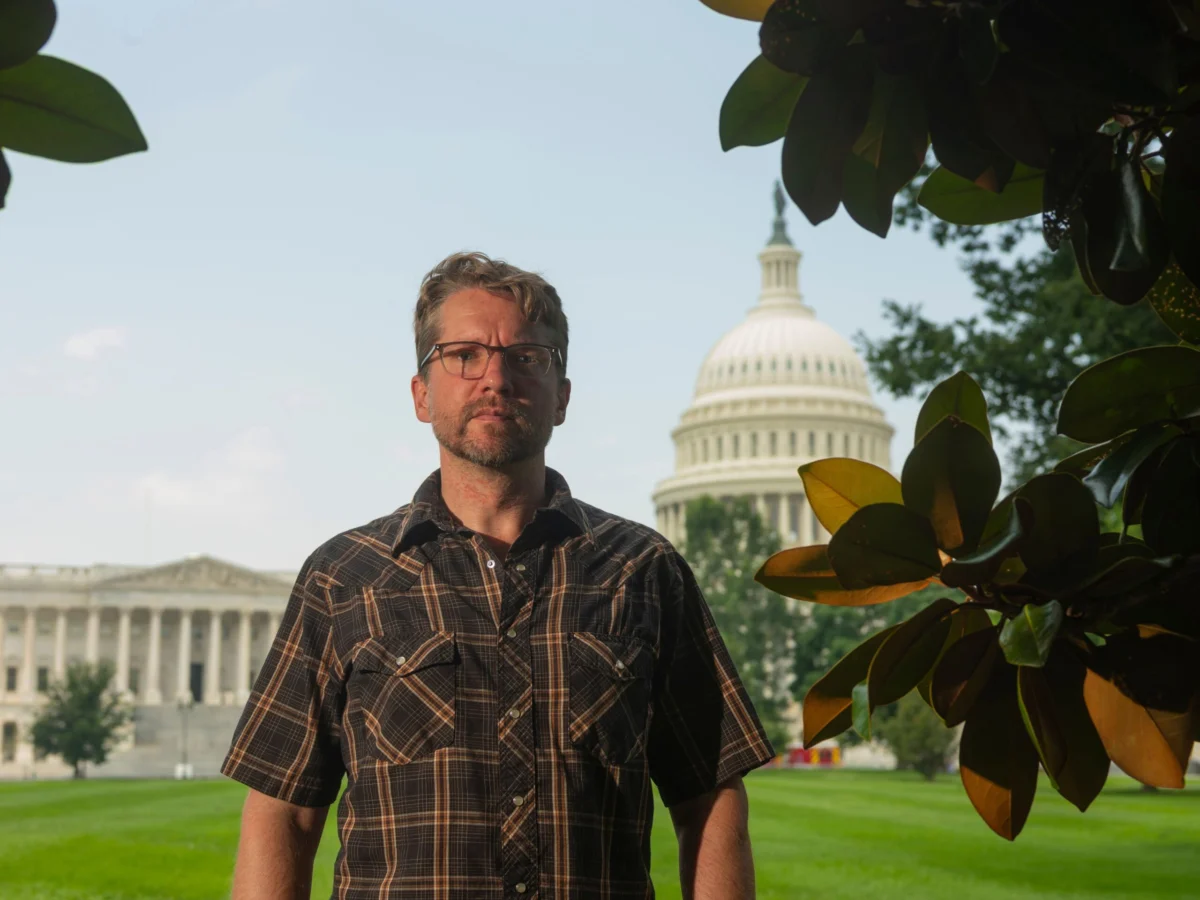
Atlanta, Georgia – Joe Allen, a figure who rose to national prominence as an anti-tech voice on Steve Bannon’s War Room podcast, embodies the surprising convergence of political ideologies in a rapidly growing movement against artificial intelligence (AI) and the massive data centers that power it. His quest to understand the name of a delivery robot in downtown Atlanta, an almost childlike sprint toward the autonomous vehicle, underscores a deeper anxiety about technology’s encroaching presence. This seemingly innocuous interaction highlights a central question the movement grapples with: What happens when technology replaces human labor and creativity, and what is its true cost?

The journalist, attempting to secure an interview with Allen before his flight from Atlanta, observes firsthand the eclectic nature of this burgeoning resistance. Allen, author of Dark Aeon: Transhumanism and the War Against Humanity, advocates for an "inverse singularity," a theory suggesting humanity’s intellect and creativity will collapse as reliance on AI for information grows. His lectures, delivered across the country, attract diverse audiences, from Georgia Tech students to self-described "politically homeless" influencers. His style, a blend of jarring right-wing rhetoric and apocalyptic visions of a tech-driven future, resonates with a public increasingly wary of AI’s rapid development.
For decades, data centers operated largely unnoticed, quietly supporting the internet’s infrastructure in areas with optimal fiber connectivity and power access, like Silicon Valley and the DC area. However, the advent of ChatGPT and the subsequent AI race catalyzed a "massive buildout" of these facilities, particularly "hyperscalers"—behemoth versions requiring immense resources. Tech oligarchs and the Trump administration, which rolled back environmental regulations to expedite development, pushed for rapid expansion.

This accelerated growth sparked widespread alarm. Reports emerged of Elon Musk allegedly trucking unpermitted gas turbines to his xAI campus in Memphis, located in a predominantly Black neighborhood already facing high pollution levels. A widely cited (though disputed) Washington Post article claimed a single ChatGPT search consumed a bottle of water. Skyrocketing electric bills, attributed by some to new data center loads, fueled public discontent. Simultaneously, tech CEOs publicly mused about AI’s potential to eliminate jobs and supersede human creativity, deepening anxieties.
The resulting backlash has been swift and widespread. A recent Gallup poll indicated that 70 percent of Americans would oppose data center construction in their communities. Local and state governments have introduced moratoriums and bans, including in Georgia and New York, and deep-red areas like Hill County, Texas. Protests at public meetings have led to arrests and detentions in states such as New Jersey, California, Wisconsin, and Indiana.

Washington initially appeared unprepared for this wave of opposition. Interestingly, early national political figures to vocalize concerns were right-wing populists like Marjorie Taylor Greene and Thomas Massie, who warned against leveraging AI regulations to seize private property for data centers. Greene famously tweeted in 2025, "Forcing eminent domain on people’s private properties to link the future Skynet is not very Republican."
Steve Bannon, a long-time critic of technology, leveraged his War Room podcast, guided by Allen, to galvanize a "MAGA coalition" against AI regulation. Bannon openly stated his intention for Allen to reach a broad base, telling ABC News that Allen was to go to "every church that asks you. I want you to go to MAGA, Tea Party meetings. I want to get the base in the loop on this at the ground floor." This strategy proved effective, as Bannon’s coalition successfully blocked a Trump administration attempt to re-up a regulation ban in late 2025.

Polling and policy typically treat data center opposition and AI anxiety as separate issues. However, research suggests a strong correlation: few opponents of data centers actually live near them, and most are also skeptical of AI. Bannon’s War Room reflected this understanding, with one segment describing data centers as "weapons labs" turned "onto the population."
Allen’s unique position as an outsider allowed him to bridge the insular world of AI safety and ethics, typically dominated by researchers in London or the Bay Area, with a mass-appeal, conspiracy-tinged flair. His engagements with prominent AI critics and futurists, and his appearances on War Room alongside figures like Max Tegmark, brought him to the attention of AI advocacy groups. In late 2025, the Center for AI Safety recruited Allen to advise "Humans First," a bipartisan group aimed at galvanizing public demand for AI guardrails.

The "Humans First" event in Georgia, where the journalist met Allen, attracted a diverse audience, including students from a nascent AI safety club and local Atlantans. Jeremy Ornstein, a Humans First staffer with a climate organizing background, set the tone, warning against "a tiny group of people in control racing ahead faster than ever with power and profit." Allen, sporting an American flag buckle, then delivered his lecture, featuring clips of Sam Altman interspersed with Heaven’s Gate leader Marshall Applewhite, drawing nervous laughter from the audience. He presented a dystopian future where tech oligarchs might replace humanity with robots, asserting that figures like Elon Musk (with Neuralink) and Sam Altman (blogging about humans as "biological bootloader for digital intelligence") substantiate these fears. His impassioned call to fight against being rolled over "like a monster truck in a white-trash arena" resonated surprisingly with the reporter.
The influence of Ted Kaczynski, the Unabomber, is palpable in Allen’s work. Allen recounts discovering Kaczynski’s "Industrial Society and Its Future" in the late 1990s, finding it more coherent than "peacenik or techie" arguments. This essay, which critiques modern society’s erosion of humanity, has found surprising resonance, even being positively reviewed on Goodreads by Luigi Mangione, an internet figure, and featured in a PCMag essay titled "The Unabomber Was Right." Even Ray Kurzweil, a prominent tech thinker, acknowledged Kaczynski’s "correctness on the deeply entangled nature of the benefits and risks" of technology.

This Kaczynski-esque environmentalism also echoes in other resistance movements, such as the NIMBYism against renewable energy projects in states like Vermont, which has seeped into the anti-data center movement. The "Make America Healthy Again" movement, too, reflects a similar sentiment that modern society and its inventions are poisoning the world.
The journalist also connected with Gage Bailey, a local activist in Troup County, Georgia. Bailey, a Democrat with an environmental science degree, discovered plans for a data center on former industrial land in 2025 with minimal public details. His research revealed concerns about power and water consumption from the local aquifer. He now manages a 4,000-person Facebook group and helps coordinate anti-data center efforts, reflecting a widespread grassroots mobilization. Despite Google being the eventual tenant, the company has reportedly ghosted environmental advocates, fueling Bailey’s ire against "the world’s most powerful corporations."

Bailey’s group, like many others across the country, demonstrates the potent, if sometimes uneasy, coalitions forming. As one mask-wearing protester at a New Jersey demonstration, concerned about AI ethics, put it, "Any enemy of my enemy is, at least, my temporary ally."
The "Humans First" movement, initially bipartisan, later split along partisan lines. The conservative wing retained the name, appointing Amy Kremer, an organizer of the January 6th "Save America" rally, as its chair. Allen, describing the group as "undergoing mitosis," metaphorically became "a lone organelle floating in the residual cytoplasm."

In the weeks following the journalist’s return from Georgia, the mainstream right intensified its focus on data centers. Tucker Carlson and Matt Walsh produced viral videos questioning projects, while politicians like Florida Governor Ron DeSantis and South Carolina gubernatorial candidate Nancy Mace announced support for data center moratoriums or legislation protecting local government authority.
A visit to Northern Virginia’s "Data Center Alley," one of the densest concentrations of data centers globally, revealed the sheer scale of construction and the constant, low hum emanating from facilities. These vast, imposing structures, often near affluent suburbs, further underscore the movement’s urgency. At a Humans First event, Alicia Shamblin shared the tragic story of her 23-year-old son, Zane, who died by suicide after hours of conversation with ChatGPT, which allegedly told him, "Rest easy, king."

Data centers, by uniting disparate communities across the political spectrum, present a unique opportunity for a unified front against tech oligarchs. This movement seeks a middle ground between wholesale rejection of technology and passive acceptance of Big Tech’s demands. However, reaching this equilibrium will be a challenging journey, one for which the current political system may be ill-prepared.