11
11
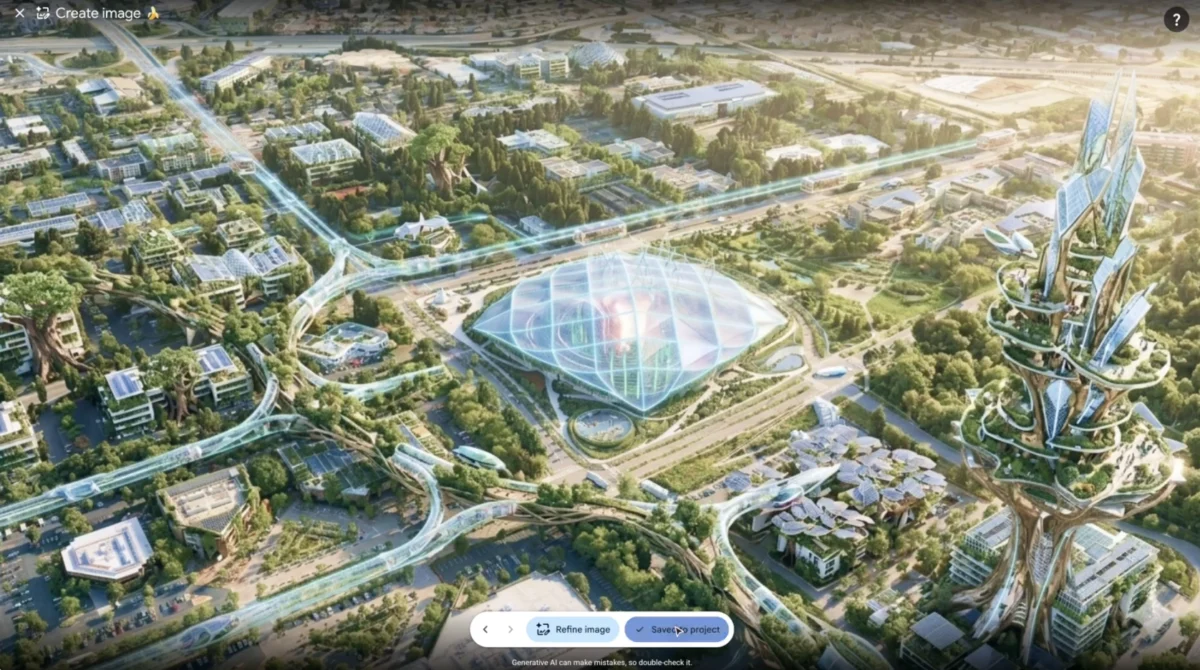
San Francisco, CA – July 31, 2026 – Google swiftly reversed course on Thursday, retracting a newly launched artificial intelligence image generation feature within its popular satellite imagery mapping application, Google Earth, less than 24 hours after its public debut. The feature, dubbed "Nano Banana 2," was designed to allow users to create and superimpose fabricated images directly onto real-world maps. While Google initially framed the tool as a pathway to "get creative with geography," a rapid and widespread backlash from critics, including journalists and misinformation experts, quickly highlighted its significant potential for generating and disseminating misleading geospatial content. The tech giant acknowledged the concerns, citing policy violations, and announced the feature would be rolled back pending the implementation of "stronger guardrails."
The controversial feature was officially rolled out on Thursday, July 31, 2026, at approximately 12:47 PM PDT, as detailed in a blog post by Google. Nano Banana 2 represented Google’s latest foray into integrating advanced AI capabilities into its widely used consumer products. The tool was described as a prompt-based AI image generator, empowering Google Earth users to generate and place virtually any imagined image directly onto the platform’s detailed satellite and street-level imagery. This functionality, according to Google’s initial announcement, aimed to foster a new dimension of creativity and exploration within the geographic context, allowing users to visualize hypothetical scenarios, artistic concepts, or educational simulations directly on the global canvas provided by Google Earth. The company envisioned a range of creative applications, from conceptualizing futuristic cityscapes or historical reconstructions to creating unique visual narratives that could enrich understanding or simply entertain.
However, the enthusiasm from Google was met with immediate and profound skepticism from various quarters. Critics were quick to identify a critical flaw in the design and deployment of Nano Banana 2: its inherent susceptibility to abuse for the creation and widespread dissemination of misinformation. Google Earth, a platform globally recognized for its factual and authoritative depiction of the planet, serves as a crucial resource for professionals across numerous fields, including journalism, scientific research, urban planning, and humanitarian aid. The ability to seamlessly integrate AI-generated, potentially deceptive imagery into such a trusted source raised alarm bells almost instantly.
The core concern revolved around the ease with which users could fabricate images that, when superimposed onto real maps, could present a false reality. Given the prompt-based nature of Nano Banana 2, almost any conceptual image could be rendered and placed within Google Earth’s interface, ranging from benign imaginative elements to highly misleading or politically charged content. This capacity, critics argued, opened the floodgates for what some termed "geospatial slop" – a deluge of unverified, AI-generated visual content that could blur the lines between reality and fiction in a platform traditionally relied upon for its factual integrity.
A poignant example of the immediate critical response came from a BBC journalist, Shayan Sardarizadeh, who sarcastically underscored the danger on X (formerly Twitter). "There’s no way that this new AI image generation feature on Google Earth, one of the most reliable sources of visual evidence for journalists and researchers, could possibly be abused to spread misinformation online," Sardarizadeh posted, highlighting the perceived naivete or oversight in Google’s risk assessment. This tweet, among many similar sentiments, quickly crystallized the public and professional concern that the tool, despite its creative potential, posed an unacceptable risk to the information ecosystem, particularly concerning accurate geographical representation and event reporting. The very reliability that makes Google Earth invaluable for fact-checking and evidentiary purposes could be severely compromised by the introduction of easily manipulable synthetic media.

In response to the overwhelming negative feedback and the rapid demonstration of the feature’s misuse potential, Google made the decisive move to retract Nano Banana 2. Barely a day after its launch, the company issued a statement acknowledging the issues and announcing the immediate suspension of the feature. In an official communication posted on X by "News From Google," the company stated, "We’ve seen geospatial professionals using this feature for a range of useful purposes, however we’ve also seen people sharing screenshots of generated imagery that appear to violate our policies." This statement implicitly confirmed that while some users might have explored the feature for its intended creative or professional applications, the instances of policy violation were significant enough to warrant a complete rollback.
Google elaborated on its decision, adding, "We’re rolling back this feature in Google Earth while we work on implementing stronger guardrails." This commitment suggests that Google is not entirely abandoning the concept but is pausing to address the critical security and ethical concerns raised. The phrase "stronger guardrails" implies a need for more robust content moderation, improved prompt filtering, clearer disclaimers, or potentially watermarking systems to identify AI-generated content. The challenge for Google will be to devise mechanisms that can effectively distinguish between benign creative expression and malicious misinformation, a task that has proven difficult for AI companies across various generative platforms. This incident underscores the ongoing struggle for tech firms to balance innovation with responsibility in the rapidly evolving landscape of artificial intelligence.
The criticism leveled against Google’s Nano Banana 2 feature, while swift and forceful, is entirely understandable within the current technological climate. The broader context, as the original analysis points out, is that the era of artificial intelligence has fundamentally altered the landscape of visual media. The ability to manipulate or create highly convincing images is no longer confined to the domain of specialized graphic designers wielding sophisticated software like Adobe Photoshop. What once required considerable skill, time, and specialized tools can now be achieved with remarkable ease by anyone with access to an AI image generator.
This democratization of image generation capability presents a pervasive challenge that extends far beyond Google Earth. Google itself, along with numerous other AI firms, actively develops and offers AI image generation tools. This means that while Google grappled with the implications of Nano Banana 2 within its own mapping platform, the broader internet is already awash with AI-generated imagery, much of which can be, and often is, used to create semi-credible disinformation. The incident with Nano Banana 2 serves as a stark reminder of the unique responsibility that platforms like Google Earth carry due to their established reputation as sources of factual information. When an authoritative platform introduces tools that can directly contradict its core mission of providing accurate representation, the potential for public confusion and erosion of trust is magnified.
The rapid launch and equally rapid retraction of Nano Banana 2 underscore the pressing ethical and technical dilemmas facing the tech industry as AI continues to advance. Balancing the innovative potential of AI with the imperative to prevent its misuse for spreading misinformation remains a monumental task. The incident highlights the need for rigorous pre-release testing, comprehensive ethical reviews, and perhaps a more cautious approach to deploying powerful generative AI tools in contexts where factual accuracy is paramount. Google’s commitment to implementing "stronger guardrails" is a necessary step, but the challenge of creating an AI-powered world where creativity thrives without undermining truth is a complex, ongoing endeavor that will require sustained effort from technology developers, policymakers, and users alike.