 11
11
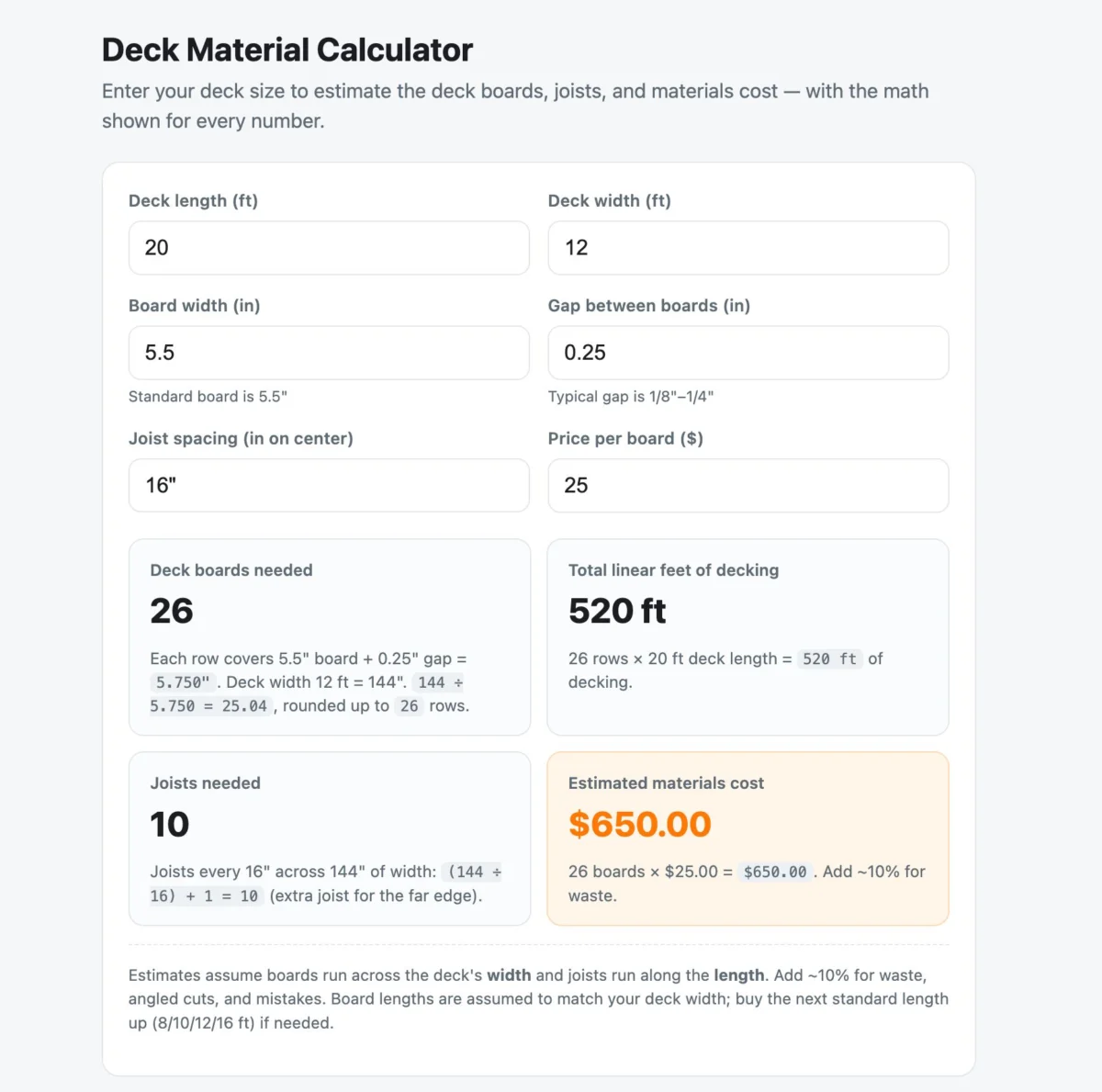
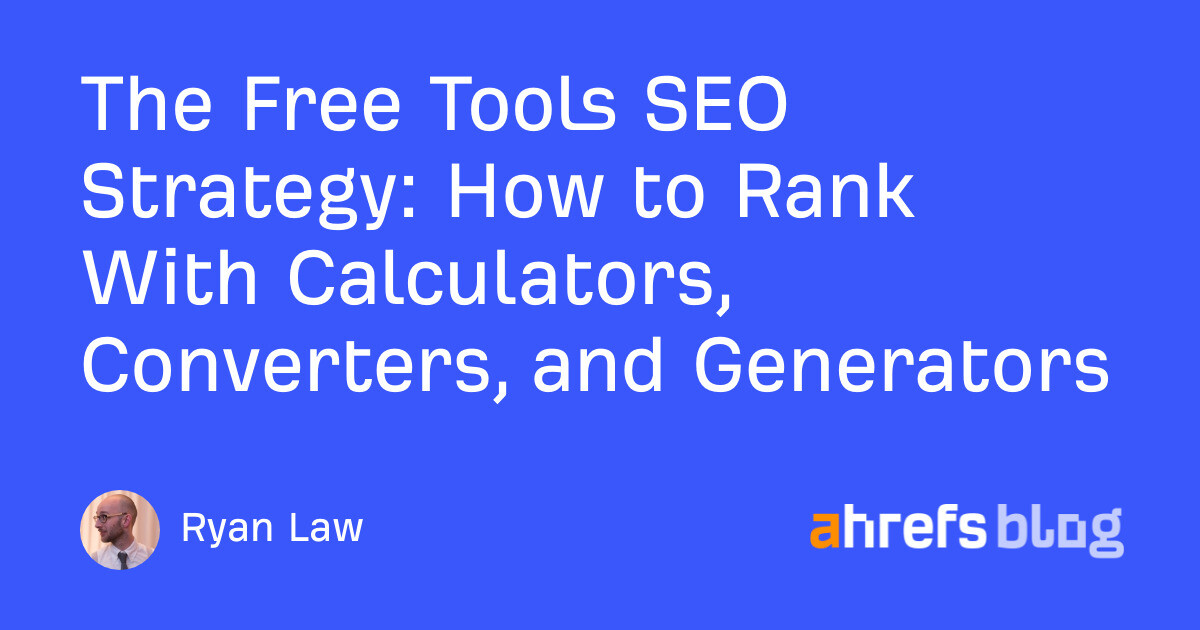
The internet’s most frequented pages are increasingly not articles, but interactive tools designed for immediate action. These include grade calculators, file converters, color palette generators, and email outreach templates, each addressing a searcher’s need to "do" rather than "read." This forms the core of the free-tools SEO strategy: instead of creating more content, businesses can build small, genuinely useful tools that rank for high-demand queries with limited competition. A single well-executed tool can capture hundreds of keywords and generate traffic for years.
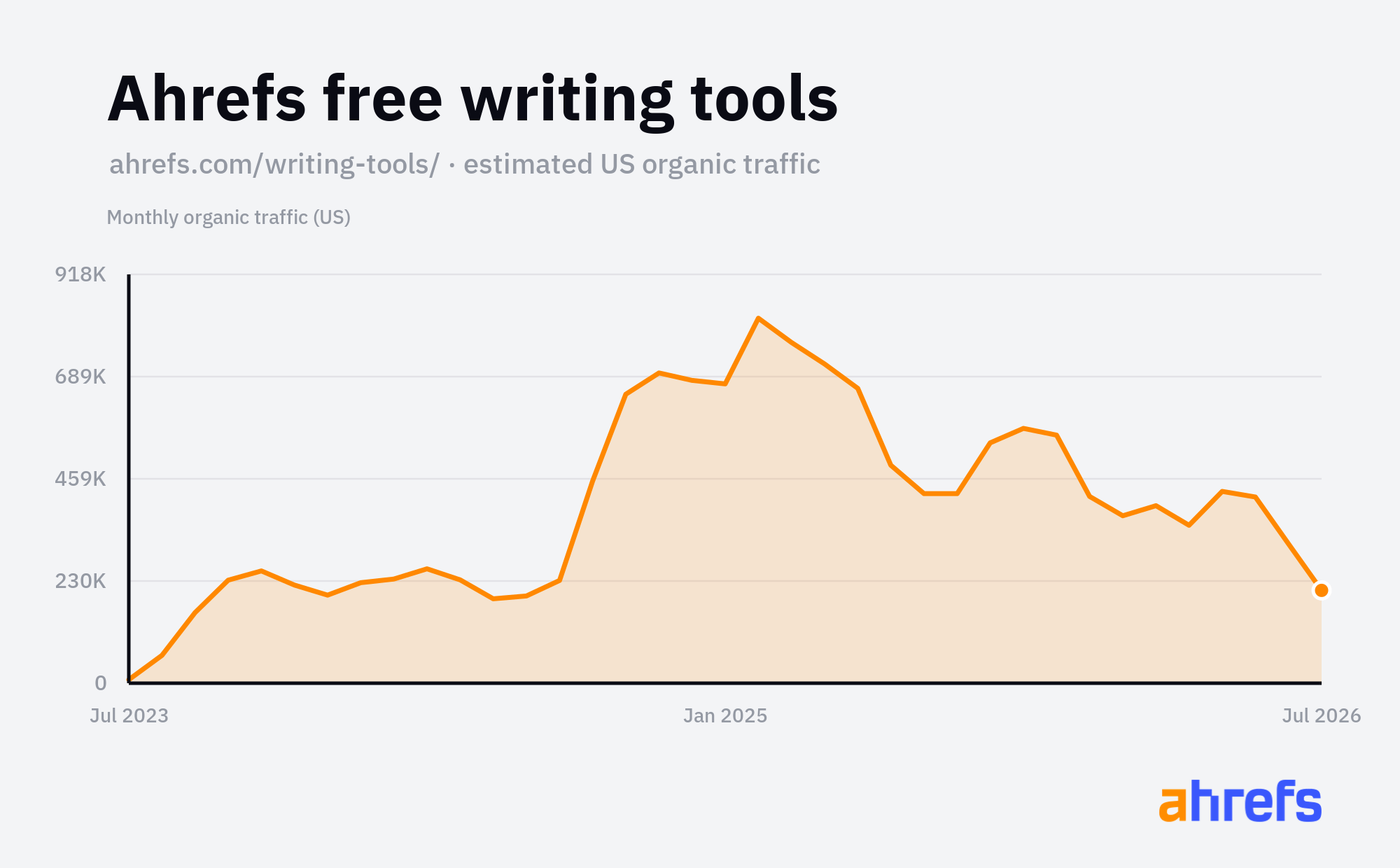
Ahrefs, a leading SEO platform, has demonstrated the efficacy of this approach. Their /writing-tools/ subfolder, launched in mid-2023, achieved a peak of nearly one million US organic visits per month and continues to attract hundreds of thousands of visitors. Their suite of free SEO tools, including a keyword generator, backlink checker, and traffic checker, are consistently among their highest-traffic pages, validating the strategy.
This approach is particularly relevant now due to the growing influence of AI. While AI models excel at synthesizing informational content, making them a challenge for traditional articles, they struggle to replicate the functionality of interactive tools. AI Overviews can explain how to perform a task, but they cannot provide the working calculator or converter itself.
Historically, the barrier to entry for tool development was cost. However, with platforms like Letaido and ChatGPT, building functional tools has become significantly more accessible, reducing the bottleneck from engineering to identifying the right tool to create. This opportunity may not last indefinitely, as the ease of AI-powered development narrows the competitive edge. Nonetheless, for now, there’s a significant chance to build sustainable search traffic through high-quality, AI-assisted free tools.
Ahrefs offers features to aid in generating organic traffic through free tools. The introduction of Letaido by Ahrefs allows users to build and deploy free tools from simple prompts, generating a functional, self-contained page without requiring developer expertise.
Calculators: Solving Immediate Needs
Calculators, which take user inputs to produce a needed number, exemplify this strategy. A search for "margin calculator," for instance, leads users to input their cost and sale price for an instant profit margin calculation, bypassing the need for an article.
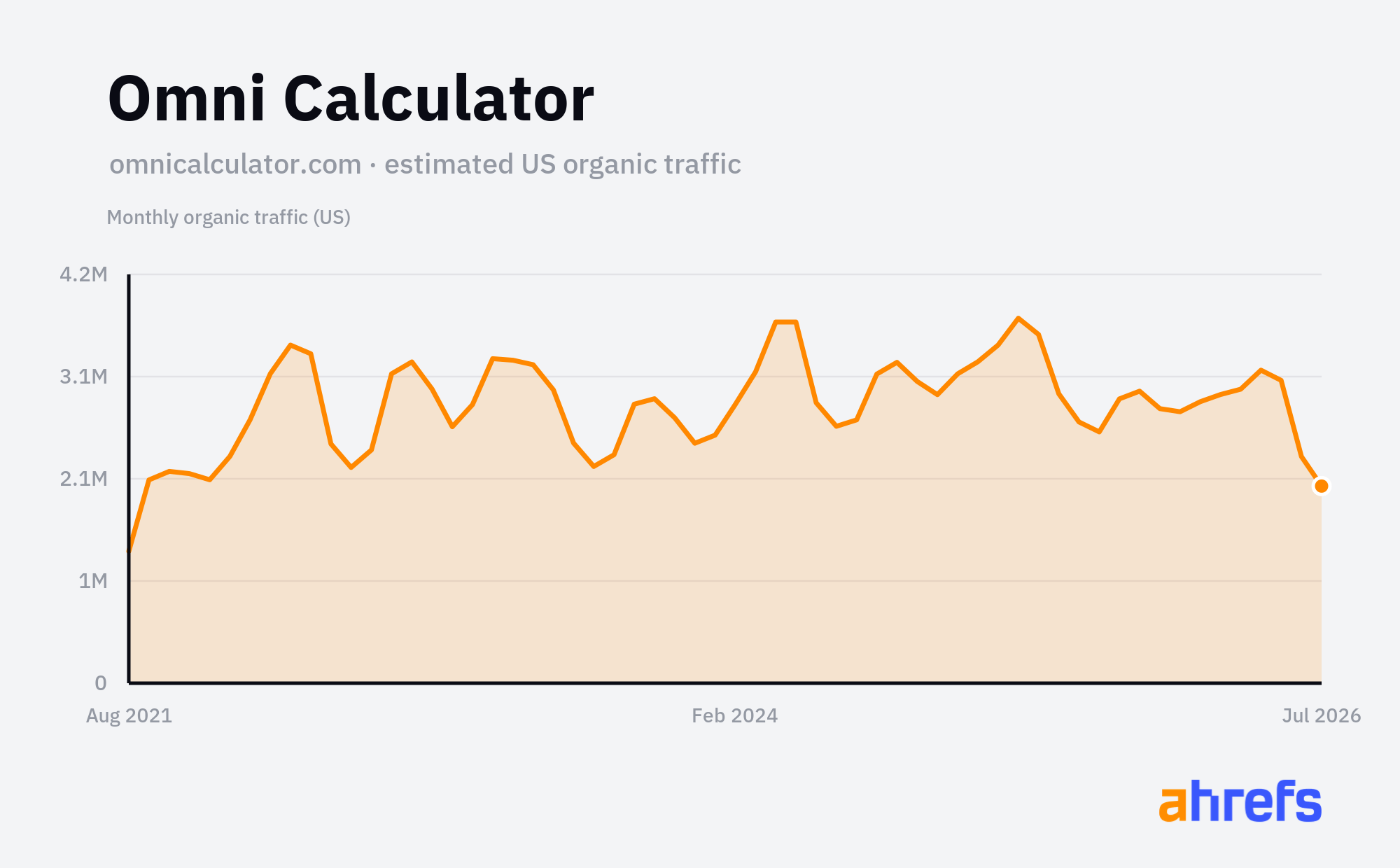
Omni Calculator showcases the potential of this model. It is not a traditional media brand or SaaS company but a vast library of single-purpose calculators, each targeting a specific "calculator" search query. With millions of monthly US visits from calculators for grades, finance, health, and unit conversions, Omni Calculator demonstrates the power of focused, single-function pages.
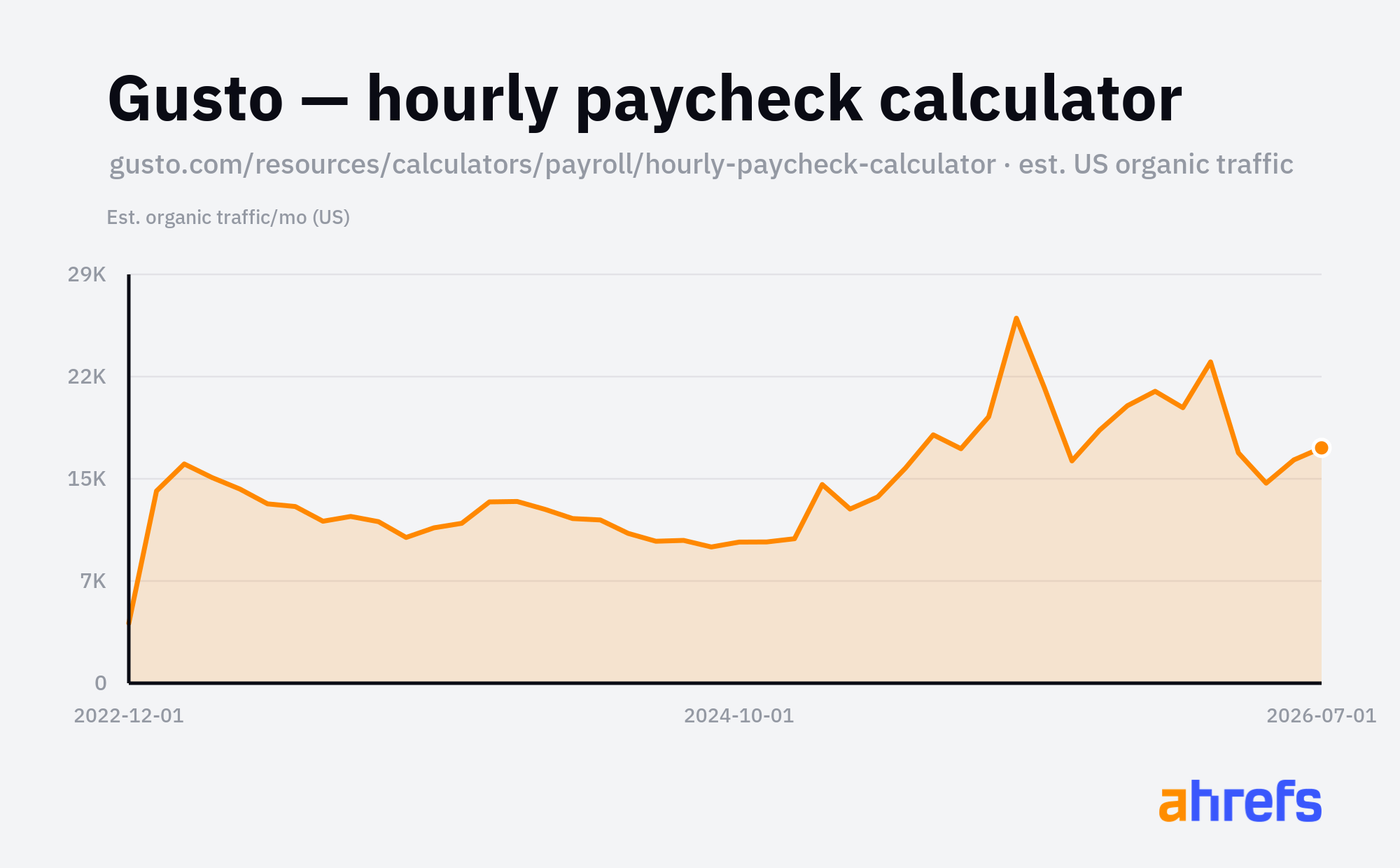
This strategy is not limited to dedicated calculator sites. Gusto, a payroll and HR software provider for small businesses, attracts around 17,800 US visits per month to its free hourly paycheck calculator, with its salary version drawing an additional 8,000. These visitors are precisely the small business owners Gusto aims to serve, with the calculator acting as a free solution that naturally leads to their paid payroll services.
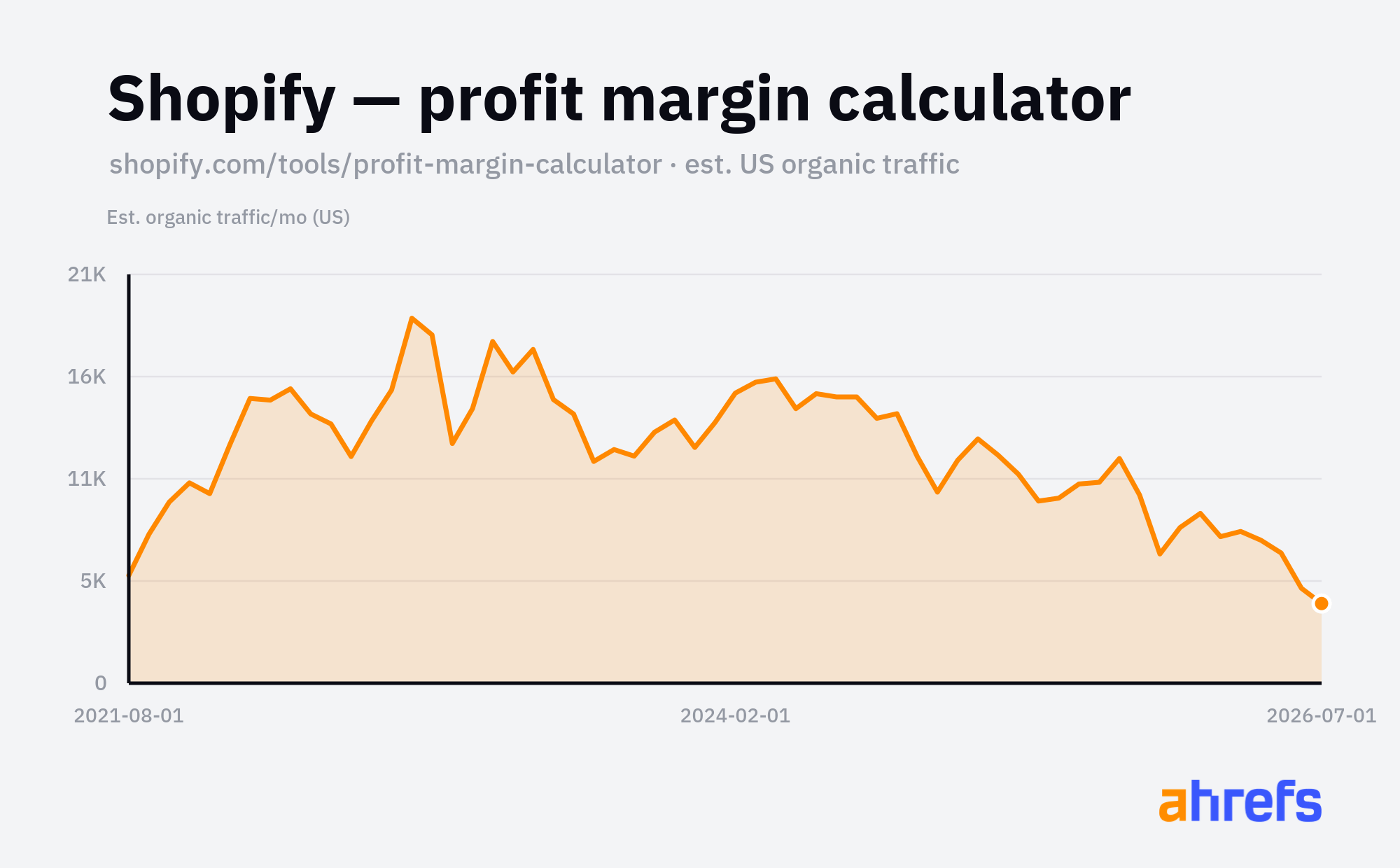
Shopify also leverages this approach with its /tools/ hub, featuring free calculators and generators. Their profit-margin calculator, which peaked at over 20,000 US visits per month, continues to attract thousands of merchants evaluating pricing strategies—the exact audience Shopify targets for its e-commerce platform. Even a tool past its peak can introduce potential customers to the product.
Calculator Keyword Opportunities
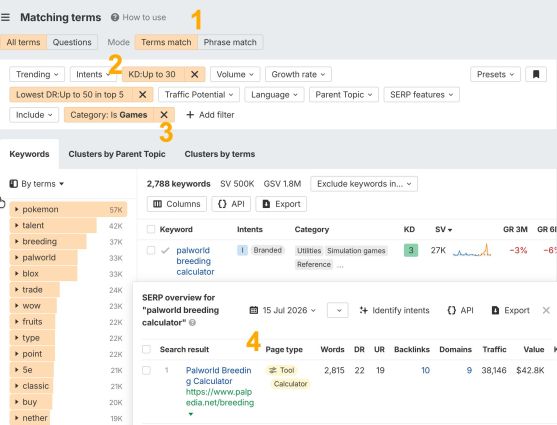
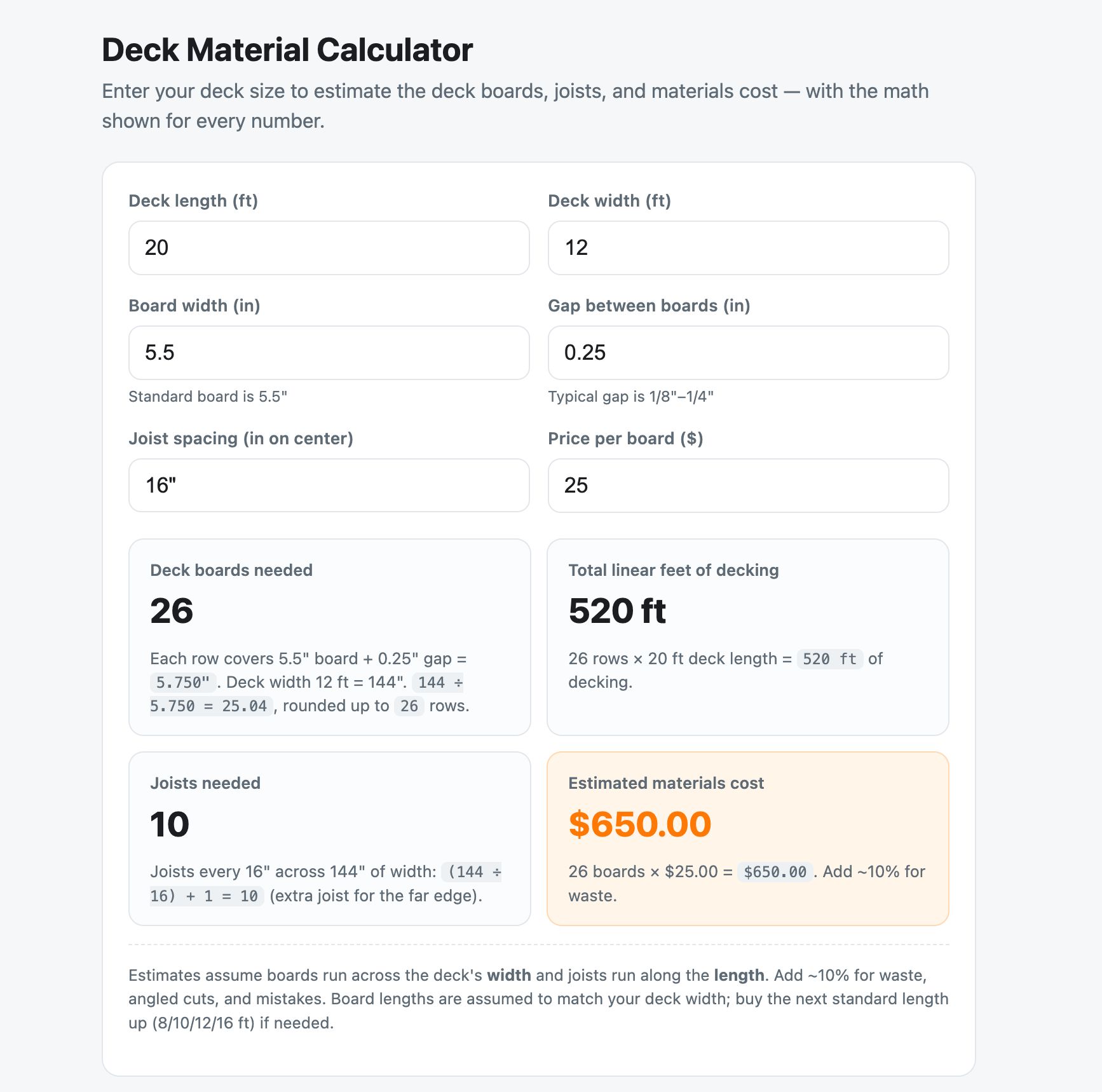
While broad terms like "mortgage calculator" have immense search volume, they are highly competitive with Keyword Difficulty (KD) scores above 80, dominated by established brands. More accessible opportunities lie in niche keywords with lower volume but significantly lower KD and substantial Traffic Potential. Examples include "Amazon FBA calculator" (KD 20), "deck material calculator" (KD 9), "roof pitch calculator" (KD 13), "Etsy fee calculator" (KD 7), "Twitch bits to USD" (KD 0), and "tattoo price calculator" (KD 1). Ahrefs’ Keywords Explorer, using "Matching terms" with seed patterns like [thing] calculator, [thing] cost calculator, and [metric] to [metric], can uncover these niche opportunities.
Converters: Transforming Digital Assets
Converters change files from one format to another. A search for "MP4 to MP3" prompts users to upload a video file and download the audio, fulfilling a single, immediate need.
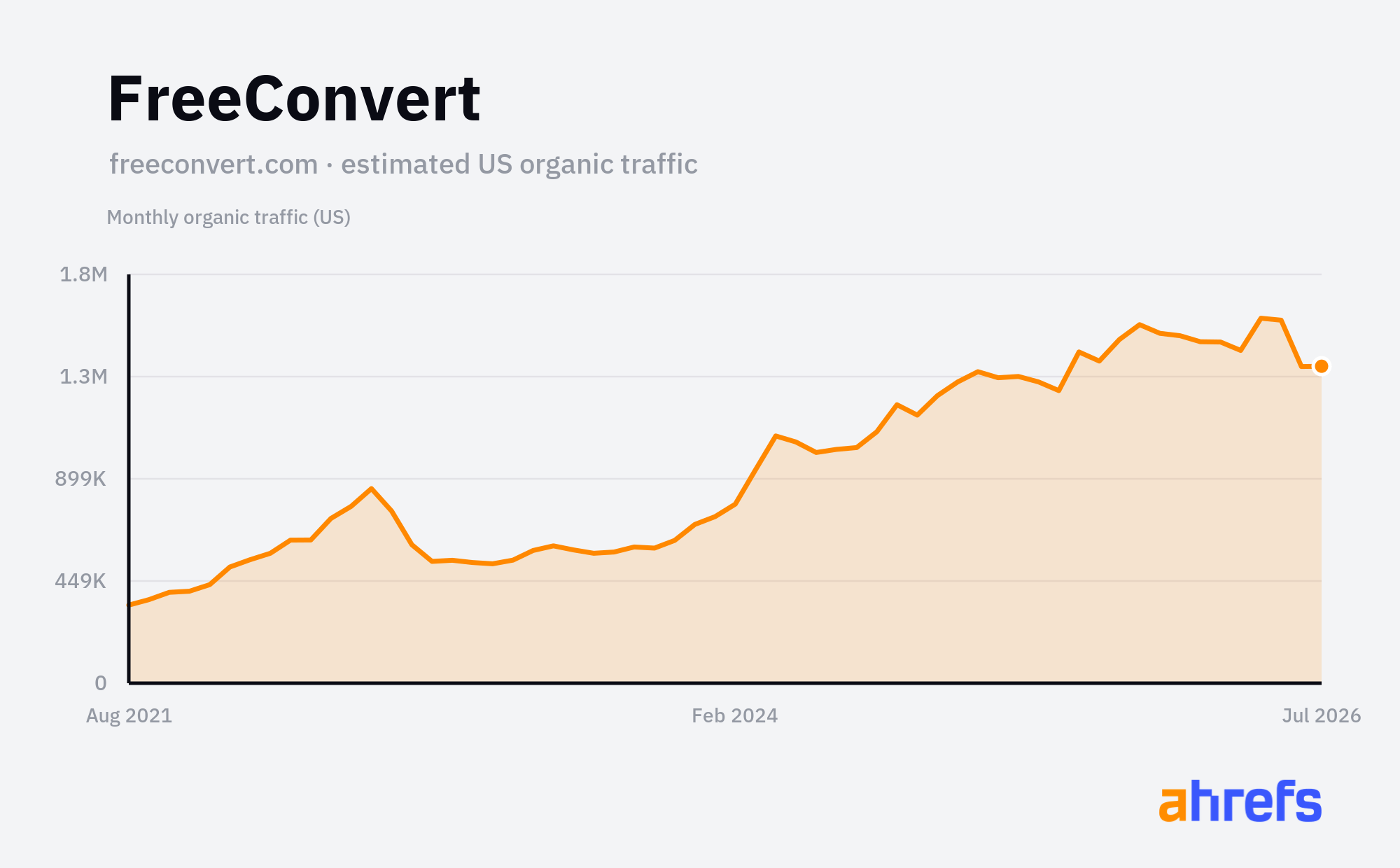
FreeConvert has seen its US organic traffic surge from approximately 380,000 to over 1.5 million monthly visits in five years, driven by "convert X to Y" searches for video, image, and document conversions, as well as compression tools. Each format pair represents a unique landing page, catering to the constant need for file conversion without users needing to recall specific tools.
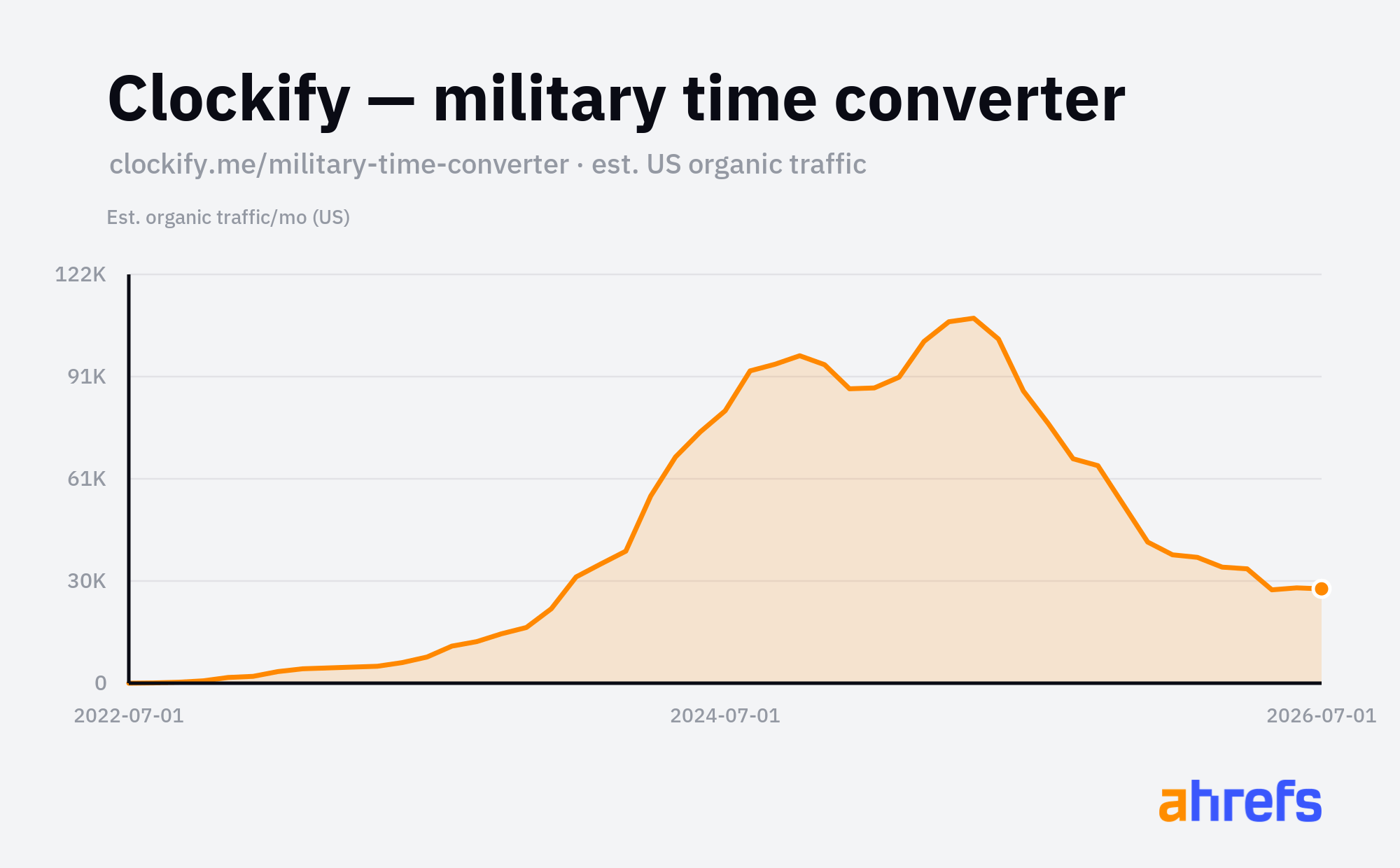
Companies outside the conversion niche also benefit. Clockify, a time-tracking software company, attracts around 31,200 monthly US visits to its free military-time converter and an additional 2,400 to its decimal-hours converter. These users, interested in time conversions, are also potential clients for time-tracking software.
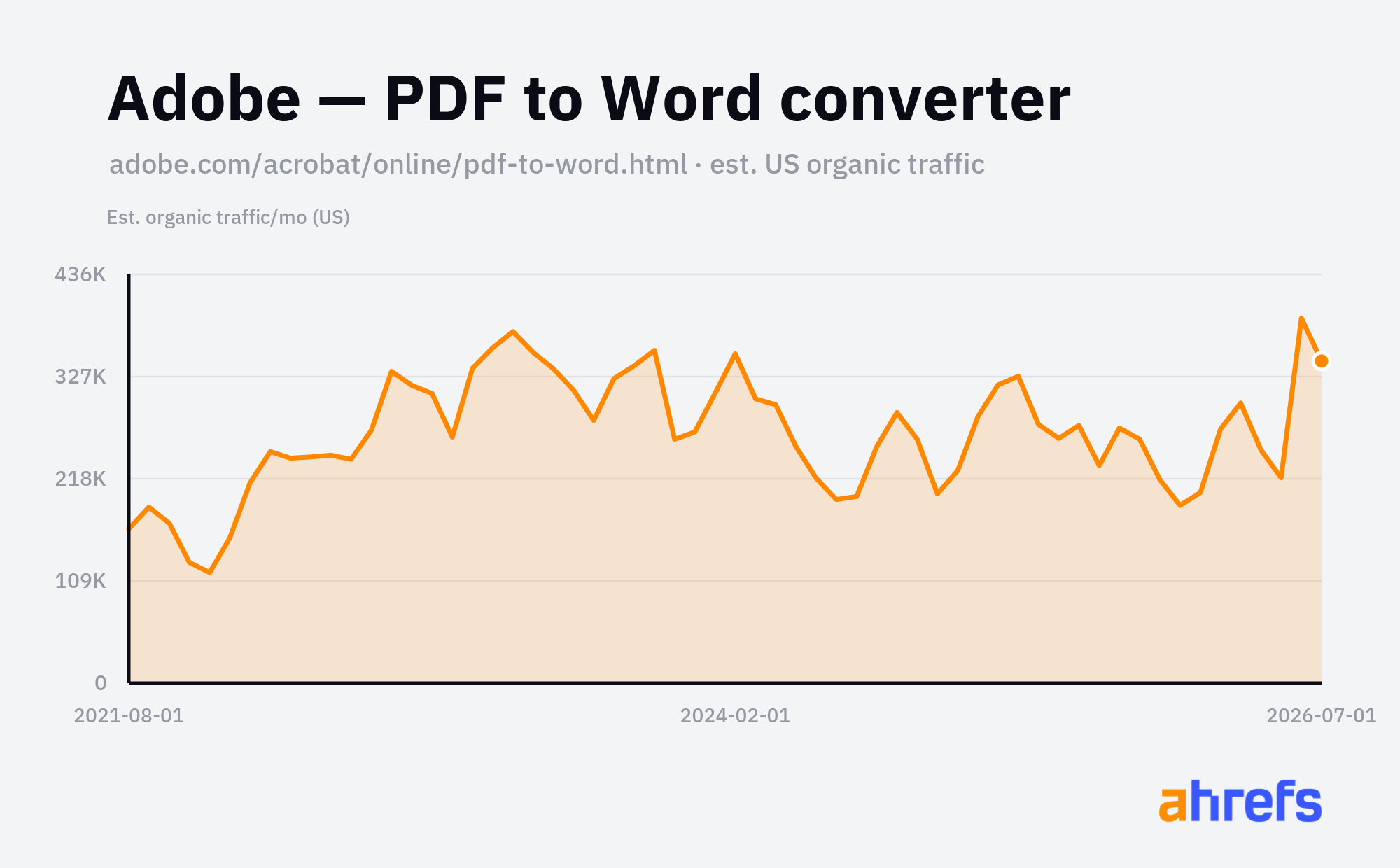
Adobe, known for its Acrobat Pro, utilizes free online converters as a significant top-of-funnel strategy. Its PDF-to-Word converter alone draws approximately 385,000 US visits monthly, subtly guiding users toward its paid subscription.
Converter Keyword Opportunities
Common format pairs like "currency converter" or "PDF to Word" are highly competitive, with KDs often exceeding 80. However, niche format pairs, such as "PDF bank statement to CSV" (KD 5), "PSD to PNG" (KD 4), "DWG to PDF" (KD 12), "MP3 to MIDI" (KD 10), "STL to Gcode" (KD 1), and "YAML to JSON" (KD 1), offer much lower difficulty and strong traffic potential. Seed patterns for discovery include [niche format] to [niche format], convert [format] to [format], and [proprietary format] converter.
Generators: Creating New Content
Generators create new content from user input or prompts. A search for "color palette generator" leads users to a tool that produces ready-to-use color schemes.
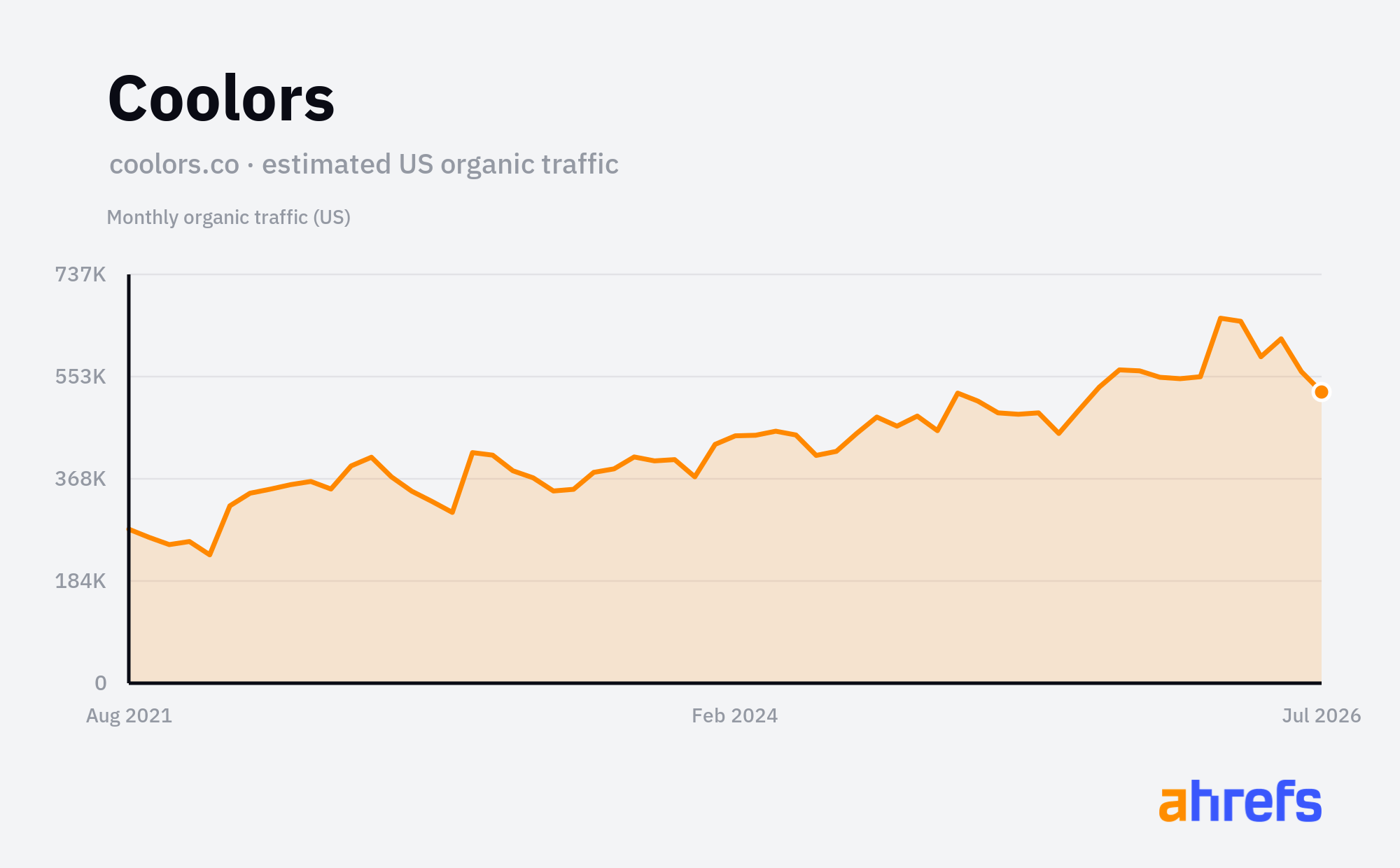
Coolors, a color palette generator, has expanded into a suite of design generators, including fonts, gradients, and contrast checkers. It has nearly doubled its US organic traffic by ranking for "color palette generator" and then creating pages for related "generator" and "maker" queries.
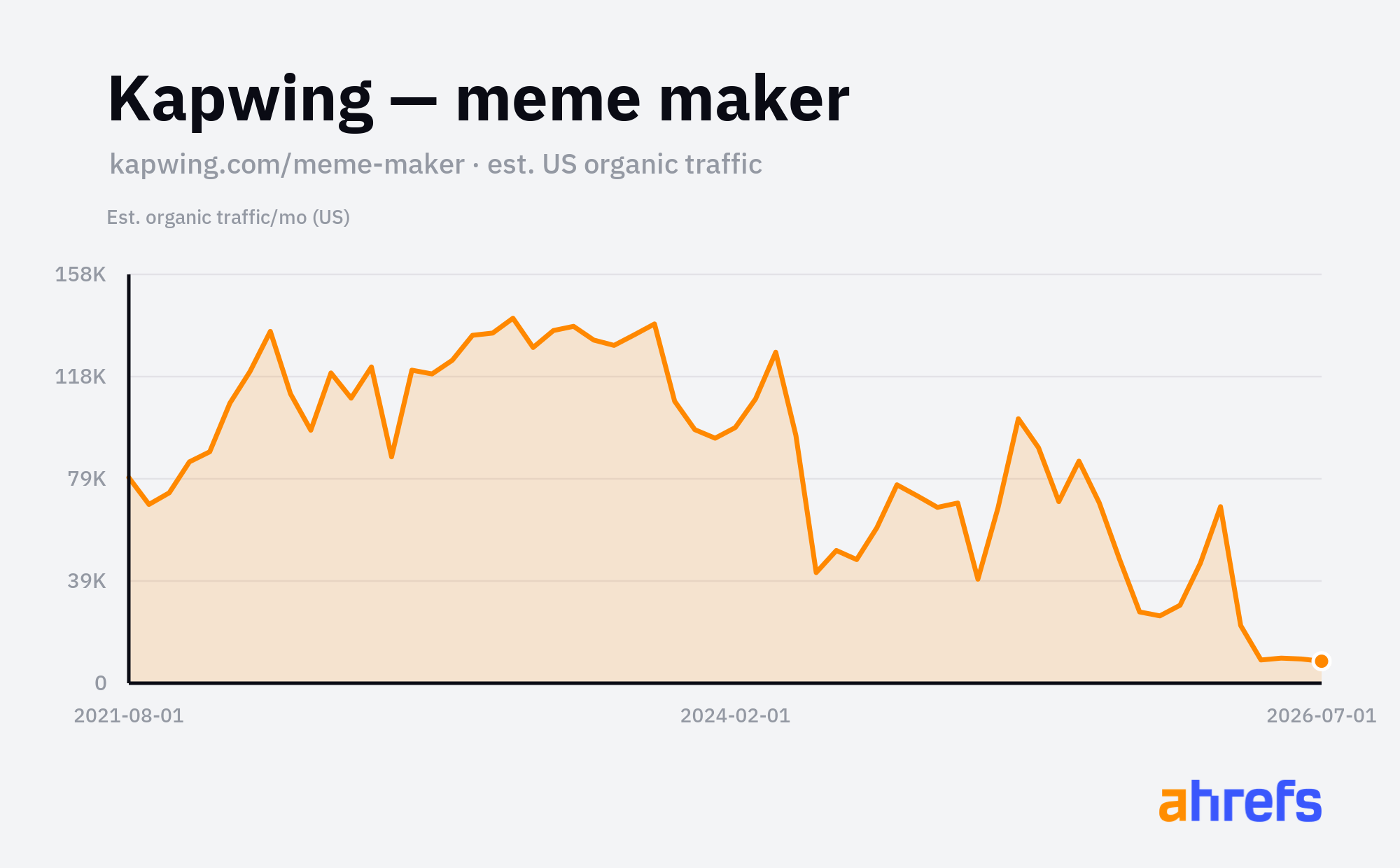
Kapwing, a video-editing tool, gains significant search traffic from its free generators, such as its meme maker (10,500 US visits monthly) and subtitle generator (5,800 US visits monthly). These tools introduce potential users to its video editing software.
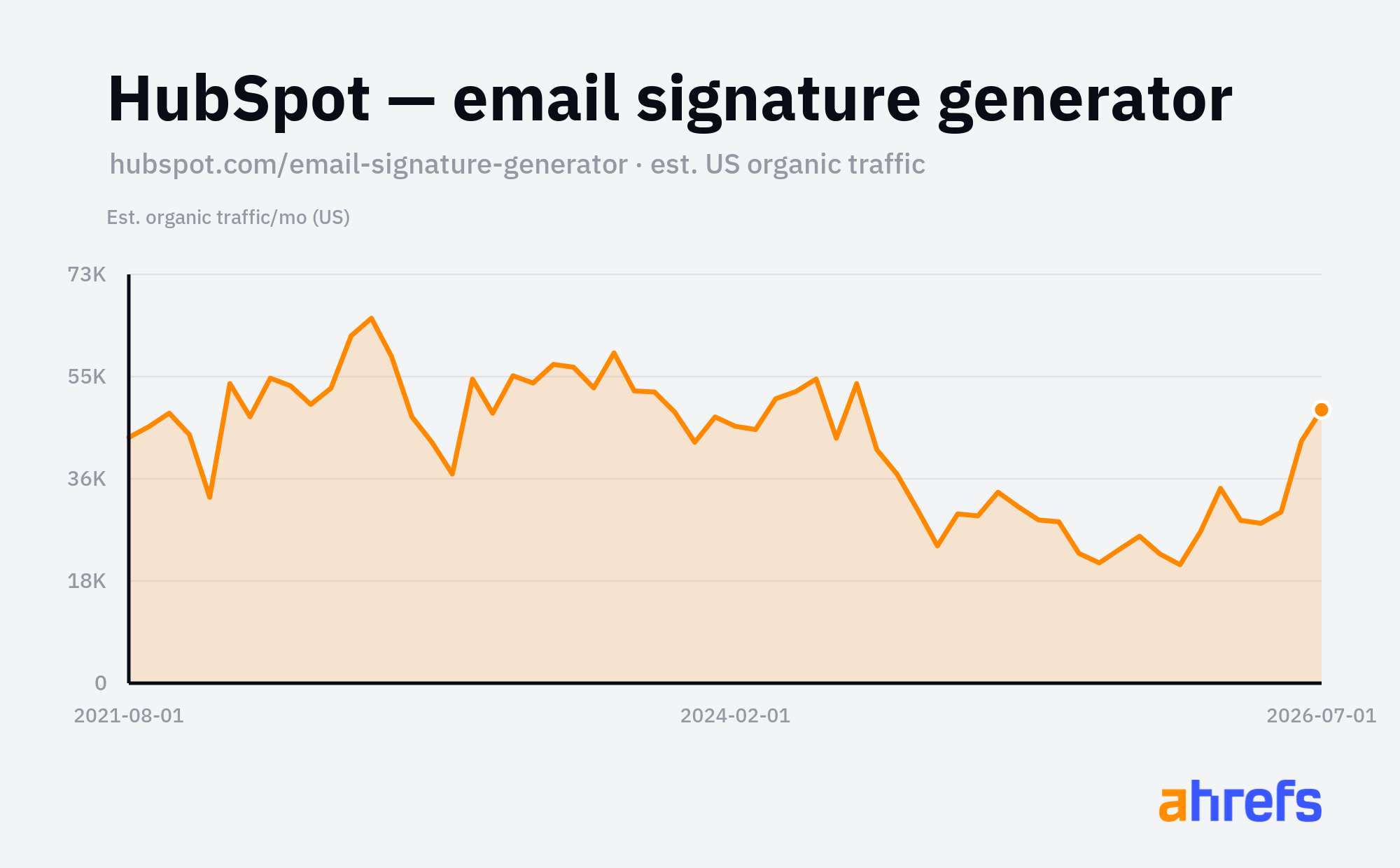
HubSpot, a CRM and marketing software provider, employs a free email signature generator that attracts around 55,000 US visits monthly. The users seeking email signatures are typically marketers and salespeople, fitting HubSpot’s target audience.
Generator Keyword Opportunities
Head terms like "QR code generator" (KD 90) and "password generator" (KD 82) are highly competitive. Niche generators, however, present winnable opportunities. Examples include "band name generator" (KD 7), "podcast name generator" (KD 8), "D&D name generator" (KD 14), "clan name generator" (KD 5), "Twitch panel maker" (KD 3), and "meta description generator" (KD 12). Seed patterns include [thing] generator, [thing] maker, and [thing] name generator.
Templates: Providing Ready-Made Frameworks
Templates offer pre-made files for users to download and customize. A search for "doctor’s note template" leads to a page where users can download an editable document.
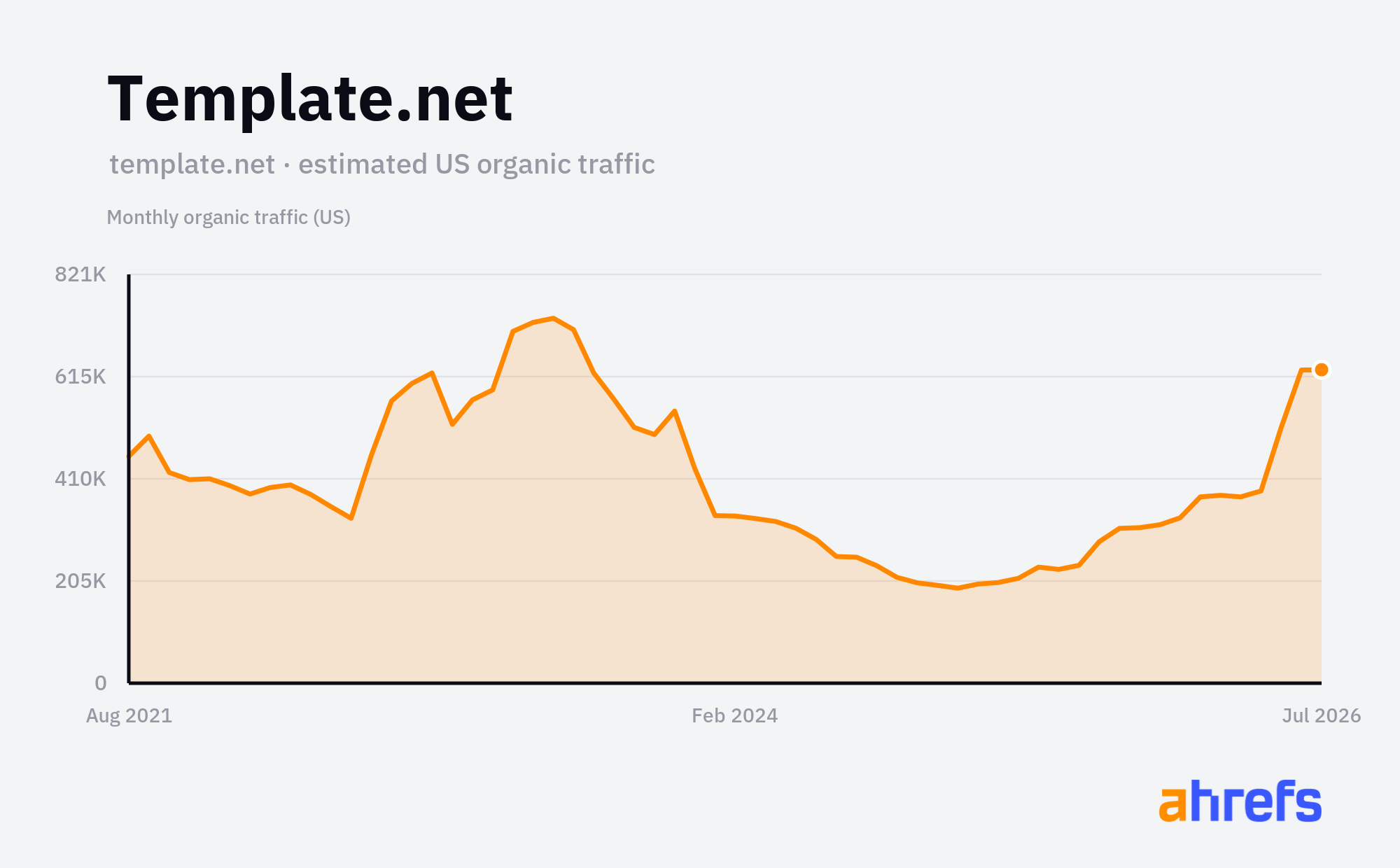
Template.net ranks for thousands of "template" queries, offering documents such as doctor’s notes, obituaries, and letters. This low-effort strategy generates around 700,000 US visits per month.
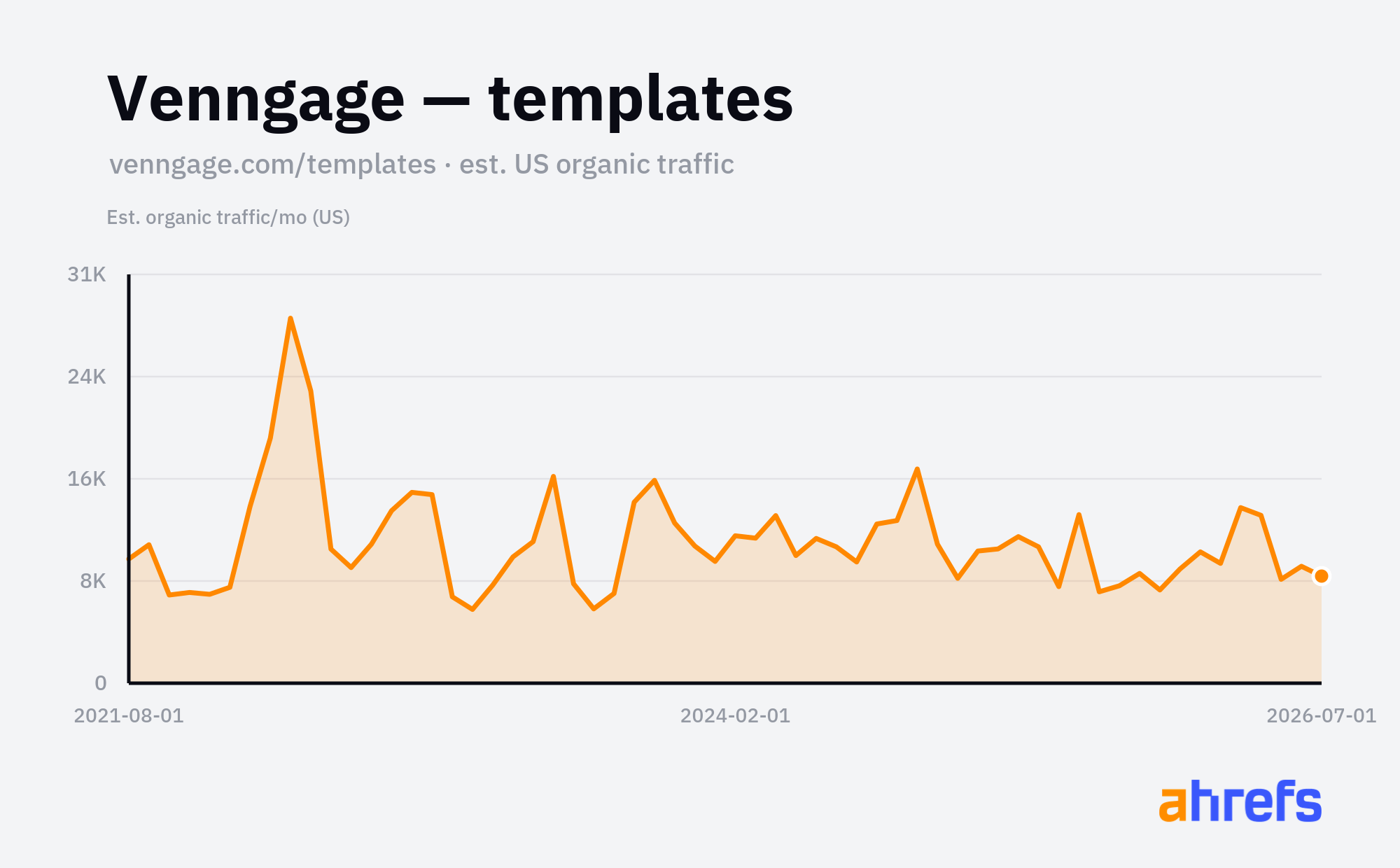
Venngage, an infographic maker, uses its /templates/ hub to attract approximately 11,000 US visits monthly with a variety of designs, from org charts to infographics. Each template ranks for its specific query, offering a free starting point that encourages users to edit within Venngage.
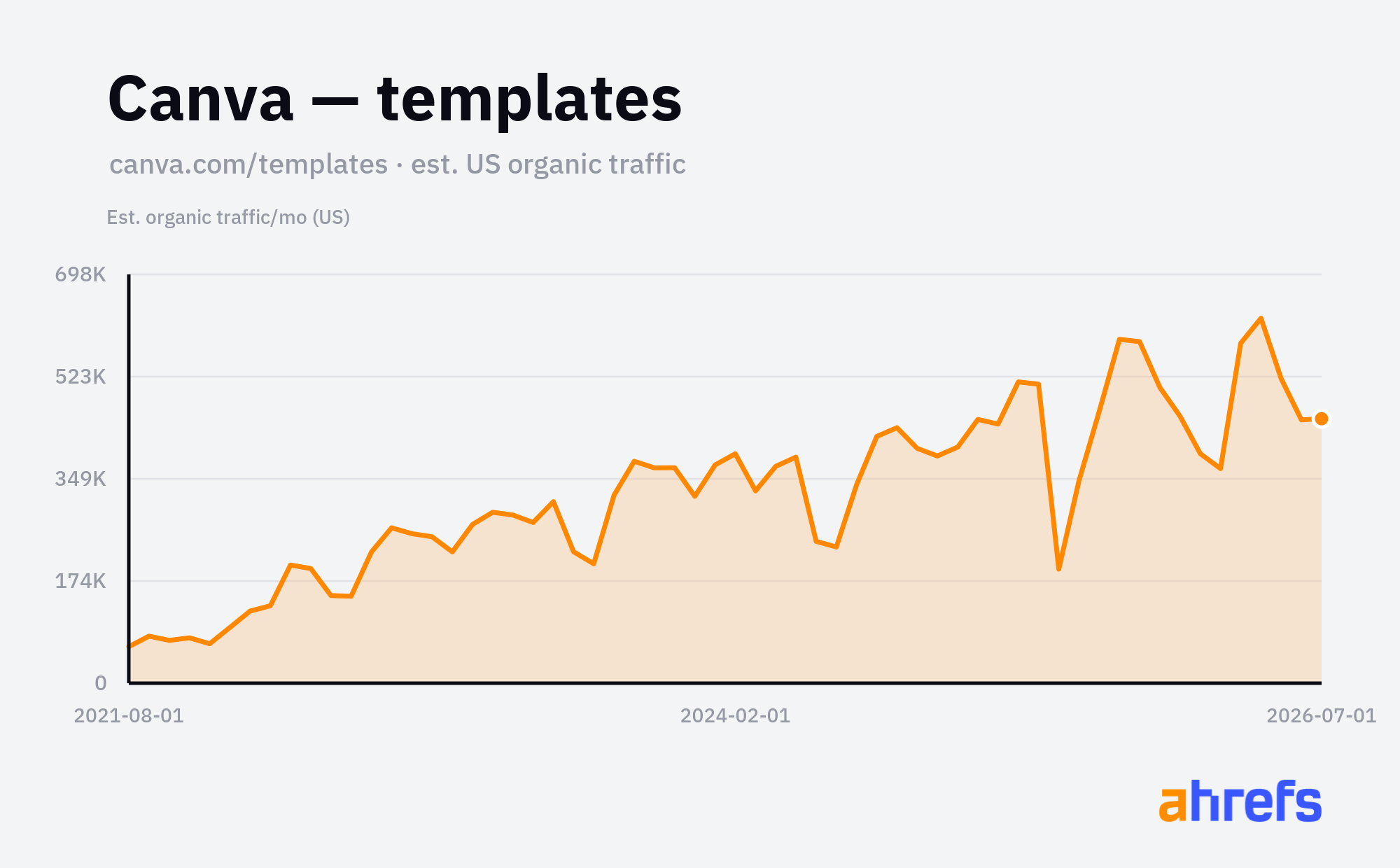
Canva operates the largest template hub, with its /templates/ section drawing around 505,000 US visits per month for various templates, including budgets, meeting agendas, and obituaries.
Template Keyword Opportunities
Broad terms like "resume template" (KD 68) and "invoice template" (KD 43) are competitive. Niche templates, however, offer accessible keywords with near-zero difficulty. Examples include "wedding seating chart template" (KD 7), "construction estimate template" (KD 2), "photography contract template" (KD 6), "podcast script template" (KD 1), "real estate flyer template" (KD 8), and "tattoo consent form template" (KD 0). Seed patterns include [document] template, [document] example, and printable [document].
Finding, Building, and Shipping Tools
The process for all these tool categories involves identifying a winnable keyword in Ahrefs’ Keywords Explorer, building the tool using AI, and deploying it on a website.
Conclusion
Tools offer a robust defense against AI-driven traffic shifts, as they require user interaction rather than mere information synthesis. The creation of these tools has become increasingly cost-effective and rapid, with users actively seeking and appreciating their utility. This combination of defensible traffic, reduced development costs, and positive user reception makes free tools a compelling strategy for building durable online presence.