 11
11
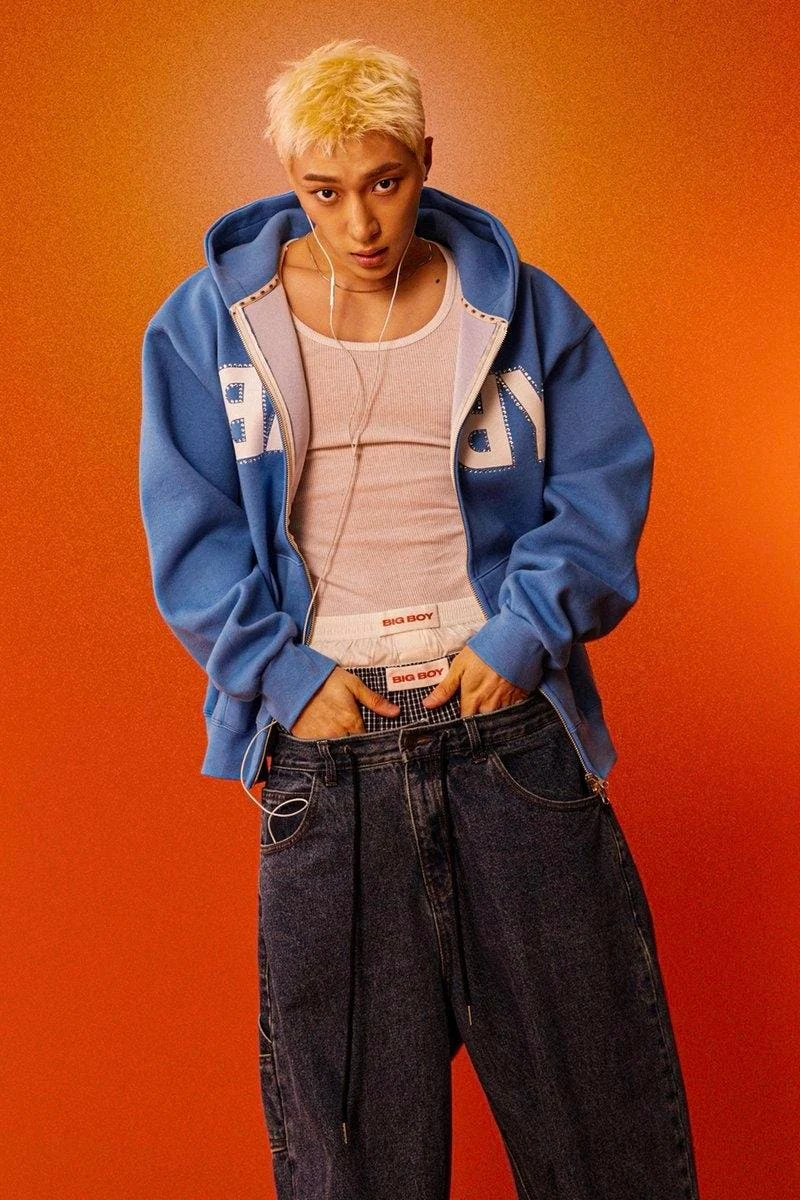
The evocative phrase at the heart of from20’s most-discussed new song, "BIG BOY," originated not from a meticulously planned marketing strategy, but as an impromptu jest among friends sharing drinks. This seemingly casual genesis belies the profound and inclusive message the Korean singer, rapper, and video director, formerly known as Kim Raehwan, now seeks to disseminate through his music.
"We were joking around and complimenting each other, saying things like, ‘Oh, look at you, big boy,’ ‘No, you’re a big boy,’" from20 recounted via a translator, recalling the evening the concept was born. "We just kept calling each other that and at one point I thought, ‘Wow, ‘big boy’ really conveys a great message.’" He elaborated on the expansive interpretation he intends for the term: "It’s not just about gender, it’s about confidence. Isn’t it great when someone calls you a big boy? It has nothing to do with whether you identify as a man, how you look, your race, or your sexual orientation. You’re a big boy because you have that energy — because you’re confident and feel like you can do whatever you want in this world. That’s the message I wanted to share." This powerful and deliberately inclusive definition serves as the cornerstone for his latest artistic endeavor.
"BIG BOY" is the magnetic title track of Rated R, from20’s second full-length album, which was unleashed on June 26. This album marks a significant milestone in an artistic journey that has seen the musician spend five years meticulously rebuilding his career on his own distinct terms, free from the constraints of his past.
Before his metamorphosis into from20, Kim Raehwan was a familiar face in the K-pop landscape. He rose to prominence as the main vocalist of BIGSTAR, a boy band operating under the wing of renowned hitmaker Brave Brothers’ Brave Entertainment agency. However, like many groups, BIGSTAR gradually faded into inactivity before officially disbanding. Embracing a new chapter, from20 embarked on his solo career in 2021, a pivotal decision that led to the co-founding of his independent label, WAY BETTER. Alongside his frequent collaborator HELLO GLOOM, also a former boy band member, from20 now serves as co-CEO, granting him an unparalleled level of creative autonomy. It was, in fact, during a casual gathering with HELLO GLOOM and Jin Choung, CEO of SKY720, that the "BIG BOY" concept organically emerged, underscoring the collaborative spirit at the heart of his new venture.
This newfound independence, while liberating artistically, has not shielded from20 from the conservative sensibilities prevalent in South Korea’s mainstream media. Operating at the helm of an independent label focused on male soloists means that no internal figure can veto his lyrics. However, the nation’s public broadcasters operate under different guidelines. The Korea Broadcasting System (KBS) famously deemed seven of Rated R’s thirteen tracks ineligible for broadcast airing. The reasons cited were unequivocal: profanity, vulgar language, and sexually suggestive content. The album’s flagship single, "BIG BOY," faced particularly stringent scrutiny, being rejected twice for its "excessively sexual lyrics." Only after a third, significantly revised submission did the track finally clear review, a process that highlights the cultural tightrope from20 navigates.
Despite these domestic hurdles, from20’s music has found a fervent and receptive audience beyond South Korea’s borders. He readily points to the United States and Latin America as his largest markets, a claim substantiated by his Spotify statistics, which list global metropolises like Bangkok, São Paulo, Singapore, Taipei, and Kuala Lumpur among his top five listener cities – a notable absence of any Korean locale. "Certainly, the biggest response has come from international audiences," from20 observed, capable of quickly retrieving these statistics even while conducting an interview from a car amidst a schedule change. "Even when I look at my Spotify statistics, the U.S. and Latin America consistently rank as my biggest markets, and that’s where most of my listeners are."
He acknowledges the album’s inherent appeal to diverse communities globally, but is quick to emphasize that such audiences exist within Korea as well. "That said, this album is about diversity. There’s a lot of diversity throughout the project, especially in ‘BIG BOY.’ Even though people often associate these conversations with international audiences, LGBTQ+ communities and many other diverse communities also exist in Korea. They’re engaging with the music and supporting what I’m creating as well. There has definitely been support from my home country, too; however, when it comes to television and mainstream media in Korea, these topics are still approached quite carefully. It’s a more conservative environment, so I think they’re still warming up to conversations like these."
The perceived provocative nature of Rated R is entirely intentional, yet from20 insists it is not for superficial clicks or shock value. "Message-wise, I wanted this album to be controversial but not for the sake of being controversial," he explained. "The real message is: gossip about me all you want. You can judge me, but you can’t change who I am." This defiant stance is rooted in a desire to emulate artists he deeply admires. He added, "The reason ‘BIG BOY’ became the title track [single] is because I’ve always admired artists like Michael Jackson. Songs like ‘Heal the World’ and ‘You Are Not Alone’ carry such positive messages and I’ve always respected artists who create music that reaches people and truly resonates with them. I’ve always thought that for from20 to become a great artist it would be incredible if I could also share positive messages with my listeners and anyone who might come across my music."
This commitment to authenticity and defiance was powerfully demonstrated following the release of his April 2025 single, "Eye Candy." The accompanying music video featured from20 shirtless in playfully sexy scenes, ranging from a football team locker room to seductively consuming peaches and bananas at a fruit cart. This visual boldness triggered a torrent of online criticism. Instead of succumbing to the negativity, from20 channeled it directly into Rated R, crafting an interlude titled "Skit 1 (They All Gossip About Me)," co-narrated by queer Taiwanese-American indie pop singer sora.

"People would say things like, ‘Stop being half-naked on Instagram,’ or, ‘When the music isn’t selling…’ there was just a lot of negativity directed at me online," he recalled. "I took those comments and turned them into a skit. In a way, it felt like I was getting revenge on all the hate I had received. I remember that after I wrote the script and assigned the lines, we were in the recording booth with the actors who were playing the people gossiping about me. I kept telling them, ‘More. Give me more!’ I wanted it to feel real — as if they were actually talking shit behind my back and spreading rumors about me." His playful defiance extended to social media, where upon releasing the album medley with a preview of the skit on X, he quote-posted it with the caption, "Thank you for giving me inspiration, guys."
The accompanying "BIG BOY" music video further exemplifies from20’s instinct for "more," particularly concerning casting. Directing and casting the video himself, he deliberately sought to fill the screen with "different body types, different genders, different skin tones — just as much diversity as I could bring together in one video." This approach is a rarity in K-pop visuals, which often adhere to highly standardized aesthetic norms. The video notably features Hong Seokcheon, Korea’s first openly gay celebrity, alongside a diverse array of romantic interests. When questioned about the difficulty of assembling such a diverse cast for a Korean production, from20 initially challenged the premise.
"First of all, is this music video really that diverse?" he asked with a smile. "I don’t know, but hearing that makes me realize how conservative the K-pop scene still is because you really don’t see things like this in K-pop music videos. To me, I just thought, ‘I’m going to have a big girl in my music video.’ But the reaction has been incredible. I remember seeing a post on X that said, ‘Wow, someone who looks like me can kiss an idol. From now on, I’m really going to support from20.’ Reading that made me realize there really hasn’t been anything like this before. It also made me think that I should keep doing more of this to show people that they have a place in this world just like everyone else. More than anything, though, it reminds me that K-pop is still very conservative and that there’s still a lot of room for change… it definitely wasn’t easy, but it was a very meaningful project for me."
While conversations around allyship to LGBTQ+ and other minority communities are slowly gaining traction, from20 pushes for a reevaluation of what "allyship" truly means. "When you asked that question of whether I’m an ally, my first thought was, ‘Do we really have to support people who simply exist?’" he mused. "Don’t get me wrong, we all live in the same world, and they could be my friends, my children, my colleagues, my neighbors, but do I need to express special support? That’s what I ask myself because they’re already by my side. We’re all the same. We’re all human. Sexuality shouldn’t determine how we see or treat someone. Ever since I was young, my parents taught me to love everyone regardless of how they present themselves or who they are. Someone in the LGBTQ+ community may simply love a person of the same gender, but that doesn’t make them any different from me."
This perspective of fundamental human connection, rather than "special support," was further solidified through a past misstep. When from20 received criticism for wearing a durag in an earlier album photoshoot and accompanying music video, he didn’t issue a company-derived, PR-safe statement. Instead, he proactively sought to learn, bringing local Black men and women living in Korea to a set to film an educational conversation. "My entire perspective changed," he shared. "The two hours I spent with them were extremely important and meaningful. Looking back, I think people can make mistakes simply because they don’t know. But this experience taught me how important it is to take the time to educate yourself about the things you don’t know, so you don’t repeat those mistakes. I wish more people in this industry, and people in general, would take the time to learn about things they’re unfamiliar with — or at least watch my video because I learned so much and the way I look at Black people’s hair completely changed. I realized it’s part of their daily lives and lived experiences. I also came to understand that the way their hair looks can affect how they’re perceived by others; it’s not simply about style or looking cool. Now, whenever I travel abroad, I notice those things. I hope people can be a little more open-minded and willing to admit when they don’t know something."
For all of Rated R’s forward-thinking and progressive messages, its musical foundation consciously looks to the past rather than pushing into entirely new sonic territories. "It’s the music I grew up listening to — the R&B of the ’90s and early 2000s," the 34-year-old artist revealed, acknowledging clear inspirations from iconic producers like The Neptunes, Scott Storch, and StarGate throughout the LP. "I loved that music so much growing up and it still holds a very special place in my heart. I’ve been making music for a long time now so that sound feels very nostalgic to me. At the same time, I think it feels fresh to younger listeners because they didn’t grow up with it. We experience the same music differently depending on when we first hear it. When I was a trainee, I practiced to a lot of R&B songs so I feel very connected to this genre."
Amidst Rated R’s diverse aims, goals, and inspirational points, the opening track, "Celebration," stands as from20’s most direct and potent declaration of self-belief. "For me, it’s like opening the door to a new beginning," he stated. "While I was making this album, I had so much faith in it. I wanted to create something that felt incredibly confident, something that says, ‘Right now, you’re witnessing the success of from20. You’re witnessing the birth of a star.’"
Currently engaged in a European tour with his WAY BETTER label mate Kang Yuchan, from20 is poised to further propel Rated R’s global reach. His upcoming schedule includes multiple performances during KCON LA in August and a prominent slot at the 2026 Atlanta Korean Festival in September. He expressed palpable excitement about these opportunities, noting, "We have a lot happening internationally, I’m beyond excited… touring gives me the opportunity to share them with people in person. That’s what I’m looking forward to the most."
Yet, beyond the thrill of connecting with audiences in person, from20 has come to profoundly recognize the vital role his work plays in fostering feelings of safety and visibility for many listeners. "You mentioned that I showed support for the LGBTQ+ community in the ‘BIG BOY’ music video, but honestly, I just wrote a few lyrics that came straight from my heart," he reflected. "I read all the DMs and comments on my music videos, and when people tell me, ‘You created a safe space for us,’ it really warms my heart. At the same time, it also makes me a little sad, because to me it was just a few honest words, yet they became something so meaningful to so many people. If my music, my concerts, or anything I create can become a safe space for someone, then I feel like I should continue to show them even more appreciation and love." This profound impact underscores from20’s evolving journey from a K-pop idol to an artist whose authentic expression creates meaningful connections and challenges the status quo.