 11
11
A comprehensive analysis of the most frequently asked questions on Google has unveiled a fascinating snapshot of global curiosity, practical concerns, and the ever-evolving digital landscape. The data, compiled from sources including Ahrefs, highlights a strong interest in fundamental information, everyday needs, and emerging technologies. The top queries range from immediate practicalities like "what is my IP" and "what is today" to more complex inquiries about artificial intelligence and cybersecurity.
Among the most consistently searched questions globally, understanding personal digital identity takes precedence. "What is my IP" and "what is my IP address" consistently appear in the top rankings, indicating a significant portion of users seeking to understand their online presence and network identification. This fundamental need for information about one’s digital footprint underscores the increasing reliance on the internet for daily activities.
Beyond digital identity, immediate temporal and calendrical questions dominate search trends. Queries such as "what is today," "what day is it," and "what is today’s date" demonstrate a persistent need for real-time information. Seasonal and event-driven inquiries are also highly prevalent, with "how many days until Christmas," "when is Easter," "when is Thanksgiving," and "when is the Super Bowl" reflecting a desire to plan and anticipate significant dates and holidays. The specific inclusion of "when is Easter 2026" and "where is the Super Bowl 2026" points to users looking ahead for future event planning.
Practical how-to questions form another significant category, revealing a population eager to acquire new skills and solve everyday problems. "How to make a budget," "how to tie a tie," "how to change a tire," "how to screenshot on Mac," and "how to screenshot on Windows" showcase a broad spectrum of user needs, from financial management and personal grooming to technical proficiency and troubleshooting. The recurring "how to screenshot" queries across different operating systems highlight the fundamental nature of digital information capture.
The burgeoning fields of technology and artificial intelligence are also generating substantial search interest. "What is artificial intelligence," "what is machine learning," "what is a VPN," "what is a URL," and "what is blockchain" indicate a public grappling with and seeking to understand the implications of these transformative technologies. The presence of "what is phishing" and "what is malware" further emphasizes concerns surrounding online security.
The data also reveals a strong interest in health and wellness, with queries like "how to improve posture," "how to gain weight," and "how to lose weight" appearing frequently. This suggests a widespread focus on personal well-being and self-improvement. Similarly, culinary and domestic questions such as "how long to boil eggs," "how many ounces in a gallon," and "how to cook rice" point to everyday life concerns and the pursuit of practical knowledge.
Linguistic and cultural nuances are also evident in the search data. Questions appearing in languages other than English, such as "o que significa" (Portuguese for "what does it mean"), "令和何年" (likely a query in Chinese related to a popular culture or trend), "cuándo juega el real madrid" (Spanish for "when does Real Madrid play"), and "az önce deprem nerede oldu? – son dakika" (Turkish for "where did the earthquake occur in}? – breaking news") highlight the global reach of Google Search and the diverse information needs across different regions and cultures.
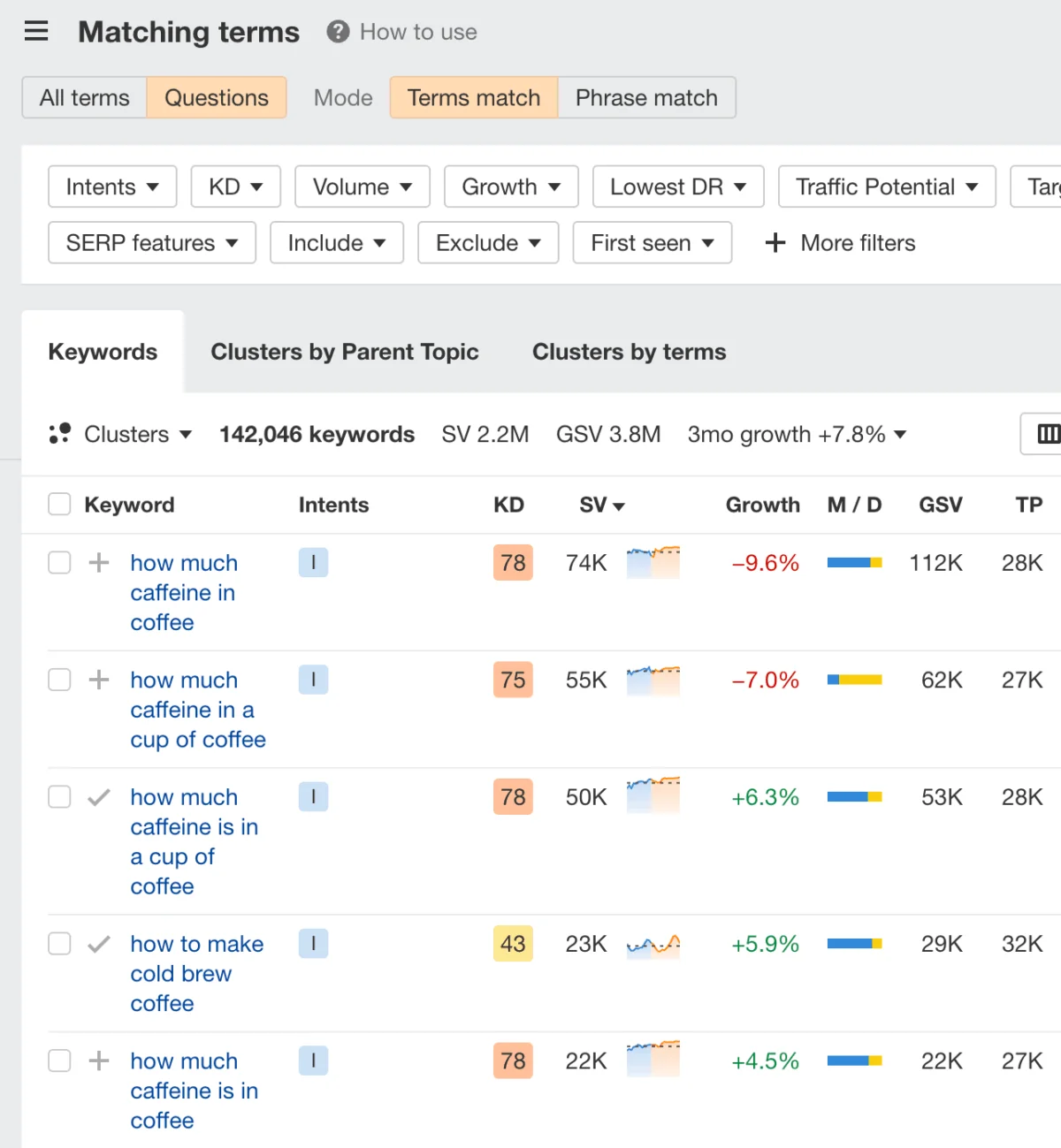
The "Questions tab in Keywords Explorer" from Ahrefs provides a powerful tool for content creators and marketers to identify the most pressing questions within their specific niches. By inputting a broad term like "coffee," users can uncover specific questions such as "how many questions about coffee are there?" or "what are the most asked questions about coffee?" This functionality allows for targeted content creation that directly addresses audience needs and can significantly boost organic search traffic. The example of searching for "coffee" yielding 142,000 potential content ideas underscores the vast opportunities available for those who can effectively tap into user queries.
The methodology for identifying these top questions involves analyzing search volumes, which represent the estimated number of monthly searches for a particular query. While specific numbers can fluctuate, the consistent appearance of certain topics across different data sets indicates enduring user interest. The Ahrefs tool, in particular, offers detailed insights into search volume, keyword difficulty, and other metrics crucial for effective keyword research.
The ability to find the most asked questions in one’s niche is paramount for developing a successful content strategy. By understanding what potential customers or audience members are actively searching for, businesses and creators can produce content that is not only relevant but also highly discoverable. This approach moves beyond simply guessing what people might be interested in and instead focuses on data-driven insights into actual user behavior. The process often involves utilizing keyword research tools that can filter for question-based queries, analyze their search volume, and assess their competitive landscape.
In conclusion, the analysis of Google’s most asked questions reveals a global community driven by a need for practical information, a desire to understand complex and emerging technologies, and an inherent curiosity about the world around them. The insights gleaned from this data are invaluable for anyone looking to create content that resonates with a broad audience, from individuals seeking everyday solutions to businesses aiming to establish online authority in their respective fields. The ongoing evolution of search queries also suggests a dynamic landscape where new topics and concerns will continue to emerge, requiring continuous adaptation and exploration.