 11
11
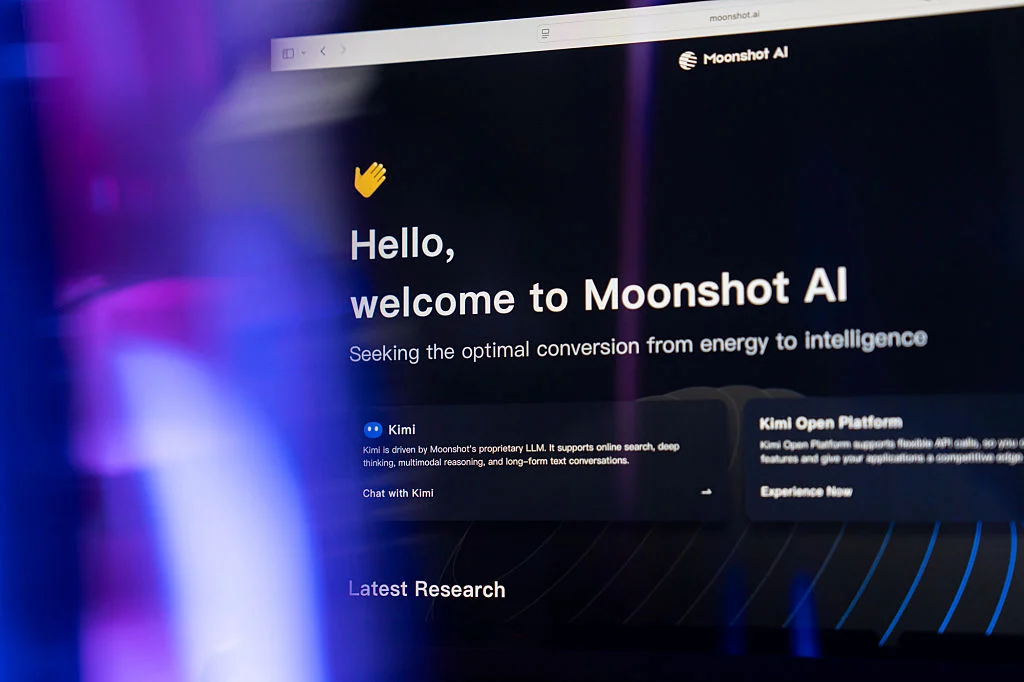
The recent launch of Kimi, the latest artificial intelligence model from Chinese company Moonshot AI, has reignited intense discussions across the American tech industry and within Washington, D.C. The model’s debut has once again brought to the forefront critical debates surrounding the United States’ competitive standing in the global AI landscape, the merits and risks of open-source versus proprietary AI development, and the geopolitical implications of technological advancement. While social media platforms buzzed with extensive conversation following Kimi’s release, the underlying concerns have reportedly extended into the corridors of power, with major American AI developers like OpenAI and Anthropic engaging in lobbying efforts with regulators regarding the proliferation of open Chinese AI models.
Kimi’s introduction was met with a mix of awe and alarm, particularly within the American tech community. On certain benchmarks, the Chinese model appeared to demonstrate capabilities that were competitive with, or at least comparable to, some of the leading frontier AI models developed by U.S. companies. This perceived parity, coupled with the model’s reported accessibility and potentially lower operational costs, quickly sparked a familiar pattern of discourse that Anthony Ha, a participant on TechCrunch’s Equity podcast, described as "very, very familiar from the launch of DeepSeek." Ha observed a recurring phenomenon where "a Chinese model comes out; on some benchmarks, it does as well, or at least seems competitive with some of the frontier models; and a certain portion of the tech industry loses their mind."
The ensuing debate garnered additional scrutiny due to the involvement of an executive from OpenAI, whose public comments amplified the discussion. Sean O’Kane, another TechCrunch Equity podcast host, characterized the reaction as "repeats of prior freakouts," noting a pervasive expectation within Silicon Valley that "something is going to arrive and blow everything else away." He cited an example of a viral post claiming Kimi could "make in 30 minutes an entire replication of macOS," which, upon closer inspection, merely produced an impressive graphical reproduction rather than a functional operating system. O’Kane highlighted this "jumpiness" within the tech industry, especially concerning Chinese models, observing that the initial panic often subsides, leaving a more measured perspective a week later. He light-heartedly advised those engaging in weekend-long Twitter (now X) arguments to "Go outside, touch grass."
Beyond the public discourse, the Kimi launch has reportedly catalyzed behind-the-scenes activities in Washington, D.C. Major American AI firms, including OpenAI and Anthropic, are understood to have approached regulators with concerns specifically targeting "open Chinese models." This lobbying effort underscores a strategic dimension to the debate, suggesting that the competition extends beyond technological benchmarks to influence policy and regulatory frameworks. The focus on "open" models points to a fundamental tension within the AI community regarding how powerful AI technologies should be developed and distributed. Proprietary models, typically developed and controlled by a single company, stand in contrast to open-weight models, which are made publicly available for researchers and developers to inspect, modify, and build upon. The reported lobbying by leading proprietary AI developers suggests an intent to shape the regulatory environment in a way that could favor their controlled, closed-source approaches over more open alternatives, particularly those originating from competitor nations.
Kirsten Korosec, a co-host on the TechCrunch Equity podcast, referenced a story by reporter Tim Fernholz, which attempted to "unpack the psychosis" surrounding the debate in the United States. Fernholz’s analysis identified several driving factors behind the heightened concern. Among these were worries that Chinese open-weight models "might have an implicit bias towards China," potentially embedding geopolitical perspectives into foundational AI systems. Another significant apprehension revolved around "security risks and guardrails," raising questions about the safety, reliability, and potential misuse of models that are not subject to the same oversight as proprietary U.S. counterparts.
However, Korosec suggested that a more overarching motivation appeared to be "protectionism" and the intense desire to "win the race" between the U.S. and China in AI development. Anthony Ha concurred, stating that "the China aspect always adds this certain level of hysteria." He drew parallels to the discussions surrounding TikTok a few years prior, noting that while concerns might not be entirely "made up," the "level of how panicked people got" dramatically increases "as soon as you add the word China to any discussion." This dynamic, Ha argued, then links to the broader discussion about open weights and the notion that AI is "so powerful and so dangerous that the only way we can control it is with these proprietary models from these American frontier companies."
This perspective, Ha observed, is often leveraged by individuals to advocate for their existing policy positions on AI. He cited David Sacks, who served as an AI czar for the Trump administration, "shouting on X about how, ‘I can’t believe people are opposing data centers, we’re tying ourselves in knots, there’s too much regulation.’" Ha interpreted this as a tactic to frame desired policies within the context of national security: "My gosh, if China beats us, that’s unthinkable, so you have to do what I want to do anyway."
The potential implications of implementing heavy restrictions on Chinese open-weight AI models are a central point of contention. Kirsten Korosec posed a critical question: "Are we accelerating and ensuring that Americans win the AI race, or are we ensuring that certain frontier labs do better than others?" She elaborated that if "across-the-board bans on Chinese open weight models" were to be enacted, it would inherently "benefit models created by OpenAI, for instance, and it would force enterprises to use those as opposed to using models like Kimi." This highlights the economic self-interest that could be at play, transforming a national security debate into a commercial advantage for specific companies.
The argument often presented by proponents of proprietary models is that their controlled environments offer superior safety, security, and ethical guardrails compared to open-source alternatives, which are more widely distributed and potentially harder to regulate. However, critics argue that this stance can lead to market monopolization and stifle innovation by limiting access to cutting-edge AI technology. The tension lies in balancing national security imperatives with the principles of open innovation, competition, and the broader societal benefits that could arise from widely accessible AI tools. The debate forces a crucial examination of whether restrictions truly serve the national interest in AI leadership or primarily bolster the market positions of a select few industry giants.
A significant turning point in the recent public discourse was a lengthy post made by Dean Ball, OpenAI’s Head of Strategic Futures. Ball’s comments, which detailed various concerns regarding open-weight models, are widely considered to have "kicked off a lot of this discussion," as noted by Sean O’Kane. Ball’s intervention was particularly impactful because of his affiliation with OpenAI, a leading developer of proprietary AI models, and his explicit articulation of anxieties that many believed were simmering beneath the surface of industry debates.
O’Kane suggested that part of the intense reaction to Ball’s post stemmed from disagreement with his arguments, but also critically, from the perception that "he kind of just said the thing out loud." According to O’Kane, Ball’s comments were interpreted by some as essentially advocating for the U.S. to "create regulatory FUD — fear, uncertainty, and doubt — and muck up the ability for these open weight models to compete with the US." This frankness, O’Kane implied, broke an unwritten rule of public relations in sensitive industry debates, prompting a response akin to, "’You’re not supposed to say that out loud, Dean.’" Ball later walked back elements of his argument, but the initial post undeniably fueled the controversy and underscored the strategic dimensions of the open vs. proprietary AI debate, revealing the intricate interplay between technological competition, corporate interests, and policy advocacy.
The launch of Moonshot AI’s Kimi has served as more than just a technological announcement; it has become a potent symbol in the ongoing, multi-layered debate over the future of artificial intelligence. It highlights the intricate web of concerns encompassing national competitiveness, the philosophical and practical divide between open and proprietary AI, and the geopolitical anxieties surrounding China’s technological rise. As discussions continue in both public forums and private lobbying efforts, the fundamental questions remain: How should the U.S. navigate the global AI race? What role should regulation play in shaping competition? And ultimately, whose interests are truly being served when policies are debated and enacted concerning the control and deployment of this transformative technology? The answers will profoundly impact not only the AI industry but also the broader geopolitical landscape for years to come.