The content industry has been significantly impacted by the rise of Artificial Intelligence (AI), with many promising to revolutionize content creation by automating marketing tasks. However, this has led to a perception of AI-generated content as low-effort and mass-produced. This article from Ahrefs aims to redefine this narrative by showcasing how AI can be used as a creative tool, not just a content factory, to achieve what was previously difficult, expensive, or impossible.
1. Vibewriting: Steering Drafts with Intuition and Iteration
Vibewriting involves guiding AI with general inputs and iterative feedback, rather than striving for a perfect, one-time prompt. This method allows creators to shape AI-generated drafts by requesting specific revisions such as making the writing punchier, expanding sections, or refining transitions. The example provided is the article "Agent-To-Agent Marketing Was Just Born on Moltbook," which was co-created using Letaido, an AI marketing platform by Ahrefs. This approach reportedly made the writing process enjoyable for the content team. Vibewriting can also be applied to other content formats, such as presentation decks.
Starting Prompt: "I want to vibewrite a blog post about [topic]. Here’s my general idea for the article [describe the idea]. I’ve gathered these materials so far [attach anything you’d like the AI to use and reference] and here is the type of article I’m after [link]. Let’s start with the abstract of the article and the outline."
2. The "Living Draft" Method: Cultivating Content Over Time
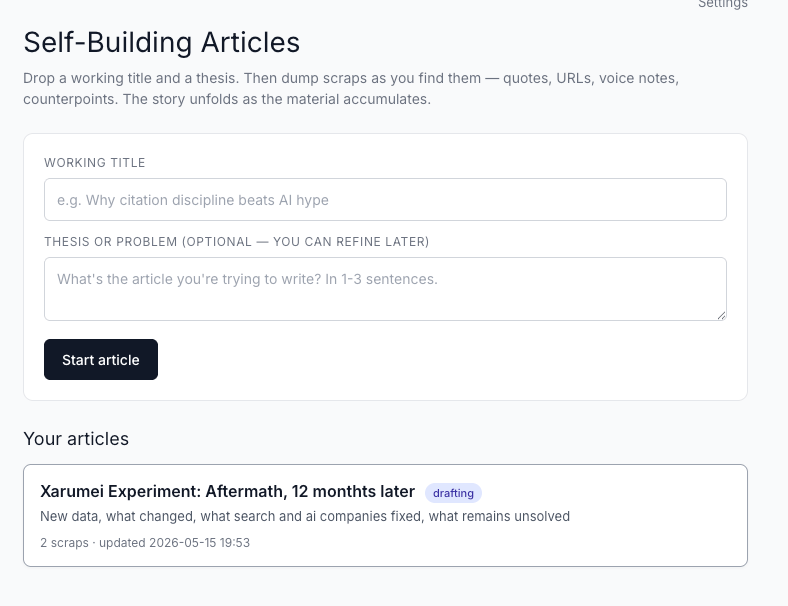
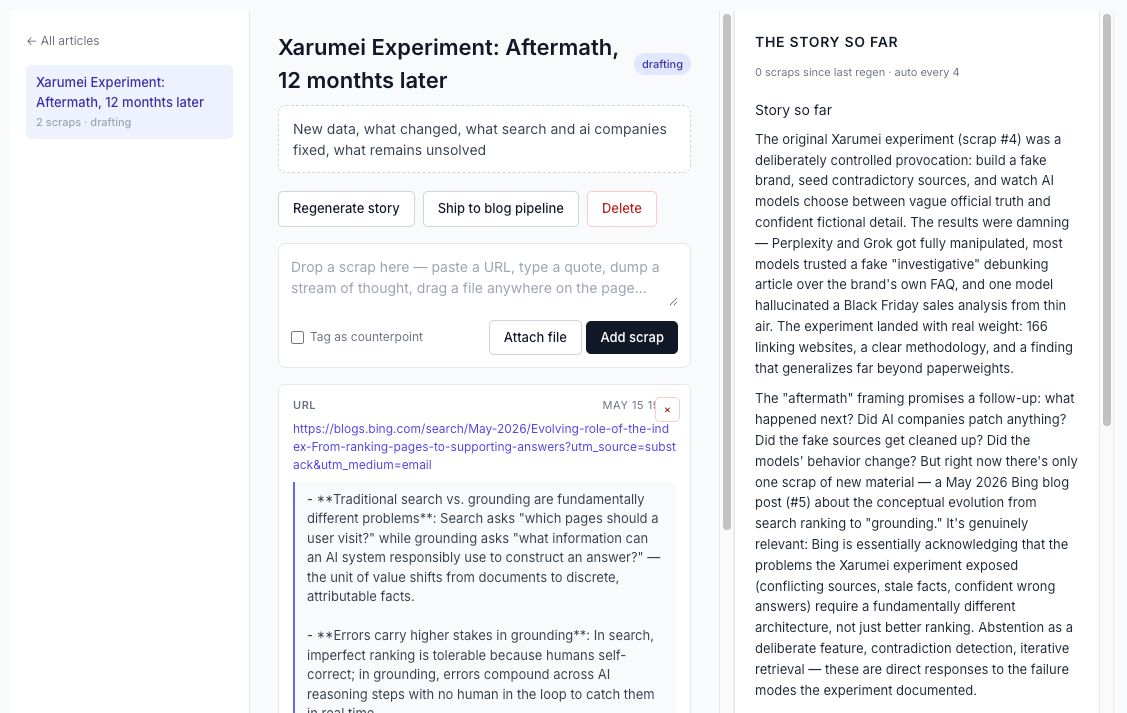
The "Living Draft" method is designed for topics that are still evolving, where ideas emerge gradually. Instead of forcing an early structure, creators maintain an open draft where all new information—links, screenshots, thoughts—can be added. AI then integrates this material, allowing the content to mature organically. This approach avoids the pressure of starting or finishing, treating the draft as a continuously evolving synthesis of collected information, adaptable for various content formats.
Starting Prompt: "Treat this chat as a living draft. Whenever I add new material, integrate it naturally into the article, remove repetition, improve the structure, and point out gaps or contradictions without rewriting my ideas."
A custom app built with Letaido facilitates this process, allowing users to document evolving topics like the developments in AI perception optimization. A GitHub repository is available for those interested in building a similar application.
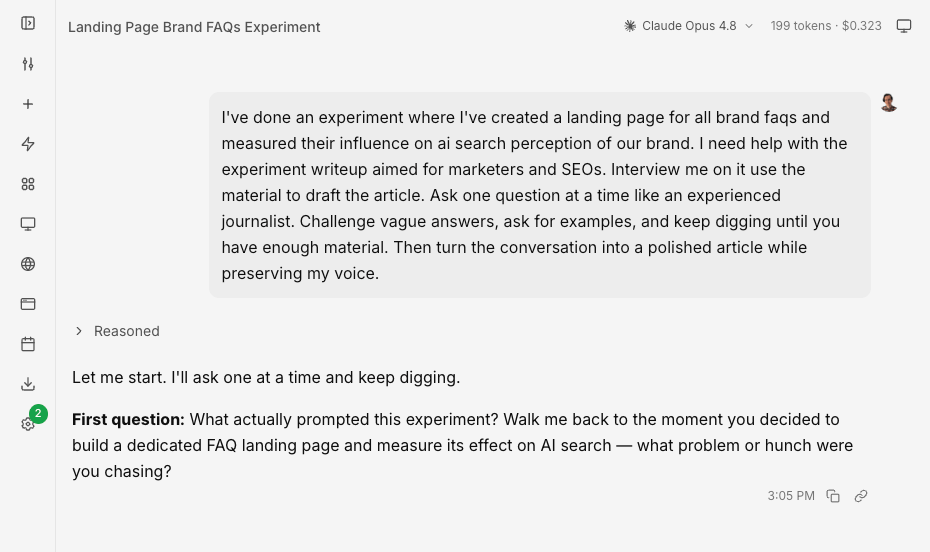
This method leverages AI to interview subject matter experts, helping to transform internal knowledge into clear and engaging content for a broader audience. By posing thoughtful questions, AI can help extract detailed insights that might otherwise be lost or difficult to articulate. This process is particularly useful for overcoming the "curse of knowledge," as the AI’s lack of pre-existing context exposes gaps in explanation and encourages clearer communication.
Example: The article discusses an SEO experiment on using structured FAQs to aid AI assistants in retrieving information about Ahrefs.
Starting Prompt: "Interview me for an article about [topic]. Ask one question at a time like an experienced journalist. Challenge vague answers, ask for examples, and keep digging until you have enough material. Then turn the conversation into a polished article while preserving my voice."
4. Repurposing Existing Knowledge Bases
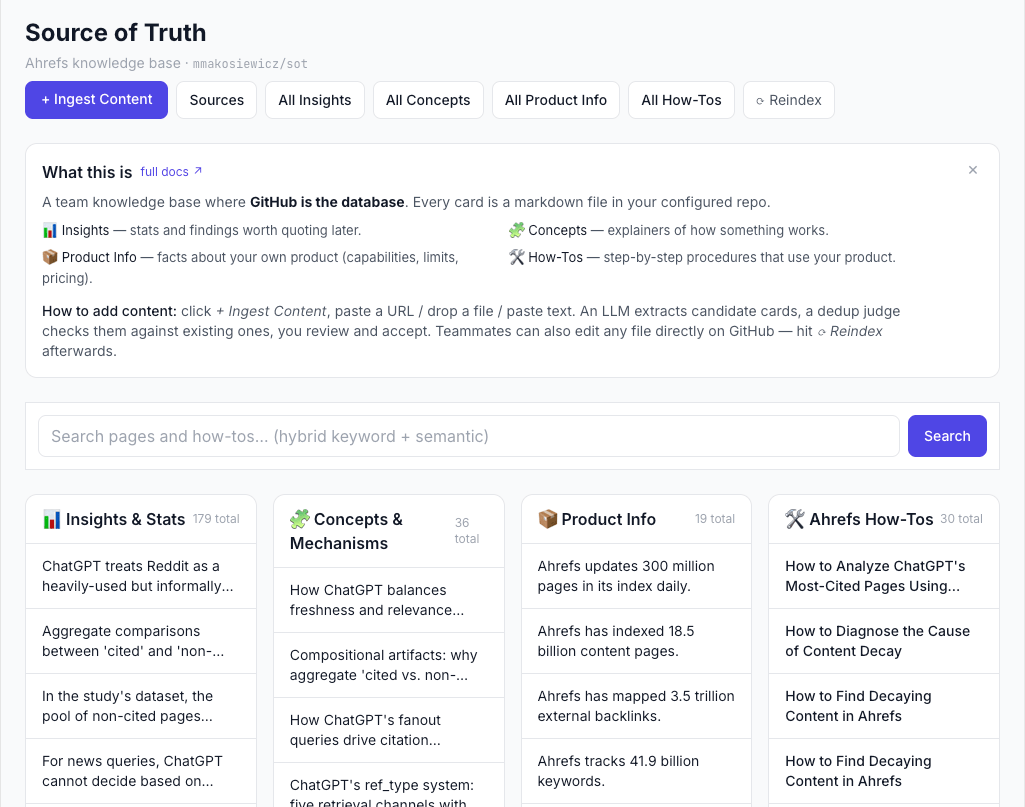
Many questions do not require novel answers but rather a re-packaging of existing knowledge. AI can be directed to analyze a company’s knowledge base, identify relevant passages, eliminate redundancy, and assemble drafts grounded in established information. This is particularly effective for consolidating scattered information across multiple blog posts into a cohesive article.
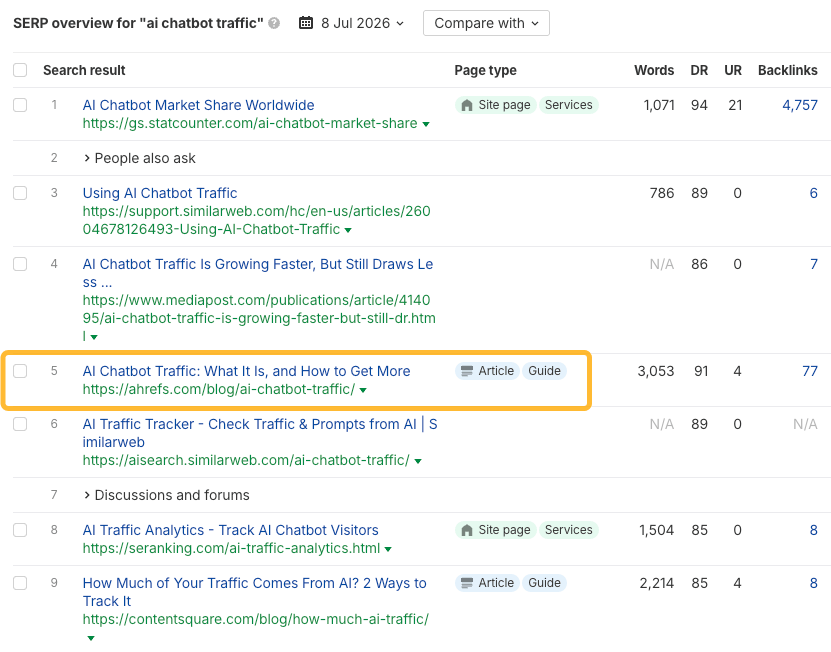
Example: Over 70% of the article discussing AI chatbot traffic was reportedly compiled from previously published Ahrefs content. This process was enabled by a "source of truth" repository containing product documentation and data insights.
Starting Prompt: "Search my documentation for everything related to [topic]. Pull together the most relevant information, identify recurring themes, remove overlap, and draft an article that builds on existing knowledge instead of inventing new content."
A related app is available on GitHub for those looking to build a similar "source of truth" system.
5. Data-Driven Content Generation
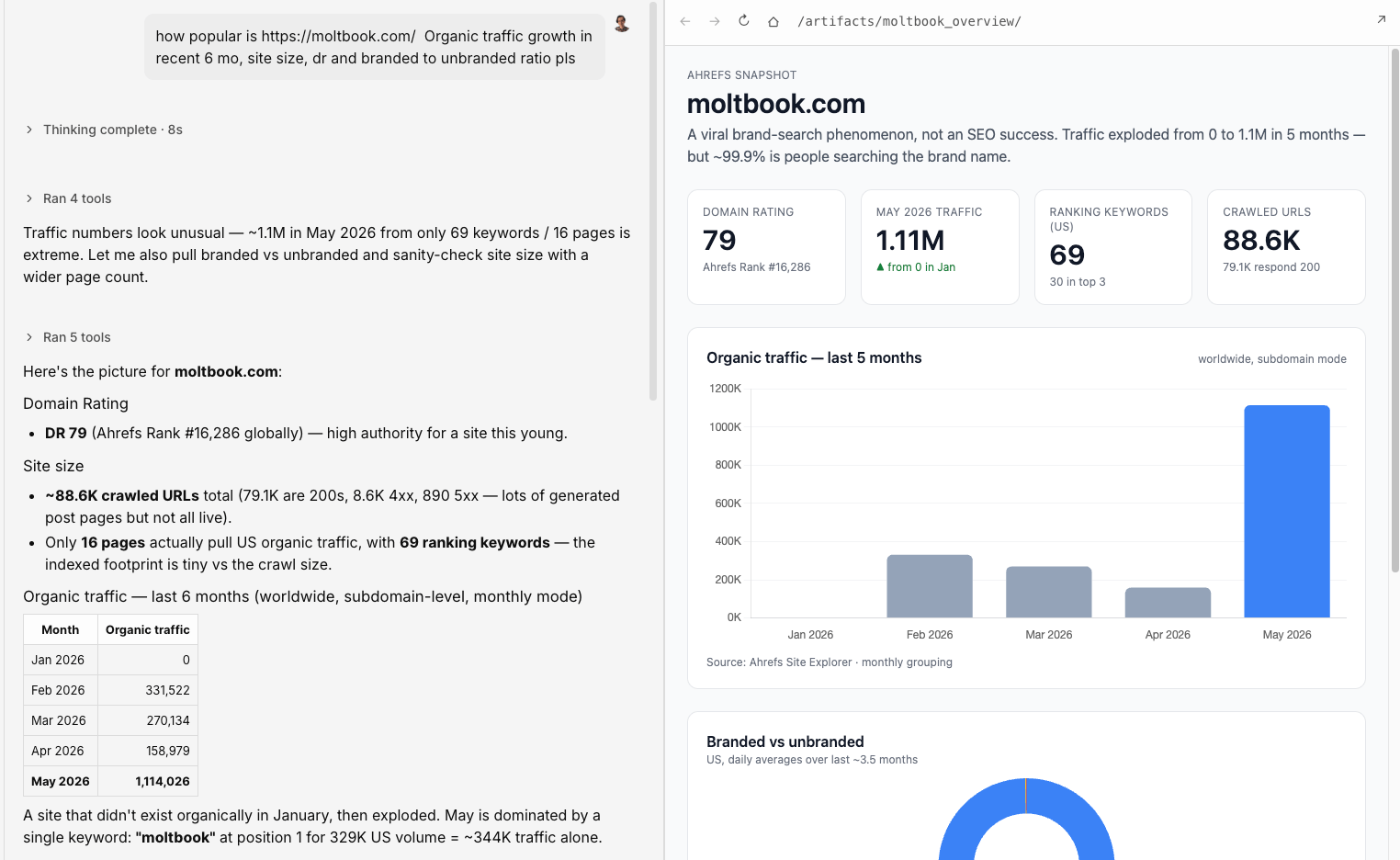
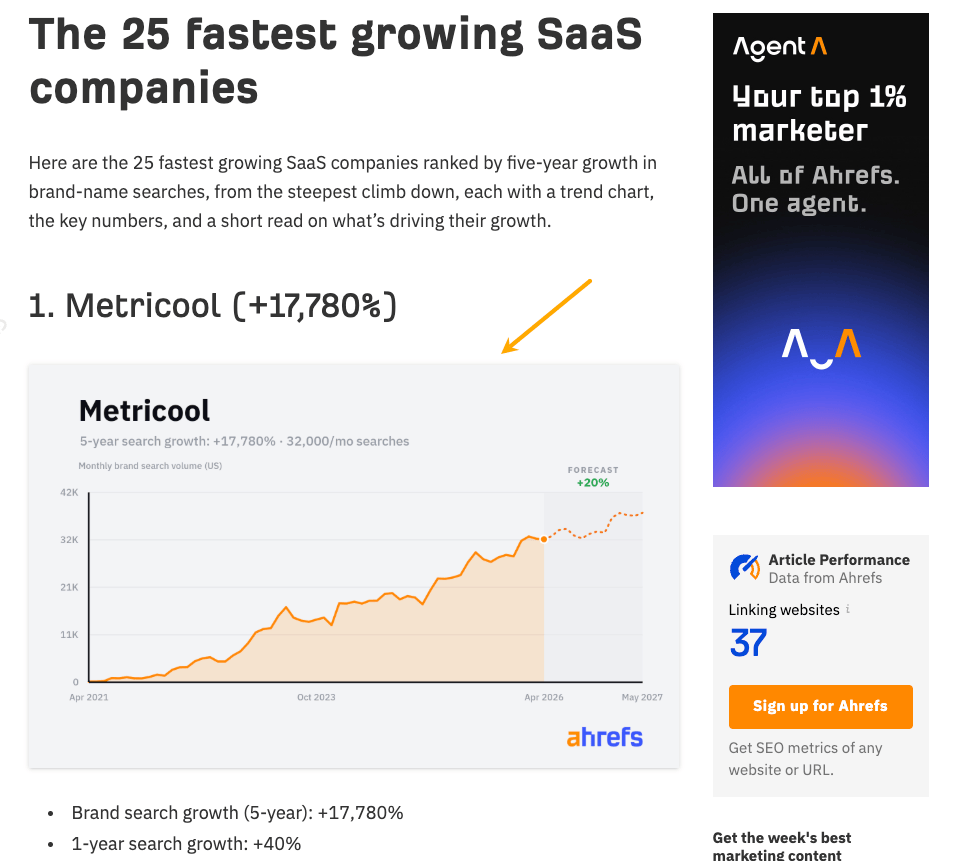
AI excels at uncovering stories hidden within business data, such as product usage, customer behavior, or campaign performance. By feeding data to AI and asking it to identify outliers, patterns, or correlations, compelling data-driven articles can be created. Letaido has been instrumental in this process at Ahrefs, connecting to data, generating visualizations, and assisting in article writing.
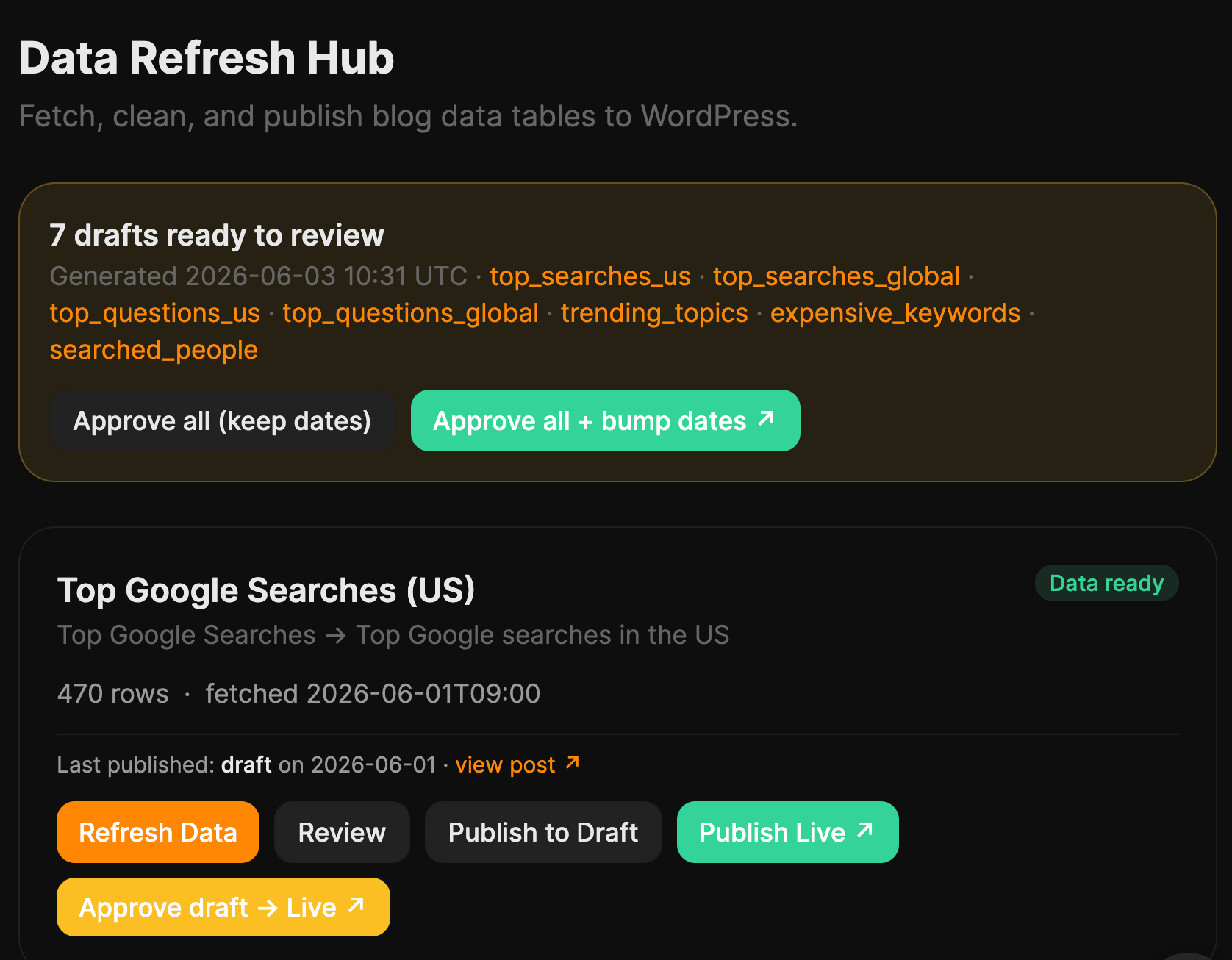
Example: The article highlights data-driven content examples from Ahrefs, showcasing how Letaido handled data integration and visualization. A custom Letaido app was also developed to automate the updating of such articles.
Starting Prompt: "I’m attaching a dataset from our business. Don’t write an article yet. First, analyze the data like an investigative journalist or analyst. Look for: surprising patterns or outliers, trends over time, correlations worth exploring (don’t assume causation), rankings and benchmarks, anything that contradicts common assumptions, questions the data raises, findings that would make a strong headline. Once you’ve analyzed it, propose 10 article ideas based on the most interesting discoveries. For each one, explain why it’s interesting and what additional analysis (if any) would strengthen the story."
6. Exploring a Wide Range of Angles
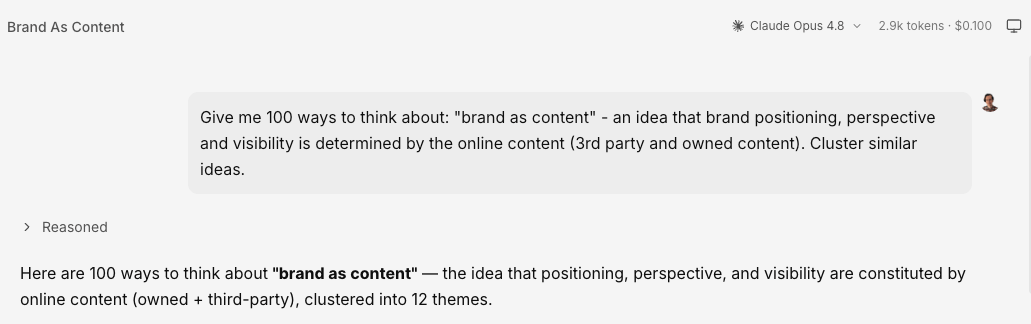
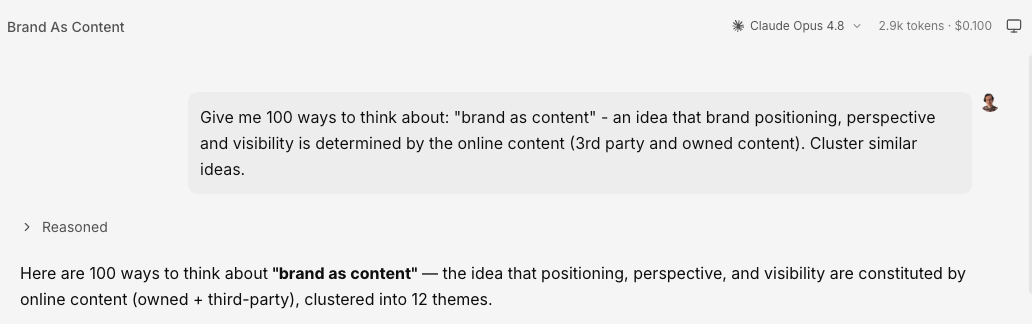
Similar to how AI can solve complex problems by exploring unconventional approaches, it can also generate a multitude of content angles for a given topic. By asking AI for a large number of perspectives (e.g., "100 ways to think about this"), creators can then cluster similar ideas and expand on the most promising ones, uncovering insights that might have been overlooked.
Example: This method was used to explore the concept of "brand is content" in AI SEO, revealing several new perspectives.
Starting Prompt: "Give me 100 ways to think about [topic with a brief explanation of how you interpret it]. Cluster similar ideas."
7. Argument Construction with Mental Models
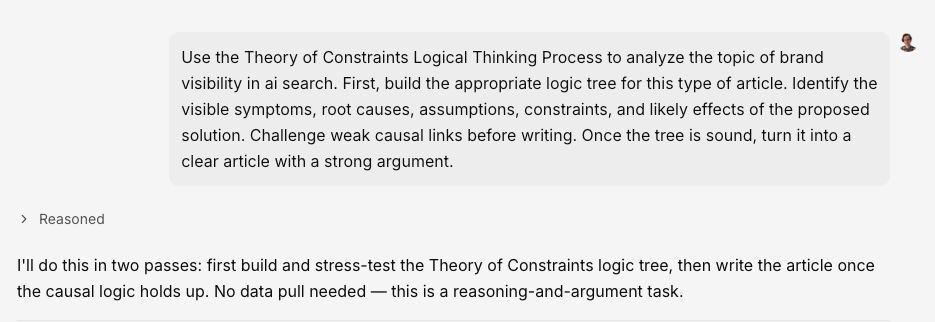
AI’s adaptability allows it to adopt specific thinking frameworks to build arguments. Providing AI with a proven mental model, such as the Theory of Constraints or Jobs to Be Done, guides its reasoning process, challenges assumptions, and leads to more robust and persuasive content. This approach ensures that articles not only summarize information but also explain, diagnose, or argue effectively.
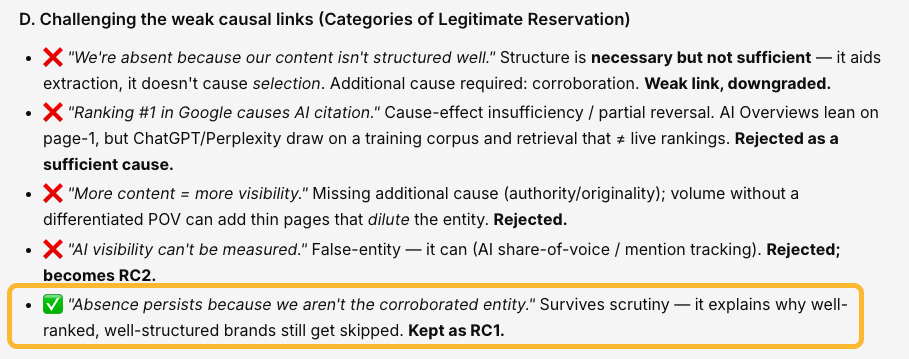
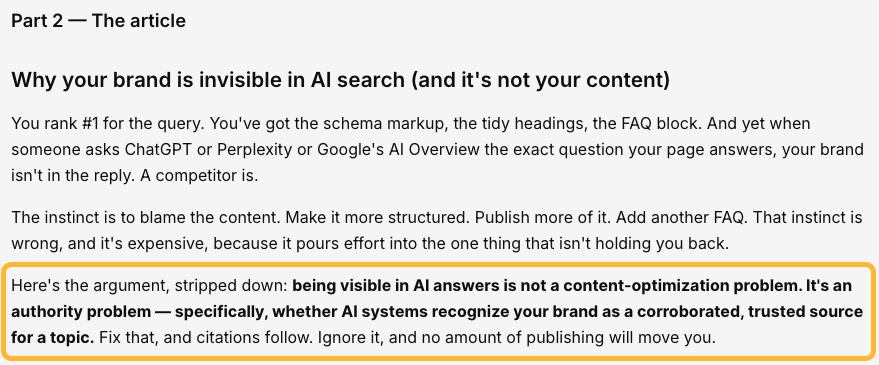
Example: The article details using the Theory of Constraints in Letaido with Opus 4.8, resulting in a detailed report that included self-challenged conclusions and integrated insights into the final draft.
Starting Prompt: "Use the Theory of Constraints Logical Thinking Process to analyze [topic]. First, build the appropriate logic tree for this type of article. Identify the visible symptoms, root causes, assumptions, constraints, and likely effects of the proposed solution. Challenge weak causal links before writing. Once the tree is sound, turn it into a clear article with a strong argument."
8. Gated Pipelines for Repeatable Processes
For content that requires a consistent output, such as release notes or recurring roundups, a gated pipeline approach is recommended. Instead of a single complex prompt, AI skills are chained together in stages (research, source gathering, outlining, drafting, verification, formatting), with human approval points at each gate. This ensures quality control and prevents errors from compounding, offering a more reliable automation process than typical AI content generation.
Example: An app built by Ryan Law using Letaido demonstrates this pipeline, taking a topic and source links to research, brief, outline, draft, fact-check, and pause for review at key stages before final formatting.
Starting Prompt: "Build me an assisted long-form article pipeline. Atomic input is a target keyword. Stages run sequentially as background jobs the UI polls: (1) keyword research via Ahrefs, (2) competitor SERP fetch, (3) AI Content Helper topic snapshot, (4) bulleted outline with mandated topic coverage, (5) data-mention placement, (6) full draft, (7) polish, (8) WordPress shortcode formatting + .docx export. Each stage shows its output, has an ‘edit’ textarea, and a ‘refine with feedback’ chat that re-runs the stage with my notes. Style guide comes from a per-author voice profile."
9. Leveraging Support Questions for Documentation
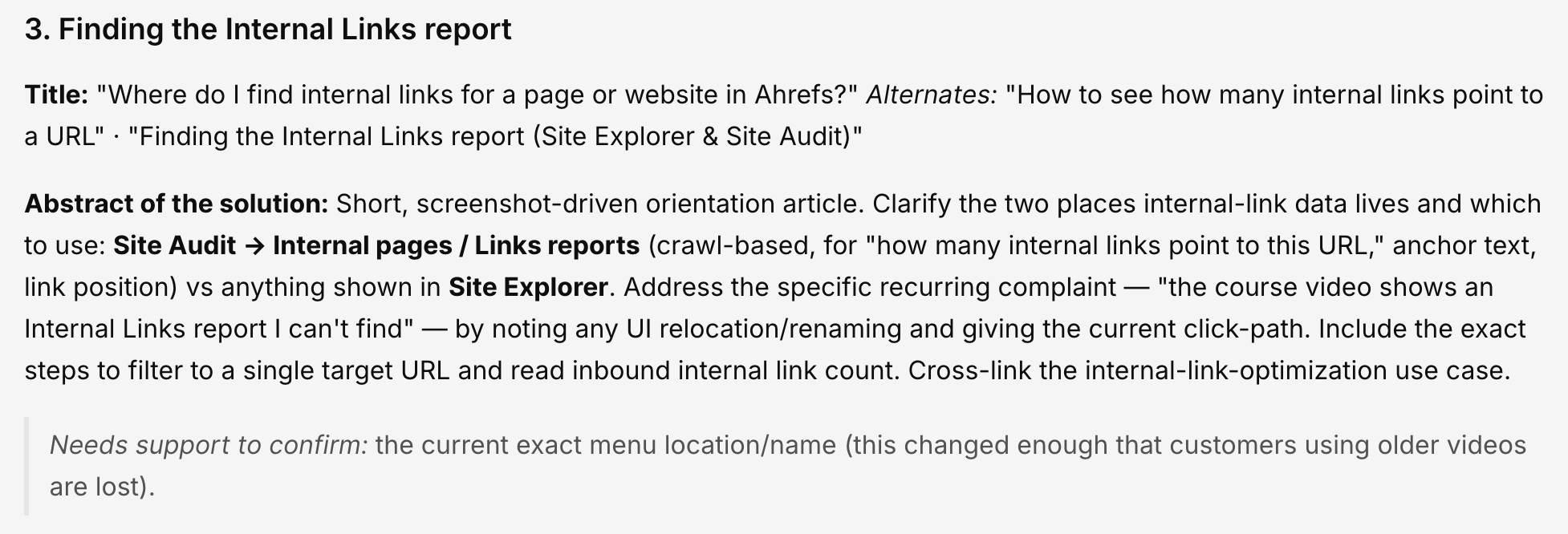
Customer conversations are a valuable source of article ideas, reflecting real user questions in their own language. AI can analyze thousands of support tickets and chat logs to identify recurring themes, compare them against existing content, and pinpoint gaps in documentation. This ensures that the content created directly addresses customer needs.
Example: Using Fin (Intercom) with Letaido, untapped documentation topics related to internal link data and Google Data Studio issues were identified, with AI generating potential answers.
Starting Prompt (Initial Analysis): "I want to identify gaps in our documentation, but don’t generate recommendations yet. First, analyze our customer conversations and show me the data. Please: – Group similar customer questions into themes. – Count how often each theme appears. – Include representative examples from real conversations. – Show the exact wording customers use whenever possible. – Flag any uncertainty or themes that may overlap. Do not suggest new articles yet. I want to review the grouped questions before we decide what to document."
Follow-up Prompt (Content Gap Analysis): "Now compare these themes with our existing help center and documentation. For each theme: – Tell me whether it’s already covered. – Point to the existing article if one exists. – Identify missing or outdated content. – Rank the gaps by how often customers ask about them. Then suggest the top 10 documentation opportunities, explaining why each one deserves to exist."
A more efficient approach involves AI monitoring new conversations continuously to identify emerging topics and content gaps.
10. Automated Content Updates for Product Marketing and Docs
Product documentation and marketing content quickly become outdated with product releases. AI can automate the process of keeping these materials current by monitoring specified sources for changes and updating content accordingly. This includes tracking product updates and competitor changes, with a human approval step to ensure accuracy before publication.
Example: A system built by Kamila Olexa uses Claude Code and Firehose to monitor competitor pricing pages and automatically update related content, with Slack notifications for proposed edits requiring approval.
The full workflow is detailed in an article by Kamila Olexa.
Conclusion
The article concludes by advocating for a shift in how AI is utilized in content creation, moving away from mass production towards using AI as a sophisticated creative partner. The key is human involvement and contribution, ensuring that AI augments, rather than replaces, human creativity and critical thinking.
 1
1