 11
11
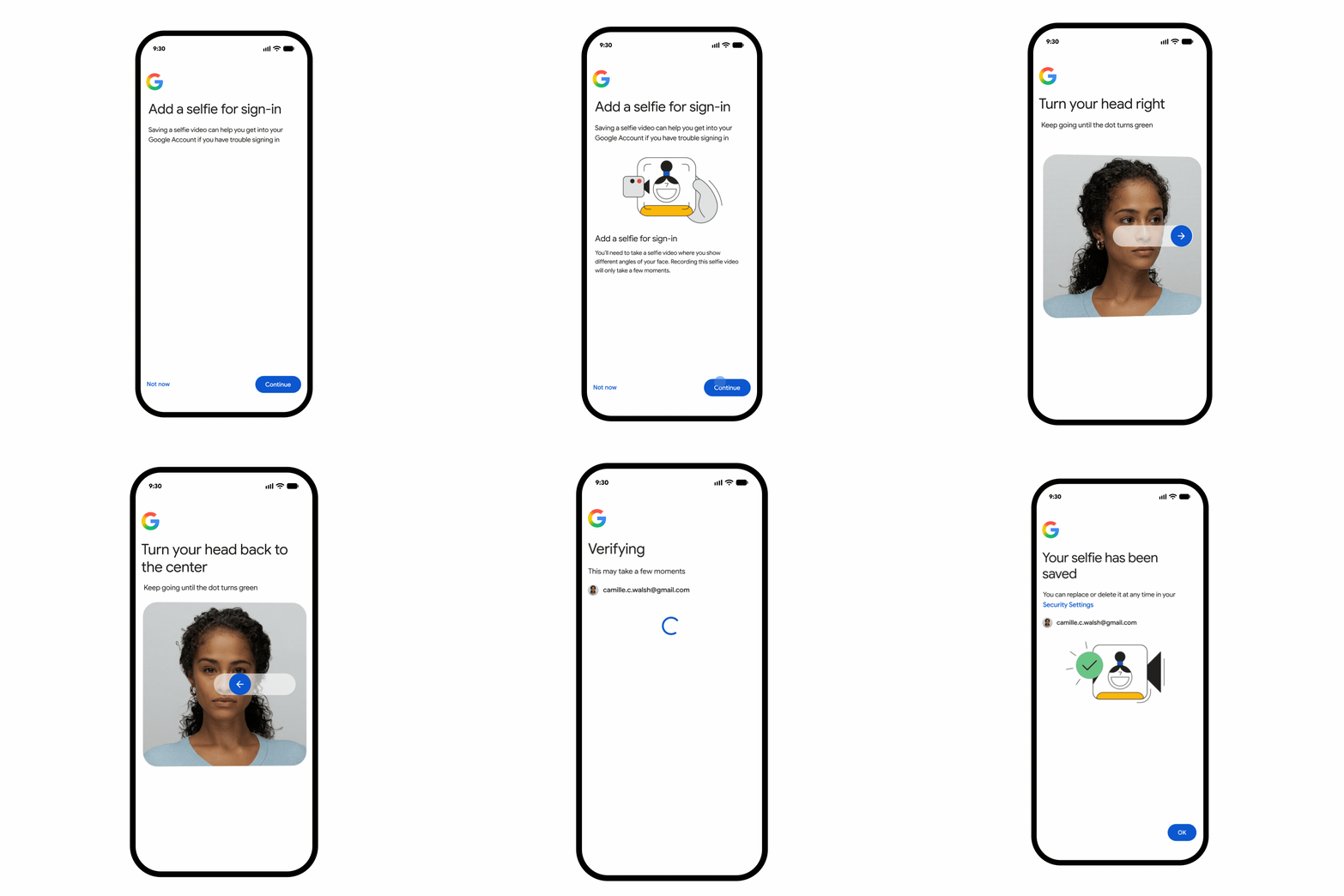
Google is rolling out an innovative new method for users to sign in to and recover their accounts: a selfie video. This development marks a significant step in enhancing account security and accessibility, particularly for individuals who find themselves locked out of their digital lives due to a lost or inaccessible device.
The frustration of losing access to a Google account can be profound, often described as a "Kafkaesque process" of navigating complex recovery protocols. For many, a Google account is the central hub for their digital existence, linking email communications, calendar appointments, cloud storage, and access to countless other services. Being locked out can paralyze daily routines, impact professional responsibilities, and create immense personal stress. This new selfie video option is designed to mitigate such scenarios, serving as an additional, easily accessible "spare key hidden in the bushes" for account access.
Claire Forszt, a product manager at Google specializing in identity and engagement, emphasized the importance of having multiple recovery options. "We always recommend that you set up more than one option," Forszt stated, highlighting the selfie video as the latest addition to this crucial list. She explained that this feature is specifically engineered to assist users in "vulnerable scenarios around not having access to the device where your passkey might be." Beyond the selfie video, Google continues to offer traditional recovery methods such as recovery contacts and backup codes, reinforcing a multi-layered approach to account security.

The setup process for the selfie video is designed for simplicity and speed. Users can enable this feature in less than five minutes by navigating to their Google account settings. The steps are straightforward: open your Google account, select the "Security & sign-in" tab, and then scroll down to the "How you sign in to Google" section. If the feature has been rolled out to your account, a new option for selfie sign-in will appear at the bottom. Google is progressively deploying this feature globally to the majority of its user base, ensuring widespread availability.
During the recording of the selfie video, Google provides clear guidelines to ensure the verification process is successful. Users are advised to keep their face fully visible, maintain direct eye contact with the camera, and record in standard lighting conditions. A critical instruction is to ensure that only one face is present in the recording; even a family portrait in the background is discouraged to prevent misidentification or security vulnerabilities. The process guides users through specific movements, such as slowly lifting their chin and staring at the ceiling for a moment before returning their head to the center, followed by a final direct gaze at the camera for capture. Upon completion, Google verifies the selfie video, which is then securely stored under the account’s Security Settings.
Google has integrated robust security measures to protect against sophisticated threats like deepfake attacks, which leverage artificial intelligence to create highly convincing fake videos. The system incorporates "liveness detection" tools, designed to differentiate between a real person and a manipulated image or video. Forszt clarified that while the selfie video is a powerful tool, it is part of a broader security framework. "There might be instances where passing a selfie video alone may not always be sufficient to get you back into your account if we suspect something risky going on," she explained. Google’s system evaluates the "overall risk based on many factors," which could include contextual clues like unusual login locations, IP addresses, or device history, providing a comprehensive security assessment.
A crucial aspect of this new feature is its proactive nature: it must be set up before a user experiences an account lockout. Google’s support page explicitly states, "You can’t add a selfie video while you’re locked out of your account or in the account recovery process." This underscores the importance of configuring this recovery option as a preventative measure, ensuring it is available when most needed.

Privacy considerations are at the forefront of Google’s implementation. During the selfie video creation process, users are presented with an explicit opt-in choice regarding the use of their recording as training data for Google’s AI models. A checkbox accompanies the description: "Allow Google to use this and any previously provided selfie videos and related data to develop and improve our facial recognition, age estimation, and other verification methods that use your physical features or movement, across Google services." This granular control empowers users to decide whether their biometric data contributes to the advancement of Google’s AI technologies. Furthermore, users retain the flexibility to adjust this setting, labeled "Improve Google services," within their privacy settings at any time if they change their mind. This transparent approach aims to build user trust by giving individuals agency over their personal data.
This selfie video verification process may feel familiar to Google power users who have engaged with other recently launched AI-powered features. Earlier this year, Google introduced an AI avatar tool within its Gemini app, allowing users to create digital clones of themselves for use in AI-generated videos. The realism and naturalness of these AI avatars were notably impressive, showcasing Google’s advancements in facial recognition and generative AI.
Google’s deliberate opt-in strategy for its selfie features stands in contrast to the approach taken by some other tech giants. In a recent example, Meta faced significant backlash in July when it automatically opted adult Instagram users into a feature that made their images available for AI remixes by anyone. Users were required to actively seek out and adjust their settings to opt out, leading to widespread criticism and ultimately, the complete deletion of the feature by Meta just three days after its launch. This incident highlights the critical importance of user consent and transparent data practices, areas where Google appears to be treading more cautiously with its new sign-in method.
While some users may understandably harbor discomfort with any new sign-in method that involves capturing and storing their likeness, the opt-in nature of Google’s selfie video feature addresses a significant portion of these privacy concerns. For individuals who frequently find themselves locked out of their accounts, this new option offers a convenient and much-needed alternative. The ability to simply present one’s face for verification when other methods fail could transform a frustrating recovery ordeal into a swift and seamless re-entry into their digital world, offering a considerable sense of relief. As digital identities become increasingly intertwined with daily life, robust yet accessible security measures like the selfie video are becoming indispensable tools for managing online presence.