 11
11
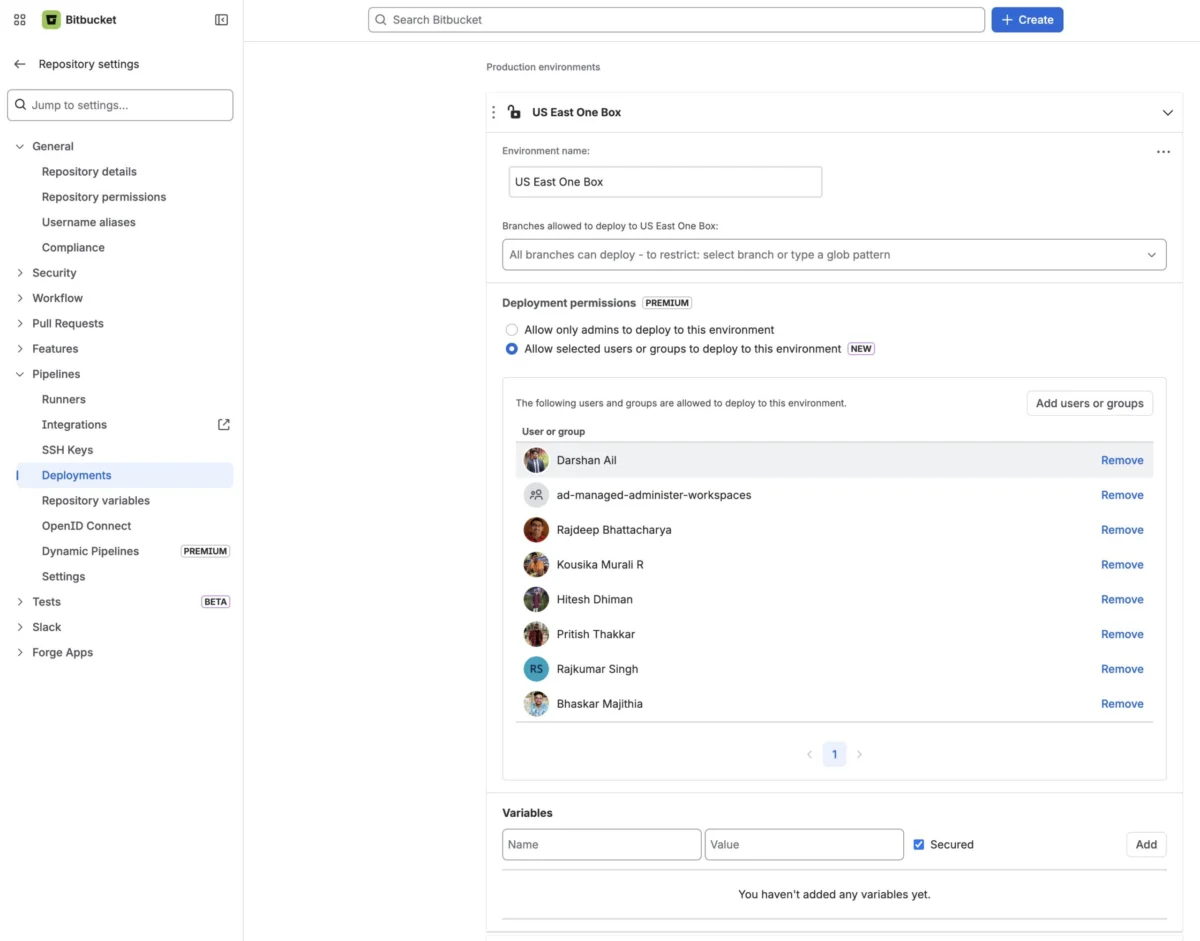
Atlassian has announced the launch of custom deployment permissions for Bitbucket Pipelines, a significant update aimed at resolving long-standing access management challenges within the continuous integration and continuous deployment (CI/CD) lifecycle. Currently in its Beta phase, this feature is designed to eliminate the "all-or-nothing" approach to repository access, allowing organizations to implement more granular control over who can trigger code deployments to specific environments. This development represents a shift toward more sophisticated governance within the Bitbucket Cloud ecosystem, catering specifically to the needs of engineering teams, release managers, and compliance officers who require tighter security protocols for production and staging environments.
For many years, repository administrators using Bitbucket faced a difficult choice regarding deployment security. To allow an engineer or a release manager to trigger a deployment through Bitbucket Pipelines, administrators often had to grant that individual full repository administrative rights. This level of access provided much more than the ability to deploy; it often included the power to delete repositories, change sensitive branching models, and modify core project settings. This over-provisioning of privileges created significant security risks and complicated the process of meeting modern regulatory requirements. The introduction of custom deployment permissions addresses this by decoupling deployment triggers from high-level administrative permissions, enabling a "least privilege" security model.
The core functionality of the new custom deployment permissions allows repository administrators to gate specific environments. Instead of a universal permission set that applies to the entire pipeline, administrators can now define exactly which users or groups are authorized to deploy to individual environments, such as "Staging," "UAT," or "Production." When these permissions are active, the system acts as a gatekeeper. If an unauthorized user attempts to initiate a deployment to a protected environment, the process is automatically blocked. In such instances, the deployment remains in a pending state until a user with the appropriate authorized credentials intervenes to resume the process. This ensures that critical infrastructure is protected from accidental or unauthorized code releases while maintaining a clear audit trail of who authorized each deployment.
This new feature unblocks several critical workflows for development teams. In high-stakes environments where software releases must be carefully coordinated, the ability to protect critical environments without stalling the entire development process is essential. By utilizing these permissions, teams can ensure that only senior personnel or dedicated release managers can push code to production, while still allowing developers the freedom to deploy to development or testing environments. This separation of duties is a fundamental requirement for many industry-standard compliance frameworks, including SOC2, HIPAA, and ISO 27001. By providing a native way to enforce these controls, Bitbucket Pipelines simplifies the path to compliance for organizations operating in regulated sectors.
The technical implementation of custom deployment permissions is managed directly within the Bitbucket interface. Repository administrators can find these settings by navigating through the "Repository settings" menu, selecting "Pipelines," and then proceeding to "Deployments." From this centralized dashboard, permissions can be configured on an environment-by-environment basis. This granular approach means that a "Development" environment might remain open to all contributors to facilitate rapid iteration, while a "Production" environment can be strictly limited to a small group of authorized stakeholders. Once the permission list for an environment is populated with specific users or user groups, Bitbucket Pipelines will strictly enforce these rules at the time of deployment.
To access this feature during its Beta period and beyond, certain prerequisites must be met. The workspace in question must be on a Bitbucket Premium plan, reflecting Atlassian’s strategy of bundling advanced governance and security features into its top-tier service offering. Furthermore, Bitbucket Pipelines must be actively enabled for the repository, and at least one deployment environment must be configured in the bitbucket-pipelines.yml file. Finally, the person configuring these permissions must hold Admin-level rights for the repository to ensure that the security settings themselves are not tampered with by unauthorized parties.
The introduction of this feature is also intended to streamline the interaction between different roles in a software organization. In the previous model, the lack of granular permissions often led to "bottlenecking," where a small number of administrators were overwhelmed with manual tasks simply because they were the only ones with the necessary permissions to click "deploy." With custom deployment permissions, administrators can safely delegate the authority to deploy to specific team members without compromising the overall security of the repository. This promotes a more agile environment where release managers can perform their duties independently, and engineers can take ownership of the deployment process within the boundaries set by their leads.
Atlassian has noted that as this feature is currently in Beta, they are actively seeking feedback from the user community to refine the permission model and the user interface. The company is focusing on validating how the permissions are enforced at deployment time and ensuring that the UI provides clear, actionable information for both authorized and unauthorized users. Feedback gathered during this period will be instrumental in shaping the General Availability (GA) release of the feature. Users are encouraged to participate in discussions on the Atlassian Community forums, where they can share their experiences and suggest improvements to the workflow.
The broader implications of this update for the DevOps industry are significant. As organizations move toward "DevSecOps"—the integration of security practices into every stage of the development lifecycle—the tools they use must support fine-grained access control. Bitbucket’s move to introduce custom deployment permissions brings it into closer alignment with other major CI/CD platforms that offer similar environment protection features. It reinforces the idea that deployment is a privileged action that requires its own set of governance rules, distinct from code contributions or repository management.
For teams looking to get started, Atlassian provides comprehensive support documentation. The process involves setting up deployment environments within the Bitbucket interface and then applying the new permission layers as needed. The documentation outlines how to monitor these deployments and how to troubleshoot common issues that may arise when permissions are first implemented. By following these guidelines, teams can transition from a broad access model to a more secure, gated model with minimal disruption to their existing CI/CD pipelines.
While the current Beta focuses on the fundamental gating of environments, the "What’s next" for Bitbucket Pipelines suggests a continued focus on release safety and compliance. The feedback loop from the Beta will likely lead to more sophisticated reporting features, perhaps providing deeper insights into deployment frequency and authorization patterns, which are vital for internal audits. For now, the primary goal remains the elimination of the "all-or-nothing" access problem, providing a safer and more compliant environment for all users.
In summary, Bitbucket Pipelines’ custom deployment permissions (Beta) provide a necessary tool for modern software teams to protect their release processes. By allowing for the gating of specific environments to authorized users and groups, Atlassian is helping teams ensure safer releases and easier adherence to compliance standards. This feature addresses a critical pain point in repository management, moving away from over-privileged administrative roles toward a more secure, granular, and efficient deployment workflow. As the feature moves toward General Availability, it is expected to become a cornerstone of the Bitbucket Premium offering, providing the governance and control that enterprise-level engineering teams require in today’s fast-paced development landscape. Organizations interested in enhancing their deployment security are encouraged to review the support documentation and join the Atlassian Community to provide feedback on this evolving feature.