 11
11
Most people use "keyword intent" and "search intent" interchangeably, and while they both refer to the underlying reason behind a search query, a practical distinction can significantly alter how this concept is applied in digital marketing strategies. Search intent focuses on optimizing content to align with what search engine results pages (SERPs) reward, whereas keyword intent acts as a crucial initial filter during the keyword research phase. This means evaluating whether a keyword should be included in your strategy at all, based on whether your website can realistically serve and convert the searcher’s need. If the intent doesn’t align with your offerings, the keyword’s search volume becomes irrelevant.
There are four primary categories of keyword intent, each with specific implications for content strategy:
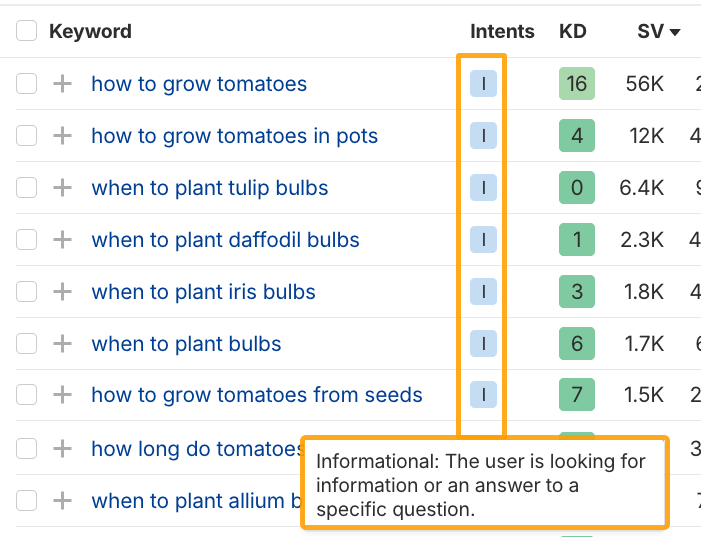
1. Informational Keywords: These are searches seeking answers, explanations, or how-to guidance. Examples include "how to grow tomatoes," "why are my plant leaves turning yellow," or "when to plant bulbs." Informational keywords represent the largest portion of search volume in most niches and form the foundation of many content strategies. They are valuable when traffic potential is high, building topical authority is a strategic goal, and there’s a natural opportunity to introduce your product or service within the context of the information provided. However, they should be skipped if the primary goal is immediate sales and there’s no clear path to product integration.
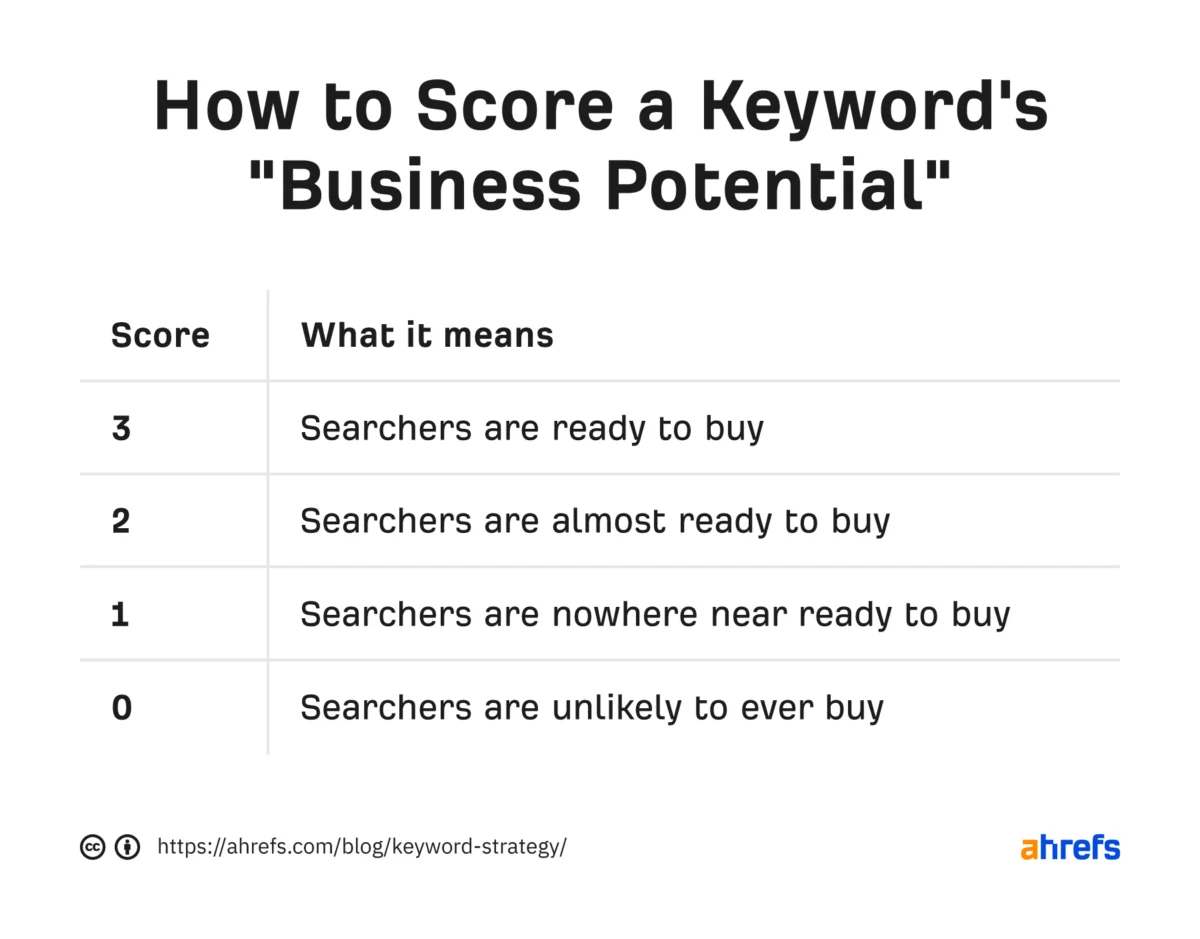
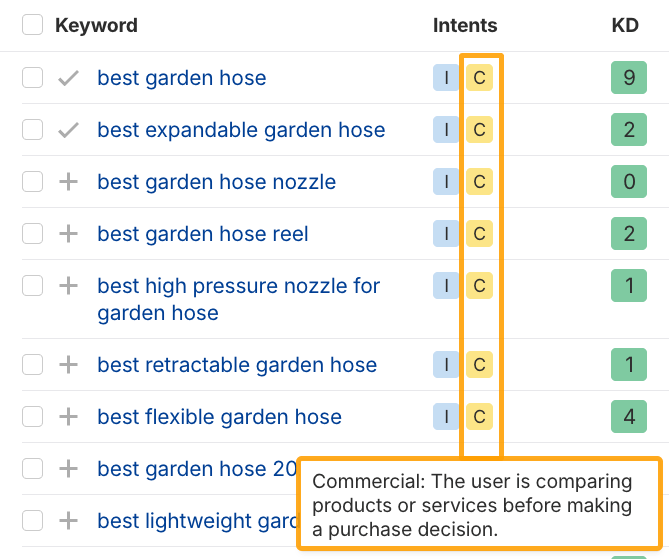
2. Commercial Investigation Keywords: These queries fall between initial research and the point of purchase. Examples include "best garden hose," "raised bed vs in-ground gardening," or "top fertilizers for vegetables." These searches indicate that the user is evaluating options but is not yet ready to commit to a purchase. These keywords hold significant strategic value for e-commerce and affiliate marketing websites. Whether to target them depends entirely on the products or services you sell or promote. Ahrefs’ Business Potential score is a useful framework for assessing these, rating keywords based on how naturally a product can be presented as the solution.
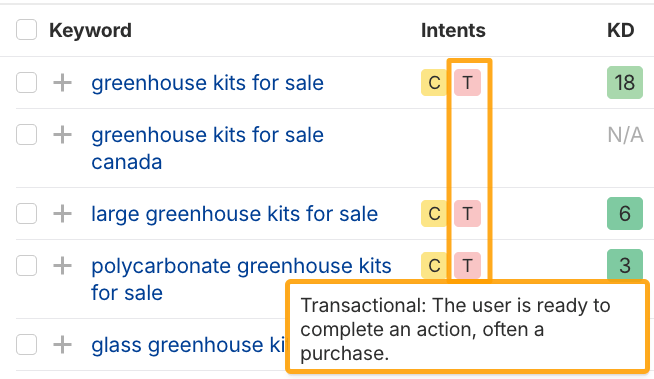
3. Transactional Keywords: These keywords signal an immediate intent to buy. Examples include "buy garden hose online," "greenhouse kits for sale," or "Miracle-Gro potting mix price." While these keywords convert well, they are highly competitive and expensive to rank for organically. Due to their proximity to the point of purchase, they attract significant competition from both organic search results and paid advertisers willing to bid aggressively. If you can achieve organic ranking, it’s worth pursuing; otherwise, paid advertising might be a more viable option.
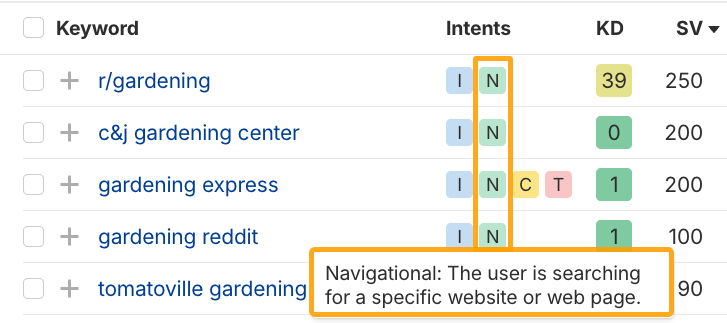
4. Navigational Keywords: These searches are for a specific brand or destination, such as "Thompson & Morgan website," "RHS plant finder," or "Gardeners’ World magazine." The only navigational terms worth prioritizing are those related to your own brand, like "Ahrefs login," "Ahrefs pricing," or "Ahrefs free trial." Ranking prominently for these ensures you capture users who are already looking for you, protecting your online presence.
Beyond these four common buckets, two additional categories of keyword intent are crucial to recognize, as they often behave differently in practice:

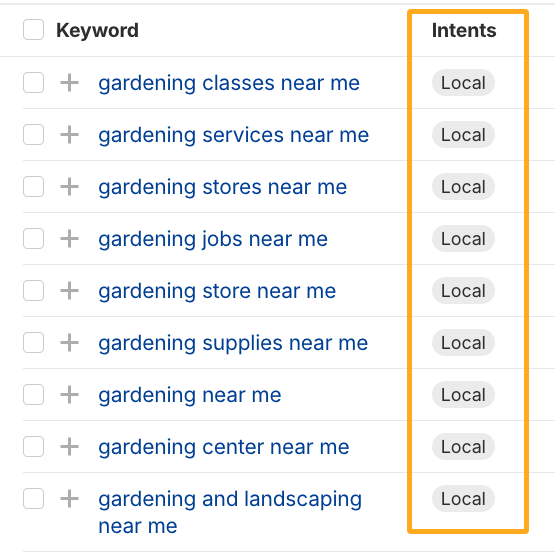
Local Intent: Keywords with local intent are not simply transactional queries with a location modifier. Searches like "dentist near me" or "coffee shop Shoreditch" trigger a distinct type of search results page. Standard content-based SEO is largely ineffective for these queries. Instead, a local SEO approach is required, focusing on optimizing your Google Business Profile, building local citations, and encouraging customer reviews.
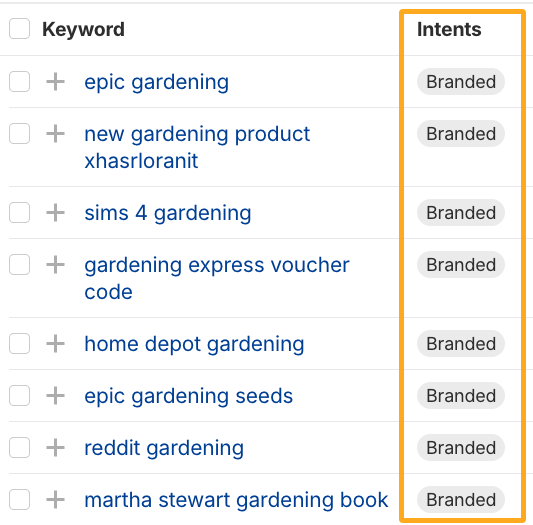
Branded Intent: These keywords include a specific brand or organizational entity by name, which could be your own brand, a competitor’s, or another relevant organization in your industry. Examples in the gardening niche include "Epic Gardening," "Home Depot gardening," or "Martha Stewart gardening book." While some branded keywords are navigational, many carry commercial or transactional signals, as users search for specific brands to research or purchase products. Appearing for these terms often requires a competitive strategy and may be well-suited for paid search advertising.
Handling Keywords with Mixed Intent:
Some keywords do not fit neatly into a single category, exhibiting mixed intent. For instance, "project management software" can have both informational and commercial signals, while "best deals on running shoes" might encompass informational, commercial, and transactional intent depending on the searcher’s stage in the buying journey.
When encountering such keywords, there are two primary approaches: either choose one dominant intent to optimize for or create separate content pieces addressing each intent. For example, an e-commerce store selling costumes could optimize its product pages for commercial and transactional intent. Simultaneously, it could create blog content, such as DIY costume tips or themed costume ideas, linking back to relevant products. This strategy ensures that all stages of the customer journey are addressed.
Identifying Keyword Intent with Ahrefs:
Ahrefs offers several tools to help identify keyword intent, both individually and at scale. In Keywords Explorer, the SERP results can be expanded, and the AI intent identification feature provides a percentage breakdown of how many ranking pages align with specific intents. This feature is also available in the AI Content Helper, customizing the content optimization report based on the selected keyword intent.
For ongoing monitoring, Rank Tracker allows you to track intent drift for priority keywords. By opening the SERP overview and comparing time periods, you can use the "Identify intents" feature to observe shifts in search intent over time.
For large-scale analysis, the Ahrefs Multiple Content Planner (MCP) can be connected to an LLM (such as Claude or ChatGPT) to group keywords by intent and identify those with high traffic potential. This provides scalability and the ability to uncover deeper, more subtle "micro-intents," particularly useful when mapping out a new niche.
Ultimately, keyword intent serves as the initial and most critical filter in any keyword research process. Before considering search volume, keyword difficulty, or content planning, it is imperative to determine if the intent behind a keyword aligns with your website’s capacity to serve and convert. If it does not, the keyword is unlikely to be a worthwhile pursuit, regardless of its potential traffic. This strategic discipline ensures that your efforts are focused on keywords that can genuinely contribute to your business objectives.