 11
11
Brinc, the burgeoning drone startup specializing in public safety solutions, is making an aggressive push to dominate its industry, marked by the recent launch of its new Guardian drone and a significant expansion into a cavernous 50,000-square-foot office space in Seattle. Blake Resnick, the company’s founder and CEO, envisions Brinc becoming the "DJI of the West," signaling an ambition to achieve the same level of market synonymity and influence as the dominant Chinese drone manufacturer, particularly within the crucial public safety sector. This strategic move comes amidst a shifting geopolitical landscape that has created a substantial opening for domestic drone innovation.
Founded in 2017 by Resnick, a former Thiel Fellow—a prestigious program that supports young entrepreneurs in foregoing or deferring higher education—Brinc quickly garnered attention from influential figures. Among its early supporters was then-OpenAI founder Sam Altman, who became one of Brinc’s first seed investors. Since its inception, Brinc has successfully navigated multiple funding rounds, culminating in a valuation of nearly half a billion dollars, as confirmed by Resnick. The company’s rapid growth is evident in its new Seattle facility, which, despite still being set up and estimated to be fully operational closer to November, symbolizes Brinc’s commitment to scaling operations and solidifying its market position.
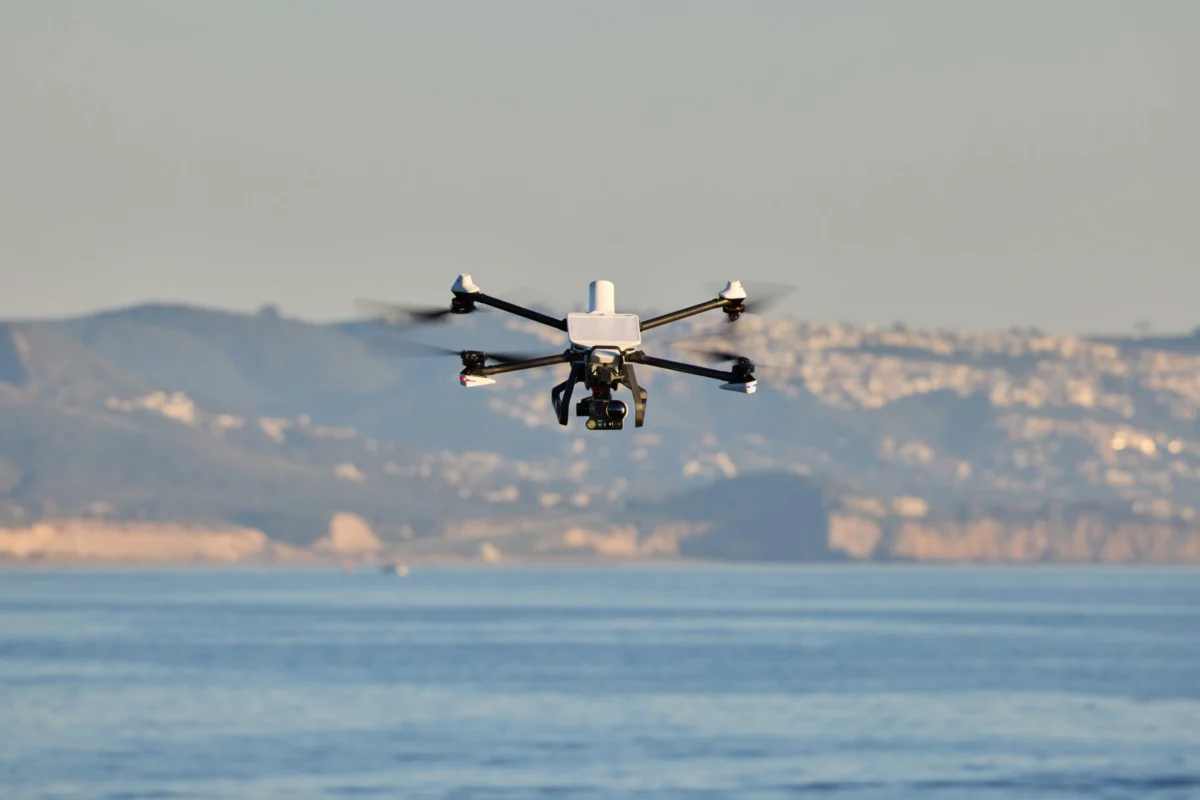
The centerpiece of Brinc’s latest offensive is the Guardian, a public safety drone unveiled on Tuesday, which Resnick touts as "the closest thing to a police helicopter replacement that the drone industry has ever produced." Brinc boldly claims the Guardian to be the "world’s most capable 9-11 response drone" ever developed, a testament to its advanced specifications and design tailored specifically for emergency scenarios. This drone is engineered to provide an unprecedented level of support to first responders, offering capabilities that traditionally required far more costly and resource-intensive aerial assets.
The Guardian’s formidable capabilities are designed to meet the rigorous demands of public safety operations. It boasts impressive flight performance, capable of reaching speeds up to 60 miles per hour and sustaining a flight time of 62 minutes. Such endurance and speed are critical for rapid deployment to incident scenes, enabling first responders to gain immediate situational awareness. Equipped with a sophisticated array of cameras, the Guardian features thermal imaging capabilities, essential for search and rescue operations, identifying heat signatures in low visibility, or assessing fire situations. Complementing this are two additional 4K cameras, all integrated with powerful zoom functionalities. Resnick highlights the precision of these cameras, stating that "even from significant altitude, a police department could read, like, license plate details," underscoring its utility for evidence collection and detailed surveillance. Beyond imaging, the drone also incorporates a powerful spotlight for illuminating dark scenes and a loudspeaker with a volume exceeding that of a standard police siren, allowing for clear communication during emergencies or crowd management.
A significant innovation integrated with the Guardian is its landing station, which Brinc refers to as a "charging nest." This nest offers fully automated battery swapping, a crucial feature for ensuring continuous operation without human intervention, thereby maximizing uptime during critical incidents. More remarkably, these charging nests can be stocked with vital safety supplies such as defibrillators, flotation devices, and Narcan. This capability transforms the Guardian into not just a reconnaissance tool but also a rapid delivery system for life-saving equipment, potentially reducing response times for critical medical aid and enhancing the safety and effectiveness of emergency services.
Perhaps the most groundbreaking feature of the Guardian is the Starlink panel embedded directly into its body. According to Brinc, this makes it the first public safety drone with such a capability. Starlink, SpaceX’s satellite internet service, provides the drone with unparalleled connectivity anywhere in the world. Resnick emphasizes the revolutionary nature of this integration, noting that "Starlink has never been built into a commercially produced quadcopter before, so [it] gives this airframe unlimited range anywhere in the world." This global connectivity is a game-changer for remote operations, disaster response in areas with compromised infrastructure, and maintaining robust communication channels irrespective of terrestrial network availability.
Resnick clearly identifies public safety as a vast and largely untapped market opportunity. He projects a substantial addressable market, estimating it to be between $6 billion and $8 billion across the U.S. and other countries. This forecast is based on the sheer number of potential clients: "There are about 20,000 police departments in America, 30,000 fire departments, 80,000 police and fire stations – and we think the top half of that market in the future will have a 911 response drone in a recharging nest on the roof," Resnick explained. This vision paints a future where drones are an integral, immediate-response asset in communities nationwide, deployed from strategic locations to enhance emergency services.
To facilitate this widespread adoption, Brinc has proactively forged strategic alliances. The company recently partnered with the National League of Cities on a program aimed at scaling "drone as first responder" (DFR) initiatives in communities across the country. This collaboration is designed to foster relationships between Brinc and potential municipal customers, helping local governments understand and implement DFR programs effectively. Such partnerships are crucial for navigating the regulatory landscape and building trust within public safety agencies, ultimately paving the way for Brinc’s solutions to become standard practice.
The timing of Brinc’s aggressive expansion is also influenced by significant geopolitical developments. For years, DJI enjoyed an unofficial monopoly on the global drone market, with many U.S. safety agencies relying heavily on the Chinese company’s products. However, a pivotal shift occurred when the Trump administration implemented a ban on foreign-made drone models from entering the country, citing national security concerns and data privacy risks. This regulatory change effectively opened up a massive potential market within the U.S. for domestic drone manufacturers. Resnick explicitly acknowledges this vacuum, stating, "There is this huge need for a DJI of the West, or a leading drone manufacturer for the free world, and ultimately, that’s what we want to be." Brinc positions itself as the ideal candidate to fill this void, offering a secure, advanced, and domestically developed alternative for critical public safety operations.
As Brinc continues to grow, evidenced by its expanding physical footprint and ambitious product launches, the company is poised to redefine the capabilities of public safety agencies. With the Guardian drone, supported by automated infrastructure and cutting-edge connectivity, Brinc is not just selling hardware; it’s offering a comprehensive solution designed to enhance situational awareness, expedite emergency response, and ultimately save lives. The company’s strategic vision, coupled with a favorable market environment, places Brinc firmly on a path to becoming a leading drone manufacturer for the free world, fulfilling its aspiration to be synonymous with advanced public safety technology.