 11
11 1
1 2
2 3
3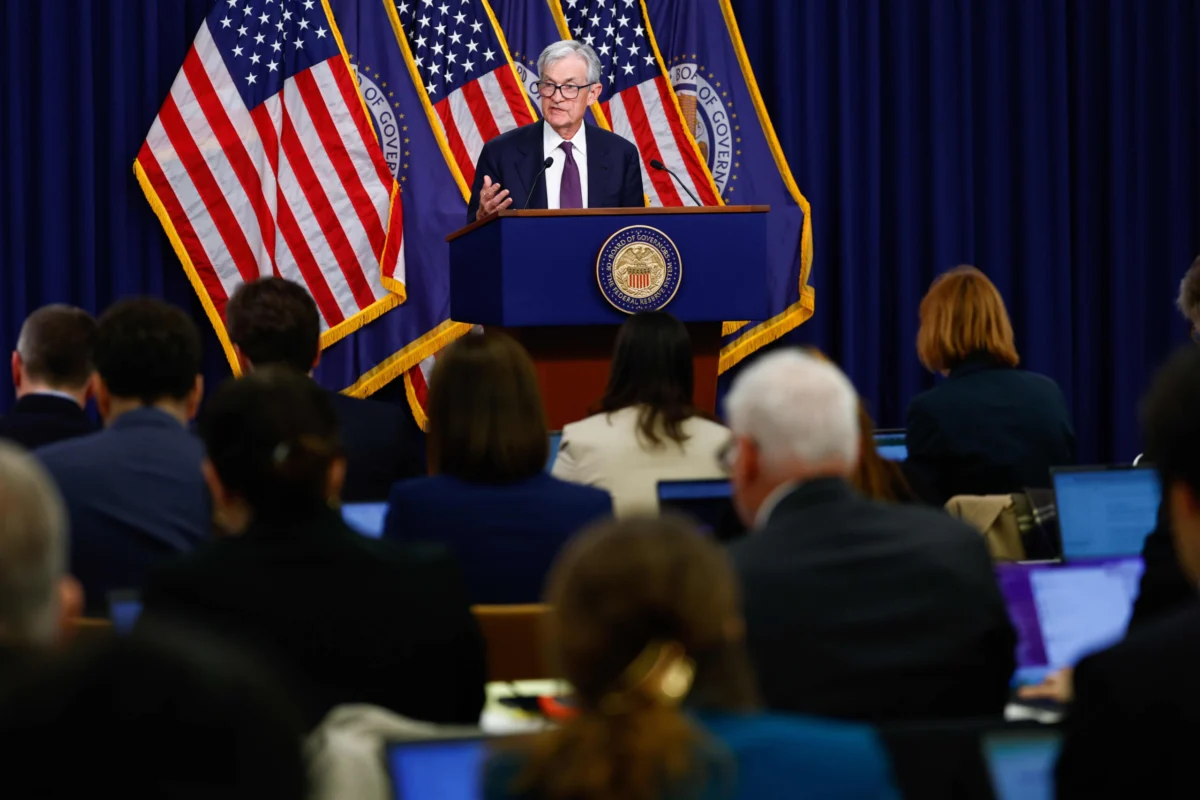
WASHINGTON – The Federal Reserve has opted to maintain its benchmark interest rate at its current level, a decision widely anticipated by financial markets. Policymakers are navigating a complex economic landscape characterized by persistently high inflation readings, a labor market exhibiting mixed signals, and the significant geopolitical ramifications of the ongoing war with Iran.
In a vote of 11-1, the Federal Open Market Committee (FOMC) decided to keep the federal funds rate within the target range of 3.5% to 3.75%. This rate influences the overnight borrowing costs for banks and, by extension, impacts a broad spectrum of consumer and business borrowing rates across the economy.
The committee’s post-meeting statement revealed minimal adjustments to its economic outlook. Policymakers now project a slightly faster pace of economic growth for 2026 and have revised upward their inflation forecasts for the same year. Despite the elevated level of uncertainty, Fed officials reiterated their expectation of future interest rate reductions. The closely watched "dot plot," which illustrates individual FOMC members’ projections for interest rates, indicates a single rate cut anticipated for this year and another in 2027, although the precise timing of these adjustments remains fluid.
Out of the 19 participants in the FOMC, seven indicated they foresee no change in interest rates this year, a slight increase from the December update. While forecasts for subsequent years exhibit a considerable dispersion, the median projection suggests an additional rate cut in 2027, after which the federal funds rate is expected to stabilize around 3.1% in the long term.
Following the Fed’s announcement and commentary from Federal Reserve Chair Jerome Powell, stock markets experienced a downturn, reaching session lows. The central bank’s decision and Powell’s remarks underscored growing concerns about the persistence of inflation.
War’s Implications Remain "Uncertain"
A significant factor contributing to the Fed’s cautious approach is the uncertainty surrounding the war with Iran, which commenced nearly three weeks ago. The conflict and its potential impact on the Strait of Hormuz have significantly disrupted global oil markets, posing a threat to keeping inflation above the Fed’s 2% target.
The FOMC’s statement acknowledged this uncertainty, stating, "The implications of developments in the Middle East for the U.S. economy are uncertain."
During his press conference, Chair Powell emphasized that it was "too soon to know" the full extent of the war’s impact on the U.S. economy. He noted that "near term measures of inflation expectations have risen in recent weeks, likely reflecting the substantial rise in oil prices caused by the supply disruptions in the Middle East."
Governor Stephen Miran once again cast a dissenting vote, advocating for a quarter-percentage-point rate cut, citing increasing concerns about the job market. Governor Christopher Waller, who had previously joined Miran in supporting a rate cut in January, voted to hold rates steady at this meeting.

Prior to the outbreak of the conflict, market participants had been pricing in two interest rate reductions for the current year, with a possibility of a third. However, the surge in oil prices and a series of robust inflation readings – even before the energy shock fully manifested – have led to a reassessment, with expectations now pointing towards at most one rate cut in 2026.
Faster Economic Growth Projected
In their updated economic projections, Fed officials now anticipate that gross domestic product (GDP) will increase at a 2.4% annual pace this year, a modest acceleration compared to their December forecast. Growth is projected to continue at a solid 2.3% rate in 2027, an upward revision of three-tenths of a percentage point from the previous outlook.
The committee also revised its inflation outlook for the current year. Policymakers now expect the personal consumption expenditures (PCE) price index, a key inflation measure, to register a 2.7% inflation rate, encompassing both headline and core inflation. However, they anticipate inflation to move closer to the Fed’s 2% target in the subsequent years as the impact of tariffs and the war diminishes. Despite a string of weaker payroll readings, officials continue to forecast a 4.4% unemployment rate by the end of the year.
The Fed’s decision to maintain interest rates comes amidst a complex political environment. President Donald Trump has consistently urged Chair Powell and the FOMC to lower interest rates. Earlier in the week, Trump criticized Powell for not convening a special meeting to implement a rate cut, even as inflation remains elevated and the war’s impact adds to economic uncertainty.
Powell is presiding over what could be one of his final meetings as the head of the central bank. His term is scheduled to conclude in May, and President Trump has nominated former Fed Governor Kevin Warsh as his successor. Warsh has previously expressed a preference for lower interest rates, though he has not issued recent public statements to clarify his current stance.
Further complicating the situation is the involvement of the Department of Justice. U.S. Attorney Jeanine Pirro in Washington has subpoenaed Powell for documents related to the Fed’s multibillion-dollar headquarters renovation. Powell has resisted the subpoena, alleging that it is being used by President Trump as a pretext to pressure the Fed into lowering interest rates. A judge sided with Powell, quashing the subpoenas and agreeing that the effort appeared to be an attempt to coerce a rate cut.
However, Pirro has vowed to appeal this decision. In response, Senator Thom Tillis, R-N.C., has indicated that he will block Warsh’s nomination in the Senate Banking Committee until the matter concerning Powell is resolved. Should the legal proceedings extend beyond May, Powell would remain in his position until Warsh is confirmed.
Powell addressed this issue during his press conference, stating that he has "no intention of leaving the board until the investigation is well and truly over, with transparency and finality." He further indicated that his decision regarding his future role after his term on the Board of Governors concludes in early 2028 has not yet been made and will be based on what he believes is best for the institution and its constituents.
Correction: An earlier version of this story contained a misspelling of Senator Thom Tillis’ name.