 11
11
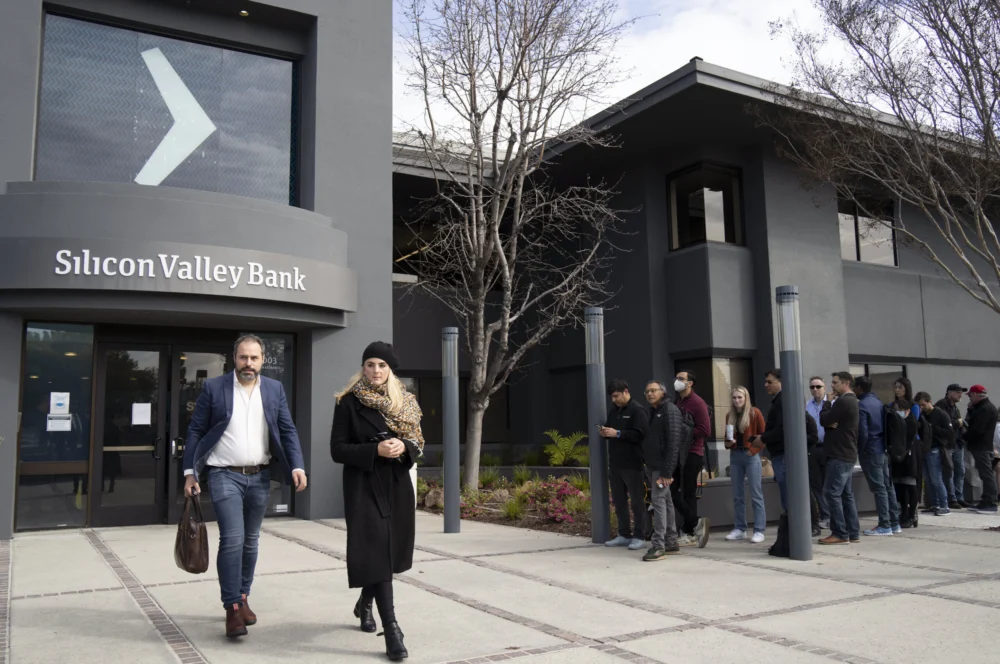
Three years ago, on March 9, 2023, JPMorgan Chase executive Doug Petno found himself at a New York City party celebrating a colleague’s retirement. His evening took an unexpected turn when his boss, Jamie Dimon, summoned him for an urgent conversation. Regulators were on the line, posing a critical question to Petno: Was JPMorgan Chase interested in acquiring Silicon Valley Bank (SVB), a prominent West Coast lender known for its deep ties to the startup ecosystem? The urgency stemmed from a dramatic day where SVB customers were rapidly withdrawing deposits, signaling the impending collapse of the institution.
The following day, California’s finance regulators officially seized SVB, marking the swift downfall of a bank that had become central to the American startup community. Over that pivotal weekend, Dimon, Petno, and other senior JPMorgan leaders engaged in extensive deliberations about potentially purchasing SVB, which had experienced an astonishing $42 billion in deposit outflows. Ultimately, they decided against the acquisition. A significant factor in this decision was the remarkable influx of SVB clients who, in a flight to safety, were independently opening accounts with JPMorgan.
"We had three years’ worth of incoming clients in a weekend," Petno, co-head of JPMorgan’s commercial and investment bank, revealed in a recent exclusive interview with CNBC. "Onboarding teams were opening up accounts around the clock." This unprecedented surge of new business, driven by a crisis of confidence in other institutions, sparked a strategic reevaluation within JPMorgan. Witnessing this mass migration of clients, Petno conceived an ambitious idea: could JPMorgan Chase intentionally build a robust competitor to SVB, as well as other emerging fintech players like Brex, Ramp, and Mercury, which had successfully carved out profitable niches by serving founders and venture capital investors?
"We went to our board and said, there’s a vacuum in the market," Petno explained. "At that very moment, everybody saw the opportunity." This realization marked a turning point, signaling JPMorgan’s intent to actively pursue and dominate the startup banking sector.
For JPMorgan, already a titan of both Main Street and Wall Street finance, the ambition to win over the specialized startup banking niche from its West Coast rivals transcends mere deposit acquisition. It represents a crucial component of its growth strategy, particularly for a bank that generated over $180 billion in revenue last year. Furthermore, establishing a strong presence in the startup ecosystem allows the New York-based lender to remain at the forefront of technological advancements, which can benefit its own operations.
With an annual technology budget approaching $20 billion, JPMorgan is not only focused on better serving its startup clients and venture capital investors but also on gleaning insights from them. The firm actively monitors Silicon Valley startups for innovative solutions to challenges it faces, ranging from cybersecurity threats to advancements in quantum computing. Petno shared an anecdote illustrating this proactive approach: when a JPMorgan client announces layoffs or expense reductions related to artificial intelligence initiatives, the bank often dispatches a team of bankers to investigate the client’s strategies. These investigations frequently reveal that while AI adoption may be a contributing factor, the primary drivers for workforce reductions are often attributed to over-hiring and inefficient internal processes.
JPMorgan’s foray into the startup banking business began in 2016, prompted by its increasing awareness of tech-focused competitors during its expansion efforts westward. Initially, the bank’s services were limited to larger, more established startups. This was partly due to the absence of a digital banking solution that younger founders typically sought, as well as a shortage of investment bankers dedicated to targeting smaller, higher-risk ventures. For years, the perception among some in the venture capital community was that JPMorgan was slow to open accounts and that resolving payment issues required cumbersome branch visits, according to investors interviewed by CNBC. "They want to go to the website to open an account, and if it’s more than 15 minutes, they’re done," Petno acknowledged.
However, in the immediate aftermath of the SVB collapse, Petno and his team acted with considerable speed. They strategically hired key personnel from SVB, including John China, who was then the President of SVB Capital. China now leads JPMorgan’s innovation economy business alongside Andrew Kresse. By late April 2023, JPMorgan found itself in a position to acquire another struggling California-based bank, First Republic, which also served the technology community. This time, JPMorgan emerged as the successful bidder. Leveraging the insights gained from the SVB crisis and the banking operations of First Republic, JPMorgan reportedly doubled its revenue from startup banking in 2023. Even with a strong emphasis on digital banking, Petno noted that startup founders occasionally still visit Chase branches to deposit substantial funding checks into standard accounts. In such instances, JPMorgan’s systems are now designed to seamlessly transition these clients to the specialized startup team.
JPMorgan has significantly expanded its client base in this sector, quadrupling the number of total clients to nearly 12,000. These clients are served by a dedicated team of 550 bankers operating on both the East and West Coasts, who draw upon resources from various divisions within the bank. Founders and venture capital investors are clients of the private bank, while the startups themselves are serviced by the commercial bank. Venture capital funds are managed as separate clients, a business segment largely acquired through the integration of First Republic. While JPMorgan has not disclosed specific revenue figures for its startup banking division, Petno indicated that its growth rate has been "dramatically higher" than that of the bank’s core business lines.
Despite these advancements, Petno remains focused on enhancing the firm’s digital banking offerings for startups, describing an ongoing project designed to help them surpass competitors. The competitive landscape for startup banking includes not only SVB (now owned by First Citizens Bank) and fintechs like Mercury and Ramp but also established players like Stifel and Customers Bank. In a significant move within the sector, Capital One acquired Brex for $5.15 billion in January. Recognizing that most startups face a high failure rate, JPMorgan strategically identifies companies it anticipates will succeed, aiming to establish relationships with them earlier in their lifecycle, mirroring SVB’s approach. This early engagement allows JPMorgan to offer not only essential banking services but also lucrative investment banking advisory as the companies grow.
JPMorgan’s overarching vision is to become the definitive one-stop shop for founders, catering to all their financial needs, from initial seed funding through international expansion, to their initial public offering (IPO) and beyond. "Once you’re onboarded, you can never outgrow JPMorgan, from unicorn all the way to a Magnificent 7," Petno stated, underscoring the bank’s ambition to support companies throughout their entire trajectory, regardless of their scale or success.