 11
11
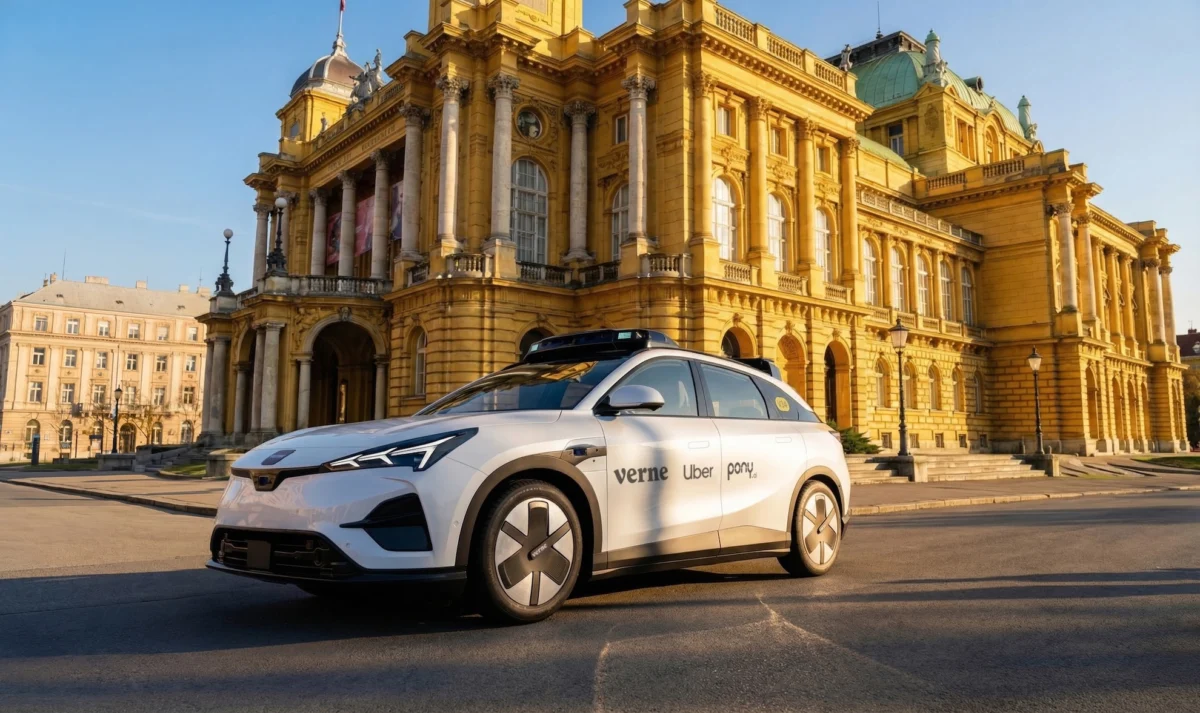
Mate Rimac, the visionary founder of the Croatian electric vehicle powerhouse Rimac Group, initiated his ambitious pursuit of electric robotaxis a remarkable seven years ago. Today, a significant portion of that long-term vision is poised to materialize through a landmark strategic partnership involving ride-hailing giant Uber, leading Chinese autonomous vehicle developer Pony.ai, and Rimac’s dedicated robotaxi startup, Verne.
The triumvirate of companies officially unveiled their comprehensive plans on a recent Thursday, detailing the imminent launch of a commercial robotaxi service across Europe. This pioneering endeavor is slated to commence in Zagreb, Croatia, a city that holds particular significance as the operational base for the broader Rimac Group ecosystem. Under the terms of this multifaceted collaboration, Pony.ai will serve as the primary supplier of its advanced autonomous driving system, seamlessly integrated into a bespoke robotaxi model known as the Arcfox Alpha T5, a vehicle developed in conjunction with the established Chinese automaker BAIC. Verne, Rimac’s dedicated urban mobility arm, will assume the crucial role of owning and meticulously operating the nascent fleet, overseeing all aspects from maintenance to daily deployment. Uber, leveraging its unparalleled global reach and extensive ride-hailing network, will provide the essential platform for users to access and hail these autonomous vehicles.
Beyond its role as a platform provider, Uber has signaled its profound commitment to the partnership by indicating its intention to make an undisclosed but substantial investment into Verne. This financial backing underscores Uber’s strategic belief in Verne’s potential and positions the ride-hailing behemoth as a pivotal strategic partner in supporting Verne’s ambitious future expansion plans across the European continent and potentially beyond. While the companies have refrained from providing a precise launch date for the commercial service, excitement is building as on-road testing of the autonomous vehicles is already actively underway in Zagreb, a critical preparatory phase that ensures safety, reliability, and seamless operation before public rollout.
Verne, in its current iteration, may not yet command the same widespread name recognition as industry titans like Waymo or Tesla, particularly within the competitive landscape of the United States. However, its foundational premise and strategic backing imbue it with an undeniably outsized ambition, mirroring the disruptive spirit often seen in Silicon Valley. The company’s origins trace back to 2019, when it was initially conceived as an internal initiative dubbed Project 3 Mobility (P3) within the burgeoning Rimac Group. This group represents a diverse and rapidly expanding ecosystem of companies under Mate Rimac’s leadership, encompassing the ultra-luxury hypercar manufacturer Rimac Bugatti, the innovative energy solutions provider Rimac Energy, and the advanced automotive technology developer Rimac Technology. Mate Rimac himself maintains a significant 23% stake in this dynamic group, reflecting his deep personal commitment and strategic direction.
Occasional updates on Project 3 Mobility surfaced over the years, offering glimpses into its progress. However, it wasn’t until July 2024 that the project officially emerged as Verne, making a declarative public debut with a substantial injection of 100 million euros in Series A funding. This significant capital raise provided the public with its most detailed look yet at Verne’s strategic blueprint and its long-term objectives in the autonomous mobility sector.
Mate Rimac’s overarching vision for Verne has consistently centered on the establishment of an urban robotaxi service, distinguished by its use of purpose-built two-seater electric vehicles. This specific focus might initially appear counterintuitive for the individual renowned for conceiving and developing the Nevera, an electric hypercar that commands a starting price in the vicinity of $2.2 million. Yet, as Rimac articulated in an interview a few years prior, his interest was never primarily in mass-producing high-volume electric vehicles intended for human drivers. This perspective stems from his firm conviction that the inexorable advance of autonomous vehicle technology is destined to render such a business model obsolete in the not-too-distant future. "It will take a while, but it’s coming; I’m sure about that," he confidently stated at the time, underscoring his unwavering belief in the transformative power of self-driving technology.
Crucially, Verne has adopted a highly strategic approach to its technological development. Rather than embarking on the immensely complex and capital-intensive endeavor of developing its own proprietary self-driving system from scratch, the company has chosen to specialize. Verne’s core focus is meticulously directed towards three primary pillars: the design and engineering of its unique urban electric vehicle platform, the development of a seamless and intuitive ride-hailing application, and the establishment of robust back-end infrastructure essential for efficient fleet management. This comprehensive back-end system encompasses critical operational aspects such as charging logistics, meticulous cleaning protocols, and routine maintenance to ensure the fleet’s optimal performance and availability. This specialization allows Verne to leverage the expertise of partners like Pony.ai for the autonomous driving stack, while concentrating its own resources on areas where it can add unique value and differentiation.
Looking ahead, Verne has ambitious plans for its manufacturing capabilities. The company intends to produce its purpose-built robotaxi EVs at a brand-new, state-of-the-art factory located in Lučko, Croatia. This facility is anticipated to commence operations later this year, representing a significant investment in local manufacturing and job creation. As of its announcement, Verne had not yet launched its own bespoke two-seater vehicles, nor did the recent partnership announcement with Uber and Pony.ai provide an immediate update on their specific deployment timeline. However, the company had previously confirmed in November that it had successfully produced and rigorously tested 60 verification prototypes of its envisioned vehicles, a testament to its ongoing commitment to developing its own unique hardware solution for urban autonomous mobility.
For the initial phase of the commercial robotaxi service, Verne will strategically utilize the Pony.ai-BAIC developed Arcfox Alpha T5 vehicle. This choice allows Verne to accelerate its market entry and benefit from Pony.ai’s proven autonomous driving capabilities and BAIC’s manufacturing prowess. Users will enjoy flexible access to the service, with the convenience of hailing a robotaxi through either Uber’s widely recognized and extensively used platform or directly via Verne’s own dedicated application, offering choice and accessibility to a broad user base.
While Verne is adopting a measured, phased approach with its initial commercial launch, its long-term vision is anything but modest. According to the recent announcement, the company harbors plans to significantly scale its operations, aiming to deploy a "fleet of thousands of robotaxis over the next few years." Furthermore, Verne’s aspirations extend far beyond the geographical confines of Zagreb, the capital city of Croatia and the strategic home of the Rimac Group. The company has a clear intent to expand its innovative autonomous mobility solution into new markets across Europe, addressing a critical need for advanced transportation services.
Marko Pejkovic, the Chief Executive Officer of Verne, articulated this broader strategic imperative in a statement accompanying the announcement. "Europe needs autonomous mobility that can move from testing to a real service," Pejkovic emphasized, highlighting the continent’s readiness for practical, scalable autonomous transportation solutions. He further elaborated on Verne’s unique positioning: "At Verne, we are bringing together the technology, platform, and operational capabilities required to make this a reality, starting in Zagreb before expanding to new markets." This statement encapsulates Verne’s holistic strategy: combining cutting-edge autonomous technology, a robust ride-hailing platform, and meticulous operational management to deliver a truly transformative urban mobility experience. This collaborative approach with Uber and Pony.ai positions Verne as a formidable new entrant in the global race for autonomous mobility, with a clear trajectory for significant growth and impact in the European market.