 11
11
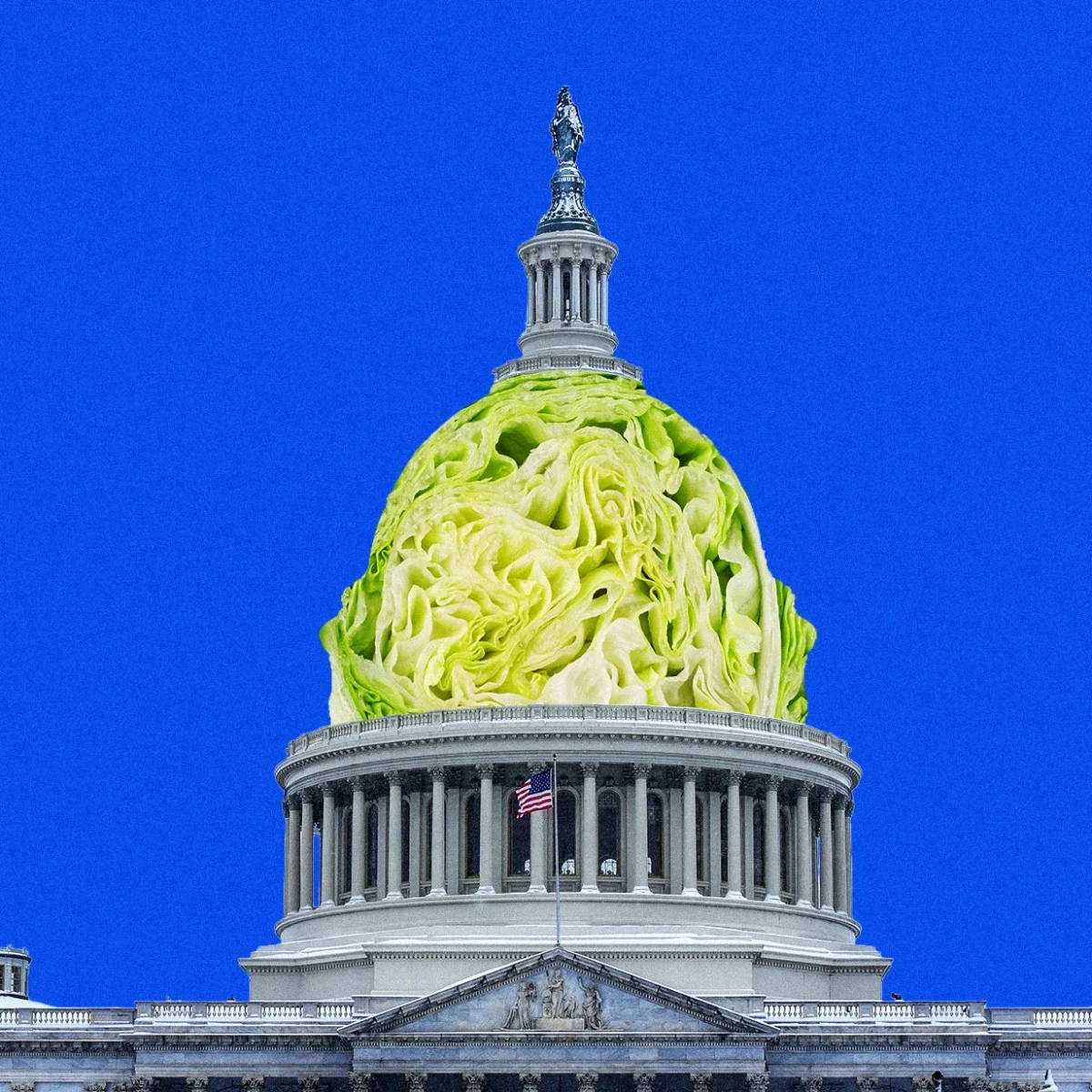
Taylor Farms, the prominent lettuce supplier currently implicated in a widespread "turbo diarrhea" outbreak, has reportedly invested millions of dollars into political campaigns and lobbying efforts aimed at shaping food safety regulations and supporting conservative candidates, including former President Donald Trump. Public filings reveal a significant financial footprint in Washington, D.C., and across various political landscapes, raising questions about the intersection of corporate influence and public health.
The company, a major player in the fresh produce industry, has been identified as being at the center of a severe cyclospora outbreak, a parasitic infection causing intense gastrointestinal distress often referred to colloquially as "turbo diarrhea." This health crisis has drawn renewed scrutiny to the company’s operational practices and its engagement with the political sphere, particularly concerning food safety oversight.
Federal Election Commission (FEC) filings indicate that Taylor Farms contributed more than $2 million to conservative political groups in 2025 alone. A substantial portion of this sum, precisely $1 million, was directed to MAGA Inc., a super PAC explicitly dedicated to advancing the political agenda of Donald Trump. An additional $1.1 million was disbursed to other super PACs committed to the election of Republican candidates, demonstrating a concerted effort to bolster conservative political power.
Beyond these recent contributions, Taylor Farms has maintained a consistent pattern of donations over several years. From 2020 through the close of 2024, the company funneled over $1.6 million to conservative Political Action Committees (PACs). This included a significant $850,000 contribution to AFP Action, a super PAC known for its anti-regulation stance and its close affiliations with the influential Koch network. The Koch network, a well-funded group of conservative and libertarian organizations, frequently advocates for reduced government intervention in business and environmental matters, aligning with a deregulatory ethos that could potentially impact food safety standards.
The political engagement of Taylor Farms extends beyond corporate donations to include the personal financial contributions of its top executive. Bruce Taylor, the chairman and CEO of Taylor Farms, has been a long-standing donor to Republican causes. Since 2020, Taylor has personally contributed more than $900,000 to Republican PACs and individual candidates. Notable recipients of his financial support include Senator John Cornyn of Texas and Senator Marsha Blackburn of Tennessee, both prominent Republican figures in the U.S. Congress. These personal contributions underscore a deep-seated commitment from the company’s leadership to conservative political objectives.
In parallel with its direct political donations, Taylor Farms has also engaged in substantial lobbying efforts, a common practice among large corporations seeking to influence policy. In early 2025, the company retained lobbyists from the prestigious firm Sidley Austin. Their mandate, as detailed in public disclosure documents, was to advocate on behalf of Taylor Farms regarding "regulation of food safety." Since initiating this lobbying campaign, the company has spent a considerable $810,000 on these efforts. This expenditure highlights a direct interest in shaping the very regulations that govern the safety of the food products it supplies, an area of particular public concern given the ongoing outbreak.
Marion Nestle, a distinguished food policy expert, has voiced concerns that Taylor Farms’ financial activities are indicative of a broader, systemic issue within the American food industry. Nestle argues that multibillion-dollar corporations frequently leverage their immense financial resources to advocate for policies that would diminish food safety regulation and accountability, particularly in the event of outbreaks. She articulated this viewpoint to WIRED, stating, "The FDA has regulations in place for what food producers are supposed to be doing, but nobody wants to do it—because it’s expensive and difficult." This perspective suggests a tension between the financial imperatives of large corporations and the public health mandate of regulatory bodies, with potential implications for consumer safety.
Amidst the growing public concern and media attention surrounding the cyclospora outbreak and Taylor Farms’ political donations, the U.S. Department of Health and Human Services (HHS) took to social media to address allegations of undue influence. In a post on X (formerly Twitter) on Monday, the HHS account explicitly denied that Taylor Farms’ political contributions had any bearing on the Trump administration’s response to the cyclospora outbreak. The statement read, "This is how the FAKE NEWS works: imply collusion, ignore the facts." It further asserted, "Nothing influences our decisions except science and the safety of the American people." This official denial aimed to quash speculation of a quid pro quo or any compromise of regulatory integrity.
The relationship between Taylor Farms and federal regulatory agencies, specifically the Centers for Disease Control and Prevention (CDC) and the Food and Drug Administration (FDA), appears to be strained during the current investigation into the cyclospora outbreak, which has sickened thousands across multiple states. Taylor Farms has reportedly expressed dissatisfaction with the agencies’ handling of the investigation. The company recently claimed that the FDA "apologized" after announcing a "false-positive" test result from a sample of Taylor Farms’ lettuce. However, the FDA subsequently refuted this claim to reporters, clarifying that "no, actually, an official apology never happened," indicating a significant disagreement over the facts of the investigation. Taylor Farms did not respond to WIRED’s requests for comment on these matters.
Prior to the public dispute over the "false positive" and the alleged "non-apology," executives from Taylor Farms held meetings with officials from the White House and the FDA. The company spokesperson characterized these meetings as discussions regarding "shortfalls" in the government agencies’ response to the outbreak. Adding another layer of political connection, The New York Times reported that these meetings followed Taylor Farms’ recent engagement of Trent Morse. Morse, who previously served as the deputy director of the White House Presidential Personnel Office, departed the Trump administration to establish a government relations firm in September, effectively leveraging his prior administration ties to facilitate access for Taylor Farms.
The current "diarrhea debacle" is not an isolated incident for Taylor Farms, a company generating approximately $7 billion in annual revenue, which has faced federal regulatory scrutiny on several previous occasions. In 2013, the FDA identified Taylor Farms as a source of a cyclospora outbreak that affected hundreds of individuals, marking a precedent for the current crisis. Two years later, in 2015, the company voluntarily recalled multiple products containing celery due to potential contamination with E. coli, another serious foodborne pathogen. More recently, in 2024, Taylor Farms was involved in an E. coli O157:H7 outbreak linked to yellow onions used in McDonald’s Quarter Pounders, leading to another recall. Following this particular incident, CBS News reported that FDA inspectors discovered dozens of violations at the Colorado Taylor Farms facility associated with the Quarter Pounder outbreak. These violations included critical lapses such as minimal handwashing practices among employees and the use of dirty equipment, pointing to fundamental failures in sanitation and hygiene protocols.
Since 2025, the FDA has conducted inspections at 18 American plants affiliated with Taylor Farms. While specific details of each inspection were not fully disclosed, three of these inspections resulted in a classification of "voluntary action indicated." This designation signifies that, while violations were indeed identified at these facilities, they were not deemed severe enough by regulators to necessitate mandatory enforcement actions, instead relying on the company to voluntarily address the deficiencies.
Beyond food safety, Taylor Farms has also faced significant issues related to occupational safety. The Occupational Safety and Health Administration (OSHA) has cited at least 21 violations across Taylor Farms facilities throughout the U.S. since the beginning of 2025. In a particularly tragic and severe case, the Department of Labor levied a substantial fine of $1.1 million against a New Jersey facility in May 2025. This penalty was issued following an OSHA inspection prompted by the death of an employee who sustained fatal injuries while cleaning an industrial blancher at the facility, highlighting serious concerns about worker safety and compliance with labor regulations within the company’s operations.