 11
11 1
1 2
2 3
3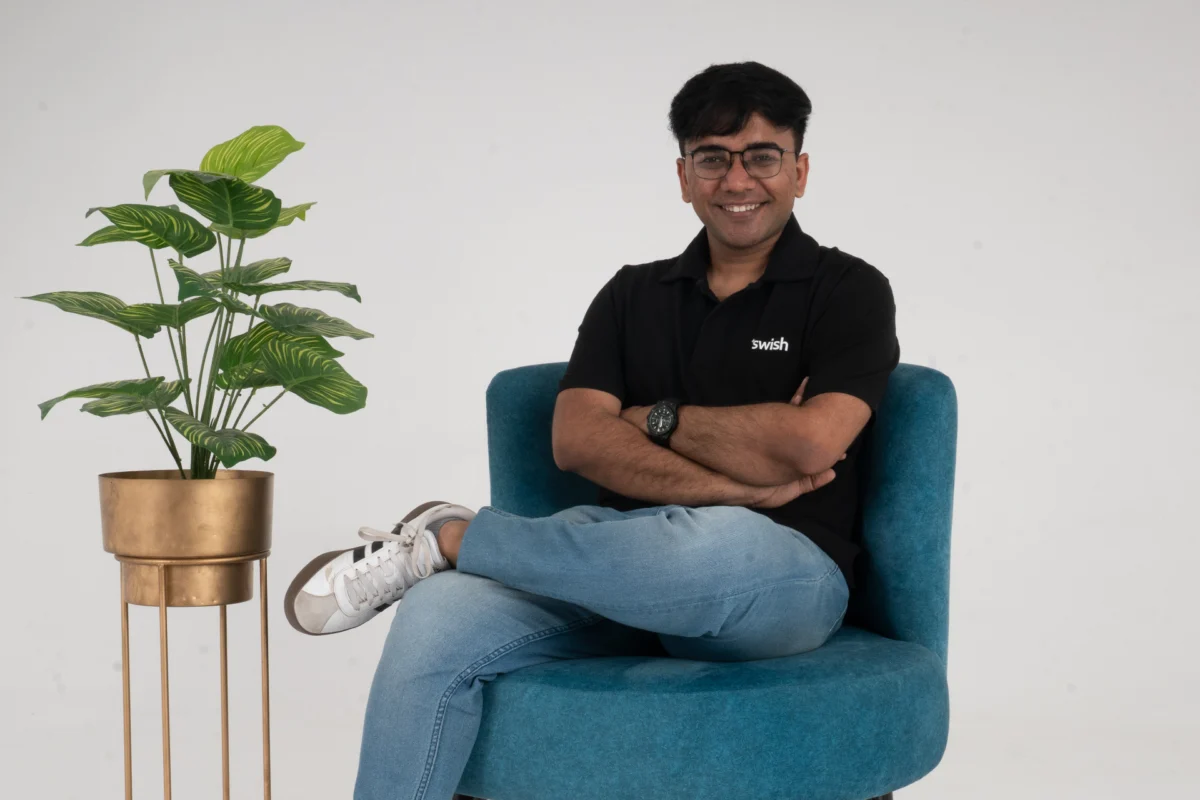
Bengaluru-based food delivery startup, Swish, has successfully concluded a Series B funding round, raising $38 million. This significant capital injection underscores growing investor confidence in the 18-month-old company’s innovative 10-minute fresh food delivery service, despite the challenging landscape of ultra-fast delivery in India. The latest funding round propels Swish’s post-money valuation to $139 million, more than double its valuation from just a year ago, and brings its total funding to an impressive $54 million.
The Series B round was co-led by prominent global investors Hara Global and Bain Capital Ventures, signaling strong belief in Swish’s distinctive business model and growth trajectory. Further bolstering the round was participation from existing investors Accel and Stride Ventures, alongside new entrant Alteria Capital, reflecting a diverse mix of venture capital and debt funding support. This substantial investment arrives at a pivotal moment for the Indian food delivery sector, where the sustainability of rapid delivery services has been a subject of intense debate and operational re-evaluation by larger market players.
Indeed, the market for ultra-fast food delivery in India has proven notoriously difficult to sustain. Major platforms such as Swiggy, Zepto, and Zomato have, in recent months, either scaled back or entirely shut down their ambitious rapid-delivery experiments. These initiatives, including Swiggy’s "Snacc," Zepto’s "Zepto Cafe," and Zomato’s "Quick" 15-minute service, encountered significant hurdles. Operational complexities, including maintaining vast networks of dark stores or cloud kitchens, managing a large fleet of delivery personnel, ensuring consistent supply chains, and combating high last-mile delivery costs, proved to be substantial financial and logistical burdens. The pursuit of speed often came at the expense of profitability, leading these market giants to recalibrate their strategies in favor of more sustainable, albeit slower, delivery models.
In stark contrast to these marketplace giants, Swish, founded approximately 18 months ago (in late 2022 or early 2023, despite a reported founding year of 2024), operates on a full-stack business model. This means the company maintains complete control over its entire operational chain, from the kitchen to the customer’s doorstep. Swish owns and operates its network of kitchens, manages its comprehensive supply chain, and commands its dedicated delivery network. This integrated approach allows Swish to bypass many of the challenges faced by marketplace platforms that rely on third-party restaurant commissions and external logistics. By owning its infrastructure, Swish claims to achieve superior economics, greater control over food quality, and more efficient cost management.
A cornerstone of Swish’s strategy is its laser focus on dense, hyperlocal clusters. The company meticulously identifies specific urban micro-markets and establishes its operations within these areas, maintaining delivery radii of approximately 1 kilometer. This hyper-local focus is crucial for achieving the promised 10-minute delivery window. By minimizing travel distances, Swish significantly reduces fuel costs, delivery executive time, and the overall logistical complexity associated with wider service areas. This model effectively transforms its kitchens into highly efficient, neighborhood-centric hubs, mimicking the proximity and responsiveness of a local restaurant for its immediate catchment area.
The efficacy of Swish’s model is reflected in its impressive growth metrics. The startup currently processes about 20,000 orders a day, a substantial increase from roughly 5,000 orders just four months prior. This rapid escalation in order volume demonstrates robust market acceptance and the scalability of its model within its targeted zones. Swish is actively expanding its footprint, now operating across 10 micro-markets within Bengaluru, India’s tech capital, a city known for its dense population and high demand for convenience services. To further enhance efficiency and consistency, Swish has also heavily invested in automating its kitchen operations. This automation plays a critical role in streamlining food preparation, ensuring consistent quality, and reducing the time from order placement to dispatch, all vital for meeting the demanding 10-minute delivery promise.
Aniket Shah, co-founder and CEO of Swish, elaborated on their operational philosophy in an interview, stating, "We are very dense, very close to the customer, ensuring that we are able to almost act like a restaurant kitchen, bringing food to your table." This quote encapsulates the company’s ambition to integrate itself seamlessly into the daily lives of its target consumers, offering restaurant-quality food with unparalleled speed and convenience.
Swish’s menu is designed to cater to diverse tastes and meal occasions, featuring over 200 items spanning full meals, quick snacks, and a variety of beverages. The average order value ranges from ₹200 to ₹250 (approximately $2-$3 USD), positioning it competitively within the Indian food delivery market. The company prides itself on high customer retention and repeat usage, with its most loyal users placing orders more than 10 times a month. This indicates strong customer satisfaction and a deep integration of Swish into the daily routines of its user base. The primary demographic targeted by Swish comprises young urban consumers aged 20 to 35, a segment that prioritizes convenience, speed, and variety. By targeting multiple daily food occasions – from early morning breakfast and mid-day tea-time snacks to late-night cravings – Swish aims to capture a significant share of its customers’ daily food expenditure.
Encouragingly, Swish has achieved profitability in its older kitchen clusters, as confirmed by CEO Aniket Shah. While specific per-order margins were not disclosed, this milestone is a critical indicator of the viability of their full-stack, hyperlocal model, especially when contrasted with the struggles of larger competitors. Reaching profitability at the unit level provides a strong foundation for sustainable expansion and justifies the investor confidence.
Looking ahead, Swish has ambitious expansion plans. The company intends to deepen its presence within Bengaluru, consolidating its leadership in its home market, before venturing into other major Indian metropolitan areas. Key targets for future expansion include the National Capital Region (Delhi-NCR) and Mumbai, both highly dense urban centers with significant potential for rapid food delivery services. However, these markets are also intensely competitive and present their own unique logistical and operational challenges.
Despite the initial successes and promising growth, the long-term viability of Swish’s business model remains contingent on its ability to sustain high order volumes within dense urban clusters. The inherent challenges of ultra-fast delivery, which led larger, well-funded rivals to retract their experiments, serve as a cautionary tale. While Swish’s full-stack and hyperlocal approach offers distinct advantages, the scalability of this model across multiple vast and complex cities like Delhi-NCR and Mumbai will be the ultimate test. Investors and market observers will keenly watch whether Swish’s current enthusiasm proves justified and if its innovative strategy can indeed carve out a profitable and enduring niche in India’s fiercely competitive food delivery landscape.
This report was informed by insights gathered by Jagmeet Singh, who covers startups, tech policy, and major tech developments from India for TechCrunch. Jagmeet previously served as a principal correspondent at NDTV.