 11
11
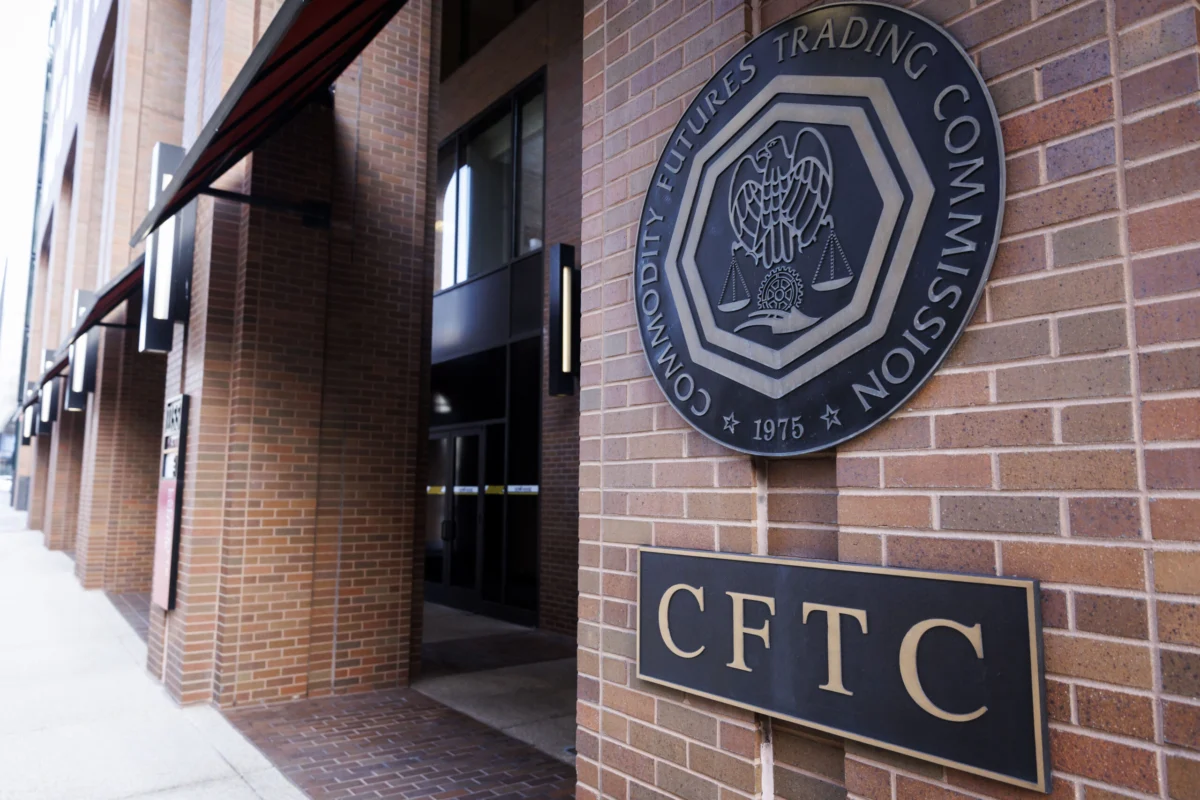
A significant jurisdictional dispute is intensifying between state attorneys general and the Commodity Futures Trading Commission (CFTC) over the regulation of sports-related event contracts traded on prediction market platforms. In a strongly worded letter sent on Monday, a coalition of 44 state attorneys general asserted that the CFTC lacks the statutory authority to regulate these contracts, arguing that such oversight rightfully falls under state law. The letter was submitted as the public comment period for the CFTC’s initial proposed rule on prediction market regulation concluded, a measure that predominantly targets exchanges’ sports offerings.
The coalition, spearheaded by Ohio Attorney General Andy Wilson, declared that the CFTC’s proposed rule "goes beyond the CFTC’s statutory powers, is in tension with the Constitution, and would otherwise be arbitrary and capricious in its current form." They urged the commission to "start afresh with its rulemaking and clarify that sports bets and gambling cannot be traded on [designated contract markets], but are instead subject to state law." Notably, attorneys general from Florida, Georgia, New Hampshire, Missouri, and Texas did not join this collective statement.
This clash over regulatory authority has been brewing since last year, coinciding with a dramatic surge in trading volumes on prediction market exchanges. This explosion in activity has been largely fueled by the immense popularity of sports-related contracts. The 2026 FIFA World Cup, in particular, propelled platform volumes to unprecedented heights, amplifying the existing tensions between federal and state regulatory bodies.
At the heart of the dispute is the classification of these event contracts. The CFTC, alongside prediction market platforms themselves, maintains that all event contracts qualify as "swaps," a category of financial derivatives explicitly falling under the commission’s regulatory purview. However, a broad spectrum of states contends that sports-related contracts bear a striking resemblance to sports betting, an area they consider firmly within their jurisdictional domain. This divergence in interpretation has led to a prolonged legal and regulatory entanglement.
In June, the CFTC released a preliminary draft of its proposed rule for regulating prediction markets. This draft placed significant emphasis on the contentious sports-related event contracts, outlining specific types that could face prohibition. The proposed rule also introduced a definition for "gaming," which the commission described as an activity undertaken for recreation or entertainment, governed by rules, and dependent on measurable outcomes determined by skilled activity during the event.

This definition of "gaming" has drawn criticism from key industry players. CME Group, a major derivatives marketplace, expressed its disagreement in a letter to the CFTC. Jonathan Marcus, CME’s general counsel, argued that by defining "gaming" as the sport itself rather than the financial wagering on the sport, the CFTC’s definition implies that the Commodity Exchange Act would preempt state sports regulations, which he characterized as a "striking overreach."
The CFTC has frequently invoked the doctrine of federal preemption in court proceedings across the United States, seeking to assert its exclusive jurisdiction over prediction markets. To date, the commission is engaged in litigation with nine states, defending its stance on this matter.
Interestingly, while CME Group expresses concerns about federal regulation of sports-related event contracts, the exchange also operates as a CFTC-regulated platform for FanDuel’s sports prediction markets, highlighting a complex relationship within the industry.
Meanwhile, Rothera, a prediction market platform that launched in June, presented a contrasting view. Rothera’s CEO, Thomas Chippas, argued in a letter to the commission that the CFTC should adopt its proposed "gaming" definition precisely because it centers on the activity itself. He stated, "A definition keyed to wagering, or to ‘risking something of value’ would, as the Commission recognizes, sweep in every event contract. Rothera agrees that a definition keyed to ‘wagering’ should be rejected." This perspective suggests that a definition focused on the act of betting, rather than the nature of the underlying event, would broaden the CFTC’s regulatory reach too extensively.
The ultimate resolution of this regulatory battle is widely anticipated to be determined by the Supreme Court. Until then, a series of court decisions are shaping the landscape of prediction market offerings. These rulings have yielded varied outcomes. In late June, a Michigan judge issued an injunction preventing the platform Kalshi from offering sports bets within the state. Conversely, on Monday, a federal judge in Minnesota temporarily blocked a statewide ban on prediction markets from taking effect. These diverging legal decisions underscore the ongoing uncertainty and the fragmented nature of the current regulatory environment.
The dispute over prediction markets reflects a broader trend of evolving financial instruments and the challenges regulators face in adapting existing frameworks to new market innovations. As prediction markets continue to gain traction, particularly in the realm of sports, the tension between federal and state regulatory powers is likely to persist, with legal challenges and legislative debates shaping the future of this burgeoning industry. The outcome of these legal battles will not only determine who holds sway over these particular markets but may also set precedents for the regulation of similar novel financial products in the future.