11
11
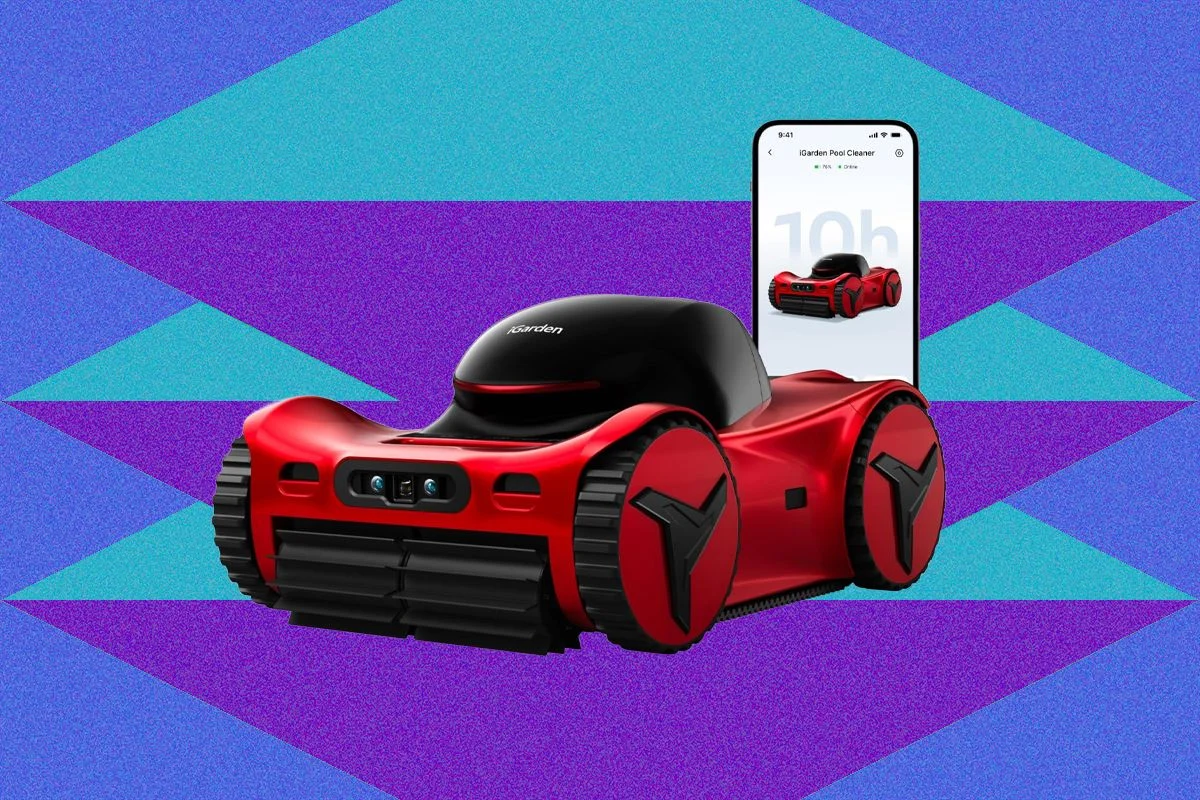
iGarden has introduced its new M1 Pro Max 100 pool-cleaning robot, a device that aims to combine sporty, high-end design with robust functionality and an impressively long run time. While the robot stands out aesthetically in a market often dominated by utilitarian designs, its performance comes with a few notable quirks that potential buyers should consider.
The M1 Pro Max 100 offers excellent battery longevity, capable of achieving a perfect cleaning record provided it is left in the water for a sufficient duration. Its distinctive and delightful styling is certainly conversation-worthy, setting it apart from competitors. However, the experience is not without its challenges. The debris basket, despite its increased capacity, proves quite difficult to clean due to its design. Furthermore, unlike some rivals, the robot does not automatically surface upon completion, necessitating retrieval with a pole. The control panel is notably confusing, and the accompanying mobile application offers minimal functionality, leaving much to be desired in terms of user interface and control.

Design Evolution: From Underwater Janitor to Aquatic Sports Car
In an aquatic technology landscape where robotic pool cleaners frequently share a homogenous appearance, iGarden has consistently aimed to inject a breath of fresh air with designs that evoke high-end automobiles rather than mere underwater maintenance equipment. The new M1 series, which debuted at CES 2026, represents a significant evolution in this design philosophy, pushing the boundaries of what a pool cleaner can look like with an even sportier aesthetic. The fundamental question for consumers and critics alike remains whether this dazzling visual appeal translates into the paramount attribute: effective and efficient pool cleaning.
The M1 series builds upon the foundation of last year’s K series, refining a previously sleek and streamlined form factor. A key visual and functional change is the addition of what appears to be a bulbous cockpit component positioned centrally on the device. While one might intuitively assume this feature houses advanced cameras or complex intelligence modules, its primary role is to integrate with and enhance the revamped debris basket. This new design allows the M1 to store up to 4.5 liters of detritus, a modest but valuable increase over the 4-liter capacity found in the K series. The M1 is available in two distinct color options: a vibrant fire-engine red, which offers a far flashier presence, and a more subdued black. The test unit provided for review was the latter, a sleek yet less eye-catching option.

Weighing in at 25 pounds, the unit is engineered with durability and extended operation in mind. A significant highlight is the robust power source: the M1 Pro Max 100 is equipped with a massive 12500 mAh battery. For those requiring even greater endurance, an M1 Pro Max 125 model, expected to feature an even larger 14500 mAh battery based on CES reports, will be available. For most users, the 100 model’s battery capacity will likely be more than sufficient. iGarden specifies that this model can deliver up to 10 hours of run time in floor-only cleaning mode, a duration ample enough to cover at least a week of daily operations for many pool owners.
Further contributing to its distinctive "automotive" aesthetic are subtle yet impactful design changes. The tread mechanism, which connects each pair of wheels, is no longer overtly visible along the side profile, as it was on the K series. Instead, the tread has been ingeniously relocated and concealed largely within the chassis, with only a small segment visible on the robot’s underside. Additionally, the wheels of the M1 Pro are now recessed within tight wheel wells, a design choice that further enhances the sleek, high-performance vehicle-inspired look of the device.
Getting Started: Setup and Operation Quirks

The initial setup of the iGarden M1 Pro Max 100 is relatively straightforward, primarily involving a thorough charging session and configuration via the company’s mobile application. The charging process itself takes approximately 5.5 hours, and users may find some initial difficulty in dislodging the tight waterproof plug from the charging port, a minor but recurring inconvenience. The mobile app, which has seen minimal changes since its previous iteration, offers limited functionality. It remains useful for setting basic operational parameters and installing firmware updates, but conspicuously lacks a historical log of cleaning activities. This omission means that most users are likely to interact with the app primarily during the initial unboxing and setup, with infrequent use thereafter.
A more significant challenge arises with the onboard control panel, located on the front of the M1 Pro Max. This interface has also remained unchanged from its previous version and is characterized by its obtuse and complicated nature. It features four touch-sensitive buttons in addition to the main power button. Through these controls, users can select the running time (options include 1 hour, 1.5 hours, 2 hours, or a "run-till-dead" mode), and choose a cleaning mode from several options: floor only, wall/waterline, both floor and wall/waterline, or a "full coverage" mode that extends cleaning to ledges and steps. A turbo mode is also available, which increases the robot’s speed at the expense of some battery life. For long-term deployment, an "AI timer" can be set to initiate repeated cleanings every 24, 48, or 72 hours, provided the robot remains submerged. The entirety of this information is conveyed to the user through a series of nonintuitive pictograms and adjacent dots, making frequent reference to the user manual almost a necessity to ensure correct settings.
Conversely, the mobile application does mitigate some of the complexity of the onboard controls by presenting settings in a more comprehensible format. It also offers the advantage of allowing users to set extended running times, up to the full 10-hour capacity. Connectivity is managed through both Bluetooth and 2.4GHz Wi-Fi, though it’s important to note that, like many robotic pool cleaners, the M1 Pro Max can only establish communication with a user’s phone while the unit is on land. A critical operational detail, often overlooked, is the requirement to press the flashing power button after all desired settings have been entered. Failure to perform this final step, which is easily forgotten given the panel’s complexity, will result in the robot sitting silently at the bottom of the pool, appearing as if it were entirely turned off.

Performance in the Water: Slow, Steady, and Thorough
The testing methodology employed for the iGarden M1 Pro Max 100 involved assessing its performance against both organic and synthetic debris. Organic matter consisted of leaves and dirt naturally accumulating in the test pool, while synthetic testing utilized a measured quantity of silk crafting leaves. The synthetic debris provided the benefit of being endlessly repeatable, allowing for accurate quantification of the debris collected by the robot. The test environment was an in-ground, L-shaped pool, measuring 12 by 36 feet on the long side with an additional 6 by 6-foot extension, totaling 468 square feet. The pool’s depth varied from 4 to 7 feet, and its surface was finished with PebbleTec, a textured surface that can sometimes pose challenges for robotic cleaners.
Once submerged, the M1 Pro Max demonstrated a slow but remarkably methodical cleaning pattern. Its extended run time proved to be a significant advantage in achieving comprehensive coverage. During tests involving both organic matter and synthetic leaves, the robot consistently achieved approximately 95 percent cleanliness within about two hours, with only scattered debris remaining in random locations on the pool floor. By the third hour of operation, the M1 Pro Max invariably managed to collect all debris in the test pool, indicating its thoroughness over a slightly longer period. This meticulous cleaning capability is partially attributed to the inclusion of two 4K cameras mounted on the front of the robot. These cameras actively scan for debris and are designed to reroute the robot to identified trouble spots, although this intelligent redirection is often difficult to discern when observing the robot from the poolside.

iGarden’s claims regarding the robot’s battery performance were largely substantiated by the testing. The M1 Pro Max 100 indeed provided the promised 10 hours of running time when operating in floor-only mode. However, in the more power-intensive full coverage mode, which includes walls, ledges, and steps, the operational time was observed to be closer to seven hours. Even at seven hours, this capacity is more than sufficient for two or three complete cleanings before a recharge is necessary, making it highly practical for regular maintenance. Officially, iGarden specifies that the robot is capable of cleaning pools up to 1,274 square feet in size, a testament to its powerful battery and efficient cleaning algorithms.
Post-Cleaning Experience: Retrieval and Basket Challenges
While the cleaning performance of the M1 Pro Max is commendable, the post-operation cleanup process presents several areas for improvement. A primary inconvenience is the robot’s inability to automatically surface when its cleaning cycle is complete or its battery is low. This necessitates manual retrieval using a pole, a task that can be cumbersome and messy for the user.

Further frustration stems from the design of the filter basket. Although its 4.5-liter capacity is generous, access to it is restricted by a relatively small hatch. This design makes it challenging to thoroughly clean out collected debris by simply hosing it down. The internal shape of the basket, which includes a kind of shelf, exacerbates this issue by trapping debris in areas that are both difficult to reach and hard to see. A more open basket design or a significantly larger access hatch would undoubtedly enhance the user experience during cleanup.
The M1 Pro Max comes equipped with a basic box-shaped filter, featuring a fine-mesh screen on all sides. For enhanced filtration, a reusable second filter is included in the box. This auxiliary filter, which snaps onto the outside of the main basket, boasts a finer mesh count. While the reviewer did not observe a significant difference in cleaning efficacy with the auxiliary filter in routine tests, it is acknowledged that users dealing with substantial quantities of fine-grained dirt and sand in their pools might find it to be a beneficial addition.
Aggressive Pricing and Overall Value Proposition

One of the most compelling aspects of the iGarden M1 Pro Max 100 is its aggressive pricing strategy. At $1,599, iGarden has made a decisive move to position this robot competitively in the market, notably by implementing a significant $1,000 price reduction compared to last year’s K Pro 150 model, all while maintaining a largely comparable level of performance. This substantial price cut makes the M1 Pro Max a far more enticing proposition than its predecessor and brings its cost roughly in line with many other top-tier robotic pool cleaners currently available.
In conclusion, the iGarden M1 Pro Max 100 stands out for its distinctive, sporty design and impressive battery life, which translates into thorough cleaning performance over extended periods. Despite its quirks—including a somewhat confusing control panel, a limited mobile app, the necessity of pole retrieval, and a challenging filter basket design—its core functionality of keeping a pool spotless is reliably delivered. For consumers who appreciate unique aesthetics and robust cleaning capabilities, and are prepared to navigate these minor operational inconveniences, the M1 Pro Max 100 represents a very strong candidate as their next robotic pool maintenance solution.