 11
11
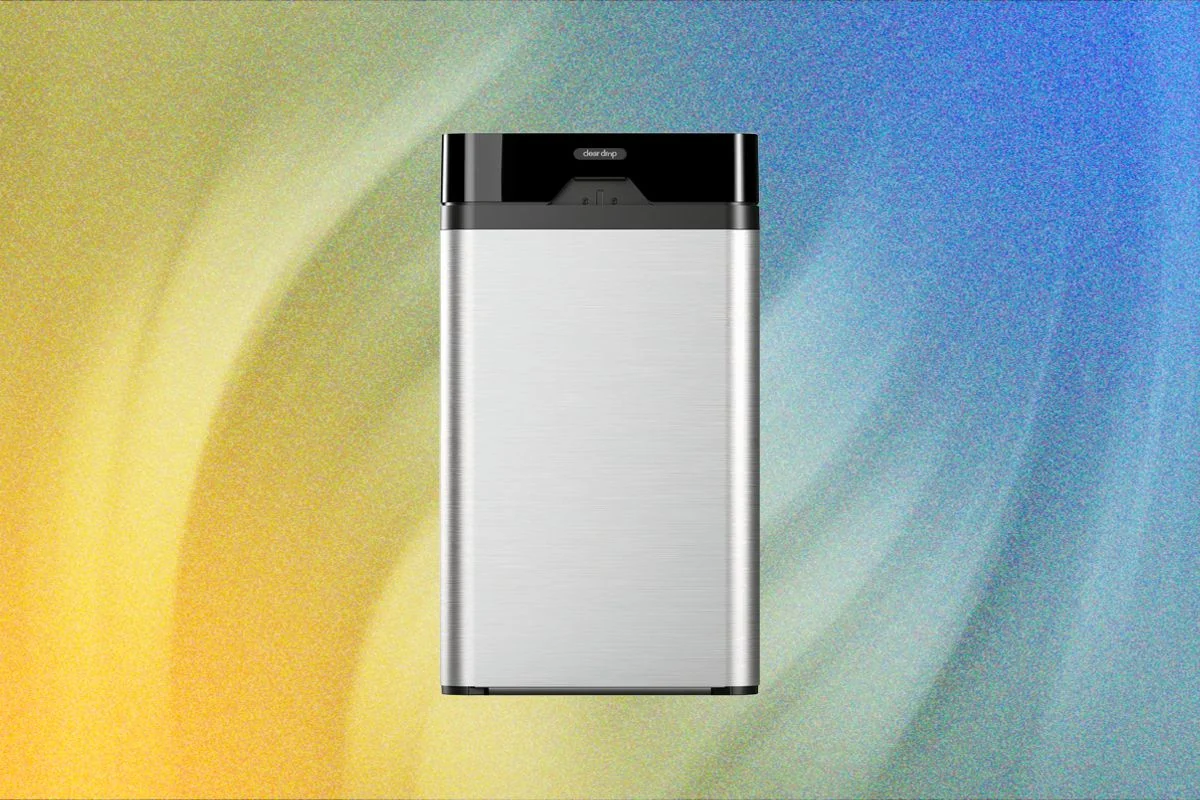
In a notable stride towards addressing the pervasive challenge of soft plastic waste, the Clear Drop Soft Plastic Compactor (SPC) emerges as a pioneering household recycling solution. This first-of-its-kind device aims to simplify the often-frustrating process of recycling plastic films and bags, offering an engaging user experience, yet prompting crucial questions about its intended audience and long-term practicality for the average consumer.
The Clear Drop SPC presents itself as a substantial and robust appliance, standing 2.5 feet tall and weighing a considerable 61 pounds. Crafted from stainless steel with a sleek black lid, its design is undeniably utilitarian, potentially leading observers to mistake it for a sophisticated trash can. However, its function is far more specialized. Operationally, the SPC draws parallels to a high-tech paper shredder, though its mesmerizing action of drawing in soft plastics is almost hypnotic, verging on an ASMR-like experience. Users simply press the "Unlock" button on the top control panel, and powerful internal rollers engage, effortlessly pulling in plastic items much like dollar bills being fed into an automated change machine. For households with young children or inquisitive pets, a crucial safety feature allows these rollers to be securely locked. The device boasts impressive versatility, accepting a wide array of crumplable plastics, from bulky bubble wrap and common Amazon mailers to delicate shrink-wrap and resilient freezer bags. Essentially, if you can crumple it in your hand, the SPC can process it.
Once the internal sensors determine that the device is full, the SPC initiates a compaction cycle, consolidating up to 3 pounds of material into a dense block, roughly the size of a shoebox. This block is then prepared for its next journey, to be sent in an included mailer to a designated recycling facility. There, the compacted plastic is ground into feedstock – a raw material that can be repurposed into various useful products, including composite decking, durable park benches, and vital highway safety cones.
.jpg)
While existing soft-plastics collection services like Terracycle and Ridwell offer external solutions for managing plastic film, the Clear Drop SPC stands out as the only device that performs this preprocessing directly within a user’s home. However, after four months of rigorous testing, the practicality of this innovative machine for the everyday consumer remains a significant point of contention for this reviewer.
The most substantial hurdle for potential adopters is undoubtedly the cost. The SPC requires a hefty $799 down payment, followed by a $49 monthly subscription for 24 months, bringing the total initial investment for the unit itself to an eye-watering $2,000. Furthermore, this subscription surprisingly includes only one mailer per month. Given that the reviewer’s household of three produced a block every couple of weeks, this single mailer allotment is quickly outpaced, necessitating the purchase of additional mailers, which currently retail for approximately $15 each. This pricing structure naturally prompts the question, posed directly to Clear Drop founder Ivan Arbouzov: "Who, exactly, is this for?" Arbouzov candidly responded, acknowledging the fairness of the question. He explained that early adopters tend to be "people who are already highly motivated around sustainability—households that actively separate waste and are frustrated by how difficult it is to deal with soft plastics."
Despite the financial commitment, the in-home experience with the SPC proved surprisingly unobtrusive. The reviewer, initially skeptical, placed the unit in the kitchen and found it was used frequently without causing disruption. Occupying merely about 2 square feet of floor space, the SPC maintains a low profile. It operates silently for the most part, only producing noise (around 60 decibels, comparable to a normal conversation) during its infrequent compaction cycles. The absence of distracting lights or a complex smartphone application contributes to its understated presence. All essential functions are managed through a minimalist control panel featuring four tactile buttons: lock/unlock, reverse feed, manual feed, and a toggle for audible beeping. A small digital screen provides status updates.
One curious aspect of the user interface is the "percent full" calculation displayed on the screen. This figure, contrary to immediate expectation, does not update in real-time as plastic is added. Instead, it reflects the machine’s assessment based on the last time it sensed sufficient material for compaction. A small "CR" symbol in the upper-right corner indicates when the device is actively calculating whether to compact its contents. If it determines a full load, it will present the option to form a block, allowing the user to initiate the process immediately or defer it to a more convenient time.
.jpg)
The block formation process itself is a silent, heat-activated procedure that takes approximately half an hour. This is followed by a cooling period, which the manual states is three hours, but the reviewer found to be closer to one hour in practice. Upon completion, the finished block dramatically rises on a telescoping platform, a theatrical reveal that evokes the grand entrance of a performer on stage. Despite the manual’s assurance of "tested air quality," the process does emit a distinct odor. While not strong enough to permeate an entire room, anyone within a few feet of the unit will undoubtedly catch a disconcerting whiff, a scent that undeniably suggests the heating of various plastic compounds.
The reviewer had a preview of the finished product even before testing the machine, receiving a sample block from Clear Drop’s head of product, Matt Daly. This representative 12 x 8 x 4-inch white plastic block, with its rounded edges, resembled a shaggy igloo brick, a visible amalgamation of various consumer plastics—ziplocks, Amazon mailers, and produce bags. Even a label from a bag of Thomas’ Bagel Thins was discernible through its largely opaque flat bottom, providing a tangible example of the material being processed.
Soft plastics are notoriously challenging for conventional recycling systems. Their lightweight, flimsy nature often causes them to jam sorting machines, slip through processing lines, and ultimately wreak environmental havoc. Consequently, they are not accepted in the vast majority of municipal curbside recycling programs. Even plastic bags collected at the front of grocery stores, a common collection point, frequently end up in landfills due to contamination or processing difficulties. The SPC, in Arbouzov’s words, acts as a "pre-recycling device." Its purpose is to streamline this problematic waste stream, delivering plastic that is neatly contained, traceable, and significantly more likely to successfully navigate the complex recycling system.
The journey of these blocks from household to new product was further elucidated by Arbouzov, who provided a video detailing their final destination: a specialized facility in Frankfort, Indiana. This facility focuses on processing polyethylene and polypropylene films, which constitute the bulk of soft plastics. There, the dense blocks are shredded into crumbles that, in the video, resembled handfuls of wet newspaper. These crumbles are then compressed and transformed into a range of composite products, including patio furniture, garden edging, and various structural components. Arbouzov noted that the full cycle, from mailing a block to its entry into recycling processing, typically takes "a few weeks," depending on shipping times and batching schedules. Currently, the Frankfort location is the sole facility processing these blocks, a situation Arbouzov hopes is temporary. "Our goal is to shift more of this processing closer to where the material is generated," he explained, "so blocks can move in bulk through regional recycling infrastructure rather than through mail-based logistics. The mail-back system is essentially a bridge that allows the material to be captured today while that larger infrastructure develops."

During the testing period, the reviewer’s household of three generated a new block every couple of weeks, quickly exhausting the limited supply of included mailers. As the compacted blocks began to accumulate in the office, a thought arose: a wish that the SPC could produce something immediately useful for consumers at home, such as spoons, straws, or even 3D-printing filament. However, this idea is complicated by the broader implications of plastic recycling. A 2023 Greenpeace report highlighted that recycling plastic can, paradoxically, increase its toxicity. The heating process can cause existing chemicals to leach into the air and water, and even create new hazardous compounds like benzene. This raises a fundamental question about the true place of recycled plastic in a genuinely circular economy.
When pressed on this point, Arbouzov responded, "We’re familiar with that argument. Those are generally related to mixed or poorly controlled recycling streams, where unknown additives can accumulate across multiple cycles. That is one of the reasons traceable and controlled material streams are important. When recyclers receive consistent polyolefin-rich feedstock, they can process it under defined specifications rather than dealing with highly contaminated mixed waste." This distinction underscores the SPC’s value proposition: providing a cleaner, more homogenous input for recyclers.
Arbouzov’s explanation also shed light on the most compelling use cases for the SPC. Beyond individual households, the device holds strong potential for businesses and institutional settings, such as schools and hospitals, which generate consistent streams of specific plastic refuse. Clear Drop is already running pilot collaborations, including one with The Shaw Institute, a nonprofit scientific research organization in Maine dedicated to studying plastic pollution, toxic chemicals, and climate-related impacts on ocean and human health. The SPC is being integrated into the Institute’s internal sustainability strategy. Other successful commercial partnerships cited by Arbouzov include the office of a Texas-based holding company with diverse operations in restaurants and transport, and a bridal and tuxedo shop seeking an efficient method to recycle its steady volume of garment bags, shrink wrap, and packaging film.
Ultimately, Arbouzov clarifies that the SPC is not merely a consumer gadget but a "transitional product" aimed at fostering a more robust waste infrastructure. "More broadly, our goal isn’t simply to sell appliances," he stated. "It’s to build a distributed recycling infrastructure, where part of the preparation happens directly where waste is produced."

While the reviewer appreciated the time spent with the Clear Drop SPC, and it undeniably heightened awareness of the sheer volume of soft plastics consumed weekly, the underlying question persists: Is the responsibility for soft plastics recycling truly that of the individual consumer? With an increasing burden placed on individuals to manage waste—from filtering our own water and purifying our own air to composting our own food scraps—consumers face limits on their money, time, and overall bandwidth. Perhaps these valuable resources could be more effectively channeled into advocating for systemic change, such as implementing policies that limit the manufacture of soft plastics at their source, rather than perpetually managing the downstream consequences.