11
11
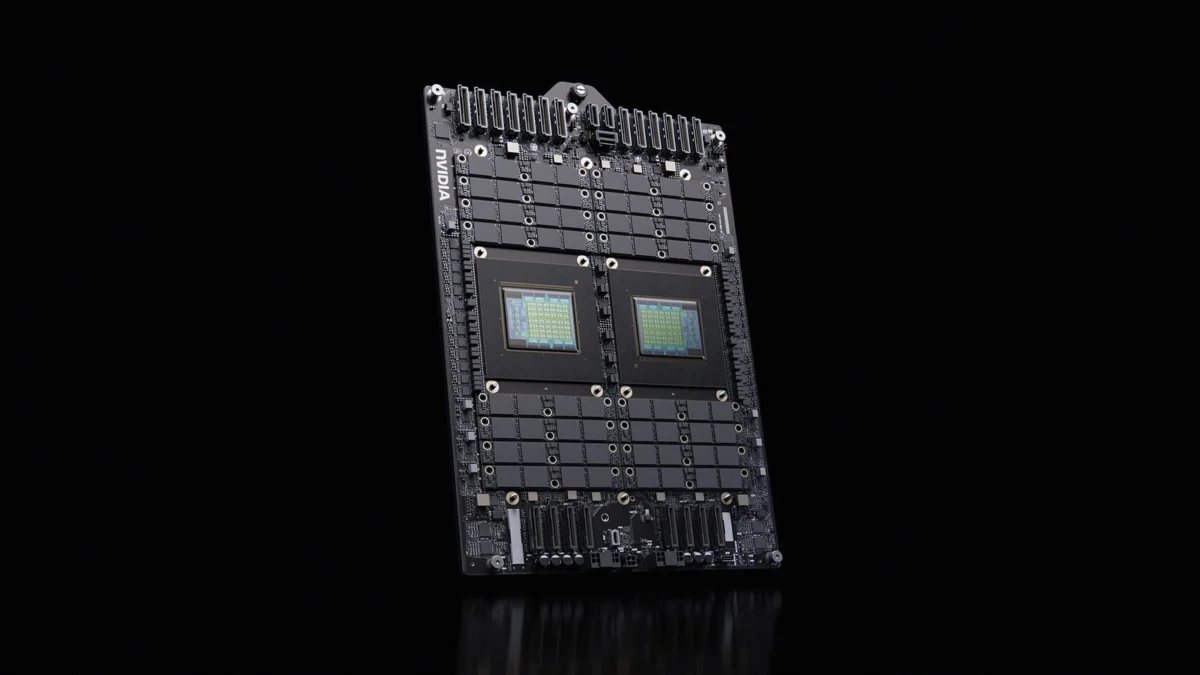
Nvidia is making waves this week with the unveiling of new performance benchmarks for its highly anticipated Vera Rubin chip system, a sophisticated GPU and CPU combination. This strategic disclosure comes just ahead of rival AMD’s annual product event scheduled for Thursday in San Francisco, setting the stage for an intensified battle for market leadership in the burgeoning artificial intelligence sector. The move underscores Nvidia’s ambition to not only maintain its dominant position in AI hardware but to expand its influence as a comprehensive provider of AI systems.
Last week, during an in-depth technical workshop held at the company’s headquarters in Santa Clara, California, Nvidia executives hosted a select group of journalists. The briefings were designed to highlight the Vera Rubin system’s significantly increased power and efficiency capabilities. The central message resonated clearly: while Nvidia has historically been synonymous with Graphics Processing Units (GPUs), it is now aggressively positioning itself as a pivotal supplier of Central Processing Units (CPUs) specifically engineered to power advanced AI agents and systems. This represents a significant evolution in the company’s strategic focus, moving beyond its traditional GPU stronghold.
The distinction between GPUs and CPUs in the context of AI is becoming increasingly nuanced. For years, GPUs have served as the fundamental hardware for training and executing the vast majority of AI models, owing to their parallel processing capabilities that excel at complex mathematical computations. However, the industry is witnessing a profound shift towards more intricate, "agentic" AI systems. These systems, characterized by their ability to reason, plan, and interact autonomously with dynamic environments, demand more than just raw computational power. They require robust CPUs to efficiently orchestrate intricate data flows, manage sophisticated networking protocols, and handle diverse software tasks that are critical for coordinating the various components of an intelligent agent. This growing demand for high-performance CPUs capable of managing these complex orchestral roles is a primary driver behind Nvidia’s eagerness to promote itself not merely as a vendor of individual AI chips, but as a holistic provider of complete, integrated AI systems.
The Vera Rubin system is heralded as the direct successor to Nvidia’s highly successful Grace Blackwell hybrid superchip system, and it is poised to become the cornerstone of the company’s near-term strategy for powering the global AI industry. Its innovative architecture is designed around a meticulously balanced ratio of one CPU for every two GPUs, optimizing for the synergistic demands of modern AI workloads. A single Vera Rubin NVL 72 super chip system, for instance, incorporates an impressive array of 36 Vera CPUs paired with 72 Rubin GPUs, creating a formidable computational powerhouse. Beyond its integrated system offering, Nvidia is also making the Vera CPU available as a standalone product. Reports indicate that these standalone Vera CPUs could be ready for Chinese customers as early as August, showcasing Nvidia’s flexibility in addressing diverse market needs and regulatory landscapes. The physical representation of this innovation, an image of the Vera CPU chip, reveals the intricate engineering behind this next-generation processing unit.
.jpg)
Further emphasizing the system’s user-centric design, Nvidia executives highlighted that its new Vera Rubin NVL72 racks—which integrate a multitude of chips into a single, highly optimized, liquid-cooled platform—are significantly more "plug-and-play" than previous generations of its products. This ease of deployment is a critical factor for hyperscale data centers and AI labs that manage vast, complex infrastructures. During an exclusive tour of one of Nvidia’s advanced data center labs in Silicon Valley, executives revealed a notable endorsement: OpenAI, a leading AI research organization, is already utilizing a Vera Rubin rack, a testament to its readiness and performance capabilities. An accompanying image of a rack filled with Nvidia’s Vera CPUs further illustrates the tangible nature of this cutting-edge hardware, designed for seamless integration with the forthcoming Rubin GPUs in next-generation AI data centers.
Notably absent from the Santa Clara workshop was Nvidia CEO Jensen Huang, who was in Japan announcing new partnerships focused on developing AI for robotics with various Japanese firms. The technical briefings were instead expertly led by Ian Buck, Nvidia’s long-standing vice president of accelerated computing and the acclaimed architect behind the company’s foundational CUDA software platform. Buck passionately articulated Nvidia’s relentless pursuit of innovation, stating, "We’re on a roadmap to crank out new architectures, not just GPUs but CPUs. We’re going to keep innovating, because it’s do this or die in Silicon Valley." This powerful statement underscores the high-stakes environment of the semiconductor industry and Nvidia’s commitment to staying at the forefront. Adding a touch of corporate culture, the meetings were held in Huang’s executive briefing center, where desks were adorned with bags of Taiwanese snacks—a thoughtful gesture from the CEO following his recent trip to Computex, a major annual semiconductor trade show in Taipei, as shared by an Nvidia spokesperson.
In terms of raw performance and efficiency, Nvidia claims that the Vera Rubin NVL72 system is engineered to process an astonishing ten times as many tokens per watt compared to its predecessor, the Grace Blackwell superchip. This leap in energy efficiency is crucial for reducing operational costs and environmental impact in large-scale AI deployments. The Vera CPU, in particular, is touted as being significantly faster at processing complex agentic AI tasks when benchmarked against rival CPUs from AMD and Intel. While Nvidia’s tests reportedly utilized slightly older generations of its competitors’ CPUs, the claimed performance advantage highlights the Vera CPU’s specialized design for AI workloads. Furthermore, the new chips boast localized memory subsystems that promise nearly three times the memory bandwidth of Blackwell. This feature is particularly appealing to companies grappling with the ongoing global shortage of high-bandwidth memory (HBM), offering a vital solution to a critical supply chain challenge.
Beyond raw power, Nvidia has also focused on enhancing the deployability and maintainability of its systems. The company asserts that it has substantially reduced the number of cables required to connect its chips to racks within multi-rack server systems. This innovation is so significant that Nvidia is marketing Vera Rubin as "cable-free compute" and "hot-swappable." Andrew Bell, Nvidia’s senior vice president of hardware engineering, alongside Ian Buck, emphasized that this design improvement can theoretically slash the time needed to install each rack from several hours down to mere minutes, dramatically improving data center efficiency and reducing downtime. Complementing this, the new chip system is designed to be 100 percent liquid-cooled. This advanced cooling method is inherently more energy-efficient than traditional air-cooling, which requires substantial energy for fans and climate control, further contributing to lower operational expenditures and a smaller carbon footprint.
Nvidia has been systematically releasing details about Vera Rubin since its initial unveiling in the spring of 2025, consistently assuring that the chip system will adhere to its planned release schedule. CEO Jensen Huang has repeatedly confirmed that Vera Rubin is ramping towards "full production" and is slated to ship in the latter half of this year, with early customers reportedly including industry giants such as Microsoft, OpenAI, and Oracle. Nvidia’s emphasis on timely delivery is particularly sensitive given past experiences. The company faced scrutiny when its previous-generation Blackwell chips reportedly encountered overheating issues when interconnected within its customized server racks, necessitating design modifications and causing subsequent shipment delays. This history underscores the meticulous planning and testing behind the Vera Rubin rollout.
.jpg)
Nvidia’s aggressive marketing campaign for Vera Rubin is strategically timed to precede rival AMD’s annual conference, where executives are widely expected to showcase their own next-generation AI and data center chips. This competitive dynamic was further highlighted on Sunday when AMD unveiled more details about its Helios AI chip rack, a direct competitor designed to challenge Nvidia’s latest offerings. Both AMD and Nvidia are fiercely vying for lucrative, large-scale, multi-year contracts to supply AI hyperscalers like Meta and Amazon, as well as prominent AI research labs such as OpenAI, Anthropic, and SpaceXAI, with the foundational chips that power their advanced AI infrastructures.
In recent years, AMD has made significant inroads, substantially increasing its market share in the segment for CPUs used in data centers. The company has long been recognized as a trailblazer in the development of the modern chiplet architecture employed in x86 processors, which continue to account for the overwhelming majority of data center CPU revenue. Nvidia, in contrast, constructs its data center CPUs on the ARM architecture, an alternative known for its superior power efficiency, often preferred in mobile and embedded systems but gaining traction in data centers.
This architectural divergence was a key point of discussion during the Nvidia workshop. Executives Buck and Hannah Coutand, who leads product marketing for Nvidia DGX Cloud, explicitly highlighted that Vera Rubin departs from the chiplet architecture favored by many modern processors. Instead, it embraces a single, monolithic chip design. Coutand presented a compelling argument for this approach, contending that stitching together multiple chiplets imposes "a heavy tax on memory bandwidth and data movement." She asserted that the monolithic design of Vera Rubin, by contrast, enables data to traverse more swiftly and efficiently across a single, integrated circuit, ultimately leading to higher performance and lower latency for demanding AI applications. This philosophical difference in chip design represents a crucial battleground in the ongoing innovation race between the semiconductor titans.