 11
11
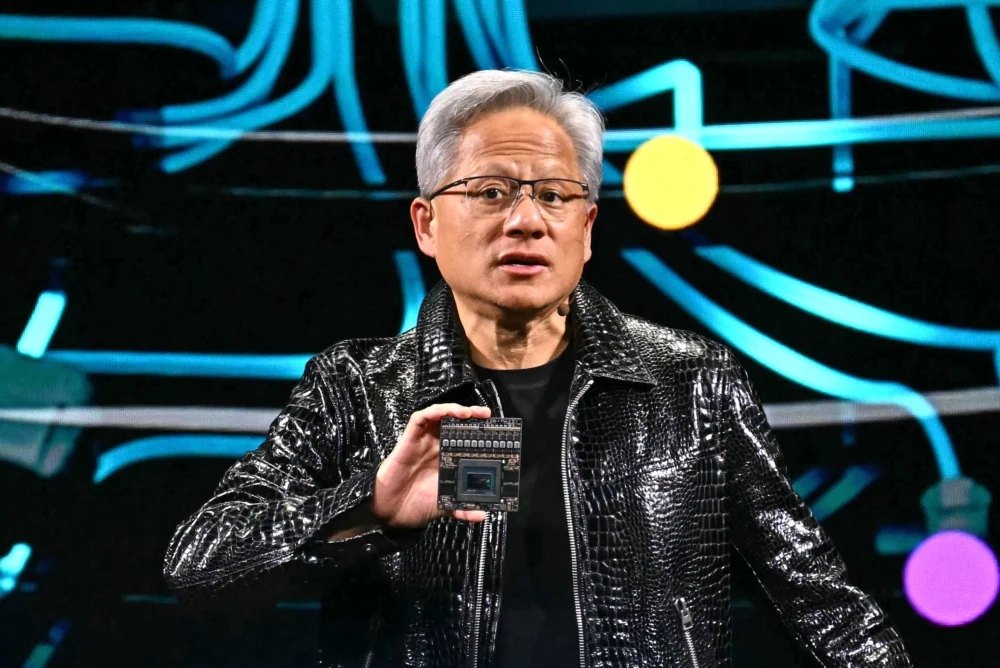
San Francisco, CA – Nvidia CEO Jensen Huang announced on Wednesday that the company’s recent investments in artificial intelligence pioneers OpenAI and Anthropic are likely to be its last in both firms. Speaking at the prestigious Morgan Stanley Technology, Media and Telecom conference in downtown San Francisco, Huang stated that the anticipated public debuts of these companies later this year would effectively close the window for further private investment. This declaration marks a significant shift in strategy for Nvidia, a dominant force in the AI chip market, as the landscape of AI development and investment continues to evolve rapidly.
Huang’s explanation points to a straightforward market dynamic: once companies go public, the opportunity for strategic private equity stakes typically diminishes. While it’s not uncommon for firms to continue investing in companies right up to the eve of their initial public offering (IPO) in pursuit of maximizing returns, Nvidia’s unique position largely negates such a need. The company is currently experiencing unprecedented financial success, primarily by manufacturing and selling the high-performance graphics processing units (GPUs) that are indispensable to both OpenAI and Anthropic, as well as the broader AI industry. This direct and lucrative revenue stream means Nvidia isn’t compelled to "goose its returns" through additional, potentially riskier, equity investments in its customers.
Nvidia, when pressed for further comment following Huang’s remarks, offered little additional insight. A company spokesman directed TechCrunch to a transcript from Nvidia’s fourth-quarter earnings call. In that call, Huang had articulated that all of Nvidia’s investments are "focused very squarely, strategically on expanding and deepening our ecosystem reach." From this perspective, Nvidia’s earlier stakes in OpenAI and Anthropic have arguably already fulfilled this strategic objective, cementing relationships and ensuring the adoption of its foundational hardware within the leading AI development houses.
However, a deeper look reveals several other complex dynamics that might explain Nvidia’s decision to pull back from future investments. One significant factor is the increasingly scrutinized "circular nature" of some of these arrangements. This phenomenon gained prominence when Nvidia initially announced its intention to invest up to $100 billion in OpenAI last September. MIT Sloan professor Michael Cusumano, commenting on the deal to the Financial Times, described it as "kind of a wash." He observed a reciprocal arrangement wherein "Nvidia is investing $100 billion in OpenAI stock, and OpenAI is saying they are going to buy $100 billion or more of Nvidia chips." Such agreements raise questions about true capital allocation versus strategic alliances that might inflate perceived valuations.
Growing concerns among market analysts and regulators that these circular AI deals could be creating an "investment bubble" might also have played a role in the commitment’s subsequent reduction. The investment Nvidia ultimately finalized just last week as part of OpenAI’s massive $110 billion funding round came in at a more modest $30 billion, significantly less than the earlier, highly publicized pledge. While Huang has actively dismissed another popular theory—that there is "bad blood" between Nvidia and OpenAI—as "nonsense," the discrepancy between the initial intention and the final investment amount remains notable and could reflect a more cautious approach by Nvidia amid market scrutiny.
Adding to the complexity are the recent strains in Nvidia’s relationship with Anthropic. Just two months after Nvidia announced a substantial $10 billion investment in Anthropic in November, the AI firm’s CEO, Dario Amodei, made headlines with controversial remarks at the World Economic Forum in Davos. Without directly naming Nvidia, Amodei drew a striking comparison, likening the act of U.S. chip companies selling high-performance AI processors to approved Chinese customers to "selling nuclear weapons to North Korea." This public criticism, especially from a company in which Nvidia had recently invested heavily, undoubtedly caused friction and highlighted ideological differences regarding the responsible deployment and international distribution of advanced AI technology.
In retrospect, Amodei’s "nuclear weapons" comparison proved to be only the beginning of Anthropic’s geopolitical challenges. Merely days ago, the Trump administration took decisive action, reportedly blacklisting Anthropic. This move bars federal agencies and military contractors from utilizing Anthropic’s technology, stemming from the company’s firm refusal to allow its AI models to be used for autonomous weapons systems or for mass domestic surveillance. This stance, while principled for Anthropic, carries significant commercial and strategic implications, potentially limiting its market reach within critical government sectors.
The geopolitical chessboard saw another rapid move within hours of Anthropic’s blacklisting. OpenAI, Anthropic’s primary competitor, announced it had struck its own deal with the Pentagon. This development immediately intensified the rivalry between the two leading AI developers. Anthropic CEO Dario Amodei publicly characterized OpenAI’s messaging around this military deal as "mendacious," reflecting deep resentment and ideological divergence. Public sentiment appears to have sided largely with Anthropic on this issue. Within 24 hours of these back-to-back announcements, Anthropic’s flagship AI model, Claude, experienced a dramatic surge in popularity, rocketing to the top of the free-app rankings on Apple’s U.S. App Store, remarkably overtaking ChatGPT. This was a stark reversal of fortunes, considering Claude had been outside the top 100 at the end of January, according to Sensor Tower data.
This series of events leaves Nvidia in an intricate position, holding significant stakes in two companies that are not only fierce competitors but are now actively pulling in divergent strategic and ethical directions. Their differing approaches to government and military engagement, and particularly the U.S. government’s recent actions, could potentially drag Nvidia’s other customers and partners into unforeseen complications.
Whether Jensen Huang foresaw this complex web of partnerships and geopolitical entanglements is impossible to ascertain. However, his stated reason on Wednesday for likely discontinuing future investments—that the IPO window closes the door on such deals—is viewed with some skepticism by industry observers, as it doesn’t entirely align with the nuances of late-stage private investing. A more probable interpretation, given the rapidly unfolding and highly charged circumstances surrounding both OpenAI and Anthropic, is that Nvidia’s decision represents a strategic exit from a situation that has become exceptionally complicated in a remarkably short period. The move underscores the intense pressures, both commercial and geopolitical, currently shaping the future of artificial intelligence.