 11
11
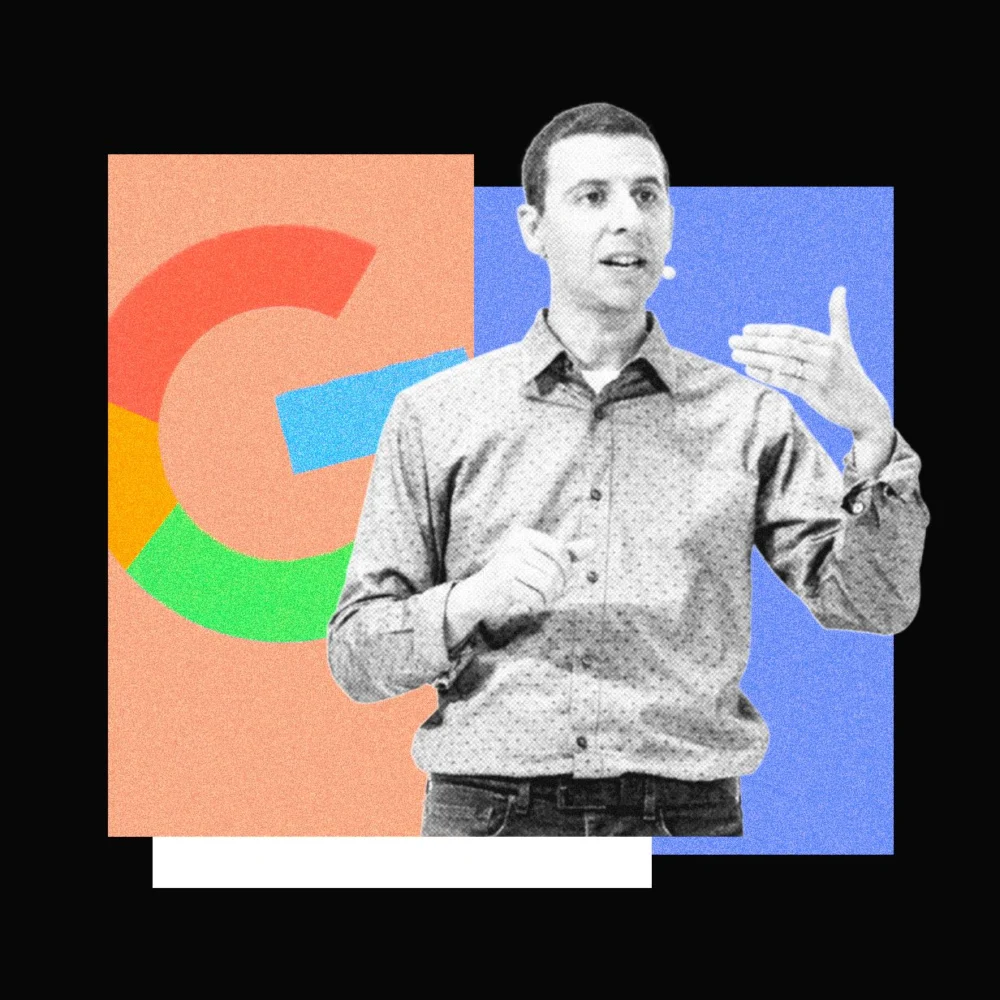
Google, a dominant force in online advertising, has clarified its evolving strategy regarding the monetization of its AI chatbot, Gemini. While executives previously stated no immediate plans for ads within Gemini, a recent interview with WIRED featured Nick Fox, Google’s Senior Vice President of Knowledge and Information, revealing a more nuanced position: the tech giant is "not ruling them out." This statement signals a potential shift as rivals like OpenAI have already begun testing ads in their free chatbot tiers, prompting closer scrutiny of Google’s long-term monetization path for Gemini.
The company’s current ad experimentation is focused on AI Mode, its Search product powered by Gemini. Fox indicated that insights gained from these trials in AI Mode would likely inform future decisions concerning the Gemini app. "I would expect that the learnings that we get from ads in AI Mode would likely carry over to what we might want to do in the Gemini app down the road," he explained. This strategic sequencing allows Google to refine its advertising models within a familiar search context. Fox also cited internal research suggesting that "users actually like ads within the context of Search," underpinning Google’s confidence in introducing relevant and useful ads. The ultimate form of monetization for the Gemini app, he concluded, will be determined over time based on user reception and effectiveness.
Google’s deliberate approach to Gemini monetization is partly due to its robust financial health and the rapid growth of its AI offerings. The company has dedicated the past year to competing intensely with OpenAI in the AI chatbot market, with significant results. Gemini now boasts over 750 million monthly active users, a substantial increase from 350 million in March of the previous year. While OpenAI does not release monthly active user figures, its weekly active user count stands at 900 million.
The challenge of monetizing large free user bases is a key concern for both AI leaders. OpenAI began testing ads in ChatGPT’s free tier in the United States in January, intensifying questions about Google’s intentions. Google DeepMind CEO Demis Hassabis initially sought to temper speculation, stating at Davos that the company had "no plans" for ads in Gemini. However, Fox’s recent comments clarify that while immediate plans for the standalone Gemini app are not in place, the possibility remains open, distinguishing between the app and the integrated AI Search experience.
Far from "cannibalizing" Google’s core business, AI is strengthening its advertising operations across three main areas, Fox explained. Firstly, AI is significantly improving core ad quality. Google generates a prediction of an ad’s performance for every query, including click-through and conversion likelihood. AI models are proving superior in these predictions, leading to more relevant and effective ads, which Fox identifies as the biggest immediate improvement Gemini brings to advertising.
Secondly, AI is transforming advertiser tools, especially for small businesses. Many smaller enterprises lack the resources or expertise to meticulously identify every potential search query or optimize their ad campaigns. AI, according to Fox, excels at autonomously identifying optimal keywords, generating effective creative content, and streamlining the entire ad creation process. This empowers businesses of all sizes to run more efficient and impactful campaigns, thereby expanding the advertiser ecosystem and revenue potential for Google.
Thirdly, the "most nascent" area involves integrating ads into new experiences. Google’s philosophy is to build an excellent consumer product first, then figure out monetization. Fox highlighted that Google’s strong financial position—generating over $400 billion in revenue in 2025—provides the "luxury" of not rushing Gemini’s monetization. This contrasts with OpenAI, which reportedly aims to significantly increase its $30 billion revenue forecast for 2026, with much of that growth expected from ChatGPT. Google’s strategic patience allows for thorough experimentation and user feedback before a full-scale ad rollout in new AI contexts.
Google’s current testing ground for AI-driven ads is AI Mode, the AI-enhanced Search product. Fox emphasized the guiding principles: ads are always clearly distinct from organic results and explicitly labeled. Furthermore, if an ad is deemed irrelevant to a user’s query, no advertisement is displayed. The paramount principle, Fox stressed, is that "ads should be useful." Initial findings from AI Mode experiments, while largely intuitive, reinforce these principles: users engage with ads when they are relevant and disregard irrelevant ones, supporting Google’s belief that well-integrated, pertinent ads can enhance rather than detract from the user experience.
Addressing Hassabis’s earlier comments, Fox clarified that the focus on AI Mode and AI Overviews stems from their perception as natural extensions of the Search experience, making them ideal for initial experimentation. Learnings from these trials are expected to directly inform future decisions about ads within the Gemini app. "We’re able to get all those learnings within a context and a construct that users are already aware of ads," he stated. Reaffirming the research that "users actually like ads within the context of Search," Fox concluded: "No, we’re not ruling them out. It’s just not where we’ve been focusing."
Regarding OpenAI’s earlier move to introduce ads in ChatGPT, Fox refrained from direct criticism, suggesting that the success of such an initiative hinges entirely on its execution. He emphasized that when ads are "done right," they can be "accretive to the product experience"—meaning they add value rather than detract from it. He underscored the critical importance of relevance, quality, and respecting user preferences, drawing on Google’s over two decades of experience in the advertising domain. For Google, the timing of ad introduction is secondary to the quality and thoughtfulness of its implementation, ensuring it is "respectful of users."
A significant new development is Google’s Personal Intelligence feature, launched in January, which allows Gemini to access a user’s Gmail, Photos, and Calendar to generate highly contextual and personalized responses. This feature raises natural questions about its interaction with advertising, particularly given advertisers’ interest in targeted data. Fox addressed these concerns directly, stating that while there are currently no ads in the Gemini app, and experimentation is ongoing within AI Mode, Google does not sell user data to advertisers.
He provided a compelling example of Personal Intelligence in action: during a skiing trip, he used AI Mode to inquire about the appropriate goggle lens for cloudy conditions. The AI, leveraging information from his email (resort, weather) and a forwarded receipt (goggle brand, extra lens), provided a highly specific and useful recommendation. This "subtle magic" illustrates the immense potential of deeply personalized AI. From an advertising standpoint, Fox clarified that the goal is to ensure ads can be targeted and relevant to the context of a query without compromising user privacy. For instance, in his goggle example, an ad might have been tailored to the specific brand of goggles he owned. The challenge lies in seamlessly integrating ad targeting with organic responses while maintaining strict privacy protocols. Google’s unwavering commitment is to ensure that "your private information remains private and isn’t shared with advertisers." The question of whether Personal Intelligence will be integrated into traditional Search remains "TBD," though Fox admitted that personalizing Search has long been his "holy grail."
The broader AI industry is grappling with the ethical and practical implications of ads in AI. Anthropic, a prominent AI developer, notably ran a Super Bowl commercial highlighting the potentially "disastrous impact" of AI ads, sparking a wider debate on how to implement advertising in AI responsibly and privacy-consciously. Similarly, Perplexity executives announced in February that they would cease experimenting with ads in their AI, partly due to concerns over user trust. Fox, commenting on Anthropic’s Super Bowl ads, found them "funny" but expressed unwavering confidence in Google’s ability to build "incredibly useful, relevant ads in the context of AI search," drawing on its 20-plus years of success in Search advertising. This confidence is rooted in the belief that well-executed ads, which are relevant and clearly labeled, can coexist harmoniously with AI experiences.
Looking ahead, Fox articulated a broad vision for the future of Search, one where users can "ask anything." The expectation is that this enhanced conversational capability will lead users to explore more web pages and potentially purchase more products. Personalization, long considered the "holy grail" of Search but never fully realized, is now being actualized through features like Personal Intelligence. Fox indicated that users should anticipate significant advancements in this area, pushing the boundaries of what Search can offer.
The integration of AI Mode, AI Overviews, Gemini, and traditional Search is envisioned to become increasingly seamless. Fox explained that within the context of Search, users should not need to differentiate between "traditional Search, what’s AI Overviews, what’s AI Mode"—these elements should converge into a unified, holistic Search experience. Gemini, on the other hand, is positioned as a "personal assistant," with overlaps certainly existing between the two roles. This seamless evolution of Search is also the trajectory for Personal Intelligence, which has so far been introduced in AI Mode but could eventually become a more pervasive part of the broader Search experience.
Fox underscored that any deeper integration of Personal Intelligence into traditional Search would be strictly opt-in, ensuring users are never "surprised" and feel comfortable with the level of data sharing. "This is not something that’s being done to users, but this is something that users are choosing to invoke," he clarified. The precise extent of Personal Intelligence’s integration into traditional Search remains "TBD," dependent on technological evolution, use cases, and user demand, with Google committed to not proceeding in a way that makes users uncomfortable.
In essence, Google is navigating the complex landscape of AI monetization with a strategic blend of caution, experimentation, and a steadfast commitment to user experience and privacy. While ads in Gemini are not an immediate priority, the door remains open, contingent on successful learnings from AI-powered Search experiences and a meticulous approach to ensuring relevance and user trust.