 11
11
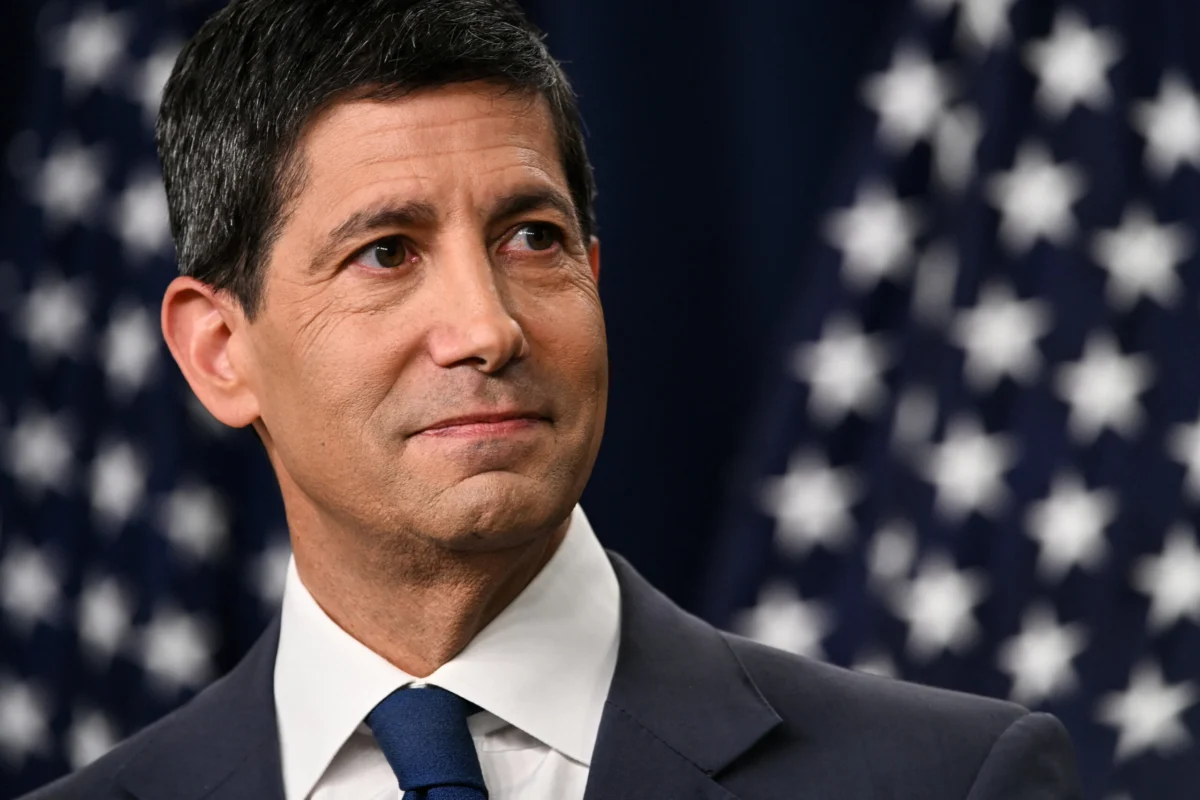
Washington D.C. – Federal Reserve Chairman Kevin Warsh is orchestrating a significant departure from decades of central bank tradition, aiming to reduce the Federal Reserve’s pervasive influence on financial markets. A key facet of this strategy involves the potential reduction in the number of Federal Open Market Committee (FOMC) meetings held annually. This move, while still largely hypothetical according to a Fed source, has ignited discussion among experts, who anticipate it could usher in an era of heightened market volatility, while simultaneously presenting new opportunities for astute investors.
Since assuming the chairmanship in May, Warsh has been systematically dismantling the Fed’s long-standing culture of aggressive transparency. This shift is characterized by a deliberate curtailment of "forward guidance"—the Fed’s signals about its future interest rate trajectory. Post-meeting statements have been dramatically shortened, and Warsh’s press conferences have featured cryptic and often evasive responses to questions regarding his monetary policy outlook. The latest potential alteration to this strategy is the contemplation of decreasing the FOMC’s established schedule of eight annual meetings.
Such a reduction in meeting frequency would further diminish the volume of communication emanating from the Warsh-led Fed, a development that market participants are beginning to assess for its potential impact on stock and bond markets. George Catrambone, head of fixed income for the Americas at DWS Group, forecasts that this recalibration will "certainly increase volatility." He elaborates that "having less transparency forces market participants to hedge or have a wider dispersion of outcomes."
No "Magical" Meeting Schedule, but Implications for Markets
The Federal Reserve has historically employed various meeting strategies. Prior to the early 1980s, the FOMC convened nearly every month. This frequency was adjusted to eight meetings annually under former Chairman Paul Volcker. Importantly, the Fed retains the authority to call unscheduled meetings at any time, an action that would carry significant market implications, signaling a potential emergency.
Minneapolis Fed President Neel Kashkari recently expressed an openness to re-examining the meeting schedule. "I don’t think there’s any magic number about eight or 10 or six," Kashkari told CNBC. He acknowledged the Fed’s ability to convene emergency meetings but emphasized that such events are "a big event" and signal significant concern. "When the FOMC calls an emergency meeting, it really sends a signal that we’re concerned about something. And so, you know, I think I’m open-minded. I don’t have a strong view."
Similarly, Philadelphia Fed President Anna Paulson indicated that "it’s healthy to have a good discussion about that." Other Fed experts echo this sentiment, suggesting that a reduction in annual meetings might not profoundly alter market dynamics. Bill English, who served as the Fed’s former head of monetary affairs during Warsh’s initial tenure and is now a professor at Yale, stated, "There’s nothing magical about eight meetings." He cautioned, however, that while there are "costs associated with having a lot of meetings," it is equally important "not to have so few meetings that you end up not acting in a timely way." English had previously proposed a schedule of six meetings per year, each accompanied by a press conference and an updated Summary of Economic Projections. He currently views eight meetings as "close to the right number" and expresses greater concern about other aspects of Warsh’s communication strategy. "I really don’t like this effort to communicate much less," English commented. "Explaining more about why you’re doing what you’re doing helps the public to understand it. It helps the public to anticipate it. It makes monetary policy more effective, and also it it just seems like it’s appropriate to make the Fed accountable."
Muted Market Reaction Amidst Broader Concerns
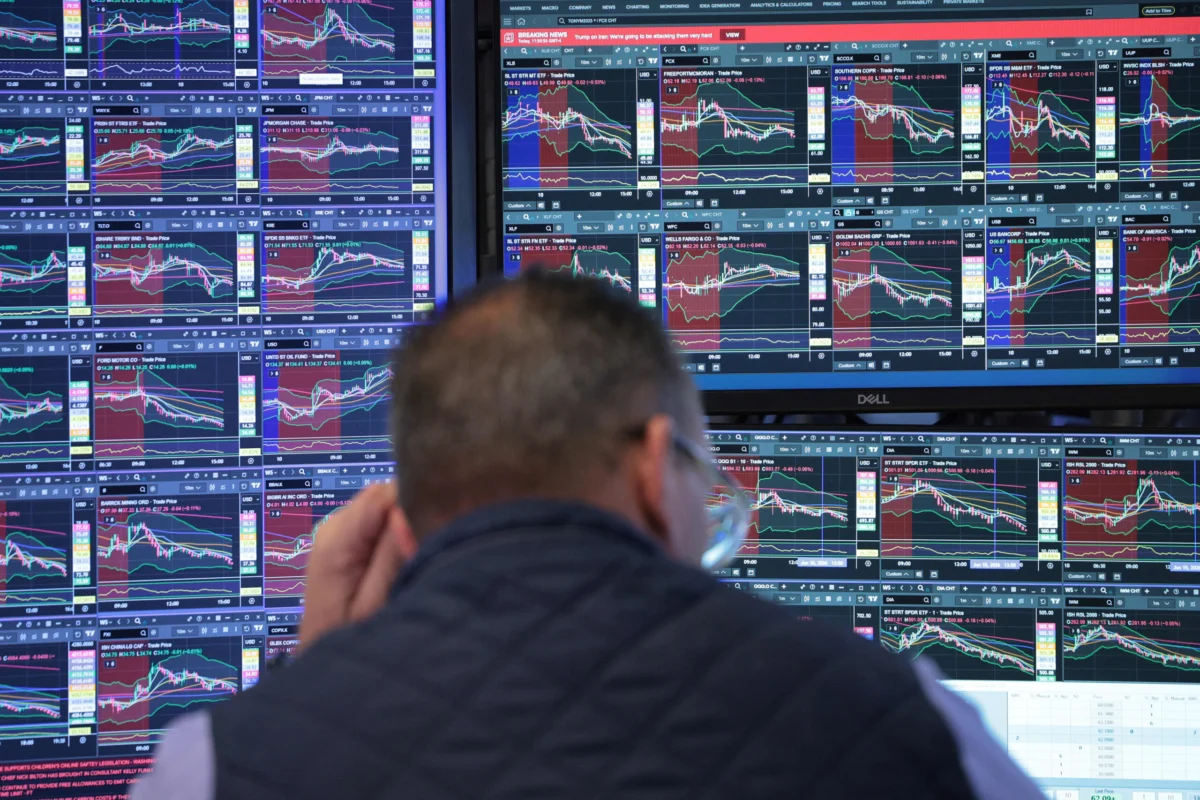
Thus far, financial markets appear to be either extending the benefit of the doubt to Warsh or are preoccupied with geopolitical developments, seemingly overshadowing the Fed’s evolving communication approach. Since Warsh took over from former Chairman Jerome Powell on May 22, the Dow Jones Industrial Average has seen a gain of approximately 3,500 points, or 7%. Bond yields have experienced a net increase, albeit not dramatically. The 2-year Treasury yield, a key indicator of short-term rate expectations, has risen by about 8 basis points (0.08 percentage points), with the benchmark 10-year Treasury yield showing a similar modest increase.
These market movements have occurred despite Warsh’s deliberate departure from a tradition of open communication and his establishment of five task forces dedicated to a comprehensive reevaluation of the Fed’s policy framework, communication strategy, and data utilization. "He’s kind of getting away with it," observed Mark Hackett, chief market strategist at Nationwide. "Warsh is really the first Fed official that I’ve seen explicitly say he wants the Fed to have less direct impact on market movement." Warsh himself has directly informed market participants that they should be focusing on economic data rather than the nuances of Fed pronouncements. "Market participants are learning to play the ball, not the referee—and market prices will continue to respond in the direction and magnitude they see fit," Warsh stated at a recent news conference. "This is, in my view, a change for the better—and we are just getting started."
However, some investors perceive Warsh’s strategy as inherently risky. Dario Perkins, head of global macroeconomics at TS Lombard, noted in a research report that the outcome of Warsh’s approach is "a regime of continuous market repricing" and that "the main takeaway is more volatility." He added, "Investors have to get used to FOMC meetings at which they don’t know the outcome ahead of time. That will also provide new trading opportunities. It goes without saying that this may well be what Warsh has wanted all along."
Potential Ramifications of Information Vacuum
Concerns about the Chairman’s stance on forward guidance have been amplified by a loosely defined "reaction function"—the economic conditions that would trigger a Fed policy response. Warsh has also expressed criticism of the Fed’s "dot plot," which illustrates individual officials’ interest rate expectations, and notably declined to submit his own projection when the FOMC last updated the chart in June.
The prospect of reducing the frequency of FOMC meetings, potentially to four or six times per year, further exacerbates the potential for an information vacuum. Markets that have for decades relied on explicit cues from the Fed may now be forced to engage in more speculative policy interpretation. "Obviously, if the dot plot changes or if guidance changes, I don’t think that’s the end of the world," Hackett commented. "If you stop start having less meetings, that’s a different level, and that could be seen as disruptive."
Komal Sri-Kumar, president of Sri-Kumar Global Strategies, suggests that a potential consequence could be longer-term yields rising faster than short-term rates, a phenomenon known as a "bear steepener." This scenario implies that fixed-income investors might anticipate the Fed maintaining short-term rates at low levels, leading to an increase in inflation expectations. "Bondholders are not babies trying to have their hands held," Sri-Kumar asserted. "The bondholders are saying, ‘Please don’t make my life more difficult by introducing even more uncertainty.’"
The federal government faces significant challenges in managing its $31.1 trillion in outstanding Treasury debt. A further decline in investor confidence in government debt could complicate financing efforts, especially as interest on the debt is the second-largest government outlay, after Social Security. The Treasury Department projects spending $1.3 trillion this year solely on debt financing costs.
In a recent appearance on CNBC, Treasury Secretary Scott Bessent characterized Warsh’s approach as a "detox" for markets. While the long-term efficacy of this strategy remains uncertain, with plausible benefits and drawbacks, the coming months will be crucial. Chairman Warsh is scheduled to deliver a significant speech at the Fed’s annual gathering in Jackson Hole, Wyoming, at the end of August, a traditional venue for central bank leaders to outline new agendas. "Warsh is trying to undertake a very large change in terms of how to communicate the data and how to interpret it," remarked Catrambone. "I would say we should also provide a little bit of grace."