 11
11 1
1 2
2 3
3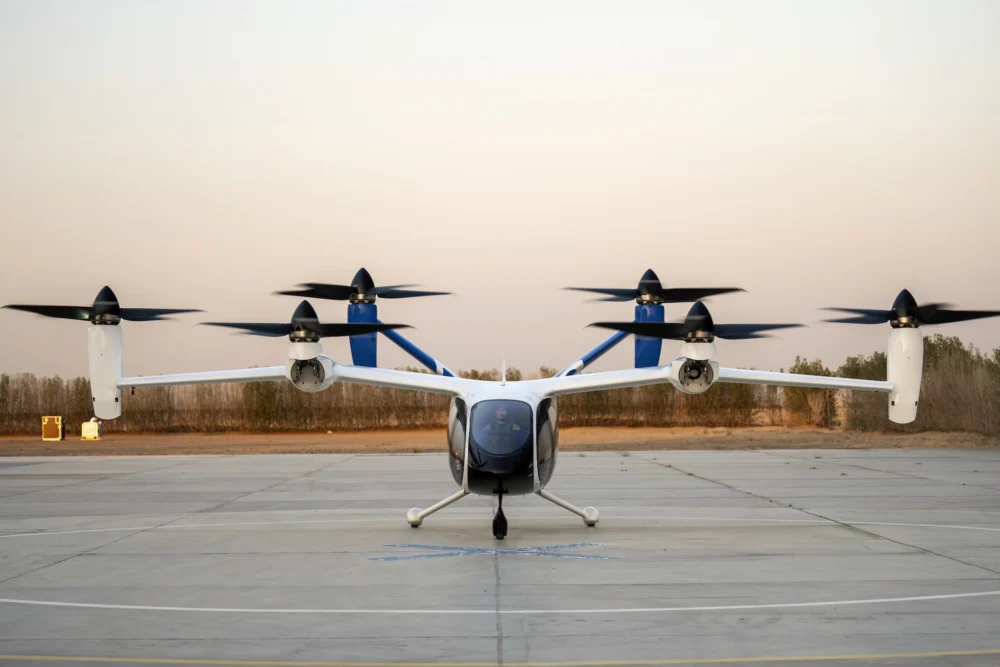
The Federal Aviation Administration (FAA) has announced the approval of eight groundbreaking pilot programs, paving the way for a select group of companies, including industry leaders Archer Aviation, Beta Technologies, Joby Aviation, and Wisk, to commence widespread electric aircraft testing as early as this summer. This pivotal decision marks a significant step towards integrating Advanced Air Mobility (AAM) into the nation’s transportation infrastructure, with the potential to revolutionize personal travel, regional transportation, cargo logistics, and emergency medical services.
This ambitious three-year initiative, spanning 26 states across the United States, is strategically designed to ensure that American companies maintain and expand their global leadership in the burgeoning field of next-generation aircraft. The overarching goal, as articulated by Department of Transportation Secretary Sean Duffy in remarks made on Monday, is to foster an environment where innovative electric vertical takeoff and landing (eVTOL) aircraft can be safely developed and deployed for a myriad of applications. This leadership is crucial not only for technological advancement but also for securing economic benefits, creating new jobs, and establishing the U.S. as the primary hub for this transformative industry.
Known formally as the Advanced Air Mobility and Electric Vertical Takeoff and Landing Integration Pilot Program (AAM & eVTOL IPP), this initiative was initially brought forth last year through an executive order issued by President Donald Trump. The executive order’s primary objective was to expedite the development and eventual commercialization of these futuristic aircraft, recognizing the substantial regulatory hurdles and financial investments typically required for new aviation technologies to reach operational readiness. AAM encompasses a broad spectrum of aviation services that transport people and cargo using revolutionary new aircraft, often leveraging electric propulsion and enhanced automation, while eVTOL specifically refers to aircraft that can take off and land vertically using electric power.
The past few years have witnessed the emergence of numerous eVTOL companies, each promising to usher in an era of urban air taxis and other regional electric aircraft that could transform how people and goods move. The vision includes quieter, more sustainable, and potentially faster travel options for congested urban areas and underserved regional routes. However, the journey from concept to commercial operation is fraught with challenges, typically demanding years of rigorous testing, development, and hundreds of millions of dollars in investment. A critical bottleneck in this process is the FAA’s comprehensive certification procedure, a multi-year undertaking designed to ensure the utmost safety and reliability of any new aircraft introduced into the complex National Airspace System (NAS), which manages all civil and military air traffic in the U.S.
The newly approved pilot program offers a crucial acceleration path. By allowing participating companies to test their eVTOL aircraft under specific operational conditions even before they receive full regulatory certification, the FAA is providing an invaluable opportunity to gather real-world data and refine operational procedures. This kind of accelerated timeline is expected to significantly bolster the development efforts, and consequently, the market valuations, of many eVTOL companies. Publicly traded entities such as Archer, Beta, and Joby, which have sought public investment in recent years, stand to benefit substantially from this fast-tracked approach by demonstrating tangible progress to investors and the public.

The immediate positive impact was evident in the stock market. Kyle Clark, founder and CEO of Beta Technologies, expressed profound optimism, stating that being selected for the program would enable his company to initiate aircraft operations a full year earlier than previously anticipated. This announcement resonated strongly with investors, as Beta Technologies’ stock price saw a nearly 12% jump on Monday. Similarly, Archer and Joby, both prominent players in the eVTOL space and publicly listed companies, also experienced notable increases in their share prices, reflecting investor confidence in the program’s potential to de-risk and accelerate commercialization.
Archer Aviation, a company developing the four-passenger piloted eVTOL known as "Midnight," drew parallels between this eVTOL testing program and the early stages of robotaxi testing. They believe that the program will be instrumental in building public trust, establishing robust safety protocols, and creating a comprehensive "playbook" for the safe and efficient scaling of electric air taxi operations. Lessons learned from the gradual deployment of autonomous ground vehicles, particularly regarding public acceptance and the iterative development of regulatory frameworks, are seen as highly relevant. Furthermore, Archer views the program as a vital preparatory step for its ambitious plans to launch air taxi services in Los Angeles in time for the 2028 Olympic Games, demonstrating a clear roadmap for initial commercial deployment tied to a high-profile global event.
Chris Rocheleau, FAA Deputy Administrator, underscored the collaborative nature and strategic importance of the initiative. In a prepared statement, Rocheleau remarked, "These partnerships will help us better understand how to safely and efficiently integrate these aircraft into the National Airspace System." He emphasized that "The program will provide valuable operational experience that will inform the standards needed to enable safe Advanced Air Mobility operations. We appreciate the strong interest reflected in the many proposals we received," noting that the FAA had received an impressive 30 proposals for the pilot program, highlighting the industry’s eagerness to participate and the broad recognition of the program’s significance. Integrating new aircraft types into the already complex and heavily trafficked NAS requires meticulous planning and data-driven standard-setting to maintain the highest levels of safety.
A defining characteristic of the AAM & eVTOL IPP is its mandatory partnership model. To participate, companies are required to collaborate closely with state, local, tribal, or territorial governments. This ensures that the integration of these advanced aircraft is not merely a technological endeavor but also a community-centric one, addressing local needs, infrastructure considerations (like vertiports or charging stations), and public acceptance from the outset. This collaborative framework is essential for developing a holistic, publicly supported, and sustainable advanced air mobility ecosystem that is tailored to diverse regional requirements.
The approved projects encompass a diverse range of applications and geographic scopes, reflecting the broad potential of electric aircraft. For instance, in a significant urban initiative, the Port Authority of New York and New Jersey has forged partnerships with Archer, Beta, Electra, and Joby. Together, they will explore a dozen distinct operational concepts, including innovative approaches to urban air mobility based out of a bustling Manhattan heliport. This particular project aims to demonstrate the feasibility and benefits of eVTOLs for short-distance, high-demand urban routes, potentially alleviating ground traffic congestion, reducing travel times, and offering a new premium travel option within dense metropolitan areas.
Moving beyond dense urban centers, the Texas Department of Transportation (TxDOT) will spearhead a regional flight initiative, collaborating with Archer, Beta, Joby, and Wisk. This ambitious program will focus on connecting major Texas cities—Dallas, Austin, and San Antonio—with an eventual expansion to Houston. The plan includes developing sophisticated networks of air taxis that will radiate outwards from each city, significantly extending regional reach and offering new inter-city travel options. This represents a crucial step in demonstrating the scalability and economic viability of eVTOLs for medium-distance regional transport, potentially revitalizing regional air travel and commerce.

Some projects boast even wider geographic implications, demonstrating the program’s national scope. A notable example is a project led by the state of Utah, which will undertake extensive testing of next-generation aircraft and operational concepts across a vast expanse covering the Pacific Northwest, the majestic Rocky Mountains, and the expansive Plains of Oklahoma. This diverse geographical testing ground will allow for the evaluation of eVTOL performance under varying environmental conditions, including mountainous terrain and open plains, and airspace complexities, providing critical data for broader deployment. Concurrently, the Pennsylvania Department of Transportation is leading another significant project involving 13 states, aiming to revitalize regional flights across a broad swathe of the country, potentially reconnecting smaller communities with larger transportation hubs and improving access to essential services.
Beyond passenger transport, other approved projects are sharply focused on specialized applications. Beta, in collaboration with Elroy Air and other partners, will conduct vital cargo and personnel transportation flights into the challenging environments of the Gulf of America. These operations will specifically target energy industry locations in Louisiana, Texas, and Mississippi, showcasing the utility of eVTOLs for rapid, efficient, and potentially more environmentally friendly logistics in critical industrial sectors, where speed and access to remote sites are paramount. For emergency medical services, the ability of eVTOLs to rapidly transport patients or critical supplies could significantly improve response times and save lives.
Further underscoring the diversity of the program, the departments of transportation in Florida, Louisiana, and North Carolina are independently leading their own projects, each tailored to address unique regional needs and explore different operational scenarios. Additionally, the city of Albuquerque has partnered with Reliable Robotics to test cutting-edge autonomous operations, pushing the boundaries of uncrewed flight and its potential for enhanced safety and efficiency in specific contexts, laying the groundwork for future fully autonomous air logistics.
This comprehensive set of pilot programs represents a pivotal moment for Advanced Air Mobility. By fostering deep collaboration between government and industry, gathering critical operational data in real-world settings, and iteratively refining safety standards and operational procedures, the United States is poised to lead the global transformation of aviation. The insights gained from these three years of intensive testing will be invaluable in establishing the regulatory frameworks, infrastructure requirements, and public acceptance necessary for a future where electric aircraft are a common and trusted mode of transportation. The industry anticipates significant progress, with the Techcrunch event in San Francisco, CA, from October 13-15, 2026, likely serving as a key forum for updates and discussions on the advancements made possible by this ambitious FAA initiative.