 11
11
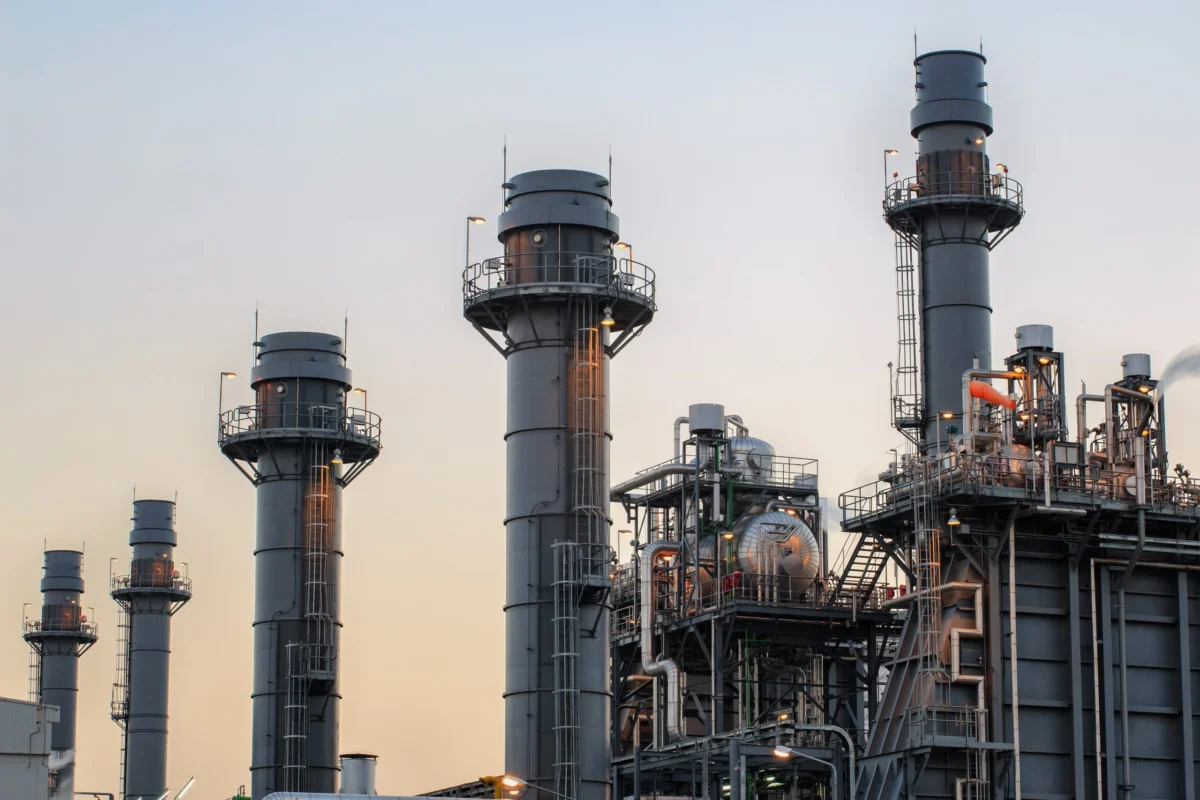
As the global economy increasingly electrifies and shifts away from traditional fossil fuel consumption, the oil and gas industry has strategically pivoted, heavily investing in and relying on plastics production as a primary driver for future profits and sustained growth. This strategic move by petrochemical giants underscores a deepening commitment to plastic manufacturing, raising significant environmental concerns regarding pollution and waste management. However, this trajectory faces a formidable challenge from innovators like Jacob Nathan, who is spearheading efforts to fundamentally transform how the world deals with plastic waste.
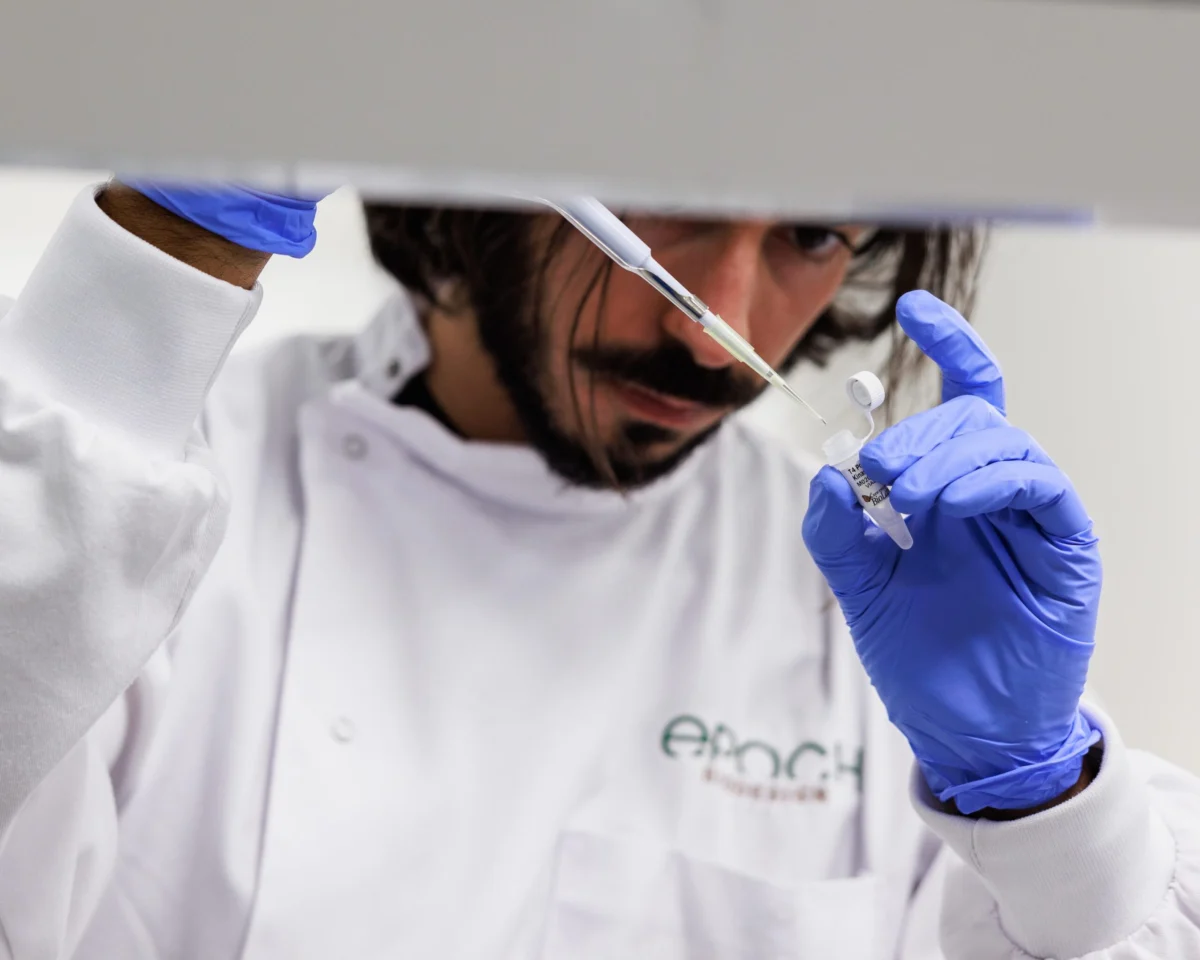
Nathan’s journey into groundbreaking plastic degradation began remarkably early, while he was still a high school student. His initial curiosity and scientific ambition led him to explore methods for breaking down plastics, a pursuit that has now culminated in the establishment of Epoch Biodesign. As the founder and CEO of Epoch Biodesign, Nathan has successfully developed a pioneering approach utilizing a sophisticated series of enzymes. This advanced enzymatic technology, which leverages AI for acceleration as indicated by TechCrunch reporting, is designed to "transform this unnatural waste" – referring to discarded plastics – into a form that can be directly used to manufacture new plastics, as he elaborated in an interview with TechCrunch. This innovation represents a crucial step towards a truly circular economy, where waste is not merely discarded but re-enters the production cycle as a valuable raw material.
Highlighting the profound shift Epoch Biodesign aims to instigate, Nathan articulated a bold vision: "For us, a bale of textile is the equivalent of a barrel of oil." This statement profoundly redefines the value proposition of waste materials. It signifies that for Epoch Biodesign, post-consumer waste fabric, rather than finite and volatile petroleum, serves as the foundational raw material for industrial production. This innovative feedstock sourcing offers a distinct economic advantage: the price of this crucial raw material will not be subject to the unpredictable and often dramatic fluctuations dictated by the weekly whims of global leaders, geopolitical events, or the speculative nature of commodity markets. This decoupling from fossil fuel market volatility promises greater stability and predictability for manufacturing processes, offering a compelling economic incentive alongside its environmental benefits.
Epoch Biodesign’s core technological innovation revolves around a sophisticated process of breaking down both pre- and post-consumer plastic waste. This breakdown transforms complex polymer structures into their fundamental constituents: monomers. Monomers are the basic molecular building blocks that are chemically linked together to form polymers, which are the larger molecules that constitute plastics. By reverting plastics back to their monomeric state, Epoch enables the creation of virgin-quality plastic without reliance on new fossil resources. The company’s method achieves this transformation by harnessing the power of enzymes, which are biological catalysts often referred to as the "molecular machinery of cells." These highly specific protein molecules are capable of accelerating biochemical reactions with remarkable efficiency and precision. Crucially, Epoch Biodesign opts to use only the isolated enzymes in its process, rather than relying on the entire microbes that naturally produce these enzymes. This strategic choice offers several advantages, including greater control over the reaction environment, enhanced purity of the output, and potentially higher process efficiency, as it avoids the complexities and byproducts associated with microbial metabolism. To ensure a consistent and scalable supply of these vital compounds, Epoch is actively collaborating with established industrial suppliers who already possess the infrastructure and expertise to manufacture enzymes on a large scale, by the ton.
The enzymatic degradation process employed by Epoch Biodesign is not a single-step reaction but rather a carefully orchestrated cascade of enzyme treatments. This multi-stage approach significantly enhances the efficiency and completeness of the breakdown, allowing the company to recover more than 90% of the desired monomers. This high recovery rate is a critical factor in making the process economically viable and environmentally impactful. Nathan explained the minimal waste generated by their system: "The only thing that’s left over after our process are dyes, which are captured and can be dealt with separately." This focused waste stream demonstrates a commitment to comprehensive resource recovery and minimal environmental footprint, addressing a major challenge in conventional recycling, which often struggles with contaminants and mixed materials.
Epoch Biodesign is strategically initiating the application of its innovative process with nylon 6,6. This particular polymer is a high-strength synthetic material renowned for its exceptional durability, resilience, and versatility. Its widespread use spans numerous critical applications, from the textile industry, where it is found in various types of clothing, to safety equipment like airbags, consumer goods such as carpets, and specialized gear like climbing ropes. Nathan underscored the historical and practical significance of nylon 6,6, noting, "It’s the original synthetic fiber. It’s what the guys at DuPont were cooking up." He further emphasized its irreplaceable nature in many applications: "The reason we still use it is it’s really good at what it does. We can’t really replace it in all these applications." This highlights why a solution for recycling nylon 6,6 is particularly impactful; it targets a material that is both ubiquitous and challenging to substitute, yet critical for modern industries.
The timing of Epoch Biodesign’s emergence into the market could not be more opportune, as noted by Nathan. The global petrochemical market, from which conventional nylon 6,6 precursors are derived, has recently experienced significant turbulence. "In the last couple of weeks, the price of precursors for nylon 6,6 and for other materials have jumped on a spot price basis by as much as 150%," Nathan revealed. Such extreme price volatility poses considerable challenges for manufacturers, impacting production costs, supply chain stability, and ultimately consumer prices. By leveraging waste textiles as its primary feedstock instead of petroleum-derived chemicals, Epoch Biodesign offers a direct and effective mechanism to sidestep this market instability entirely. Nathan articulated the broader economic advantage: "When we’re detaching the production of materials from the extraction, refinement, and volatility that comes from fossil carbon, we can create much more consistency." This consistency not only offers economic predictability for manufacturers but also contributes to greater supply chain resilience, a increasingly critical factor in today’s global economy.
This compelling pitch, combining environmental sustainability with economic stability, has garnered significant attention and investment from a diverse group of stakeholders. Among the notable investors is the apparel giant Lululemon, a company that itself generates substantial quantities of clothing made from plastics. Lululemon’s participation in the recent $12 million funding round underscores the strategic interest of major corporations in adopting circular economy solutions to address their own waste challenges and meet sustainability targets. Other key participants in this funding round included Exantia, Happiness Capital, Kompas VC, and Leitmotif, signifying broad investor confidence in Epoch Biodesign’s technology and business model.
The capital raised in this funding round is earmarked for crucial next steps in Epoch Biodesign’s expansion strategy. A significant portion will fund the establishment of a demonstration-scale facility. This crucial intermediate step, often located near leading research institutions, will be situated near Imperial College London, allowing for further refinement and validation of the technology in a pre-commercial setting. Following the successful operation of the demonstration facility, the company has ambitious plans to bring a full commercial-scale facility online by 2028. This large-scale plant is projected to have the capacity to produce 20,000 metric tons of monomer per year, representing a substantial contribution to the circular economy for plastics and a significant reduction in reliance on virgin fossil resources.
Looking beyond its initial focus, Jacob Nathan indicated that once the nylon 6,6 recycling process reaches full maturity and commercial scale, Epoch Biodesign is poised to expand its technological application to other types of plastics. Nathan affirmed the inherent adaptability of their core technology, stating it "can be repurposed for different types of materials and plastics." While nylon 6,6 is the immediate priority and is expected to reach commercial viability first, the company is actively developing solutions for other polymers, with Nathan hinting at "some exciting stuff in the pipeline." This adaptability suggests a broader potential for Epoch Biodesign to address the multifaceted global plastic waste crisis across a wide range of polymer types, positioning the company as a key player in the future of sustainable materials.
This detailed report on Epoch Biodesign’s innovations was covered by Tim De Chant, a senior climate reporter at TechCrunch. De Chant brings a wealth of expertise to his reporting, having written for prestigious publications such as Wired magazine, the Chicago Tribune, Ars Technica, The Wire China, and having served as the founding editor for NOVA Next. His academic and professional background includes a lectureship in MIT’s Graduate Program in Science Writing and a Knight Science Journalism Fellowship at MIT in 2018, during which he focused on climate technologies and new business models for journalism. De Chant holds a PhD in environmental science, policy, and management from the University of California, Berkeley, and a BA degree in environmental studies, English, and biology from St. Olaf College, equipping him with a comprehensive understanding of the scientific, environmental, and economic complexities inherent in climate-related innovations. Such discussions and technological advancements are frequently showcased at industry-leading events like the upcoming TechCrunch event scheduled to take place in San Francisco, CA, from October 13-15, 2026, where further progress in sustainable technologies is likely to be highlighted.