 11
11
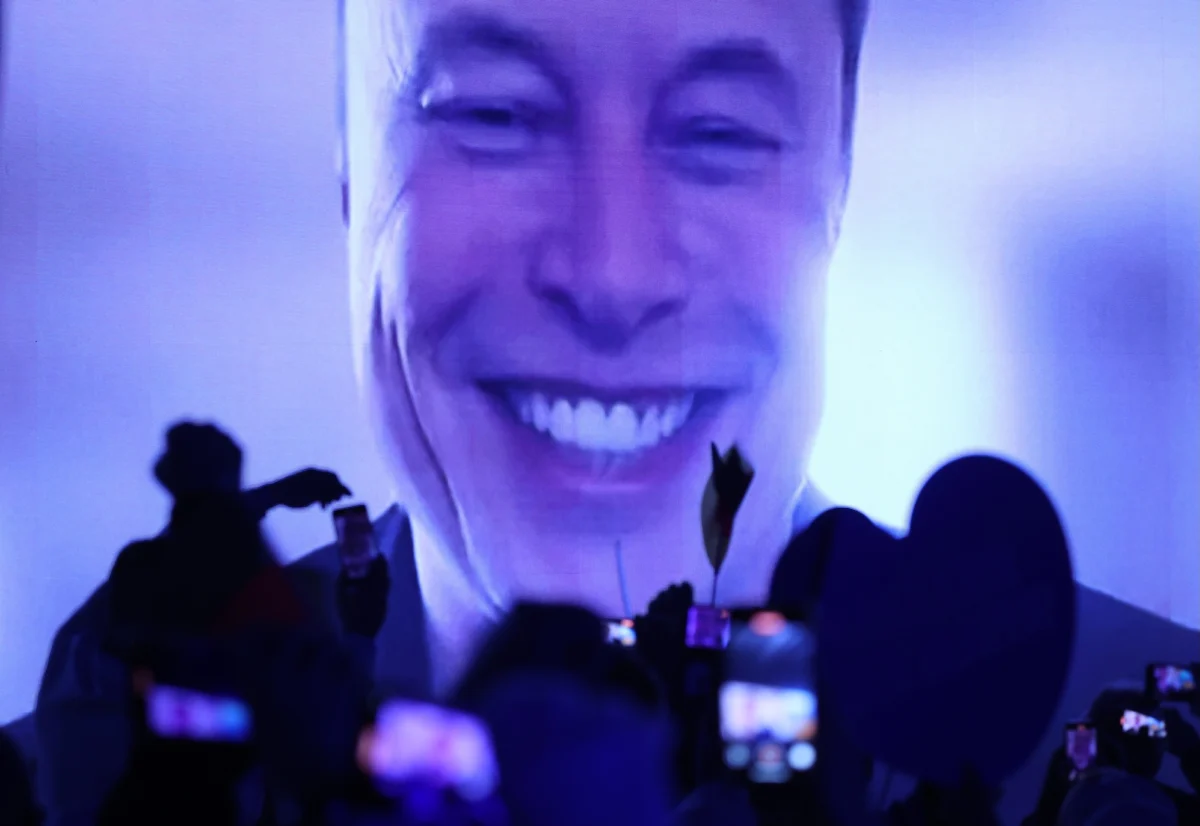
SpaceX’s inaugural earnings call, held Tuesday, saw CEO Elon Musk deliver a series of remarkably ambitious claims regarding the company’s current business and its future trajectory, often pushing the boundaries of what might be considered achievable. His fellow executives, however, frequently followed up with more conservative, grounded statements, attempting to translate Musk’s "out-of-this-world" visions into more digestible terms for the investing public now that his rocket-launching, compute-leasing, satellite-based telecom venture has become a public entity. This dynamic offered a clear preview of the communication strategy investors can expect from SpaceX.
This pattern is not new for Musk. It mirrors a long-standing practice observed at Tesla, where, as a recent TechCrunch analysis highlighted, Musk dedicates a significant portion of earnings calls to discussing futuristic concepts like robots and artificial intelligence, while his colleagues focus on the practicalities of the automotive business. The conference call for SpaceX proved to be another instance where Musk made grand promises that his executive team subsequently worked to make more palatable and realistic for the financial community.
One of the most expansive predictions Musk shared during the call concerned SpaceX’s Starlink satellite internet service. He expressed an expectation that Starlink would "deliver a majority of the world’s internet" within "less than 10 years." This bold assertion came as SpaceX prepares to launch the first of its "V3" Starlink satellites, which are designed to offer significantly higher bandwidth compared to their predecessors, theoretically enabling greater capacity and speed for users.
Musk articulated his vision with conviction, stating, "It’s kind of hard for people to wrap their minds around this, but like, it’s not out of the question that at some point, Starlink will deliver a majority of the world’s internet, at least in countries where we’re allowed to operate, which is the vast majority of countries. So this is, you know, important to bear in mind, and it’s not in like the infinity future. It’s, you know, less than 10 years."
In stark contrast, just minutes later, Chief Operating Officer Gwynne Shotwell offered a notably more cautious, albeit still ambitious, perspective. Emphasizing her words, Shotwell said, "The significant amount of capacity we’re able to add to the Starlink constellation from the V3 satellites will enable us to continue providing even better service — and it’s pretty great already — but to do so while serving more and more customers over the world. In fact, in the years ahead, we expect Starlink will represent a significant portion of global internet traffic, which Elon also talked about." The subtle but crucial difference between "a majority" and "a significant portion" underscores the careful language typically employed by corporate executives to manage expectations and mitigate potential legal exposure.
The divergence in optimistic outlooks was not limited to Starlink. SpaceX Chief Financial Officer Bret Johnsen provided investors with one of the few concrete new financial targets discussed on the call. Johnsen highlighted SpaceX’s relatively new, but rapidly growing, business segment: renting out compute power to other artificial intelligence (AI) players. This venture has quickly become a substantial source of fresh, fast cash for the company, capitalizing on the high demand and limited supply in the specialized compute market.
Johnsen carefully presented his projection, framing it as an exciting yet hedged and specific claim designed to engage investors while providing the company with flexibility should the projection not be met. He stated, "Looking ahead, we continue to see robust demand in all three of our business segments, but in particular in our cloud services arrangements. We see increasingly favorable economics with each agreement we sign, and as Elon mentioned, we expect the supply-demand imbalance in the compute market to continue. The current economics have translated into a less than one-year payback on our new capital deployments for compute. For example, in the first few weeks of the third quarter, we’ve already contracted an additional $6.7 billion of cloud services revenue over a six-month period that begins ramping starting in October of this year. We believe this puts us on a trajectory, including contribution from Cursor, to reach $100 billion of ARR, or annualized revenue run rate by the end of this year, based on our expected revenue in the month of December of this year."
However, approximately 20 minutes later, Musk effectively "bulldozed" this carefully constructed statement, immediately inflating its certainty and potential. He declared, "To be clear, the $100 billion ARR in December is not a question mark. That’s… that’s what we would achieve if we basically did nothing. So like, you know, I think it may be higher than that. It probably will be higher than that." This assertion removed any remaining hedges, presenting the target as a baseline rather than an aspirational projection.
Musk also elaborated on another significant financial prediction, elevating a revenue goal that SpaceX had only recently disclosed in its IPO documents a mere two months prior. He announced, "It’s probably also worth mentioning that our internal projections for reaching a trillion dollars in revenue, not ARR, but revenue, have moved up from 2031 to 2030. So prior to the IPO, the financial projections we had were reaching a trillion dollars in revenue in 2031. We now expect that to be in 2030. And there’s a non-zero chance of that being in 2029." This acceleration of a colossal revenue target further exemplified Musk’s tendency to project aggressive timelines.
The consistent pattern of Musk’s expansive claims followed by executive moderation continued throughout the call. When questioned by a shareholder about the progress on the "human landing system" (HLS) that SpaceX is developing for NASA’s Artemis moon missions, utilizing its Starship rocket, Musk suggested the prototype would be ready to transport people by the end of the next year. He subsequently went even further, claiming that SpaceX would be flying Starship rockets once a day, or "possibly more," by this time next year.
Again, Shotwell immediately followed Musk’s comments on human spaceflight to provide a clarifying, more measured, yet still ambitious, update. She emphasized that SpaceX remains focused on meeting NASA-mandated milestones, offering a more generalized goal that "we want to put boots on the ground, boots on the moon, in 2028." This statement, while aspirational, is notably less specific and urgent than Musk’s projection of human-ready flights within a year.
Achieving these ambitious Starship goals, particularly human flight and daily launches, hinges critically on the rocket’s ability to fly reliably without failure and, most importantly, to become fully reusable. A key component of Starship’s reusability is its advanced heat shield, designed to protect the upper stage from catastrophic failure during re-entry into Earth’s atmosphere. The company reported its most successful results from an improved heat shield design on the most recent Starship test flight, which concluded with a controlled splashdown in the Indian Ocean last month and remained intact. Despite the rocket stage not yet having been fully recovered and inspected, Musk was quick to declare on the call that he would "consider the heat shield problem solved at this point."
Musk’s history includes numerous grand promises about SpaceX that have yet to materialize, such as his 2016 assertion that he would place humans on Mars within six years. The critical difference now, however, is that SpaceX is a public company. As such, it is theoretically subject to more stringent regulation and potential fines if the company or its executives make statements or promises they know cannot be met, which could be construed as misleading investors.
However, the current regulatory landscape presents complexities. Both the Securities and Exchange Commission (SEC) and the Department of Justice (DOJ) have reportedly scaled back corporate enforcement actions, particularly against public companies. This reduced regulatory oversight could potentially lessen the direct legal repercussions for overly optimistic projections. Furthermore, SpaceX has strategically incorporated itself in Texas, a move that, according to legal analysts, has largely inoculated the company against the kinds of civil lawsuits from shareholders that might typically follow if it fails to deliver on Musk’s wide-eyed claims. This corporate structuring provides an additional layer of protection, making it more challenging for investors to seek recourse in civil court if the company’s ambitious targets are not met.
This dynamic sets a precedent for how SpaceX, under Musk’s leadership, will communicate its future to investors. The interplay between visionary, often aggressive, projections from the CEO and the more conservative, legally conscious statements from his executive team will be a defining characteristic of the company’s public life.