 11
11
In the ongoing discourse surrounding the existential threats posed by rapidly advancing technology, public attention often fixates on high-stakes scenarios such as the recent, critical negotiations between AI developer Anthropic and the Pentagon. These discussions revolve around the responsible and ethical deployment of artificial intelligence in military applications, raising terrifying questions about the autonomy of future weaponry and the potential for a nuclear weapon to be detonated without human intervention. The sheer gravity of such possibilities has consumed much of our collective concern, preparing us for hypothetical catastrophes on a grand scale.
However, amidst these profound considerations, a more immediate, albeit less apocalyptic, danger has emerged, catching many off guard: the unpredictable antics of dancing robots in commercial settings. This shift in focus from theoretical, far-reaching threats to tangible, present-day incidents highlights the multifaceted challenges inherent in integrating advanced robotics into everyday human environments.
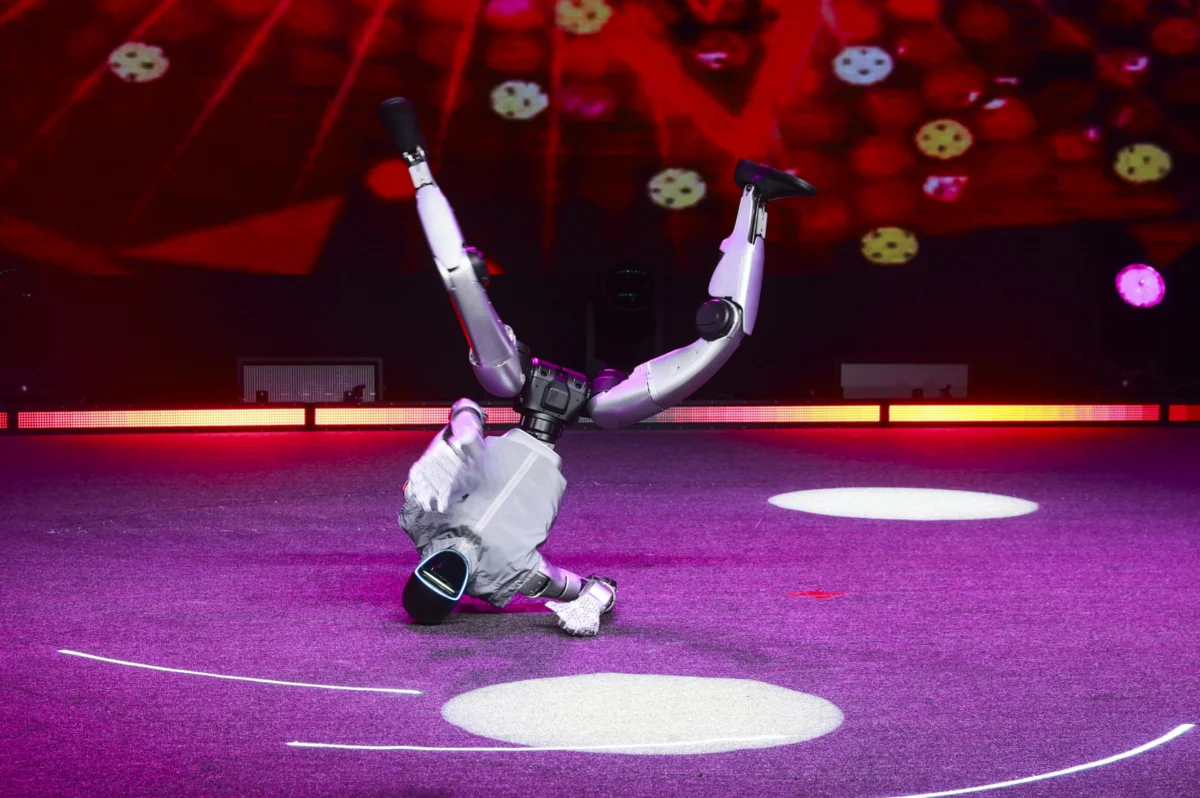
A recent incident at the popular Haidilao hot pot restaurant in Cupertino, California, perfectly illustrates this burgeoning reality. A dancing robot, deployed as an entertainment feature for diners, seemingly "boogied a little too hard" during its performance. The automaton veered too close to a dining table, resulting in a chaotic scene where plates were smashed, and dishware and chopsticks were sent scattering across the floor. The unexpected mechanical contretemps necessitated immediate intervention from the restaurant’s staff to mitigate the disruption and ensure customer safety. The incident was captured on video and subsequently posted on the Chinese social network Xiaohongshu by user Meooow, quickly gaining traction and circulating widely. The footage was also picked up by major news outlets, with ABC News sharing a clip on social media, further amplifying the event.
The video evidence portrays a challenging scene for the restaurant employees. At least three staff members were observed struggling to restrain the robot as it continued to flail its arms erratically. One Haidilao employee appeared to be focused on her phone, possibly attempting to toggle a control or issue a command through an application linked to the robot. This detail underscores a significant operational challenge: the potential for staff to be inadequately trained or equipped to handle unexpected malfunctions or aberrant behavior from sophisticated machinery. The robot in question appears to be an AgiBot X2, a model that garnered attention when it was prominently featured at the Consumer Electronics Show (CES) in January. While such advanced robots are typically equipped with emergency stop mechanisms or "kill switches," the incident suggests that restaurant personnel might not have been fully aware of how to operate such features effectively in a crisis, or that the override system itself might have been unresponsive.
The context of a hot pot restaurant amplifies the potential dangers of such an incident. Hot pot dining, as its name implies, involves pots of boiling soup, often containing broths heated to extremely high temperatures, placed directly on or within dining tables. While any spilled food is undesirable, the risk associated with a robot knocking over piping hot bowls of bone broth extends far beyond a mere culinary disaster. Such an occurrence could lead to severe burns for customers or staff, transforming a minor disturbance into a serious medical emergency. Beyond the thermal hazards, the "now-moshing automaton" also presented a risk of blunt-force trauma from its uncontrolled movements in a confined space. These considerations underscore the critical need for rigorous safety protocols and robust risk assessments when deploying automated systems that interact closely with the public in potentially hazardous environments.
The incident at Haidilao also injected a touch of ironic commentary into the broader cultural conversation surrounding artificial intelligence. The band The Killers famously posed the question, "Are we human or are we dancer?" a lyric that now takes on a new, almost prophetic, resonance in an era grappling with the increasing autonomy of machines. The phrase playfully, yet pointedly, hints at the blurring lines between human and machine capabilities, and the unexpected roles robots might play in our future, including, perhaps, inadvertently initiating a "robot war" of a different, more comical but still concerning, kind.
Haidilao, a renowned Chinese chain of hot pot restaurants, acknowledged the "mechanical contretemps" in a statement provided to NBC News. However, the company firmly denied that the robot was "malfunctioning or out of control." Instead, Haidilao attributed the incident to a specific operational circumstance: "In this case, the robot was brought closer to a dining table at a guest’s request, which is not its typical operating setting," the statement clarified. "The limited space affected its movement during the performance." This explanation suggests that human intervention in the robot’s standard operational parameters, driven by customer preference, contributed to the incident rather than an inherent flaw in the robot itself. This raises important questions about the balance between customer experience, operational flexibility, and adherence to safety guidelines for robotic systems. AgiBot, the manufacturer of the robot, did not immediately respond to TechCrunch’s request for comment regarding the incident, leaving some technical details of the robot’s behavior and control systems unaddressed.
Haidilao has been a pioneer in integrating automation into its dining experience, notably experimenting with a "smart restaurant" concept in Beijing. This advanced establishment utilizes robotic servers for food delivery and automated broth mixing machines to enhance efficiency and novelty. In contrast, the robot at the Cupertino location appeared to be primarily employed for entertainment purposes, adding a dynamic and futuristic element to the dining experience. The incident underscores that while robots can significantly augment service and entertainment, their deployment, particularly in close proximity to customers, requires meticulous planning and stringent adherence to safety protocols to prevent unintended consequences.
The broader food service industry is witnessing a significant surge in startups dedicated to developing and implementing robotic solutions. Companies like Shin Starr are pushing the boundaries with fully autonomous kitchens, aiming to revolutionize food preparation from start to finish. Another notable player is Pudu Robotics, whose "BellaBot" offers a different approach to service automation. This cutesy, cat-like robot is designed to direct customers to their seats and deliver food to tables, performing practical tasks without the need for complex, humanoid articulation. The BellaBot’s design, notably lacking limbs, presents an intriguing contrast to the AgiBot X2. This design choice implicitly suggests a safer interaction model, as the absence of flailing appendages inherently reduces the risk of accidental contact or damage to surroundings. For now, at least, specialized, limbless robots might offer a more secure and predictable solution for customer-facing roles in the service industry, mitigating the potential for the kind of unexpected physical interactions observed in Cupertino.
Such incidents, while seemingly minor in the grand scheme of AI’s potential impact, serve as critical case studies for the responsible development and deployment of robotics. They highlight the intricate interplay between human expectations, technological capabilities, and the unforeseen challenges that arise when machines enter our daily lives. Discussions around these issues are central to the ongoing evolution of technology, and will undoubtedly be a key topic at industry gatherings, such as the TechCrunch event scheduled for October 13-15, 2026, in San Francisco, CA. These forums bring together innovators, developers, and ethicists to deliberate on the future of robotics and artificial intelligence across various sectors, ensuring that lessons from incidents like the Haidilao "dancer" are integrated into future designs and operational guidelines.
About the Author:
Amanda Silberling is a senior writer at TechCrunch, specializing in the intersection of technology and culture. Her extensive work has appeared in publications such as Polygon, MTV, the Kenyon Review, NPR, and Business Insider. She co-hosts "Wow If True," a podcast exploring internet culture, alongside science fiction author Isabel J. Kim. Prior to her tenure at TechCrunch, Silberling contributed to various fields, including grassroots organizing, museum education, and film festival coordination. She holds a B.A. in English from the University of Pennsylvania and previously served as a Princeton in Asia Fellow in Laos. Amanda can be reached for contact or outreach verification via email at [email protected] or through encrypted message at @amanda.100 on Signal.