 11
11
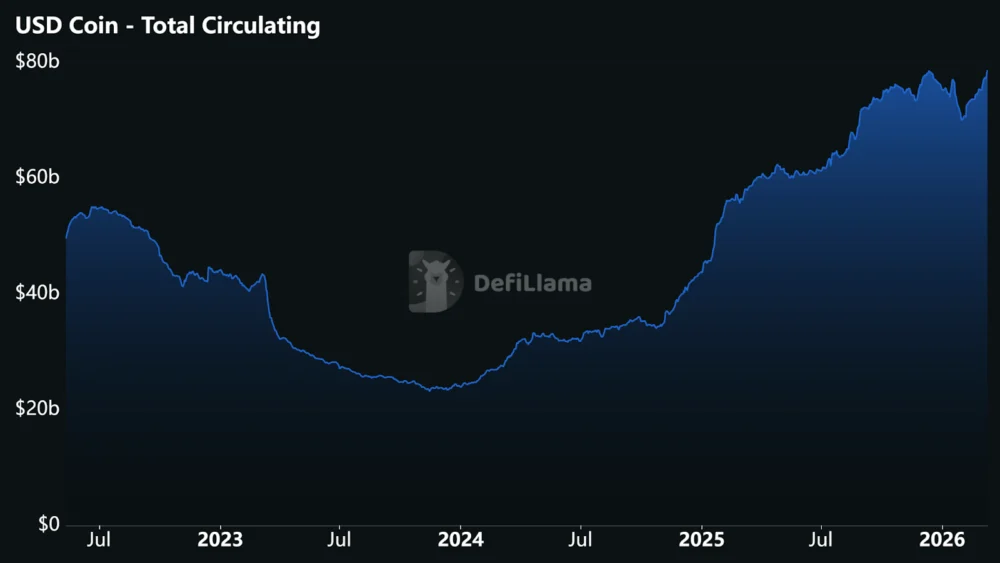
Despite a general selloff impacting both traditional Wall Street and cryptocurrency markets, Circle, the prominent stablecoin issuer, has experienced a remarkable surge in its stock value. The company’s stock has more than doubled since the beginning of February, a trend that Bernstein analysts predict will continue as stablecoins increasingly transcend their speculative origins and integrate into more conventional financial applications. This burgeoning adoption is being underscored by significant developments across various sectors, from traditional finance and insurance to the core of the cryptocurrency mining industry.

Circle’s stock has been on a significant upward trajectory throughout 2026, reflecting a growing Wall Street confidence in the long-term growth prospects of digital currencies. Analysts at Bernstein have reiterated an "Outperform" rating on Circle’s stock, projecting a price target of $190, which represents a substantial 60% increase from its current valuation. This impressive performance has seen Circle’s stock price more than double since early February and achieve a year-to-date gain of approximately 49%, outperforming both the S&P 500 and Nasdaq 100 indices during the same period.
Bernstein’s optimistic outlook is primarily driven by the accelerating adoption of stablecoins across a spectrum of financial activities, including payments, infrastructure development, and on-chain settlement. As the issuer of USD Coin (USDC), the world’s second-largest U.S. dollar-pegged stablecoin, Circle is strategically positioned to benefit from the broader industry’s move towards mainstream financial integration. The circulation of USDC has reached nearly $79 billion, according to data from DeFiLlama, highlighting its significant role in the stablecoin ecosystem.

Beyond the success of stablecoin issuers, the broader cryptocurrency market is witnessing diverse strategic plays. Bitcoin (BTC) miner Canaan is adopting a contrarian approach to treasury management, actively increasing its Bitcoin holdings even as many of its competitors choose to divest. In contrast to the prevailing trend within the mining sector, where several publicly traded miners have significantly reduced their Bitcoin reserves due to tighter margins and post-halving economic pressures, Canaan is expanding its Bitcoin treasury. In February alone, Canaan mined 86 BTC, bringing its total Bitcoin holdings to 1,793 BTC. The company also holds 3,952 Ether (ETH), pushing its total cryptocurrency reserves to record levels. Canaan’s strategic expansion includes growing its mining footprint, with operations in Texas, a major hub for cryptocurrency mining in the United States.
The integration of stablecoins into traditional finance is also gaining traction, with major players exploring real-world applications. UK insurance giant Aon recently conducted a pilot program for stablecoin payments for insurance premiums, collaborating with crypto companies Coinbase and Paxos. The primary objective of this initiative is to streamline cross-border premium payments, a process that traditionally involves multiple intermediaries, currency conversions, and often significant settlement delays. Stablecoins offer the potential for faster and more efficient fund transfers, thereby reducing costs and processing times for both insurers and clients. This could lead to simplified premium collection, improved cash flow management, and a reduction in the administrative burden associated with international transactions. The pilot signifies a broader trend of stablecoins moving beyond cryptocurrency trading to address inefficiencies in global payment systems.

Furthermore, traditional financial institutions are showing increasing interest in digital assets. U.S. banking giant Wells Fargo has filed a trademark application for "WFUSD," a move that signals potential expansion into cryptocurrency-related services. The trademark filing encompasses a wide array of blockchain-related offerings, including cryptocurrency trading, payment services, digital wallet solutions, and software for staking and custody. It also references financial services built upon distributed ledger technology. Given Wells Fargo’s significant scale as the fourth-largest U.S. bank with approximately $1.95 trillion in assets as of Q3 2025, this filing is noteworthy. While trademark applications do not guarantee the launch of new products, they often indicate areas of strategic exploration for companies. The breadth of the WFUSD filing suggests that Wells Fargo may be considering the development of crypto-based payment solutions or a tokenized dollar product under this branding.
These developments collectively illustrate a dynamic landscape where stablecoins are increasingly recognized for their utility beyond speculative trading, finding practical applications in traditional financial sectors. Simultaneously, established players in the crypto industry are demonstrating resilience and strategic foresight, even amidst market downturns, suggesting a maturing and expanding role for digital assets in the global financial ecosystem.