 11
11

BlackRock, the world’s largest asset manager, is strategically integrating sophisticated hedge fund strategies into its burgeoning exchange-traded fund (ETF) offerings, particularly within its liquid alternatives segment. Jeffrey Rosenberg, a senior portfolio manager on BlackRock’s systematic fixed income team, is at the forefront of this initiative, playing a pivotal role in the firm’s liquid alternatives ETFs, which employ a long-short investment approach within the familiar ETF structure.
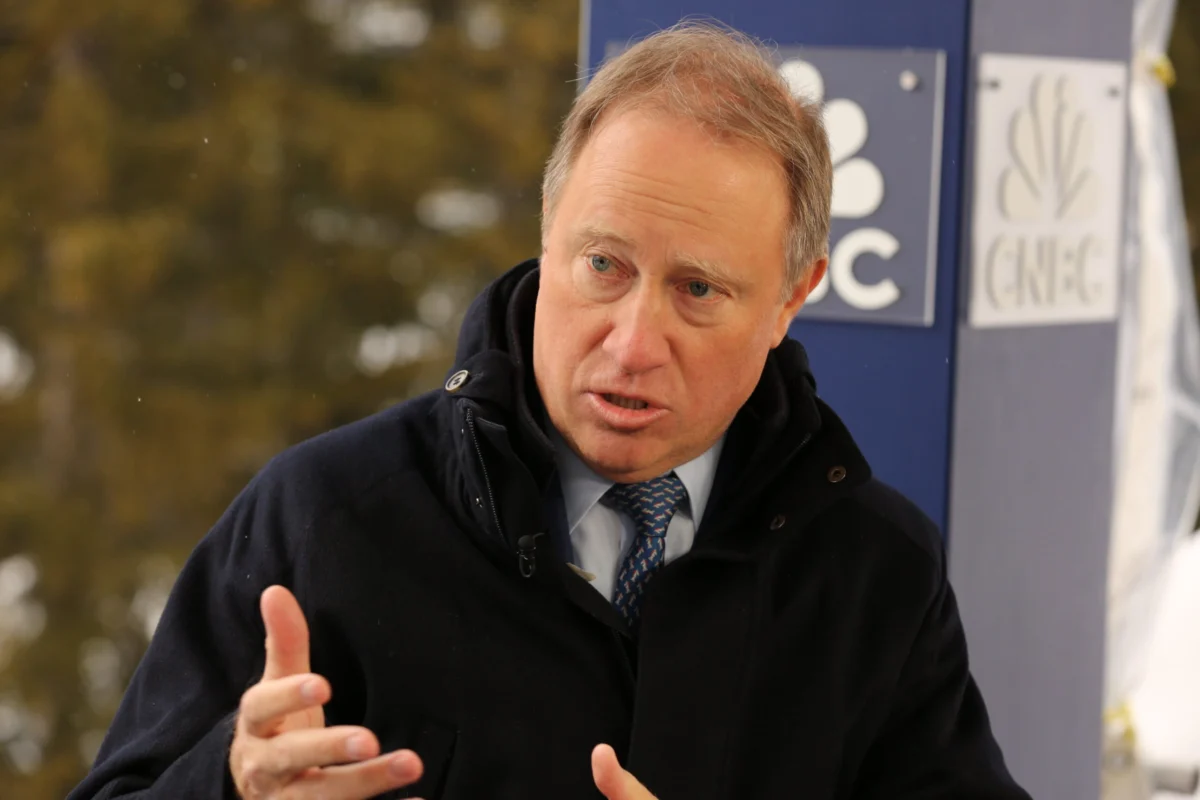
Rosenberg argues that these strategies are becoming increasingly vital for providing meaningful diversification, especially in light of a recent and concerning breakdown in the traditional inverse relationship between stocks and bonds. He elaborated on this point during an appearance on CNBC’s "ETF Edge," stating, "The great old adage around fixed income is ‘my bonds go up when my stocks go down.’ Now, we just went through a period in March with war risk where we clearly saw again on display… that doesn’t hold. And, really saw it in 2022. This entire post-Covid environment has really challenged that bedrock principle of the 60-40 portfolio that bonds are diversifying."
The growing demand from clients for liquid alternatives ETFs, according to Rosenberg, stems from a fundamental desire to "diversify your diversifiers." This implies investors are seeking strategies that can offer uncorrelated returns and reduce overall portfolio risk beyond traditional asset allocation. BlackRock’s approach aims to achieve this by leveraging the expertise developed within its hedge fund operations. "We’re bringing the techniques that we’ve developed in the hedge fund side of our business, which primarily center around market neutral, long-short investing," Rosenberg explained. He emphasized that this represents a crucial realization for many ETF investors: "That’s the key kind of ‘a-ha moment’ for ETF investors to realize most of what they have exposure to in the ETF ecosystem is some kind of beta exposure." Beta exposure, in this context, refers to returns that are largely driven by broad market movements, which can be problematic when markets are volatile or trending in a single direction.
Rosenberg currently serves as a portfolio manager for two key BlackRock liquid alternatives ETFs: the iShares Systematic Alternatives Active ETF (IALT) and the iShares Managed Futures Active ETF (ISMF). As of April 8, these funds have demonstrated promising performance. The firm’s website indicates that IALT has achieved a gain of nearly 8% year-to-date, while ISMF has seen an increase of approximately 5%. These returns suggest that the underlying strategies are effectively capturing returns beyond simple market directionality.
"What liquid alternatives bring to the table is the ability to look at other sources of return away from just market directionality," Rosenberg articulated. He further highlighted a significant challenge investors are currently facing within the equity markets, which is the increasing concentration of portfolios in a few dominant players. "Our equity portfolios have been more and more dominated by the big, large cap tech winners," he observed. This concentration, Rosenberg noted, leads to a "loss of diversification and a loss of diversification value on the equity side." Liquid alternatives, therefore, offer a potential solution to both the diversification challenges inherent in concentrated equity holdings and the broader need for uncorrelated return streams.

Todd Rosenbluth, head of research at VettaFi, echoed the sentiment that liquid alternatives ETFs represent an evolving and increasingly important segment of the investment landscape. While acknowledging that the category remains relatively small compared to traditional equity and fixed income ETFs, Rosenbluth stated, "we are seeing advisors looking for something that’s going to zag when the market zigs." This analogy perfectly encapsulates the desired behavior of alternative strategies – to move independently of or even inversely to traditional markets, thereby providing a valuable hedge against market downturns or periods of high correlation.
The underlying methodologies employed by BlackRock’s liquid alternatives ETFs are designed to achieve this "zagging" behavior. Long-short strategies, a cornerstone of hedge fund investing, involve taking both long positions in assets expected to rise and short positions in assets expected to fall. When executed effectively, these strategies can generate returns regardless of the overall market direction. Market-neutral strategies, another key component, aim to eliminate or significantly reduce market risk, focusing instead on capturing alpha – returns generated through skillful security selection or timing.
The incorporation of these sophisticated strategies into the accessible and regulated ETF wrapper is a significant development. ETFs offer advantages such as intraday trading, transparency, and generally lower expense ratios compared to traditional hedge funds, making them an attractive option for a wider range of investors, including financial advisors seeking to enhance their clients’ portfolios.
The demand for such products is being fueled by a confluence of factors. Persistent inflation, geopolitical instability, and the changing dynamics of monetary policy have created an environment where traditional diversification assumptions are being questioned. Investors are no longer confident that bonds will reliably cushion equity losses, and the outperformance of a select few mega-cap technology stocks has led to a concentration risk in many portfolios.
BlackRock’s strategic move into liquid alternatives ETFs signals a broader industry trend. As investors become more sophisticated and demand more tailored risk-management solutions, asset managers are compelled to innovate and offer products that can navigate complex market environments. By bringing hedge fund-like strategies to the ETF platform, BlackRock is democratizing access to tools that were once the exclusive domain of institutional and high-net-worth investors. This expansion of the ETF ecosystem offers the potential for improved portfolio construction and enhanced risk-adjusted returns for a broader base of investors. The success of IALT and ISMF, along with the growing client interest, suggests that liquid alternatives are poised to become a more significant component of diversified investment portfolios in the years to come.