 11
11
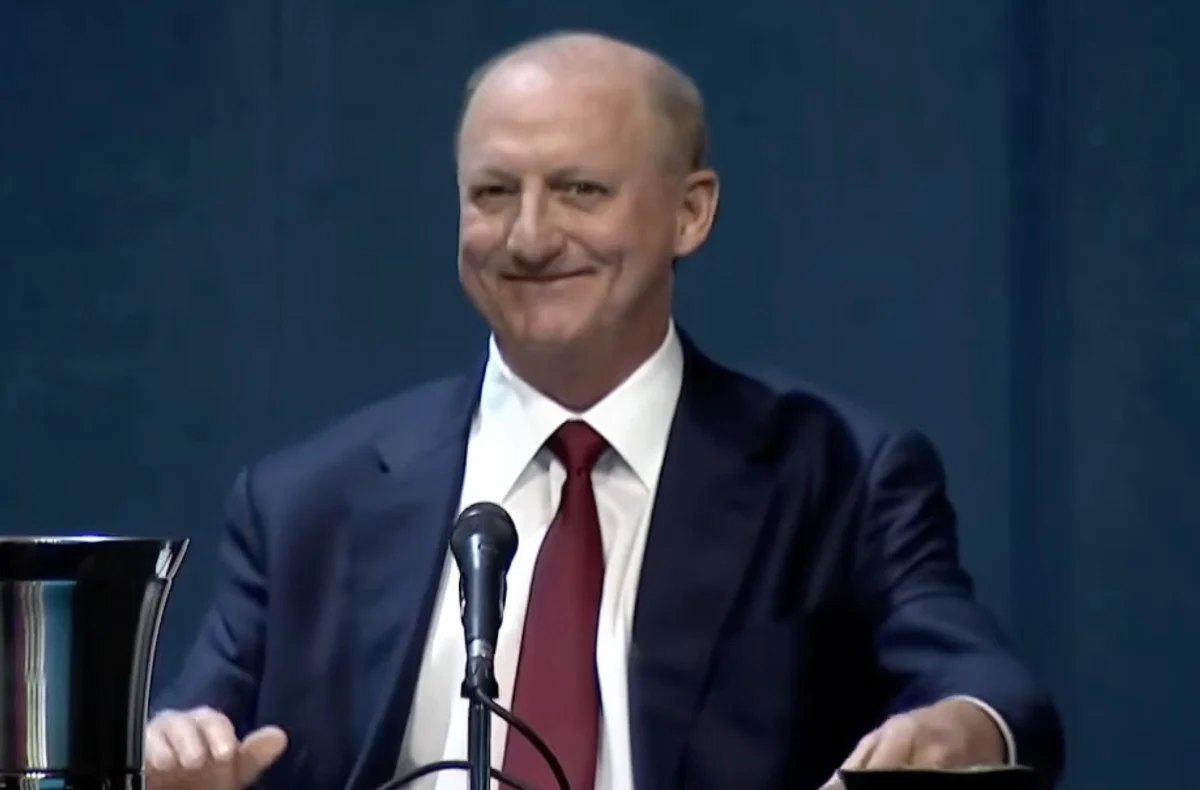
Berkshire Hathaway shares experienced a notable decline on Monday, a reaction to the conglomerate’s reported sharp decrease in fourth-quarter operating earnings. In his first formal communication with shareholders as CEO, Greg Abel offered few indications of an immediate strategic pivot, instead reaffirming the long-standing investment philosophy of his predecessor, Warren Buffett.
The Class A shares of the Omaha-based conglomerate saw a 4.2% drop at the commencement of the trading week. This downturn followed Berkshire Hathaway’s announcement of fourth-quarter operating earnings totaling $10.2 billion, a significant reduction of over 29% from the $14.56 billion reported in the same period a year prior. The primary driver of this decline was attributed to underperformance within the insurance segment, where underwriting profits plummeted by 54% to $1.56 billion, down from $3.41 billion in the preceding year.
These financial results represent an early test for Greg Abel, who assumed the chief executive role from Warren Buffett at the beginning of 2026. While Abel’s inaugural annual shareholder letter had generally been met with investor approval for its reiteration of Berkshire’s core tenets of financial strength and disciplined investing, some stakeholders had anticipated more assertive signals regarding capital deployment, particularly given the company’s substantial cash reserves.
Berkshire Hathaway concluded 2025 with a formidable cash and Treasury holdings balance exceeding $370 billion. In his shareholder letter, Abel reiterated the company’s current stance against initiating a dividend, maintaining that retained earnings are expected to generate greater market value for shareholders than a dividend payout.
Meyer Shields, an analyst at KBW, expressed surprise at the absence of a dividend and, more pointedly, the stated sustained unwillingness to implement one. Shields noted in a commentary that, given Berkshire’s considerable cash position and its prospects for ongoing cash generation, there had been an expectation for persistent dividends to accompany the CEO transition.
Instead of a dividend, Abel emphasized a strategy of reinvestment and opportunistic share repurchases when Berkshire’s stock is trading below its intrinsic value. This approach aligns with the capital allocation framework that has been a hallmark of Warren Buffett’s leadership for decades.
However, not all market observers shared a bearish outlook. Brian Meredith, an analyst at UBS, acknowledged that while the quarterly results were weaker than anticipated, Berkshire’s inherent defensive characteristics could provide support for the stock. Meredith advised clients that Berkshire’s shares are expected to outperform the broader market, particularly in light of elevated geopolitical tensions. He highlighted Berkshire’s historically strong performance during periods of market volatility, attributing this to its diversified earnings streams, robust liquidity, and a predominantly U.S.-focused business portfolio.
Meredith further commented that Berkshire’s annual letter served to reinforce these fundamental principles and values. Looking ahead to 2026 and 2027, he anticipates that the management team will concentrate on enhancing operating margins at BNSF, aiming to bring them more in line with industry benchmarks. Additionally, he expects a focus on increasing policy retentions at Geico while ensuring sustained profitability within that segment.
The financial performance of Berkshire Hathaway’s various business segments paints a nuanced picture. The insurance operations, a cornerstone of the conglomerate, faced headwinds in the fourth quarter, contributing significantly to the overall decline in operating earnings. This segment, historically a powerful engine for Berkshire’s profitability, experienced a substantial drop in underwriting profits, reflecting challenges in the insurance market.
Beyond insurance, other Berkshire subsidiaries also contributed to the financial results. While the specific performance of each subsidiary was not detailed in the initial earnings report, the conglomerate’s diversified nature means that performance can vary across its vast array of holdings, which span industries from railroads and energy to manufacturing and retail. The resilience of these diverse operations is a key factor in Berkshire’s long-term strategy and its ability to weather economic fluctuations.
The substantial cash pile of over $370 billion underscores Berkshire’s financial strength and its capacity for future investments and acquisitions. The debate among analysts regarding the optimal use of this capital—whether through share buybacks, acquisitions, or dividends—is likely to continue. Abel’s commitment to reinvestment and strategic repurchases signals a continuation of Buffett’s proven approach, prioritizing long-term value creation over immediate shareholder distributions.
The succession of Greg Abel from Warren Buffett marks a significant transition for Berkshire Hathaway. While Buffett remains Chairman of the Board, Abel’s assumption of the CEO role places him at the helm of operational decision-making. His initial shareholder communication has emphasized continuity and adherence to core principles, suggesting a measured approach to leadership. Investors will be closely watching his execution of these strategies and his ability to navigate the evolving economic landscape.
The geopolitical tensions mentioned by UBS analyst Brian Meredith are a significant factor influencing market sentiment and corporate strategy. In such an environment, Berkshire Hathaway’s reputation as a defensive investment, with its diversified earnings and strong balance sheet, becomes increasingly attractive to investors seeking stability and resilience. The company’s U.S.-centric businesses further enhance this appeal in a global climate marked by uncertainty.
The focus on improving BNSF’s operating margins and boosting Geico’s policy retentions indicates specific strategic priorities for the coming years. These operational enhancements are crucial for driving profitability within key subsidiaries and contributing to the overall financial health of the conglomerate. The success of these initiatives will be closely monitored by analysts and investors alike as they assess Berkshire Hathaway’s future trajectory under Greg Abel’s leadership.