 11
11
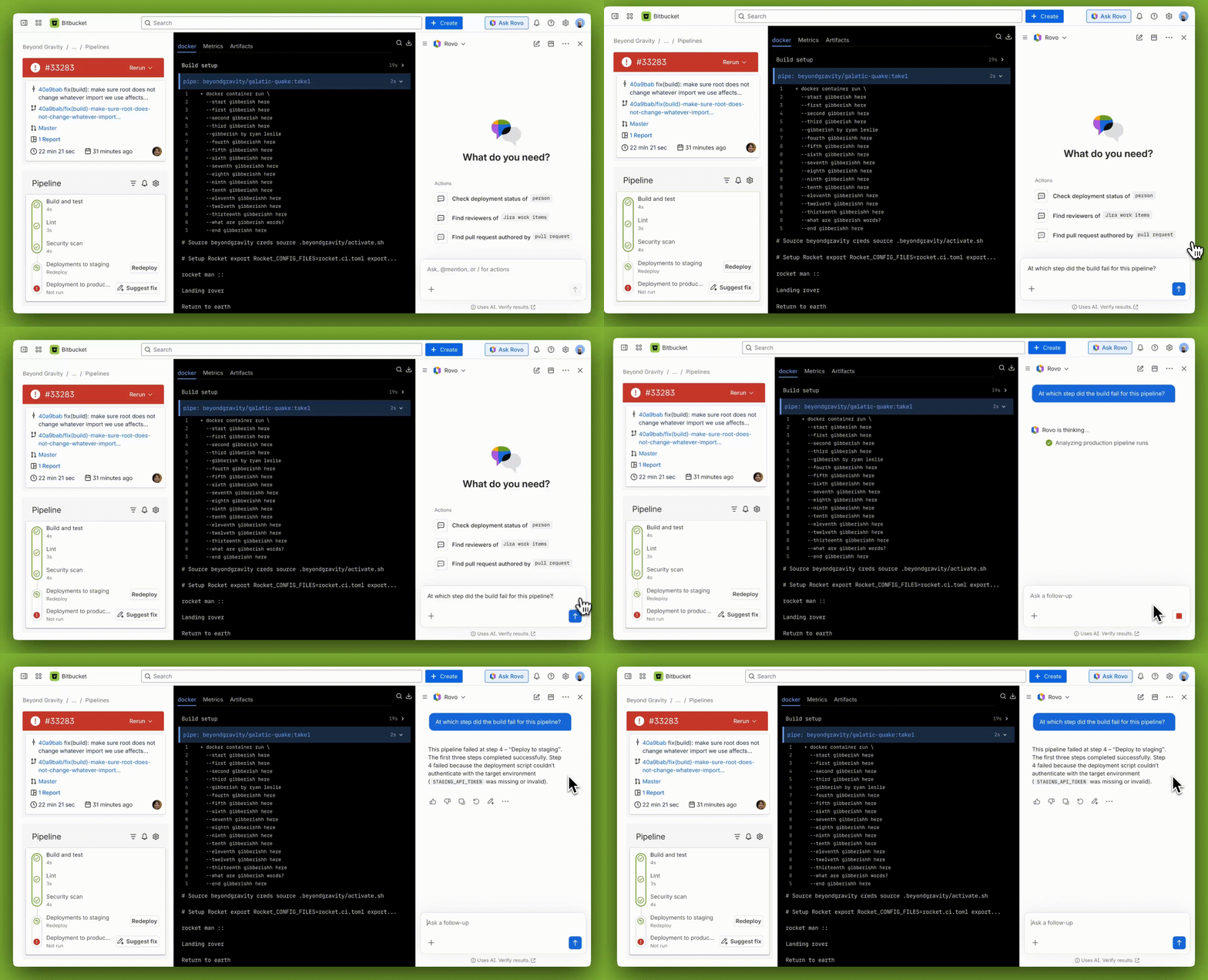
Atlassian has announced a significant update to its Bitbucket Cloud platform, integrating Rovo Chat directly into Bitbucket Pipelines to address one of the most persistent bottlenecks in the software development lifecycle: pipeline debugging. This integration allows developers to use natural language queries to identify, analyze, and resolve build failures, effectively transforming how engineering teams interact with continuous integration and continuous delivery (CI/CD) logs. By leveraging generative artificial intelligence, Atlassian aims to reduce the "toil" associated with log analysis, which currently consumes a substantial portion of developer time and contributes to widespread productivity loss across the industry.
The introduction of Rovo Chat into Bitbucket comes at a time when developer productivity is under intense scrutiny. According to the "Atlassian Research: Developer Experience Report 2025," more than 50% of surveyed developers reported losing upwards of 10 hours each week to non-coding tasks. These inefficiencies stem from searching for information, onboarding to unfamiliar codebases, and constant context-switching between different applications. Failed pipelines are a primary driver of this friction. Internal data suggests that developers spend between 20 and 45 minutes on average for every single pipeline failure. The vast majority of this time is dedicated not to fixing the code itself, but to the tedious process of "log spelunking"—manually parsing through thousands of lines of terminal output to find the specific point of failure.
Rovo Chat seeks to eliminate this manual labor by providing a conversational interface that sits directly within the Bitbucket environment. Instead of scrolling through raw logs, developers can now ask Rovo specific questions about their builds and receive summarized, contextual answers. The tool is designed to provide the failing step, the root cause of the error, and actionable suggestions for remediation. This shift from manual extraction to automated synthesis allows developers to maintain their flow state and resolve issues without leaving their current workspace.

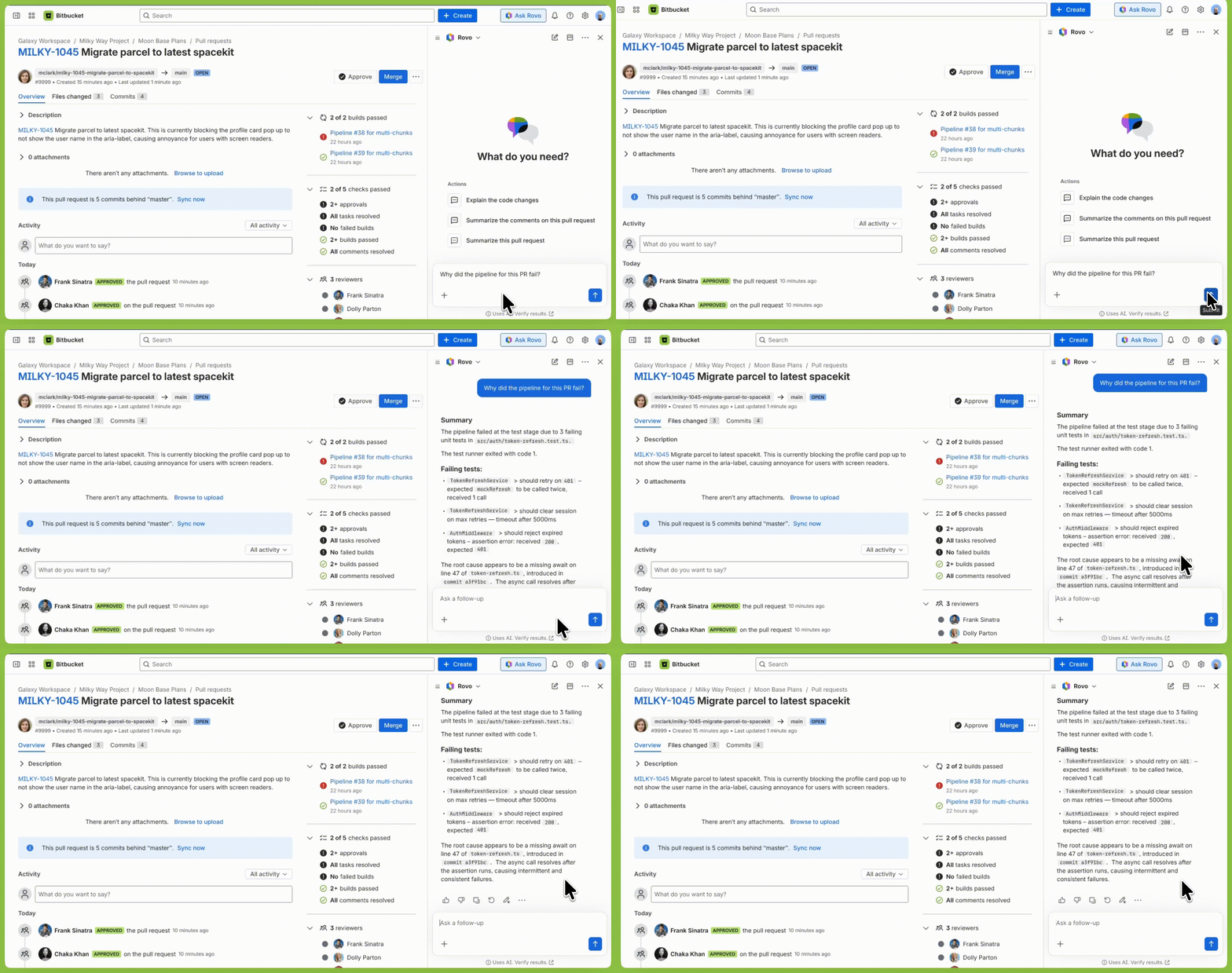
The functionality of Rovo Chat in Bitbucket is categorized into several key capabilities that mirror the natural thought process of an engineer. First, it offers comprehensive root cause analysis. When a build "goes red," a developer can ask, “Why did my last pipeline fail?” Rather than returning a generic error code or a dump of the last 50 lines of the log, Rovo provides a plain-English explanation. It identifies the specific step in the YAML configuration that triggered the failure, interprets the error message, and suggests a fix based on the code changes in the associated pull request.
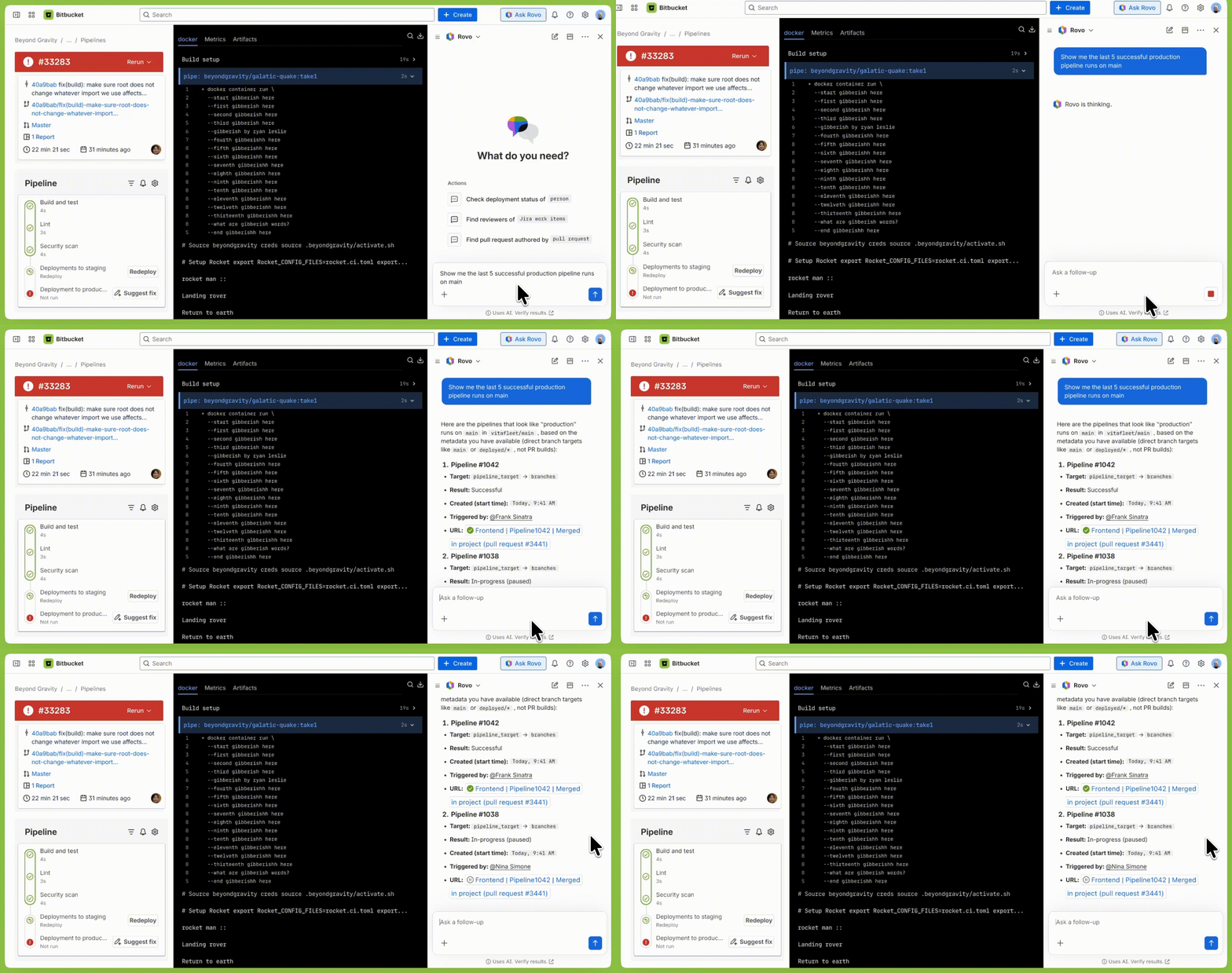
Second, the tool provides historical and health-related insights for repositories. By asking questions such as, “When was the last successful run on main?” developers can quickly assess the health of their primary branch without navigating through multiple pages of build history. This "at-a-glance" intelligence is particularly useful for teams managing complex, high-frequency deployment schedules where understanding the "last known good state" is critical for troubleshooting regressions.
Third, Rovo Chat acts as a translator for cryptic technical output. Stack traces, exit codes, and deep-seated environmental errors are often difficult to interpret, even for experienced engineers. By asking Rovo to “Explain the error in this step,” developers can receive a breakdown of technical jargon. The AI reasons through the stack trace to explain whether the issue is a syntax error, a failed unit test, a missing dependency, or a configuration mismatch in the CI environment. This capability is intended to lower the barrier for junior developers while accelerating the diagnostic speed of senior staff.
The underlying technology of Rovo Chat distinguishes it from generic large language models (LLMs). While standard AI bots can explain general coding concepts, Rovo is powered by a combination of Atlassian’s proprietary "Teamwork Graph" and specialized context from Bitbucket Pipelines. When a user queries the chat, Rovo pulls specific metadata from the current pipeline run, including the pipeline configuration, recent commit history, and the specific logs of the failed container. It then processes this local context through an LLM to generate a response that is highly specific to the user’s unique environment and codebase. This ensures that the advice provided is not just theoretically correct, but practically applicable to the specific failure at hand.
Atlassian’s decision to build this feature was driven by the recognition that extracting meaning from raw logs is a specialized, time-consuming skill. The company notes that even veteran engineers spend more time than necessary on these tasks because the interface for CI/CD has traditionally been static and information-dense. By changing the interface from a "read-only" log file to an "interactive" chat, Atlassian is attempting to lower the cognitive load required to maintain modern software systems.
The current release is described as the foundational step in a broader roadmap for AI-driven DevOps. Atlassian has outlined two major areas of upcoming development: "Taking Actions" and "Deployment Intelligence." In the near future, Rovo Chat will evolve from an advisory tool into an operational one. Developers will be able to issue commands directly through the chat interface to retry failed builds, cancel running pipelines, or trigger new deployments. This will further reduce the need to navigate through the Bitbucket UI, allowing for a fully keyboard-driven or conversational workflow.
Furthermore, the "Deployment Intelligence" phase will expand Rovo’s knowledge to the post-build environment. Developers will be able to ask Rovo what specific features or bug fixes were included in a particular deployment, what has changed since the last release to a production environment, and which versions of the code are currently running in various staging or development environments. This level of visibility is often siloed in different tools or requires manual cross-referencing of Jira tickets and Bitbucket commits; Rovo aims to centralize this information through a single conversational entry point.
The availability of Rovo Chat with pipeline context is currently limited to users on paid Bitbucket Cloud plans who also have an active Rovo and Jira connection. This requirement reflects Atlassian’s strategy of creating an interconnected ecosystem where data flows seamlessly between project management (Jira) and source code management (Bitbucket). To get started, administrators must ensure that Rovo is enabled and that the necessary workspace permissions are configured to allow the AI to access pipeline data.
As engineering organizations continue to navigate the complexities of microservices and cloud-native development, the volume of logs and telemetry data is only increasing. Atlassian’s integration of Rovo into Bitbucket Pipelines represents a strategic move to use AI as a filter for this data, prioritizing meaningful insights over raw information. The company has invited active feedback from its user base to refine the accuracy and quality of Rovo’s responses, acknowledging that the nuances of different coding languages and build environments require constant tuning.
In summary, the integration of Rovo Chat into Bitbucket Pipelines marks a transition toward "AI-augmented DevOps." By focusing on the high-friction task of pipeline debugging, Atlassian is targeting a specific pain point that costs global engineering teams thousands of hours in lost productivity. Through root cause analysis, historical health checks, and plain-language error explanations, Rovo Chat provides a new layer of intelligence that sits between the developer and the raw technical output of their CI/CD systems, with the ultimate goal of making software delivery faster, more intuitive, and less prone to manual error.